Just a few steps from the beginning of the cobblestone lane leading to the main square of Pyrgos, next to the main road and directly across from the Museum of Marble Crafts, sits Trataro. It is the kind of delicatessen that is almost impossible to walk past without stepping inside—a contemporary grocery shop filled with carefully selected products, designed with love, attention to detail and genuine knowledge of food.
Trataro is not simply a place where tourists can buy a little piece of Tinos to take home with them. It is also somewhere a local might discover a cheese from Lemnos, a wine made from an unfamiliar Greek grape variety, or a product from a tiny family workshop they would otherwise have struggled to find. In my view, that makes it even more interesting.
Naturally, I walked through the door as soon as I saw it. To my great delight, I found myself surrounded by the kind of smiling people you immediately take to heart. From the very first moment, I understood that I was not simply going to be told which cheese to buy or which wine to try. I was going to learn who made it, where it came from, what challenges the producer faced and why it had ultimately ended up on that particular shelf.
Behind Trataro are brothers Dimitris and Panagiotis Ouraïloglou, two young men who, about three years ago, decided to leave Athens and return to Tinos, the island they had been connected to since childhood. Their parents, Michalis and Marina, have been beside them every step of the way, actively supporting the venture and becoming an inseparable part of its story.
The family has deep roots on the island. They spent their summers there until their studies and professional obligations inevitably began to limit the amount of time they could spend there. But the idea of returning never disappeared.
Then their grandfather gave them a building that had until then been used as a storage space. He had, in fact, built it with the idea that one day it would belong to his grandchildren. Suddenly, the idea of returning began to take shape.
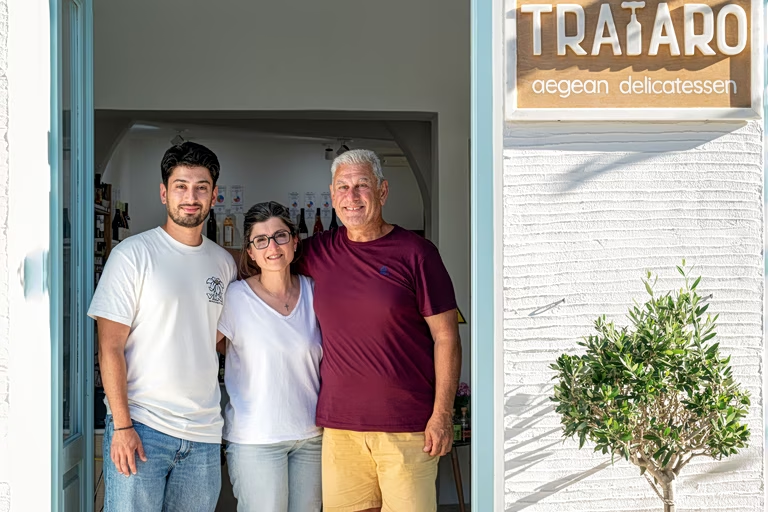
Panagiotis, Marina and Michalis outside the shop. Photo: Alexandros Alexandris
Dimitris is a food technologist, while Panagiotis studied industrial product design. That different starting point for the two brothers explains much of what you see at Trataro today.
Dimitris had worked in another professional field and had even embarked on an academic career. At some point, however, he felt the need to return to what he had originally studied and genuinely loved: food.
Trataro became his way of doing that—not through an industrial approach, but by moving in precisely the opposite direction, toward small-scale producers and people who still make food through personal effort and with a strong sense of identity.
Panagiotis, meanwhile, took charge of almost the entire design side of the business. From the shelves and packaging to the way the products are arranged and presented, the look of Trataro is his work. Wood and marble—natural materials that fit seamlessly into the landscape of Pyrgos—create a space that feels contemporary without ever becoming cold.
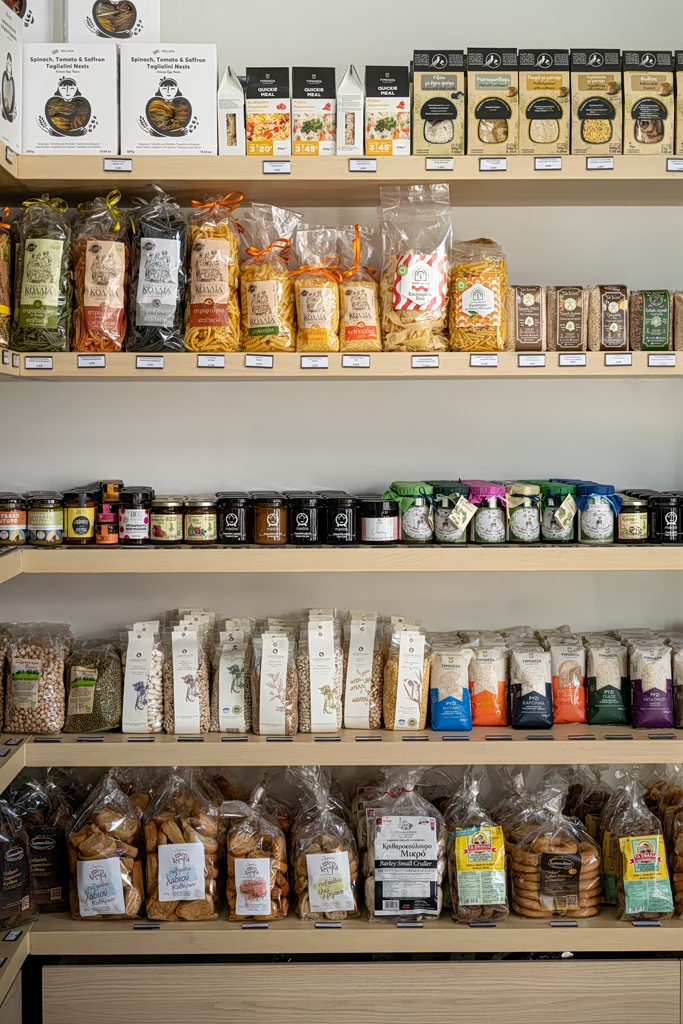
The way the products are arranged and presented on the shelves is Panagiotis’ work. Photo: Alexandros Alexandris
And this is where the part of the story I liked most begins.
Dimitris does not choose his products by sitting behind a computer or waiting for supplier catalogs to arrive. He travels.
He has been to Lemnos, Mytilene, Alexandroupoli and many other parts of Greece in search of small-scale producers. He makes appointments, meets people where they work, sees how and where their products are made and, often, one producer leads him to the next.
That is how a network of nearly 100 producers has gradually emerged.
He has not, of course, managed to visit every one of them personally. But the principle remains the same: before something reaches the shelf, he wants to know as much as possible about what lies behind it.
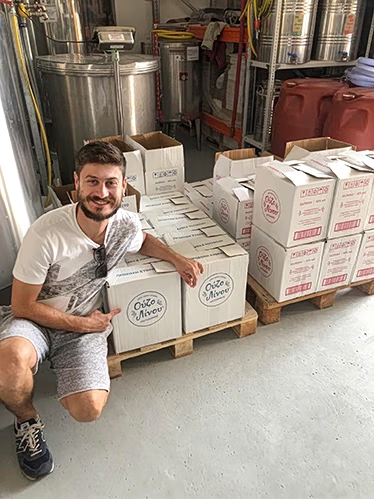
Dimitris travels throughout Greece, discovering the producers he wants to bring into his shop. Photo: Alexandros Alexandris
Originally, the idea was even more narrowly focused. At Trataro, they wanted to bring together exclusively products from small producers on the surrounding islands.
The reason was not only gastronomic. As island-based entrepreneurs themselves, they knew very well how difficult this can be—particularly for a small producer who has to transport products, deal with higher costs and find a way to reach consumers.
Eventually, however, they decided to include more distant islands as well as mainland Greece. As Dimitris told me, it was impossible to ignore so many interesting products.
The emphasis remains on small producers, but the search can now take them anywhere there is something genuinely good to discover.
A genuine love for the island
Naturally, Tinos has the starring role.
There is a dedicated section for Tinian products, offering a small edible map of the island. Capers and herbs, artichokes from Komi, pickles, traditional spoon sweets, cheeses from the island’s dairies, traditional confections and exceptional honey all have their place.
And because many of these producers are genuinely small, there is no expectation of endless availability. Something may be on the shelf today and gone a short while later simply because that is all the farm produced that year.
Dimitris has a particularly close relationship with Tinian honey. He has worked in beekeeping himself and explained to me just how difficult it is on the island because of the powerful winds and water scarcity.
And yet, this very challenging landscape produces thyme honey with a high concentration of thyme and an exceptionally intense aroma.
These are the kinds of small details that make you understand how differently you see a product once you know what it took to produce it.
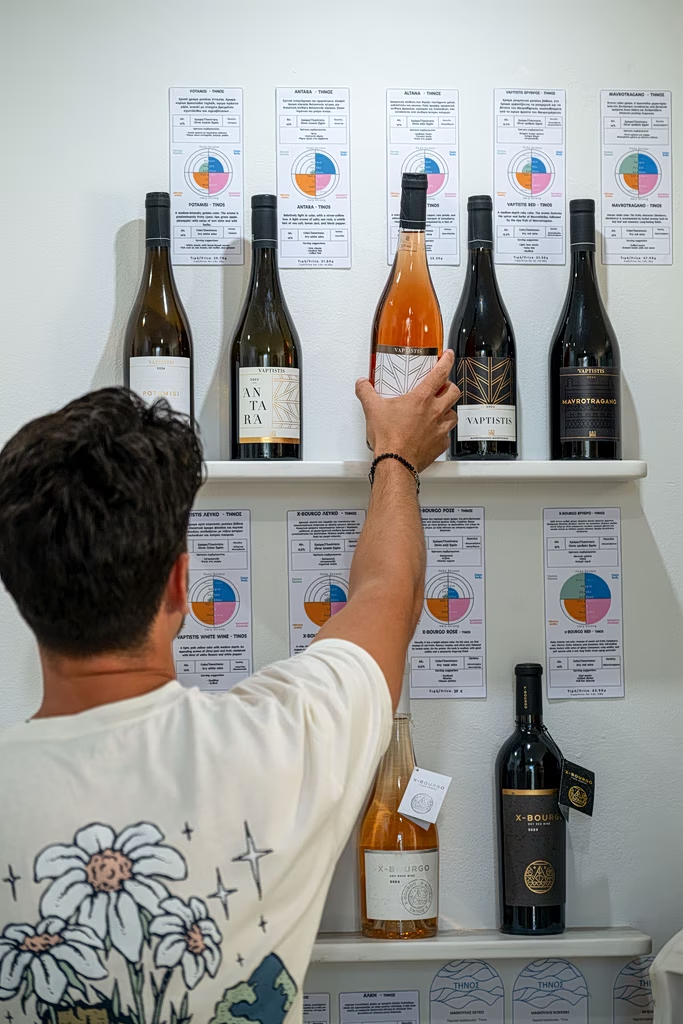
Trataro also has a deep love for wine. It stocks labels almost exclusively from island wineries and helps visitors discover them. Photo: Alexandros Alexandris
Wine is another great passion at Trataro.
At first, the philosophy was almost exclusively island-focused, with only a handful of exceptions. Over time, however, Dimitris began to see that a clientele was developing that was genuinely interested in Greek wine, and he decided to look deeper.
Small wineries from different parts of Greece began appearing in the shop’s wine selection, along with lesser-known indigenous grape varieties such as Mouchtaro and Asproudi.
His goal is not so much to fill the space with hundreds of bottles as to create a collection that will intrigue wine lovers.
Even the way the wines are presented continues to evolve. They did not want row after row of bottles packed tightly together, leaving visitors with nothing to go on beyond the label and the price.
Instead, they added information about the wineries and began creating a more accessible way for customers to understand the characteristics of each bottle.
The natural next step for their concept would be to allow people to sit down, open a bottle of wine and taste it alongside some of the products on the shelves.
And it is already something they have in mind.
Not the creation of yet another restaurant, but a small tasting space where products can be introduced even more effectively through flavor.
What could be more fitting for a shop called Trataro?
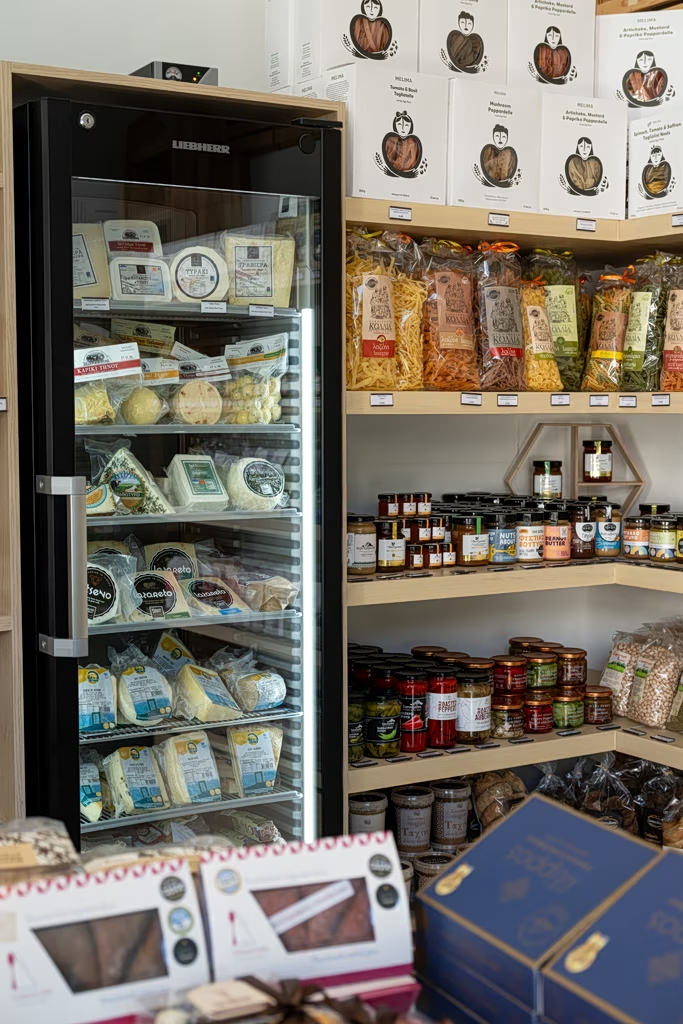
In the future, Trataro wants to literally “treat” its customers, allowing them to taste cheeses, rusks, honey and spirits before buying them. Photo: Alexandros Alexandris
The name itself has a story, too.
When the family was trying to decide what to call the shop, the idea for Trataro came from their mother, Marina. They wanted a word that could capture hospitality and good food.
And that is exactly what the Greek word trataro evokes. It comes from trata, the act of treating someone to something, and brings to mind grandmothers who would never let you leave without eating something; a small offering that becomes an excuse to stay a little longer; a conversation that begins over a plate of food.
A simple, sweet, old-fashioned word that ultimately describes perfectly what they are trying to do.
And there is one more thing that made me like them even more.
Trataro is not in Pyrgos simply because that happened to be where their grandfather’s property was. At one point, they could have moved to Chora, Tinos’ main town, and, as Dimitris told me, several people in the industry had suggested exactly that.
There would have been more foot traffic and greater exposure.
They do not want to leave.
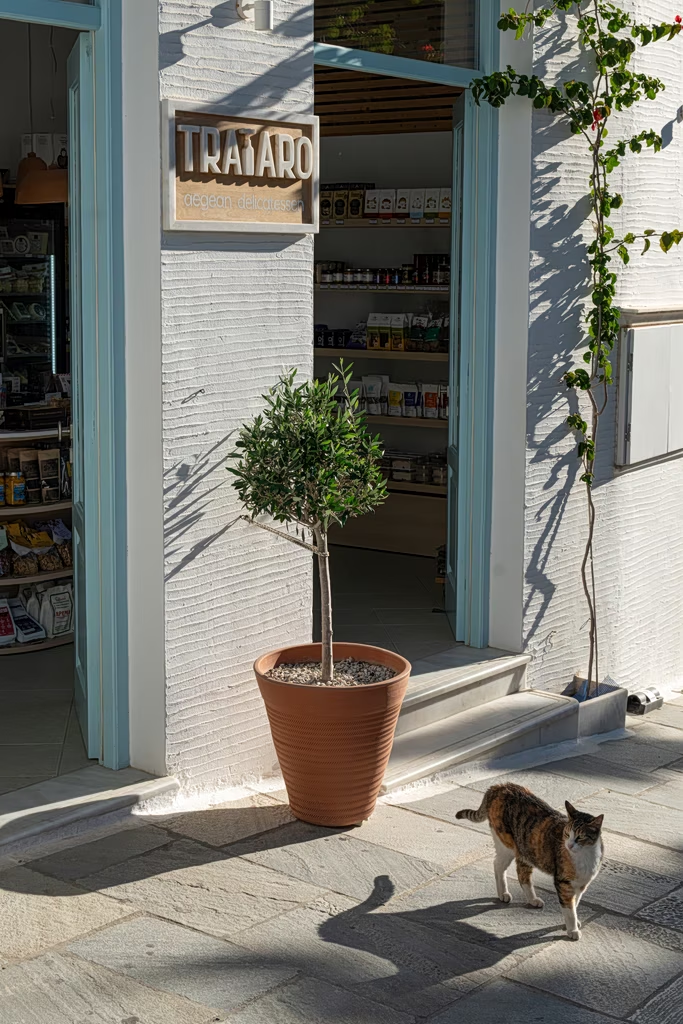
Remaining in Pyrgos, their village, is part of the brothers’ philosophy. They have no plans to move to Chora. Photo: Alexandros Alexandris
For Dimitris, staying in the village is part of the philosophy behind the entire venture.
If everyone leaves the villages and concentrates in the cities, he told me, the local character and magic of those places will gradually disappear with them.
There is something even more important: much of the real production still takes place in the villages. That is where the fields and crops are, and where the people who continue to produce these foods live and work.
So if you are going to talk so much about the value of place and small producers, it makes sense to be close to them yourself.
The same applies to winter.
From the beginning, they did not want to create a shop that existed solely for the tourist season. Every year, they try to remain open for longer because Pyrgos still has hundreds of permanent residents.
And, as Dimitris rightly points out, there is no sadder sight than a village that shuts down completely as soon as summer ends.
Even the few weeks they take off during the winter often turn into trips in search of new producers.
And perhaps that is ultimately what I liked most about Trataro.
Nothing about what they do feels disconnected.
The place, the producers, the products, the aesthetic, the journeys and even the decision to remain in Pyrgos are all pieces of the same story.
It is the story of a family returning to its roots—and of two young people who decided to use what they had learned to create something modern without erasing everything that came before them.