 Μake us preferred on Google
 We love the idea of the mountains in summer. There is something wonderful about spending a few days away from the crowds of the Greek islands, somewhere where the air is always cooler and you can sleep under a light blanket at night.
August transforms the villages of mainland Greece. At other times of year, the signs of abandonment can be unmistakable: windows remain shut and courtyards are left untended. But in summer, people return to their ancestral homes. Houses fill with life, alleyways and village squares come alive, and friends and families reunite.
If the village happens to be near a lake, there is even the possibility of going for a swim.
This is exactly what happens in the settlements around Lake Plastira, in the spectacularly picturesque villages that have managed to retain much of their authenticity while offering the perfect setting for slowing down.
Here, you can rediscover the simple pleasure of eating lunch beneath a vine-covered pergola, biting into tomatoes picked from nearby gardens, drinking a small glass of tsipouro—a traditional Greek grape spirit—alongside a meze, and ordering a ypovrychio or a loukoumi with your coffee at the village café. Ypovrychio, literally “submarine”, is the old-fashioned Greek sweet of spoonful of white fondant served submerged in cold water.
It was in one such village, Moschato, at an altitude of 800 meters amid lush greenery, that we recently discovered a beautiful taverna called Tsardaki.
It is a warm, family-run restaurant, with a courtyard overlooking the green landscape and an interior of stone and wood, complete with a fireplace and wood-burning stove. In winter, it must become the perfect refuge for anyone traveling toward the lake.
We stopped to admire the carefully tended courtyard and ended up staying for lunch, eager to learn more about the food—and the story behind the place.
A roadside stop before there was a lake
Tsardaki has been a place of business since 1939, originally operating as an hani—a traditional roadside inn—and grocery store serving people traveling toward the villages of the Agrafa mountains.
It later passed into the Korompilias family and evolved into one of the area’s most historic tavernas.
“The shop existed before my grandfather. My father bought the building after 1980, but its history goes much further back,” Stavroula Korompilia tells us. Today, she runs Tsardaki with her husband, Babis Tsilikas.
“From stories my father has told me, I know that the bus stop was here. There was no lake, and there weren’t roads as we know them today. Where you now see water, there were gardens, fields and animal pens.
“The bus couldn’t continue any further up, so everyone traveling to the mountain villages stopped here. They would have their coffee, their tsipouro, eat a few chops and then continue their journey.”
It is easy to picture another era: a world that was simpler in some ways, but often much harder.
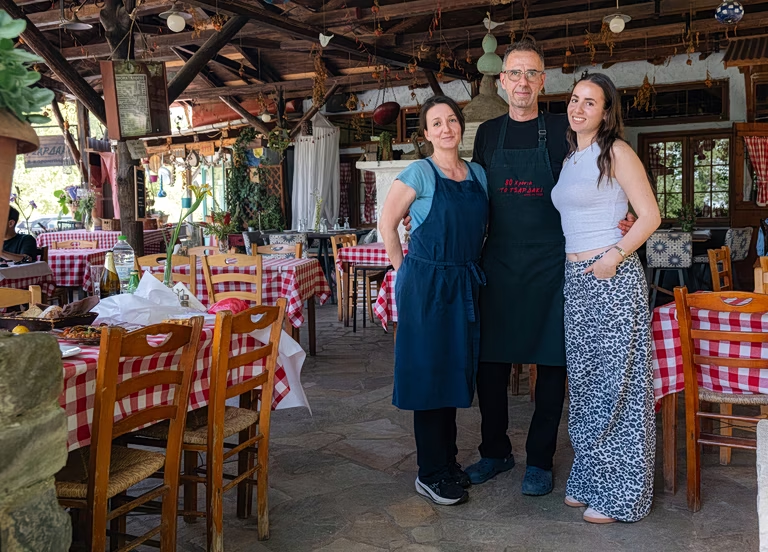
Stavroula, Babis and their daughter Marialena welcomed us with a smile and reminded us of the value of the family taverna—the good fortune of having a place that remains open for locals and visitors alike. Photo: Alexandros Alexandris
Tsardaki was also a meeting point for merchants and traders, for all those who wanted to sell their goods. The area was once bustling with life, with dozens of small businesses lining the road.
“There were around 30 shops. This was the commercial passage between the Karditsa plain and the mountain villages. They exchanged produce—potatoes, onions, vegetables. Everything started here.”
Then the lake was created with the construction of the dam, permanently changing the landscape.
Most of the businesses disappeared. Only two remained: Tsardaki and the Alexiou butcher’s taverna nearby.
The baton passed from the grandfather to Vasilis Korompilias and his wife, Eleni. For decades, they kept the business alive and turned it into a landmark around Lake Plastira.
“My parents have now retired, but my father still helps. This place is his life,” Stavroula says, visibly moved.
“Everyone who knows him loves him. If old customers happen to see him, they immediately rush over to hug and kiss him.”
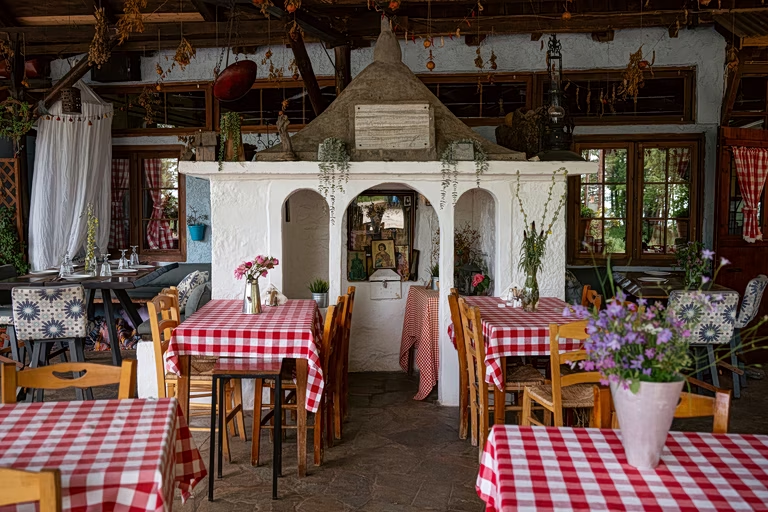
Tsardaki has a long history. It began as an inn and grocery store before the Korompilia family transformed it into one of the area’s best-known tavernas. Photo: Alexandros Alexandris
A family kitchen at the heart of everything
Stavroula grew up inside the taverna and left for Athens only to study. She lived there for a while and worked as a television technician.
Babis, meanwhile, had completed his studies at the Athens University of Economics and Business, but had never really left the restaurant trade behind: his own family also ran businesses in Karditsa.
“Athens was a stopover for both of us. We never intended to stay there permanently.”
When the business officially passed into their hands in 2006, the decision had already been made.
“Cooking was always inside me. Wherever I went, I would try recipes, take notes and buy magazines. I still have all my old food magazines, many of them dating from before 1990,” Stavroula says, describing a lifelong passion for cooking that was already obvious to us after tasting her food.
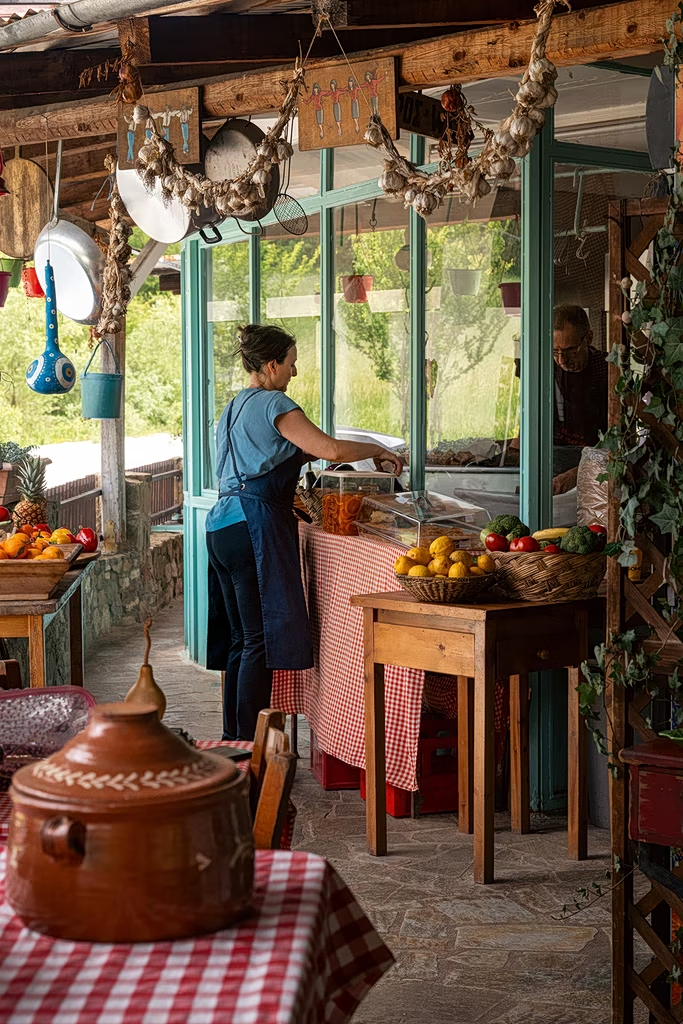
Stavroula works tirelessly in every part of the restaurant to make sure nothing is missing from the tables. Cooking has always been her passion. Photo: Alexandros Alexandris
From the moment they took over Tsardaki, Stavroula and Babis knew they did not want to change its fundamental character. They simply wanted to add a few touches of their own.
“We wanted to move beyond the image of a simple grill house and offer more choices,” Stavroula says.
“My father and mother worked on their own and were enormously successful. We knew we had a strong hand to play. So we limited ourselves to adding more cooked dishes and building a wood-fired oven that would elevate our cooking and help us achieve an even better result.”
Everything local, everything seasonal
When it comes to ingredients, there is no compromise.
They want the best—and they want it from the surrounding area.
The meat comes from butchers in Karditsa, the cheeses from local cheesemakers, while the vegetables come either from the family garden or from local growers, depending on what the kitchen needs.
“My mother still gives us eggplants, zucchinis and tomatoes from the garden. Naturally, they aren’t enough to cover our needs, so we also buy from other gardens belonging to people we know.”
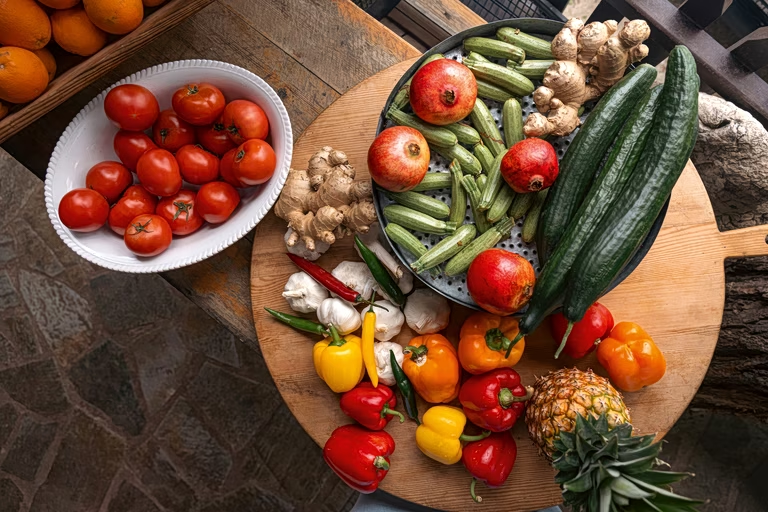
Their exceptionally fresh vegetables arrive at the restaurant every day, either from Eleni’s garden or from local producers. Photo: Alexandros Alexandris
Everything passes through their hands.
From the fresh salads to the spreads, everything is prepared by them in the kitchen.
Every day, the wood-fired oven is filled with pies as well as many of the cooked dishes that have now become signatures of the taverna.
There are chickpeas with eggplants; pork braised in tomato sauce with peppers and feta; eggplants baked with meatballs; stuffed zucchini flowers; lamb with potatoes; and even moussaka made with lamb—not minced meat from a grinder, but lamb finely chopped by hand with a cleaver.
The food is delicious, homemade and firmly seasonal.
In winter, soups appear on the menu, along with gigantes beans with pastourma, lentils with sausage and leek, and other slow-cooked dishes.
During major Greek holidays, traditional customs are honored, too.
“On Clean Monday we will make octopus with eggplants; on March 25, cod. We try to satisfy everyone in terms of flavor, without forgetting those who are fasting.”
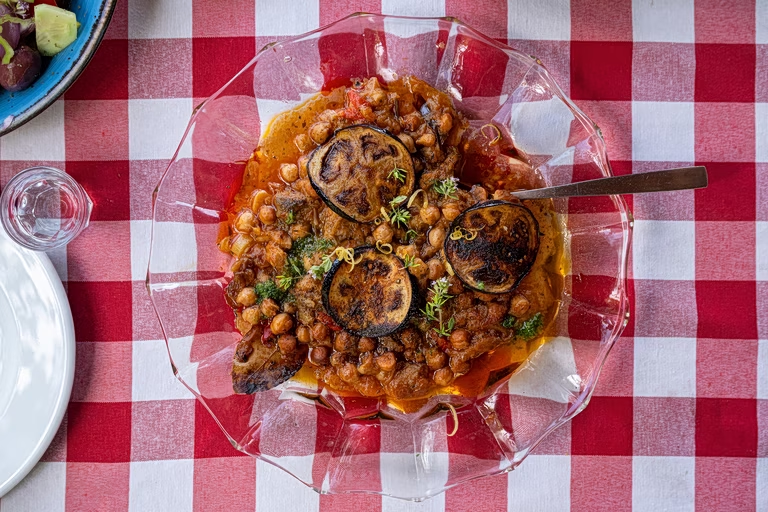
Stavroula and Babis have not changed much about the philosophy of the food. To distinguish themselves from the classic grill house, however, they added more cooked dishes and a wood-fired oven, which produces extraordinary dishes such as the chickpeas with eggplants, a favorite at Tsardaki. Photo: Alexandros Alexandris
Even the greens served at the table follow local tradition.
Vlita, a tender wild green commonly eaten in Greece, is served alongside sautéed zucchini shoots and cheese—recipes that are rarely encountered outside the villages of Thessaly.
The grill, of course, has never stopped being the star.
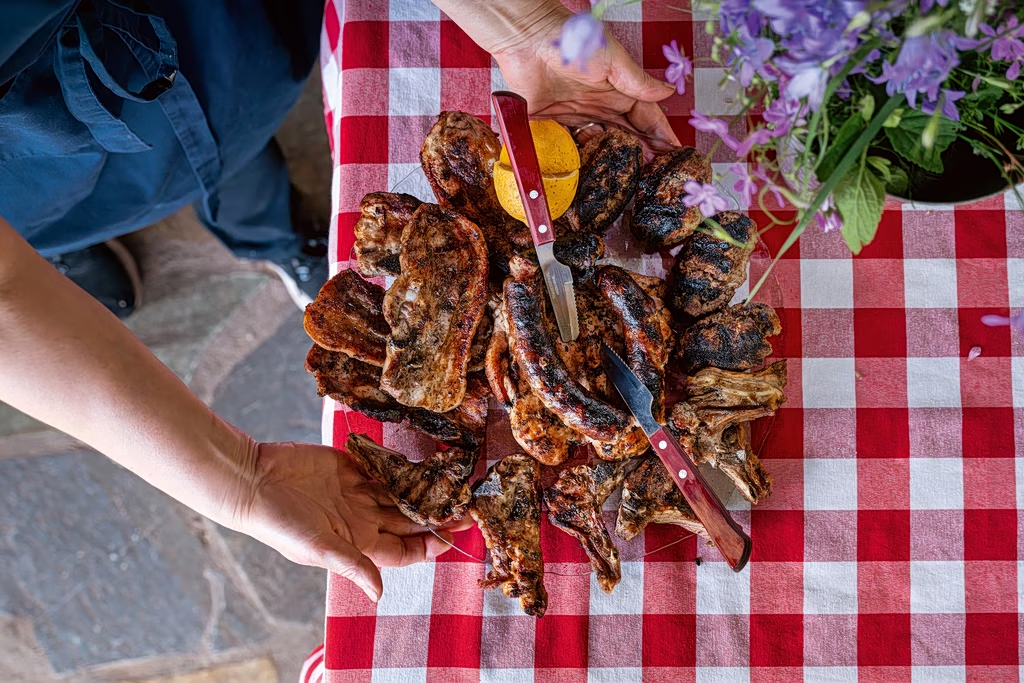
The lamb chops remain one of the favorite choices among visitors, just as they were in the days of Stavroula’s parents.
But today they coexist with a kitchen that is becoming increasingly creative.
Recently, for example, Stavroula made a wonderful rose-loukoumi ice cream—a flavor that had always reminded her of childhood and that she was determined to put on the summer menu.
“It had always been in my memory, but I couldn’t find a recipe anywhere that I liked. So I started experimenting, and eventually I made exactly what I had in my mind.”
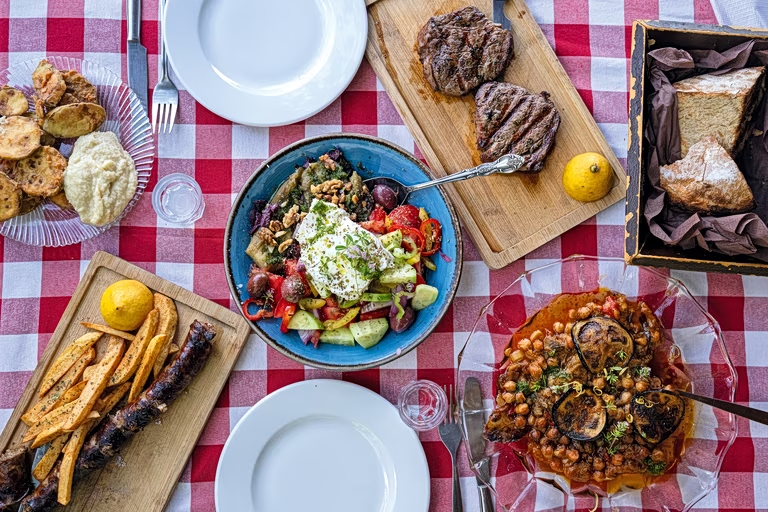
Everything we tried at Tsardaki was exceptional, from the grilled meats, salads and cooked dishes to the naturally leavened homemade bread. Photo: Alexandros Alexandris
Wine, grape must and recipes that refuse to disappear
At some point, the conversation moves beyond food and toward the land itself.
The vineyards. The grape must. The things that are still done as they were generations ago.
The family cultivates around 30 acres of vineyards, and Stavroula’s father still tends them with the same passion and love.
“We make wine, tsipouro and also retselia, the traditional sweet made with grape must and pumpkin. Every September, the large cauldrons are lit again in the courtyard and we all boil it together. It’s a process we don’t want to lose.”
Retselia are among those sweets that have almost disappeared from modern tables.
They are made from fresh grape must, pumpkin and walnuts and are one of the defining flavors of the wine-growing villages of Thessaly.
At Tsardaki, they are still prepared every year in the traditional way, after the grape harvest.
The wine served at the tables is also either their own or comes from small local producers.
“We don’t have a large collection of expensive labels from all over Greece. We are a taverna, and we want whoever comes here to learn about the wines of the region.
“The only thing we have that is different is a good retsina, and that’s because we believe retsina has a place in every Greek taverna. Besides, you don’t find it anywhere else in the world.”
She says this to emphasize how important solidarity within the local community is to the family: supporting one another and keeping the area’s producers alive.
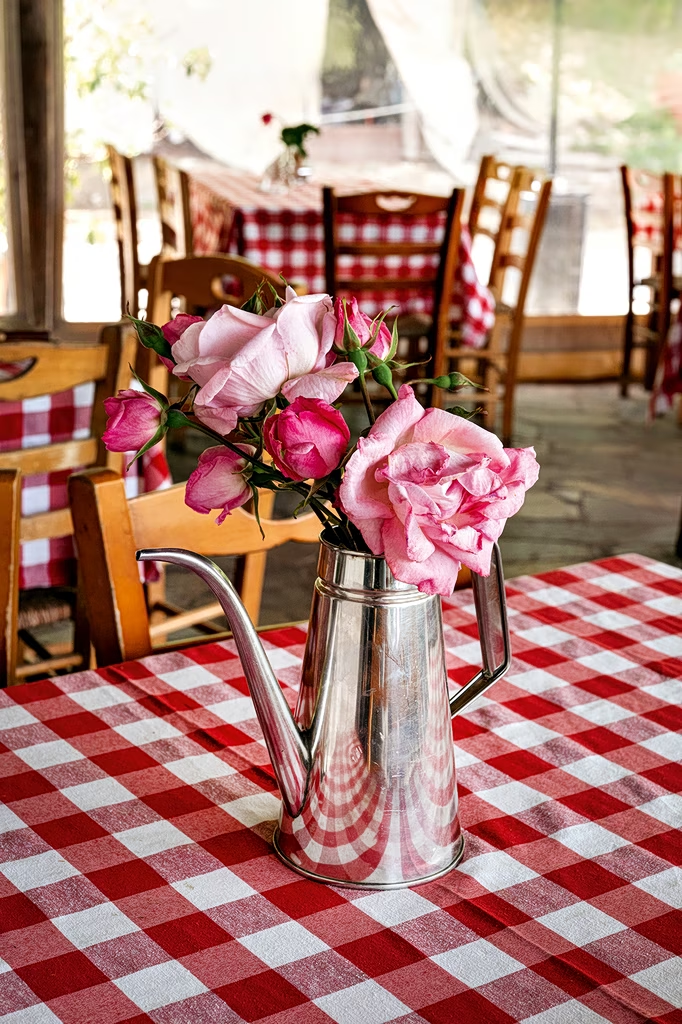
Personal care and love go into everything, from setting the table to the dessert that completes the meal. That is what every visitor experiences at Tsardaki. Photo: Alexandros Alexandris
A taverna that never really closes
Tsardaki is open throughout the year, closing for only a few days in July, so it can look after every hungry or tired traveler who comes through its doors.
In the courtyard stands a small chapel dedicated to Saint Seraphim, a remnant of the years of the Greek Civil War, quietly reminding visitors that this place has lived through far more than what we can see today.
Vasilis Korompilias still drops by the taverna and helps wherever he is needed.
Stavroula and Babis, meanwhile, barely leave their posts.
Their children, Marialena and Vasilis, are often there too. They are studying sports science at the University of Physical Education and Sport, but help with the family business whenever they can.
“They don’t like big cities. They want to stay here. Now, what will happen in the future, nobody knows,” Stavroula tells me.
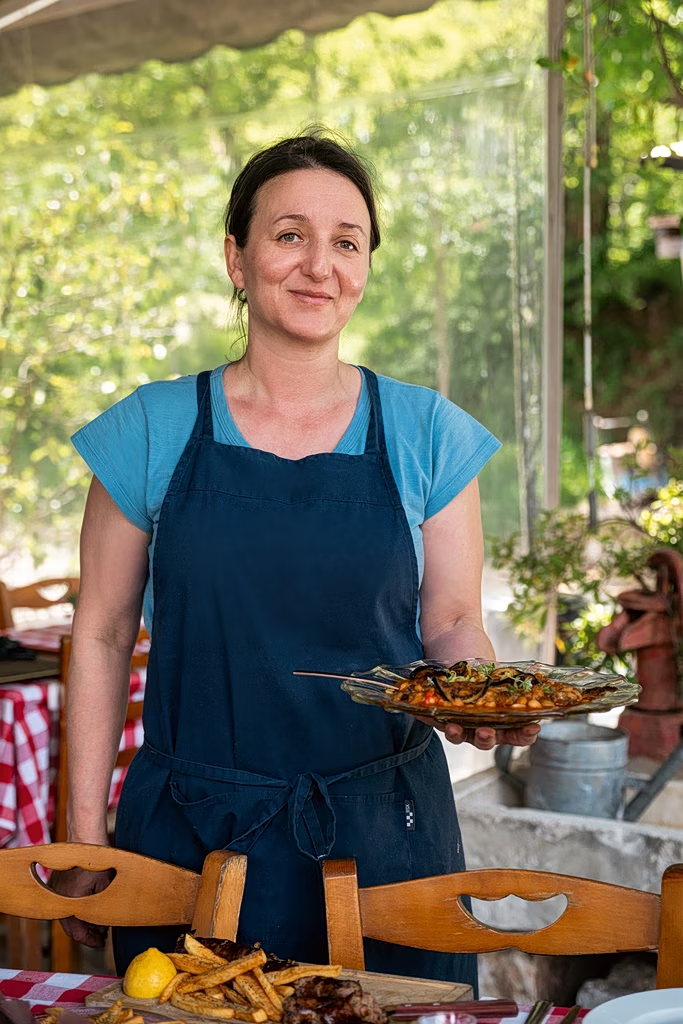
We will certainly return to Tsardaki, to see Stavroula’s warm smile again and enjoy all the delicious food that comes from her hands. Photo: Alexandros Alexandris
Worth the drive from Athens
Everyone loves Tsardaki, and everyone seems to have discovered it by word of mouth.
People come to eat here from Karditsa, Trikala, Larissa and Volos—and even from Athens.
That doesn’t surprise us at all.
It is beautiful up there. Away from the crowds, you feel more human.
We left full—not only of delicious food, but of warmth, hospitality and beautiful images.
And, naturally, we will return.
There is a grape harvest in September.
How could we possibly miss that?