 Μake us preferred on Google
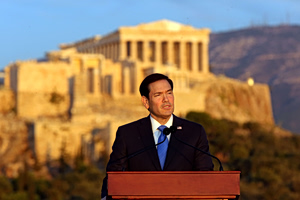
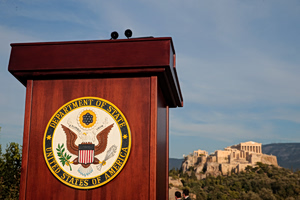
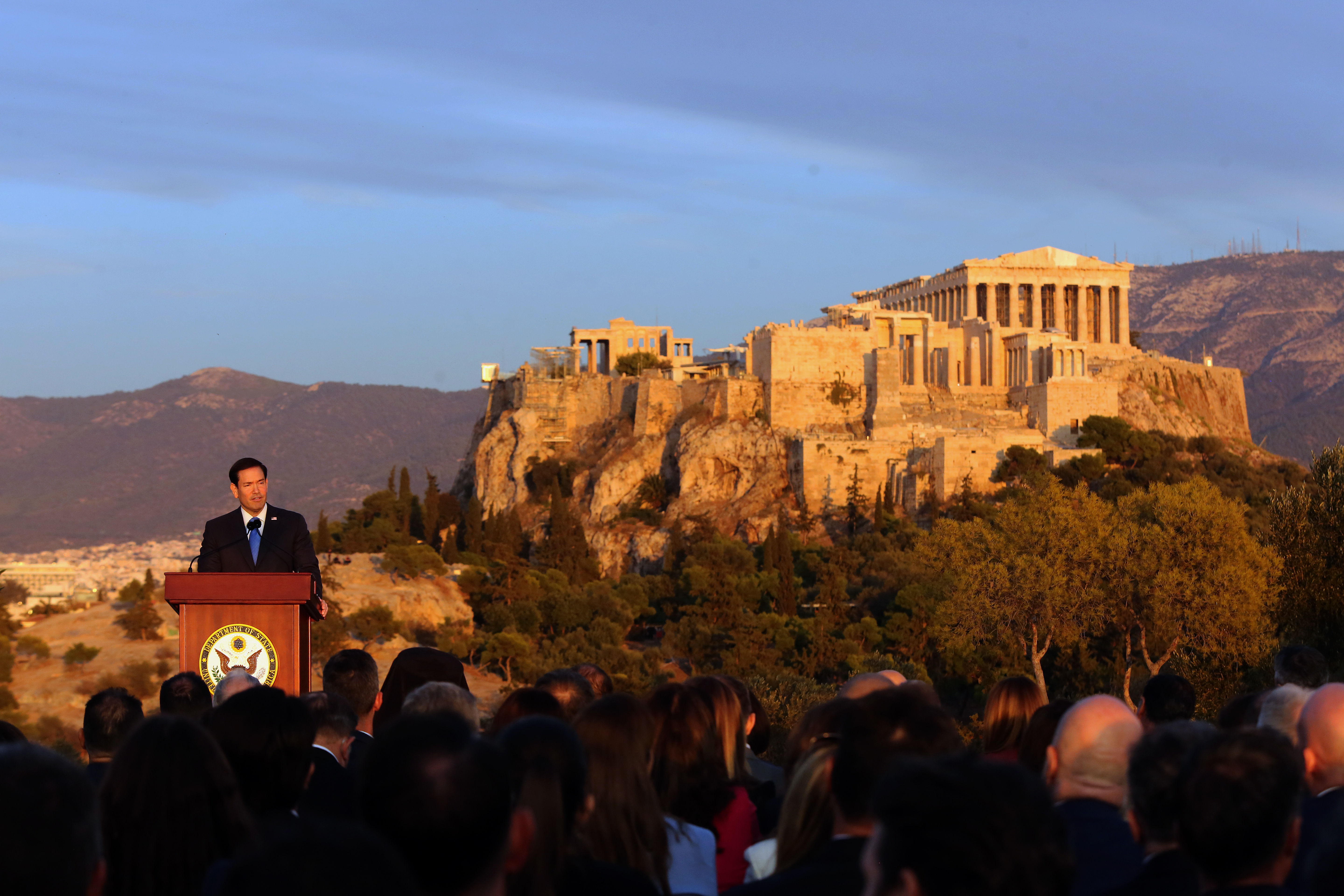
 Live your myth in Greece. With the Parthenon at dusk in the background, through close-up and panoramic shots, the myth serves as the perfect historical backdrop against which to build a political identity. If there is one thing Americans know well, it is show business, and their politicians also belong, in a way, to the world of entertainment. Roger Stone, the longtime Republican adviser and personal friend of Donald Trump until his first term in office, put it bluntly: “Politics is show business for ugly people.”
Marco Rubio is not ugly, and he also wields power, but he does not renounce spectacle. For a superpower to be unapologetic, as he put it — meaning that it does not apologize for its choices — it needs the allure of a global myth. Otherwise, it would amount to brute force. The amalgam of ancient Greece that the U.S. secretary of state presented at the Pnyx, in front of the Acropolis, which “has captivated the imagination of the Western world for thousands of years,” may not have been historically accurate, but it stirred people’s imaginations in the direction he wanted. The MAGA movement has not only the brutal side represented by Trump and J.D. Vance, but also a milder, more refined, more pro-European side, provided, of course, that “Europe awakens from its long slumber.”
The West has acquired its own crusader, one who holds it accountable, asking whether it “will maintain its position at the helm of the world or fatalistically accept a future of inertia, subservience and decline.” The United States has made its choice, he assured his audience.
Missing from his references to ancient Greece was Thucydides, who described the conflict between two city-states and two worlds in the Peloponnesian War. His account would have been closer than the examples Rubio cited to the thinking of Samuel Huntington and his “clash of civilizations,” which runs through Rubio’s worldview. In fact, he spoke of a “clash of civilizations” in 2015, following the attacks at the Bataclan and other locations in Paris. Back then, the threat was Islamist terrorism. Now it is China, and the United States wants “allies by our side.” In February, at the Munich Security Conference, he called on Europeans to work with the United States to create the “new Western century.”
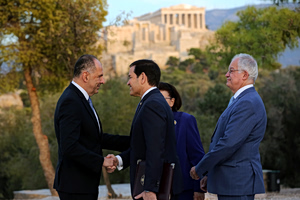
The Greek government, which never managed to open a channel of communication with Trump, who prefers Erdogan’s friendship, saw an opportunity to reach out to the man who may become the next U.S. president. The problem is that no one can predict whether Rubio will manage to secure the Republican Party’s nomination for the 2028 election. Trump has left the race open between Rubio and Vance, although it is well known that his son has allied himself with the vice president. Moreover, the U.S. president does not tolerate dissent and has not hesitated to oust powerful Republican candidates and replace them with others from the MAGA movement, even when they lose elections, as happened in Arizona, Pennsylvania, Michigan, Wisconsin, Maryland and Massachusetts. Rubio has a plan to strengthen his position. Our own government, meanwhile, alternately clings to America and Europe, driven by circumstances and lacking a consistent strategy.
For example, Rubio showed considerable interest in energy issues, the Vertical Corridor and arms procurement. The Greek side interpreted this interest — or at least presented it that way — as an expression of the possibility that the United States might intervene with Turkey to ensure that work on the Greece-Cyprus electricity interconnection cable could continue unhindered.
The U.S. secretary of state supported every project that diversifies the energy mix, but took care not to say anything that could be interpreted as a pointed criticism of Turkey. After all, the interconnection, if and when it is completed, will serve southern Cyprus. As for northern Cyprus, Turkey has announced that it will lay its own cable connecting it to the Turkish coast. If that happens, it would formalize the division of the island. Moreover, whenever this issue is discussed, one detail is forgotten: the contract that has been signed prohibits the French company from becoming involved in matters considered to be between states.
Before Rubio’s arrival, a meeting was organized in Athens at the nongovernmental level, with think tanks from the United States, Israel and Greece taking part. According to reports, the discussions focused on Turkey’s growing aggressiveness in the Eastern Mediterranean and the Middle East. American and Israeli analysts concentrated on what Greece’s position would be if Turkish-Israeli relations deteriorated. Although the possibility of an armed conflict between Greece and Turkey was ruled out, it was clear that they were exploring the potential for closer alignment, expressing their deeper concerns.
As for the €4 billion in arms procurement, the government insists that these purchases are necessary for the country’s security. The problem is that Greece is arming itself against Turkey, while America is strengthening its allies against China. In the broader picture, Turkey is not the United States’ strongest ally; India is, as it can serve as a counterweight to China. In addition, India’s vast diaspora is only now beginning to unite its forces, and it is expected to be able to exert influence in Britain and the United States in the near future. The Greek government invested in relations with India early on and plays a small role in IMEC, the India-Middle East-Europe Economic Corridor.
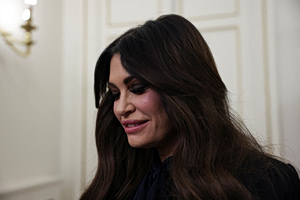
While the world of diplomacy is largely out of public view, the U.S. ambassador to Greece, Kimberly Guilfoyle, is making headlines in international media. Rubio offered her protection but did not conceal his irritation when questioned about the matter. And although she was constantly at his side, the ambassador was absent from every shot in the video he posted of his visit to Athens. Her behavior, which has departed from diplomatic protocol, has been the subject of commentary since the day she arrived in Greece, carrying herself like a star rather than a diplomat. Even at the event on the Pnyx, instead of welcoming her guests, she arrived shortly before her superior. Her own associate, Christos Marafatsos, is following in her footsteps.
In addition to her private business ventures, she has also signed a lobbying agreement with PPC’s U.S. subsidiary, for a fee of $60,000, although the services to be provided have not been specified.