 Μake us preferred on Google
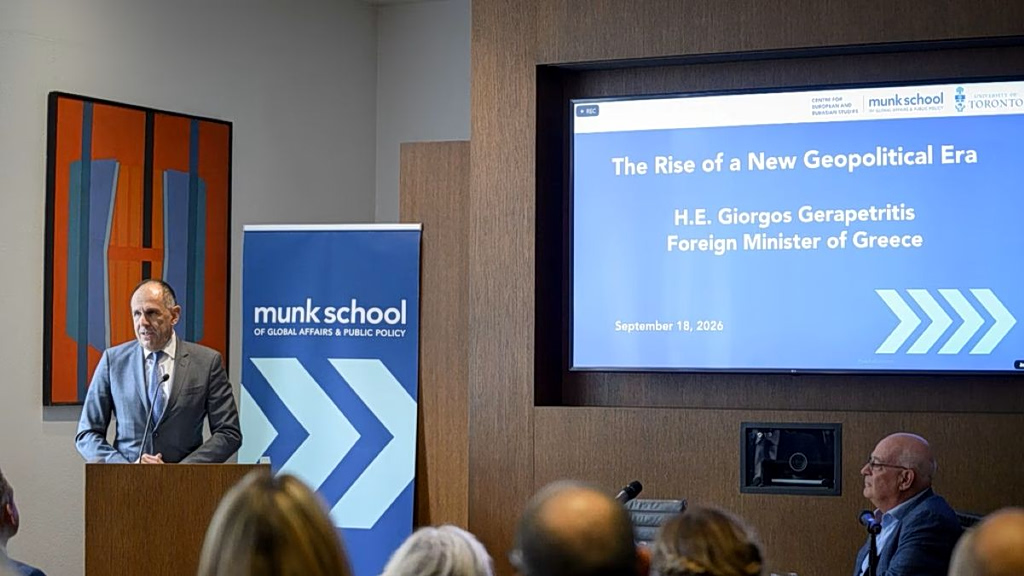
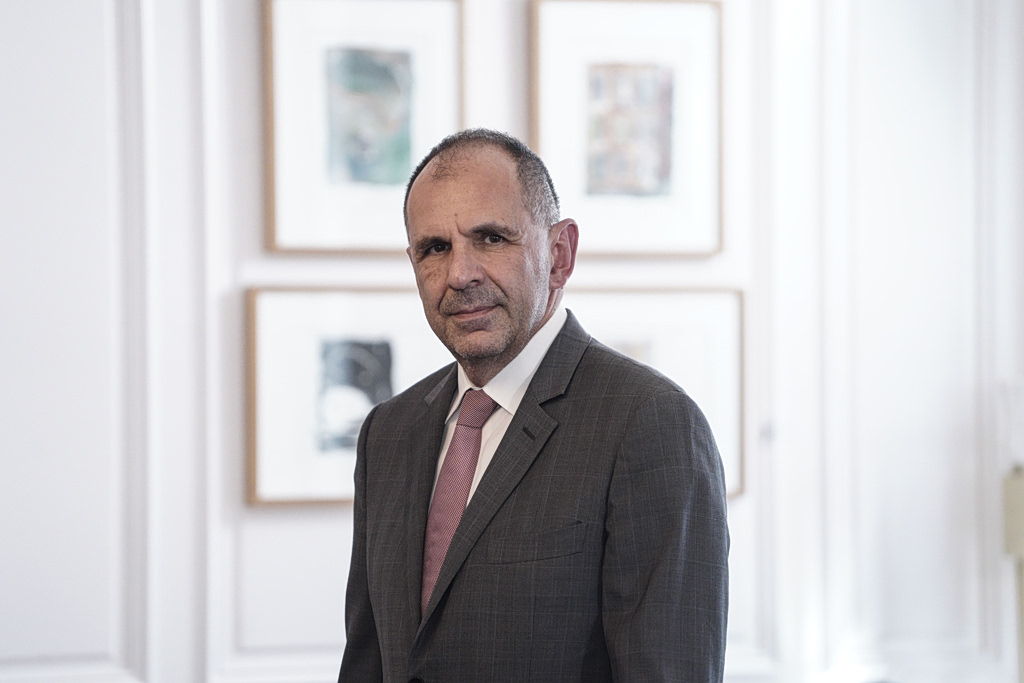
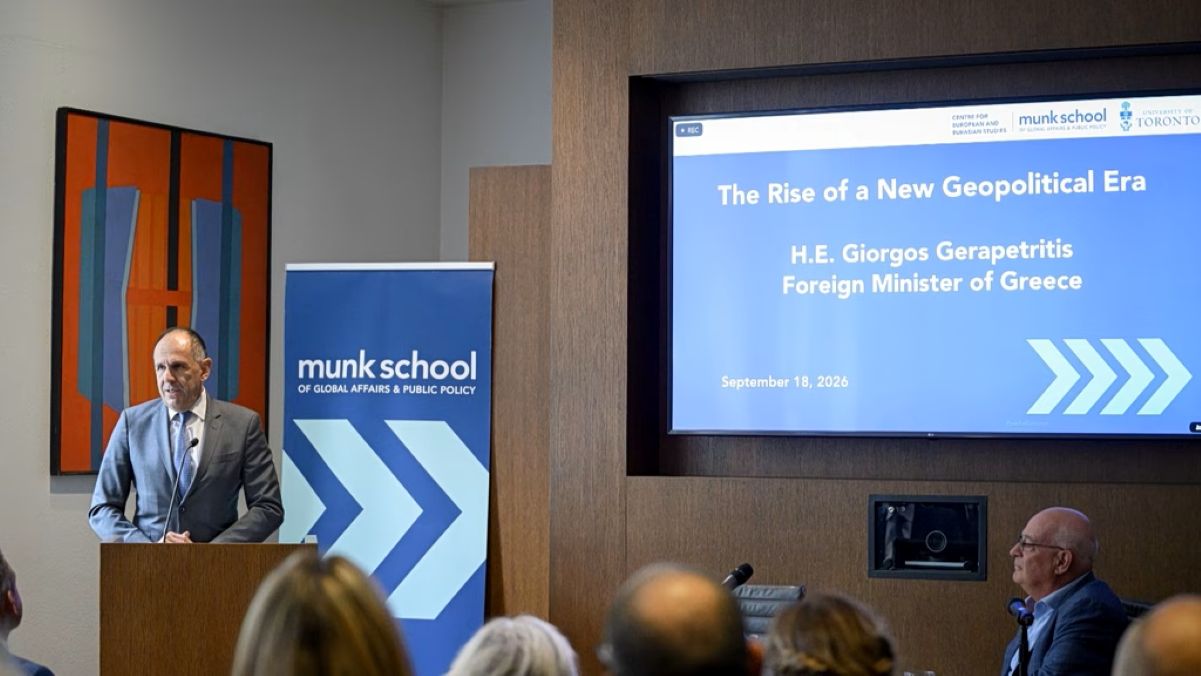
 Greek Foreign Minister George Gerapetritis said the world has entered a new geopolitical era in which power prevails over principle, describing the past three years as a geopolitical catastrophe. He spoke at the Munk School of Global Affairs and Public Policy at the University of Toronto, on Friday, Sept 18, in a lecture titled “The Rise of a New Geopolitical Era.”
“Everything that could go wrong has, in effect, gone wrong,” he said, calling this perhaps the worst time to be foreign minister of a small or medium-sized country like Greece. The minister described Greece’s non-permanent seat on the UN Security Council as a privilege, but said he would not have put forward its candidacy had he known the extent of today’s instability.
For the first time since World War II, Gerapetritis said, cascading crises and tectonic shifts are unfolding simultaneously. International law and multilateralism are in retreat, the rules-based security architecture is eroding, and new cross-regional alliances are forming as geography loses its place in diplomacy. Europe, he said, is evolving into a “Europe plus,” with Canada as its first associated partner.
He noted that more than 60 armed conflicts are under way worldwide, the highest number since 1945, and none stays within its borders. Events in the Gulf, the Red Sea and Saudi Arabia have created an unprecedented energy security problem, he stressed, while the collapse of Ukraine’s grain corridor and water scarcity are raising food security concerns.
Gerapetritis noted that artificial intelligence is driving a new industrial revolution and expects it to dominate the eight elections due in Europe next year, without adequate tools to counter it. Nearly 90% of people now get their news from social media, he added, undermining the integrity of information.
Turning to the United Nations, he said the General Assembly has failed to produce substantive resolutions on the 61 conflicts. He called for strategic autonomy and higher defense spending, and asked whether this marks the end of the post-war security order.
“We trusted the United Nations. The truth is that the organization did not deliver,” he said. “We have no alternative at the moment, and until we find one, power will prevail over principles.”