 Μake us preferred on Google
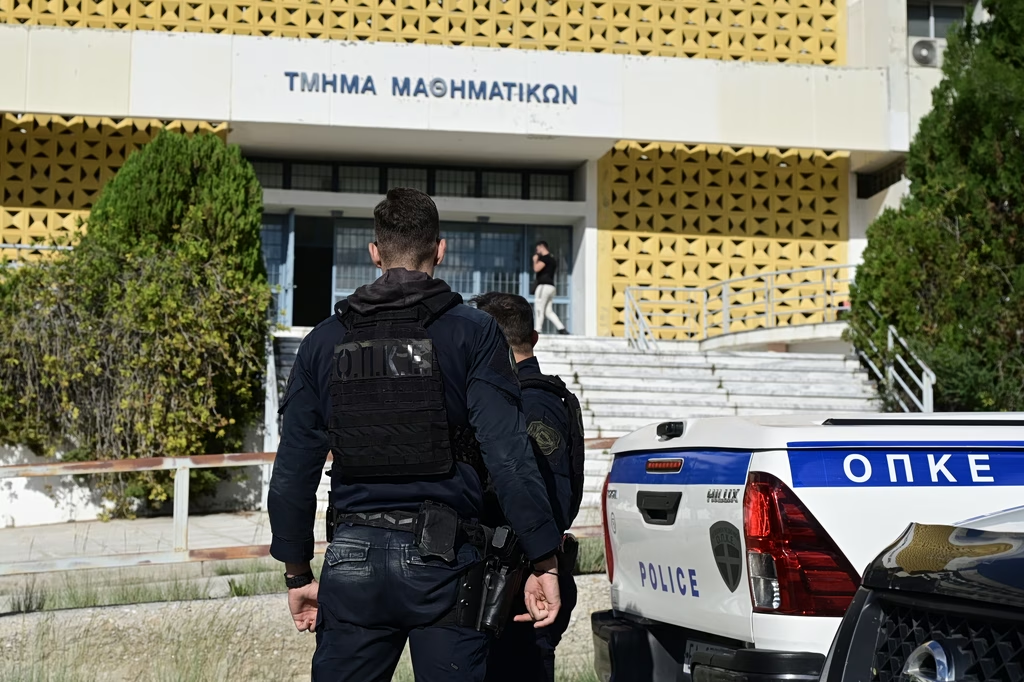
On the afternoon of Oct. 8, a 32-year-old man left his home in Elefsina, west of Athens, to walk his dogs. A short time later, he was found covered in blood after being stabbed. Two men, ages 18 and 22, have been charged with attempted murder and placed in pretrial detention as investigators examine whether the attack was politically motivated.
The victim, an antifascist activist, said the attackers recognized him and singled him out for his political beliefs. “We came after you because you’re a leftist, because you’re an antifascist, and we’re fascists,” they told him, according to his testimony.
Police found knives and far-right material during searches of the suspects’ homes, including a T-shirt bearing the name of Propatria, a far-right nationalist group that describes itself as a nationalist martial arts club, but some of its members previously belonged to Golden Dawn’s assault squads.
The stabbing is one of several incidents that have revived concerns about far-right violence in Greece, particularly the growing presence of extremist groups in schools and their efforts to attract young recruits.
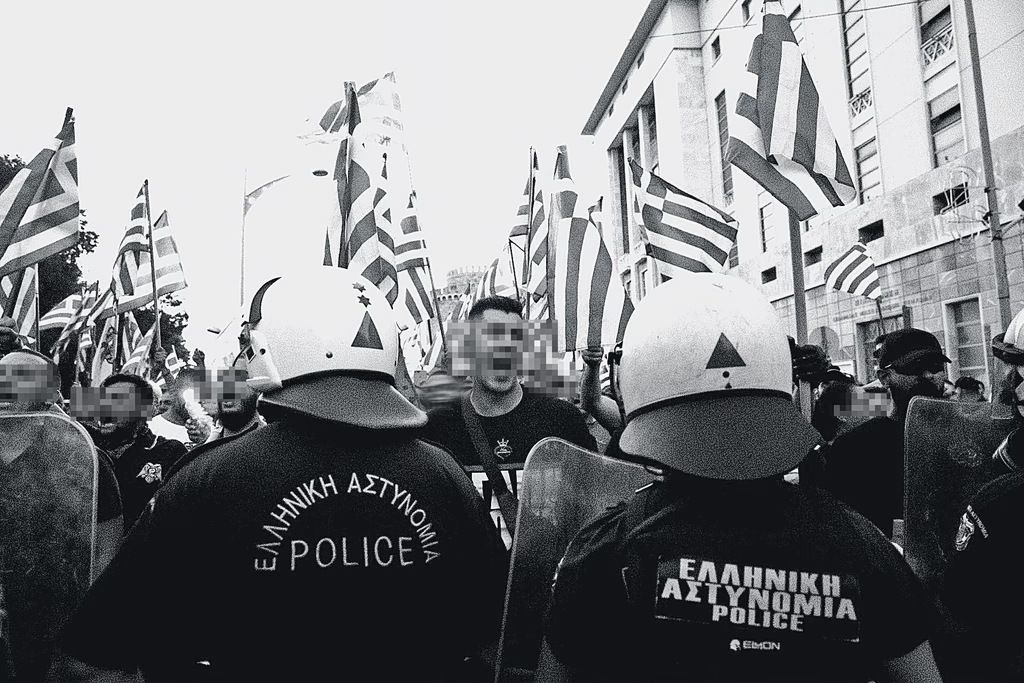
Last week, tensions erupted in central Thessaloniki over an event organized at a hotel by Ilias Kasidiaris, a former senior figure in the neo-Nazi Golden Dawn party who was recently released from prison after serving time for his role in the criminal organization. Police banned the planned antifascist demonstration involving hundreds of people and then attacked protesters, sparking a political backlash both inside and outside Parliament.
These incidents come 13 years after the murders of Pakistani migrant worker Shehzad Luqman and antifascist rapper Pavlos Fyssas by Golden Dawn members, with both killings having become emblematic of Golden Dawn’s campaign of violence. In 2020, a landmark court ruling found Golden Dawn to be a criminal organization and convicted several of its leading members. Yet reports of neo-Nazi activity in schools and neighborhoods suggest that the movement’s influence has not disappeared. The question now is whether far-right groups are gaining ground again or simply becoming more visible after years of operating outside the spotlight.
TA NEA spoke to survivors of Golden Dawn attacks, relatives of victims, lawyers, trade unionists and others familiar with far-right activity to examine what is happening and whether the warning signs are being taken seriously.
Magda Fyssa: ‘There Is Recruitment’
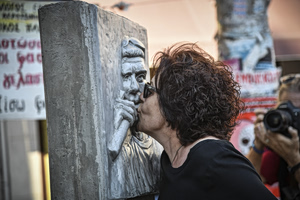
Magda Fyssa, the mother of murdered antifascist rapper Pavlos Fyssas, is among those warning that far-right organizations are actively recruiting young people. She visited the man injured in Elefsina after the stabbing. Although she declined an interview with TA NEA, she recently spoke about the attack on a television program hosted by Natasha Giamali on MEGA.
Fyssa drew parallels with the murders of her son and Shehzad Luqman, saying she believed neo-Nazi groups were still operating in an organized manner. “There is recruitment,” she warned. She also pointed to the fact that the Elefsina victim had survived. “This time we have an injured man, not a dead one,” she said.
Fyssa criticized the authorities’ handling of far-right violence and emphasized the importance of the swift response by antifascist campaigners following the attack.
‘Fascism Doesn’t End With a Court Ruling’
Dimitris Zotos, the lawyer who represented Luqman’s family, also sees the Elefsina stabbing as part of a wider pattern. “It wasn’t the first attack recently, but it was the bloodiest,” he said, citing incidents in schools and cities across Greece.
He sees troubling similarities with the murder of Luqman, a 27-year-old Pakistani worker stabbed to death in the Athens neighborhood of Petralona in January 2013. The two men convicted of his murder initially claimed that the stabbing followed an argument with the victim. Zotos said the suspects in the Elefsina case had offered a similar account. “It’s the same excuse: an argument in the street. And the same method: knives,” he said.
For Zotos, the crucial issue is whether investigators look beyond the immediate circumstances of an attack to establish whether it was politically or racially motivated, and whether those involved were acting as part of an organized group. He warned that the court ruling that found Golden Dawn to be a criminal organization, and the convictions of its leading members, did not mean the threat of far-right violence had disappeared. “One court ruling, two court rulings, however many convictions there may be, they’re not enough. Society has to remain vigilant,” he said.
Zotos also accused the government of helping normalize anti-immigrant rhetoric, arguing that such language is not confined to the far right. He pointed to Operation Xenios Zeus, a sweeping police crackdown on undocumented migrants launched in 2012, when migrants faced mass detentions and what he described as humiliating identity checks. The operation coincided with a period of escalating Golden Dawn violence.
‘This Is a Continuation’
Sotiris Poulikogiannis knows firsthand what Golden Dawn’s violence looked like. The president of the Attica Metalworkers’ Union was among a group of trade unionists affiliated with PAME, the Communist Party-linked labor movement, attacked by a Golden Dawn assault squad in Perama, near Piraeus, just six days before Fyssas was murdered.
“We know very well that a court ruling doesn’t put an end to fascism,” he said.
Poulikogiannis believes economic and business interests have helped keep far-right groups in reserve, ready to be mobilized when needed. He also rejects the idea that the recent incidents mark the emergence of something new. “What we’re seeing now is a continuation of what came before. It never really stopped,” he said. “These incidents aren’t isolated. They’re part of the same pattern.”
In his view, extremist groups are adapting to the present, looking to establish themselves in different schools and neighborhoods. He fears more attacks could follow. Young people are a particular concern, especially those who were children when Golden Dawn’s violence reached its peak in 2013. “There’s a reason fascists always target young people, trying to fill their heads with these ideas,” he said. He believes teaching young people about that history and challenging extremist ideas in schools and other youth spaces are essential to preventing further recruitment.
Neo-Nazi Symbols and Slogans in Schools
Reports from schools around Athens offer a glimpse of how far-right ideas are circulating among some students.
At a high school in Nea Filadelfeia, a suburb of Athens, students recently proposed hanging a banner on Nov. 1 to commemorate two Golden Dawn members who were shot dead in Neo Iraklio in 2013. “They died too. They’re heroes too,” the students reportedly argued.
A parent at the school described another incident involving girls in the school choir who posted a TikTok video of themselves rehearsing “Accordion,” a song associated with resistance to fascism. Their video was accompanied by the caption: “We used to fight fascism. Now we vote for it.” Some students responded with abusive comments, including insults, and calling the girls “commies”. The parent believes a small group of five or six students is behind the incidents but is concerned about possible links to organized far-right groups.
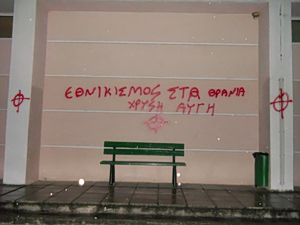
Similar incidents have been reported elsewhere. In November 2025, some students at the 1st Vocational High School of Petroupoli attempted to disrupt commemorations of the 1973 Athens Polytechnic uprising against Greece’s military dictatorship by taking over the school premises. A banner also appeared at the school bearing the slogan “No to the Polytechnic Myth,” along with Golden Dawn’s “signature”.
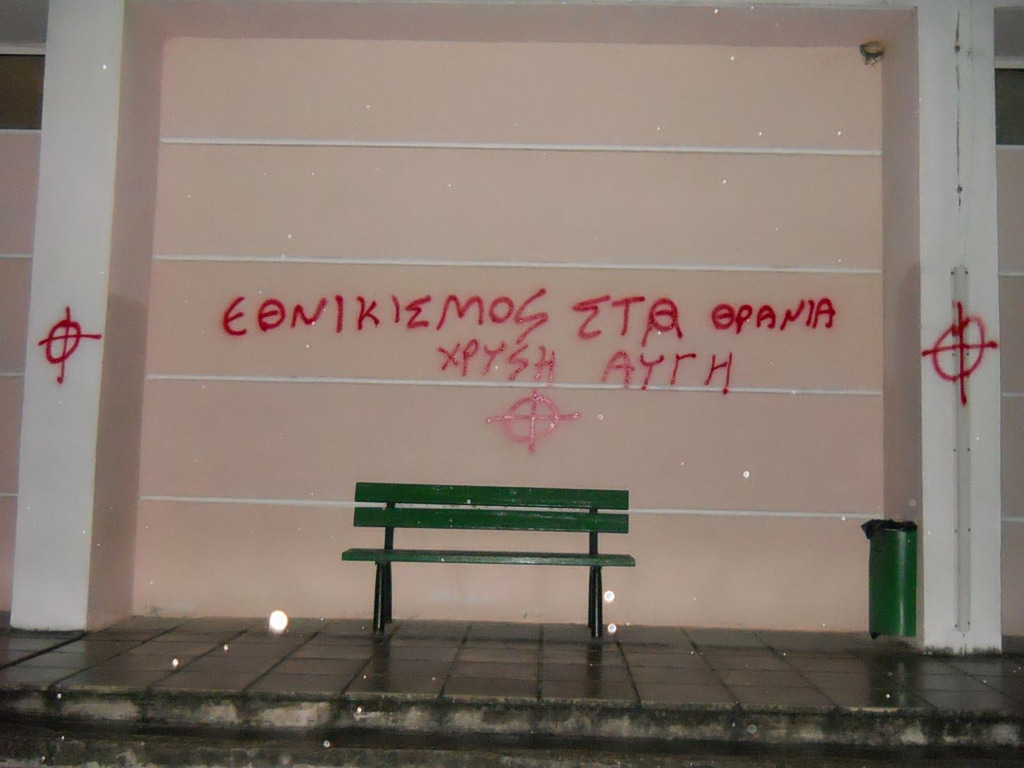
Around the same time, swastikas and Nazi slogans were found on the walls of the 1st General High School of Peristeri. A banner put up by students to mark the Nov. 17 anniversary of the Polytechnic uprising was also taken down.
More recently, in October 2026, the Antifascist Education Network reported violent incidents at two vocational high schools in Athens’ Grava school complex, where students had taken over the premises. According to the organization, some of those occupying the schools vandalized property and threw stones at students from a neighboring school. Photographs of Kasidiaris were also reportedly used as wallpaper on interactive classroom displays.
Far-Right Groups Regrouping in Neighborhoods
The antiracist organization Movement United Against Racism and the Fascist Threat (KEERFA), has warned that far-right networks are rebuilding their presence in schools and neighborhoods. In a written response to TA NEA, the organization linked the Elefsina stabbing to Kasidiaris’ release from prison and described the attack as a sign of escalating fascist activity.
KEERFA also criticized the government’s immigration policies, citing conditions at the migrant detention facility in Sintiki, northern Greece, and plans announced by Citizen Protection Minister Michalis Chrysochoidis for police operations to remove migrants from overcrowded apartments in the Athens neighborhood of Agios Panteleimonas. It also argued that the failure of police and judicial authorities to confront Golden Dawn before 2013 had allowed the organization to expand its activities and become increasingly violent.
Inside Greece’s Far-Right Networks
The two men accused of the Elefsina stabbing are believed to have ties to Propatria, an organization that presents itself as a “nationalist sports club.” Propatria is closely associated with another far-right group, Autonomous Nationalist Youth Athens. Its members attacked an antifascist event in Neo Iraklio in 2021, while both organizations have been linked to clashes at the Monastiraki railway station in central Athens in November 2023.
Groups operating under the “Autonomous Nationalists” name have also appeared elsewhere in Greece. Similar organizations have been active in Chania, on Crete, and Argos, in the Peloponnese. A newer group, Autonomous Nationalists Thessaloniki, has established a presence mainly in the western districts of Greece’s second-largest city.
All these groups have publicly expressed support for Nationalist Youth of Thessaloniki, known by its Greek acronym ENETH or by the name Defend Salonica. In July, ENETH members were convicted on charges ranging from assault and gang activity to weapons offenses and property damage. The case involved attacks on left-wing organizations that members later boasted about on social media. According to court documents, some of the defendants were admirers of Kasidiaris and had made plans to meet him in Athens.
Links to Earlier Attacks in Thessaloniki
According to Greek police, ENETH members were involved in violent incidents at schools in the western Thessaloniki districts of Stavroupoli and Evosmos between 2021 and 2022. A confidential counterterrorism report that became public in 2023 traced the group’s origins to former members of Ieros Lohos (Sacred Band), another far-right organization active in northern Greece. The report said ENETH was established by members who wanted to pursue more aggressive tactics.
Ieros Lohos had previously been involved in clashes surrounding Pride events in Thessaloniki and had campaigned against mandatory COVID-19 vaccination. The connections reach back further still. At least two defendants in the ENETH case heard in court this summer had previously been linked to the 2018 attack on Yiannis Boutaris, then mayor of Thessaloniki, near the city’s White Tower.
Source: TA NEA