 Μake us preferred on Google
The issue was raised in the House of Lords on Tuesday by independent peer Earl of Clancarty, who asked whether the government had considered proposals for the permanent return of the sculptures.
Responding on behalf of the government, Culture Minister Baroness Twycross said no such assessment had been undertaken, while welcoming the ongoing discussions between the British Museum and Greek officials.
“The government has no plans to change the law or introduce legislation to permit the Parthenon sculptures to be returned permanently,” she said.

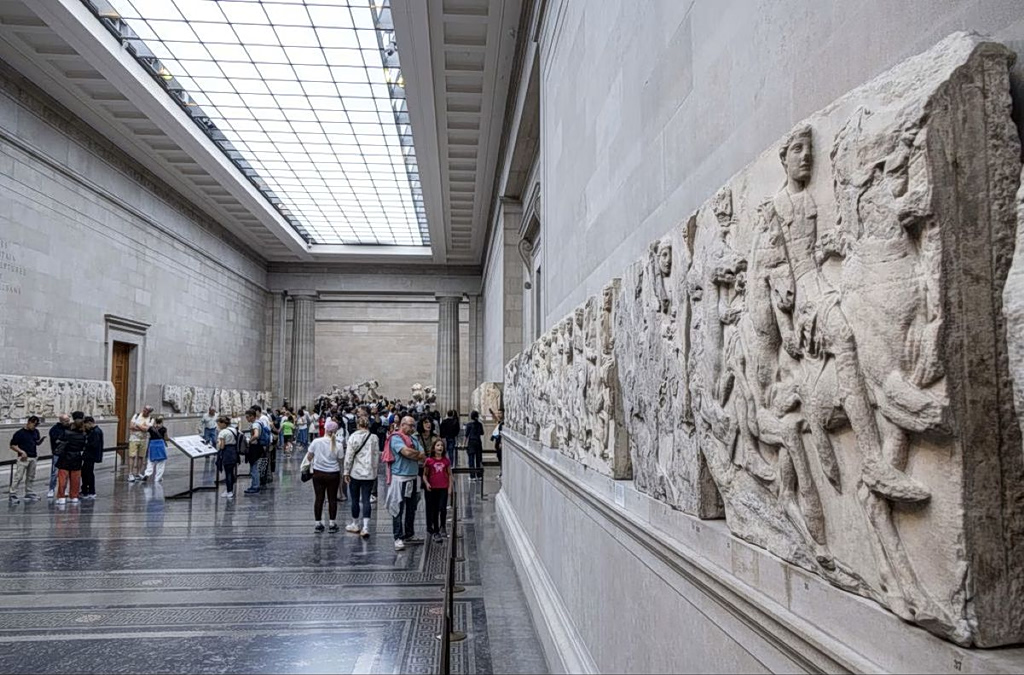
People view examples of the Parthenon sculptures on display at the British Museum in London, Britain, November 29, 2023. REUTERS/Hannah McKay
Clancarty argued that the case for reunification was not merely a legal or national question but also an artistic one. Comparing the sculptures to Pablo Picasso’s Guernica, he asked how the public would react if the painting had been dismantled and its sections exhibited in different museums.
He called for a limited amendment to the British Museum Act 1963 that would allow the institution itself to decide on the sculptures’ future.
Labour peer Lord Dubs also supported their return, asking whether the existing legislation permitted such a decision or whether new legislation would be required.
Twycross explained that the 1963 act prohibits the permanent disposal of objects from the museum’s collection, subject to limited exceptions, including duplicate items and objects deemed unfit for retention. She reiterated that the museum would consider a loan request provided Greece acknowledged its ownership of the sculptures and guaranteed their return.
The debate exposed divisions among peers. Labour’s Baroness Chakrabarti challenged the logic of a loan, asking whether Britain would accept such an arrangement if its Crown Jewels had been taken abroad.
Liberal Democrat peer Baroness Hussein-Ece stressed that Greece had been seeking the sculptures’ return for decades, describing them as an integral part of the country’s cultural heritage. She also pointed to the Acropolis Museum, inaugurated in 2009, which was specifically designed to accommodate the reunited sculptures.
Conservative peer Viscount Hailsham opposed their return, arguing that it could set a precedent for the repatriation of other antiquities held in British museums.
The British Museum Act 1963 is central to the dispute. It restricts the museum’s trustees from permanently disposing of objects in its collection, although Parliament could amend the legislation. The British government, however, has repeatedly ruled out such a change.
The museum’s chairman, George Osborne, has advocated a long-term partnership under which the sculptures would be displayed alternately in Athens and London, potentially alongside rotating exhibitions of Greek antiquities in Britain. He has also cited the successful loan of the Bayeux Tapestry from France as a possible model for cultural cooperation.
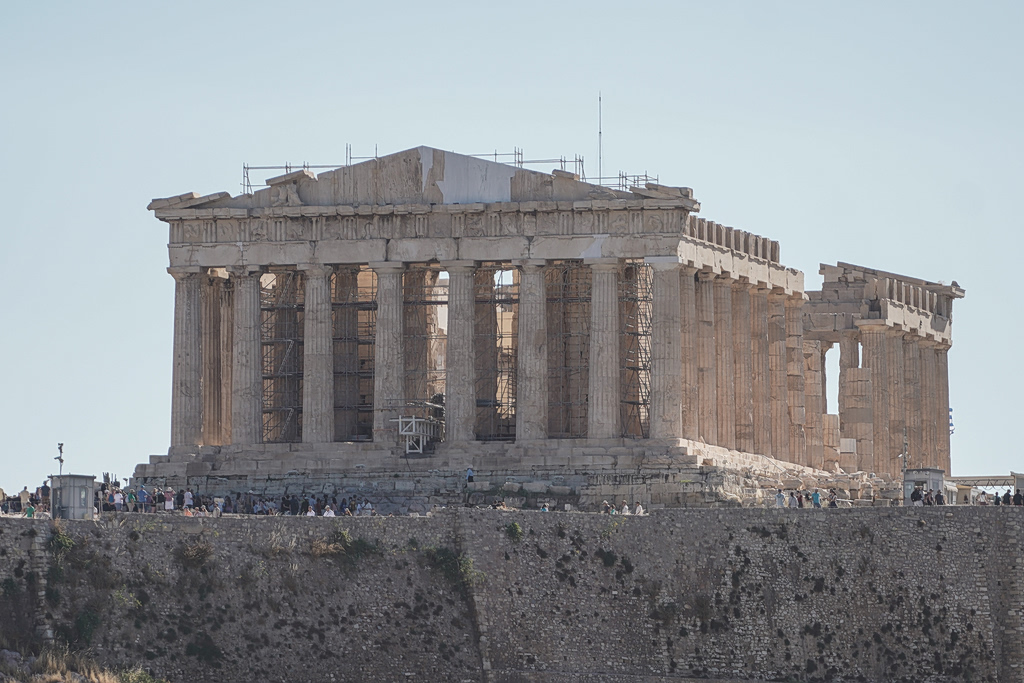
Completion of the restoration of the western pediment of the Parthenon and removal of the external scaffolding from the western façade of the temple, on the Acropolis, Athens, on June 19, 2026.
Negotiations between the two sides, which began in 2021, have repeatedly encountered difficulties over the question of ownership and the legal framework for any agreement. Although reports in September suggested that the talks had stalled, the latest statements from the British government indicate that discussions remain open.
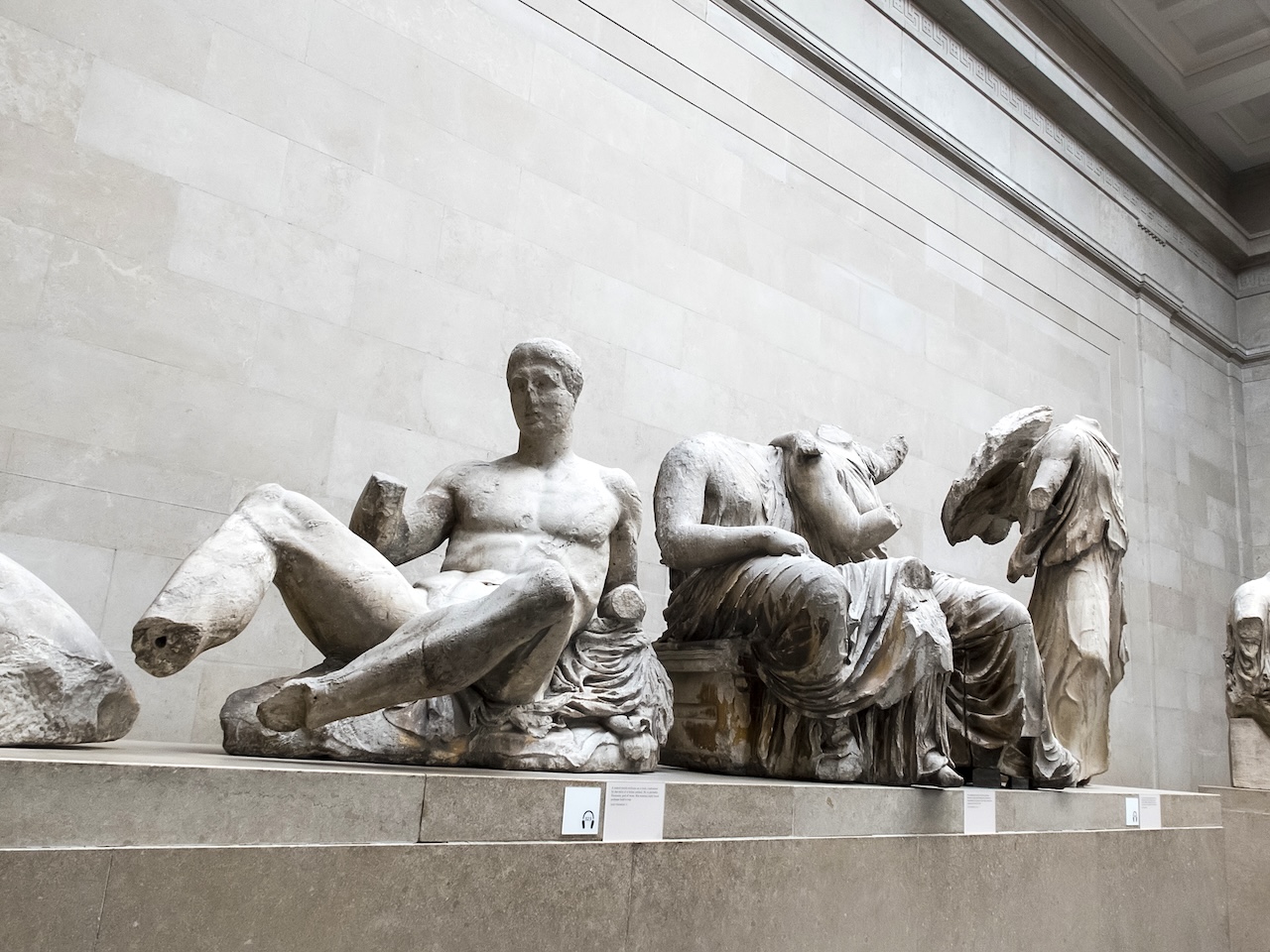
The sculptures, removed from the Parthenon by agents of notorious Lord Elgin in the early 19th century, remain divided between the British Museum and Athens, with fragments also held by other European institutions.
Greece has maintained its campaign for their reunification for decades, arguing that they form an indivisible part of one of the world’s most significant monuments.