
 Μake us preferred on Google
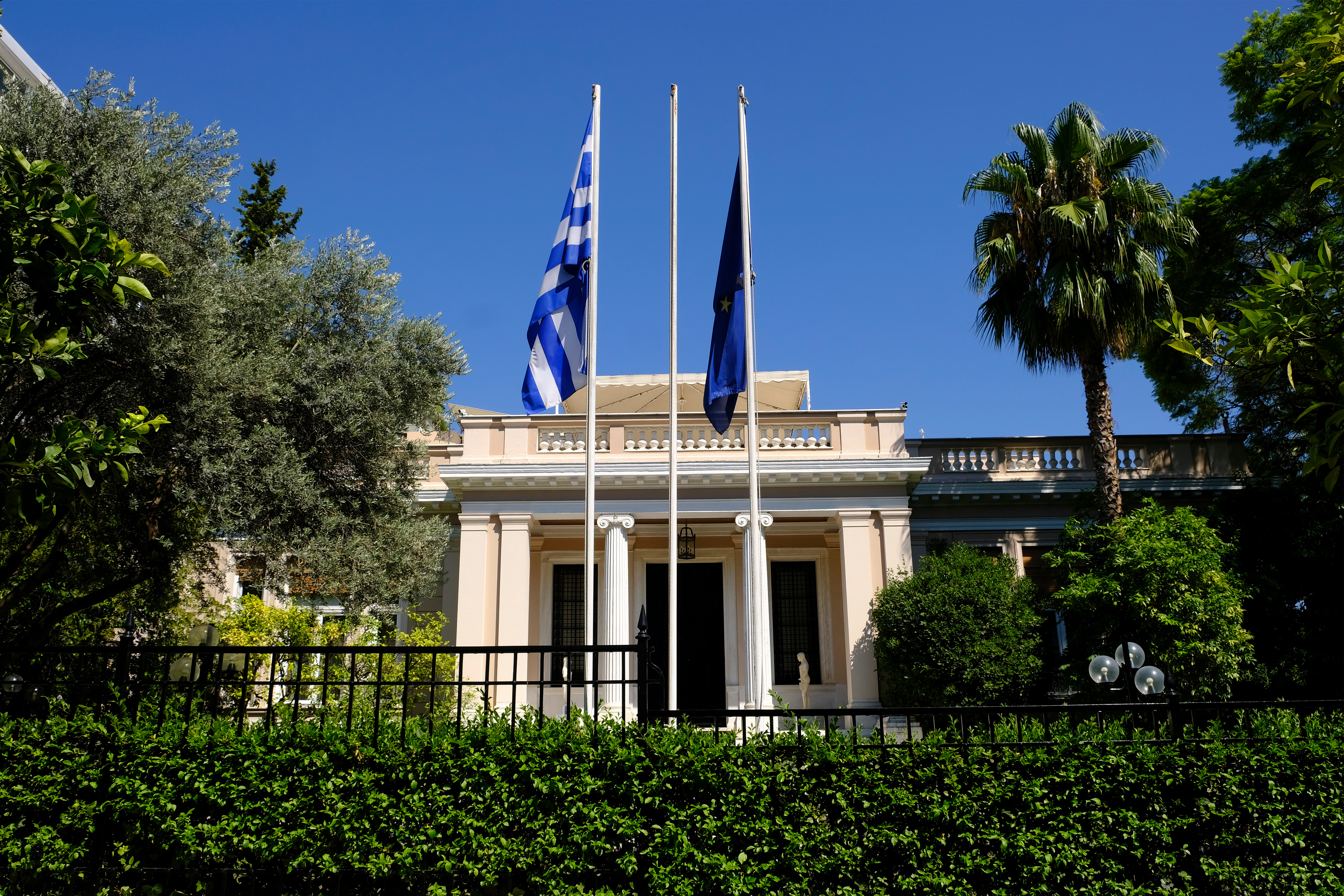
The Democrats’ “blue wave” swept across Washington, and its political aftershocks are reaching the Maximos Mansion. The Republicans’ major defeat in the midterm elections is changing the political landscape in the United States — and, with it, Athens’ diplomatic calculations.
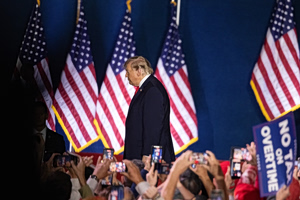
The Democrats secured majorities in both the House of Representatives and the Senate, depriving President Donald Trump of the congressional dominance he had enjoyed until now, without stripping him of his considerable presidential powers.
In Athens, the government is neither celebrating Trump’s defeat nor considering a change in its approach to the White House. Instead, its attention is turning to the new centers of influence in Congress and the opportunities created by the shift in political power.
“The government’s task now is to make the most of Washington’s new political landscape without disrupting its strategic relationship with a president who may have lost Congress but still holds the keys to the White House,” a New Democracy lawmaker told TO BHMA in the aftermath of the results.
The government spokesman, Pavlos Marinakis, set the tone as early as Wednesday morning, emphasizing that the United States remains a strategic ally of Greece and that the agreements and major projects linking the two countries will not be affected by the American voters’ verdict.
“Nothing will be affected by this result,” he said, while also indicating where the government’s attention is now focused. Several individuals with whom Athens already maintains “very good relations” are expected to take up positions on key congressional committees.
The remark was far from incidental. It underscored that Greece’s connections in the US capital are not limited to Trump’s political circle but also extend to the Democratic camp, giving the government greater flexibility in navigating the new political reality.
Mitsotakis’ outlook and the Trump question
The Republicans’ electoral defeat did not catch Prime Minister Kyriakos Mitsotakis off guard. On the eve of the vote, he had already acknowledged the possibility of a major shift in Congress, pointing to rising living costs as a key source of American discontent — and, above all, to the gap between the economic prosperity promoted by the White House and the everyday reality facing households.
Mitsotakis nevertheless refrained from predicting the outcome, stressing that Greek-American relations have deep roots and enjoy bipartisan support. In his view, this would ensure that a change in the balance of power in Congress would not work against Greek interests.
More than the Democrats’ victory itself, however, it is Trump’s own response that is raising questions about what comes next. Mitsotakis described the US president as “certainly not the most predictable politician,” acknowledging the uncertainty surrounding his decisions.
The prime minister also made clear that Athens is preparing for the possibility of renewed military escalation in the Gulf. A resurgence of conflict could trigger further turbulence in international energy markets and put additional pressure on the economy.
The weakening of the US president at the ballot box does not necessarily mean he will adopt a more moderate policy. The Greek government must therefore assess not only the moves of the victorious Democrats but also the reactions of a president who has lost control of Congress.
Democratic connections and a difficult two years ahead
For the Maximos Mansion, the next phase will involve maintaining close ties with the US presidency while strengthening Greece’s presence in the new centers of power. Athens wants to keep Greek-American relations insulated from the United States’ domestic political disputes.
Cooperation in defense, energy and security in the Eastern Mediterranean remains a firm priority. Contacts with congressional leadership and committees responsible for foreign policy and security are also taking on greater importance.
The bipartisan support Greece has cultivated over the years is a significant diplomatic asset at a time when the White House and Congress are controlled by opposing political camps.
Their coexistence, however, points to two difficult years ahead in Washington. Democrats will have the ability to block legislative initiatives, intensify congressional oversight and put greater pressure on the US administration’s decisions.
Trump, meanwhile, retains considerable room to maneuver in foreign policy, leaving open the possibility of more unilateral initiatives and sharper confrontations with his political opponents.
Greek diplomacy must therefore navigate a more complex environment, making use of new opportunities for cooperation without jeopardizing the relationships it has already built. The American “blue wave” may have shifted the balance of power in Washington, but it has not changed Athens’ strategic priorities.
What New Democracy lawmakers told TO BHMA
On Wednesday, the so-called Trump-aligned members of the New Democracy party were conspicuously absent from the debate. More progressive and centrist members of the governing party acknowledged that the results across the Atlantic had come as no surprise, describing them instead as expected.
New Democracy lawmakers, unsurprisingly, do not share a single view of developments in the United States. Those on the party’s right see the outcome as a personal defeat for Trump.
“He has made a complete mess of things,” a senior parliamentary figure told TO BHMA, arguing that Trump’s back-and-forth on foreign policy and erratic approach had raised questions about his handling of international affairs.
“He failed to explain adequately to the public that, in the Middle East, we are going there to protect the West,” a New Democracy lawmaker said, adding that Trump’s many statements had created a contradictory debate.
But the issue, according to the lawmaker, was not limited to the contradictions surrounding the Middle East or the failure to achieve the broader objective the US president had set out. The shifting positions on the war in Ukraine also played a role.
The same New Democracy lawmaker believes the results cannot be attributed to the economy alone.
Another lawmaker, elected in a provincial constituency, offered a different assessment. “People everywhere in the world vote according to what is in their pockets,” he said succinctly.
“The results of the midterm elections were disastrous for Trump and the Republicans. They lost seats they had held for almost a century,” said another New Democracy lawmaker familiar with the geopolitical landscape.
“The Democrats’ victory was essentially a reaction to Trump’s policies,” he said. “The primary reason for the defeat was high inflation. Americans expected Trump to deliver better living conditions and instead found themselves paying twice as much for gasoline.”
“Second, and related to the first, was the ill-fated war with Iran. Despite Trump’s claims, Tehran held out and inflicted serious damage on the American military machine and on US allies in the Gulf,” he added.
He also pointed to implications for Greece. “As far as we are concerned, Trump’s unpredictability is always a risk, particularly for Greek-Turkish relations, given the president’s tendency toward personal diplomacy and the admiration he shows for [Turkish President Recep Tayyip] Erdogan.
“We must remain cautious throughout the coming period and also monitor US-European relations, which are at a low point.”
He nevertheless described the election of one senator and six members of the House of Representatives from the Greek-American community as “particularly encouraging.”
“These people are valuable in advancing Greek positions within the US administration, and we must make the fullest possible use of them,” he said.
A New Democracy lawmaker from the so-called millennial generation said that, judging by the victory speeches, the vote appeared to reflect a sense of relief at the prospect of an end to unpredictability — an unpredictability that, in his view, creates inequalities and limits opportunities for everyone to advance.
“The US midterm elections send an important message about how democracy works and the importance of institutional checks and balances. The strong presence of Democrats in the House of Representatives and the Senate reflects the will of a significant part of American society for meaningful parliamentary debate, oversight and balance in the exercise of power,” another lawmaker said. He is a longstanding member of the New Democracy party.
“The United States is a strategic partner of Europe. Our relationship does not depend on shifts in political power but is based on shared historical ties, values and mutual interests. What matters today is strong democratic institutions, respect for the popular verdict and the continuation of close cooperation,” he added.
Finally, another lawmaker from the party’s right wing questioned whether the results amounted to a “blue wave.”
“I see a message from the American people to Trump, mainly about the economy and his involvement in the war. Depending on how he interprets it, developments will affect everyone. In other words, it will depend on how he handles the war, which has a global economic impact,” he said.