

 Μake us preferred on Google
Greece has formally reiterated its objections to the 2019 Turkey-Libya maritime agreement in a letter to United Nations Secretary-General António Guterres, following its approval by Libya’s eastern-based House of Representatives last month.
The letter, sent on October 22 by Greece’s Permanent Representative to the UN, Ambassador Aglaia Balta, on instructions from Foreign Minister George Gerapetritis, was subsequently circulated as an official UN General Assembly document under the heading of the law of the sea (A/81/455).
Athens maintains that the memorandum, which seeks to delimit maritime jurisdiction areas between Turkey and Libya in the eastern Mediterranean, is incompatible with international law and cannot produce legal effects for third countries.
The Greek position is that Turkey and Libya do not have opposite or adjacent coastlines that would provide a legal basis for the delimitation, while the agreement disregards the maritime entitlements of Greek islands, particularly Crete and the Dodecanese.
The circulation of the letter formally places Greece’s objections on the UN record but does not constitute a UN ruling on the agreement or an endorsement of Athens’ legal arguments.
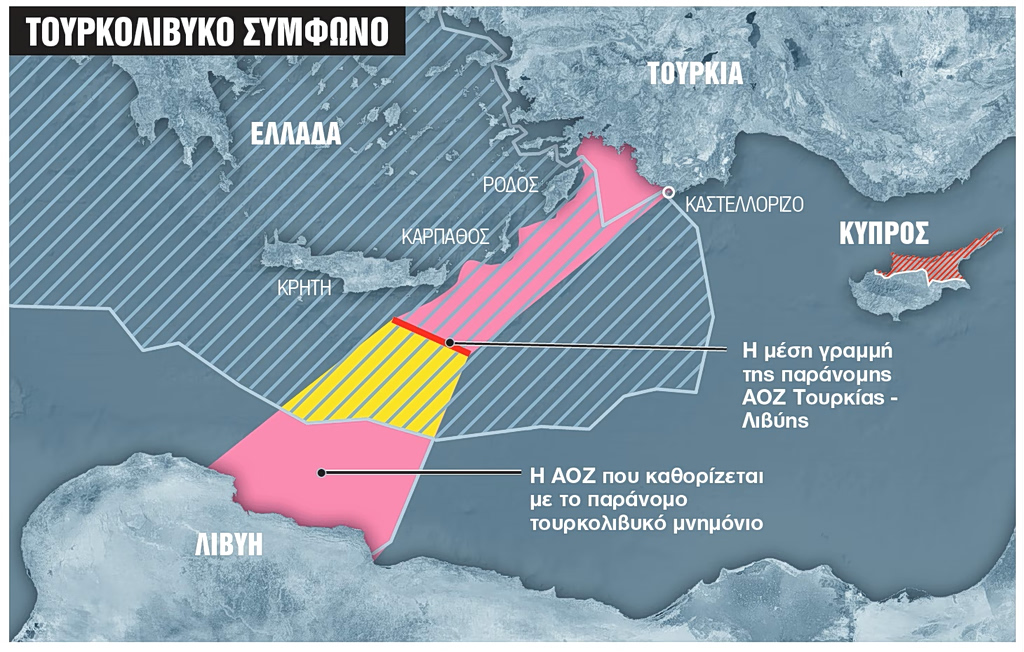
Libya’s parliamentary decision revives maritime dispute
The Greek diplomatic initiative follows the October 20 decision by Libya’s eastern-based House of Representatives to approve the 2019 memorandum, reversing its previous opposition to the agreement.
The memorandum was originally signed in November 2019 between Turkey and Libya’s then internationally recognized Government of National Accord, based in Tripoli. The eastern-based parliament, aligned with military commander Khalifa Haftar, had rejected the agreement and withheld its approval for years.
The October vote also reversed earlier parliamentary decisions to reject agreements with Turkey and sever political ties with Ankara.
The decision drew strong reactions from Greece, Egypt and Cyprus, all of which consider the agreement detrimental to their maritime claims in the region.
Turkey welcomed the Libyan parliament’s approval, maintaining that the agreement safeguards the mutual rights and interests of the two countries under international law.
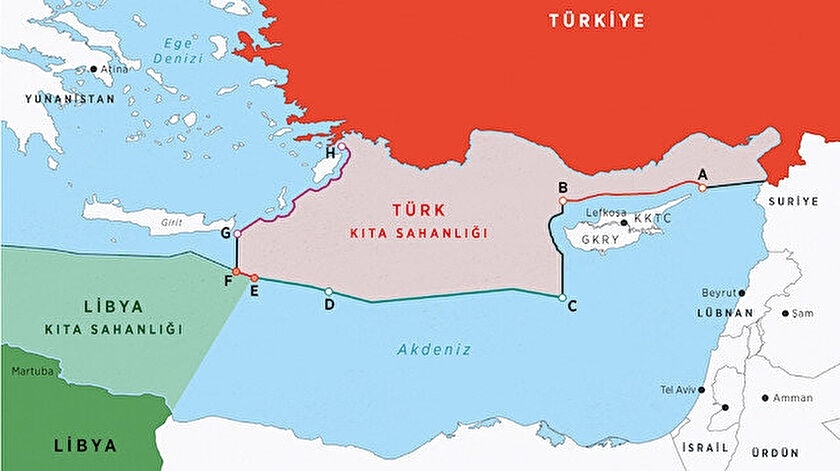
Athens, by contrast, reiterated that the parliamentary decision does not change the memorandum’s legal status and cannot override the rights of other coastal states.
The European Union also rejected the agreement. EU foreign policy chief Kaja Kallas said the bloc considered the memorandum incompatible with the law of the sea, infringing upon the sovereign rights of third countries and incapable of producing legal consequences for them.
European Council President António Costa and European Commission President Ursula von der Leyen similarly reiterated the EU’s position following the Libyan vote.