 Μake us preferred on Google
 Greece’s ruling party has outlined a sweeping set of proposed constitutional changes, presenting a framework of around 30 articles for revision as part of an upcoming constitutional reform process. The initiative is described as an effort to build a “functional democracy for today and tomorrow.”
The proposals span a broad range of state functions, including education, justice, governance, taxation, digital policy, and public administration, marking one of the most extensive constitutional reform agendas in recent years.
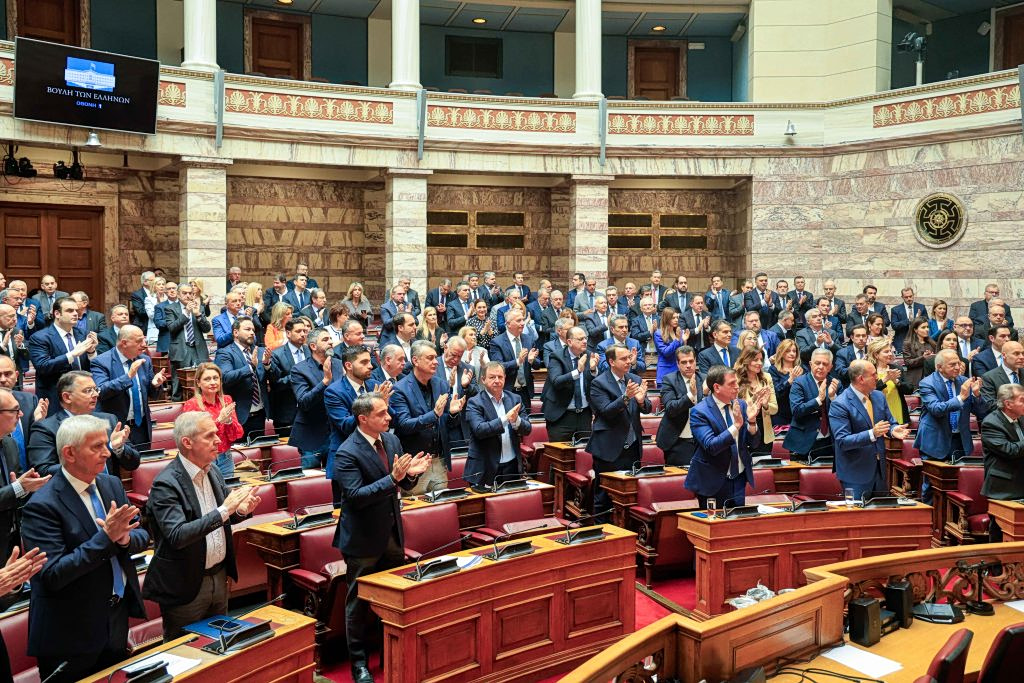
The document was presented to members of the parliamentary group of the governing party and is intended as a basis for further discussion before formal parliamentary procedures begin.
Education reform and private universities
One of the most significant proposals concerns higher education, with plans to allow the establishment of non-state, non-profit universities operating alongside public institutions. These would function under state supervision and an independent regulatory authority, provided they meet strict academic standards.
The reform package also includes an extension of compulsory education to at least 11 years, as well as constitutional safeguards for the protection of the Greek language and national symbols.
Changes to governance and justice
A major focus of the draft reforms is the restructuring of state institutions. Proposed changes include revisions to the system for selecting the leadership of the judiciary, adjustments to ministerial accountability rules, and reforms to the law governing ministerial liability.
Under the proposals, preliminary investigations into ministers could be transferred from parliament to judicial authorities, aiming to reduce political influence in legal proceedings.
Public administration and civil service overhaul
The plan also includes a redefinition of public sector employment rules, including a re-examination of lifetime job security in the civil service. Performance evaluation systems would be strengthened, with clearer criteria for promotion, rewards, and potential dismissal based on effectiveness and accountability.
Officials also propose introducing two-way evaluations, allowing both supervisors and subordinates, as well as citizens, to assess public servants.
Electoral system and political transparency
The reform framework suggests changes to electoral law to balance proportional representation with governmental stability. It also introduces new rules on party transparency, financing, and internal democratic functioning.
Additional proposals include updated regulations for referendums, postal voting expansion, and revisions to eligibility criteria for parliamentary candidates.
Fiscal rules and state accountability
On economic governance, the draft calls for stronger constitutional principles of fiscal balance, transparency in public spending, and tighter oversight of state-funded entities. It also proposes incentives for long-term investment stability.
Environmental and digital provisions
The package introduces constitutional references to climate change, environmental protection, and sustainable resource management. It also includes provisions ensuring that artificial intelligence development serves both individual freedom and societal welfare.
Institutional restructuring
Further reforms target decentralization, local government structures, and independent authorities. The proposals aim to clarify competencies between central and regional administrations while strengthening accountability and transparency mechanisms.