 Μake us preferred on Google
 Greece returned on Monday to a city with an unusual place in its American history.
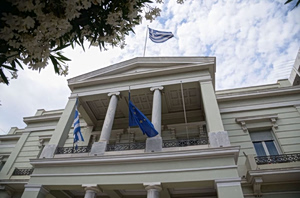
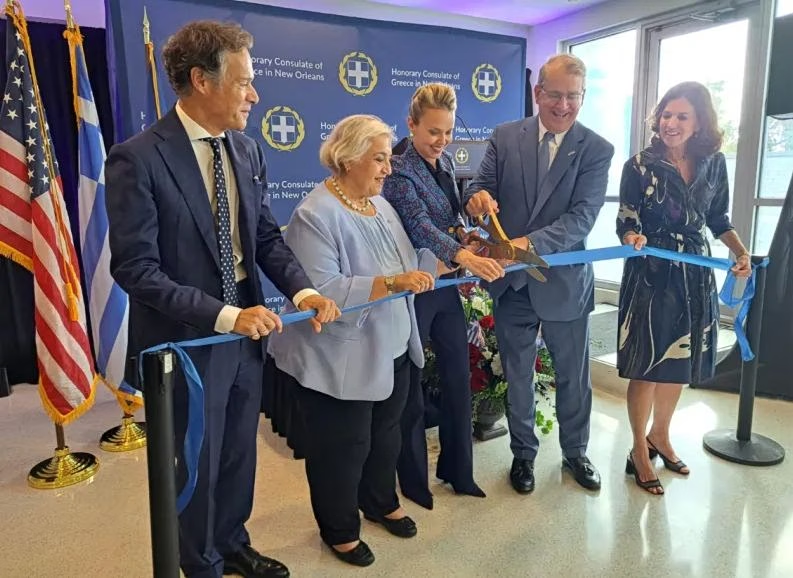
Twenty one years after the Greek government closed its consulate in New Orleans, officials inaugurated a new Honorary Consulate, restoring a formal presence in the city where Greek merchants settled before the Civil War, the country established its first American consulate and the first organized Greek Orthodox parish in the United States took shape.
The ceremony brought together two chapters of the Greek American relationship separated by more than a century. New Orleans was an early center of Greek migration and maritime commerce. Today, Louisiana sits at the heart of an expanding American liquefied natural gas industry, while Greece is investing in infrastructure designed to move imported gas north into southeastern and central Europe.
🇬🇷🇺🇸 Today, the Honorary Consulate of Greece in New Orleans was inaugurated, with the participation of Deputy Minister of Foreign Affairs Papadopoulou, Ambassador Alexandridis, Honorary Consul Georges, Mayor of the City of New Orleans Moreno & the Greek-American community. https://t.co/9zvyTD5NTD
— Embassy of Greece in Washington D.C. (@GreeceInUSA) September 15, 2026
Foreign Minister George Gerapetritis, in a recorded message shown at the inauguration, emphasized both the historical ties and the growing importance of shipping and energy in relations between Greece and the United States.
Among those attending were Alexandra Papadopoulou, Greece’s Permanent Deputy Foreign Minister; Antonis Alexandridis, the Greek ambassador to the United States; and John Dennis Georges, the Greek American businessman appointed honorary consul.
For Ms. Papadopoulou, the return was also personal. She served as Greece’s consul in New Orleans from 1987 to 1991, early in a diplomatic career that later took her to Washington as ambassador. She returned this week as one of the Foreign Ministry’s most senior officials.
The Greek government closed its New Orleans consulate in 2005, the year Hurricane Katrina devastated the city. Mr. Georges, who was president of the local Greek community at the time, has described the decision as a serious loss for Greek Americans in Louisiana.
The office inaugurated on Monday is not a restoration of the old career consulate in its previous form. It is an honorary consulate, with more limited consular functions. Louisiana residents will still rely on Greece’s consulate in Houston for services including passports.
The new office is instead expected to focus heavily on maintaining local relationships and strengthening ties with government, business, universities and cultural institutions.
Mr. Georges is deeply rooted in those networks. A New Orleans native, he owns The Advocate and The Times Picayune and has held leadership roles at Holy Trinity Greek Orthodox Cathedral. He was involved in rebuilding the church and the local Greek community after Katrina.
The relationship between Greece and New Orleans began largely through trade.
Greek importers and exporters were established in the city by the middle of the 19th century, drawn to a port that connected the Mississippi River and the American interior with overseas markets.
In 1864, members of the community organized what is recognized as the first Greek Orthodox parish in the United States. Two years later, its first church building was constructed.
Greece’s diplomatic presence developed at roughly the same time. On Oct. 25, 1864, President Abraham Lincoln formally recognized the appointment of Nicolas Benachi as Greek consul in New Orleans. Greece’s Foreign Ministry dates the establishment of its first consulate in the United States to New Orleans in 1866.
The commercial geography that drew Greek merchants to Louisiana remains important.
New Orleans and the Lower Mississippi form one of North America’s largest port and freight systems, linking agricultural and industrial production across the American interior with global markets. Greece, meanwhile, remains the world’s dominant ship owning nation by carrying capacity.
Energy has added another layer to that relationship.
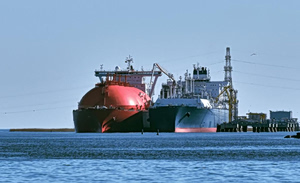
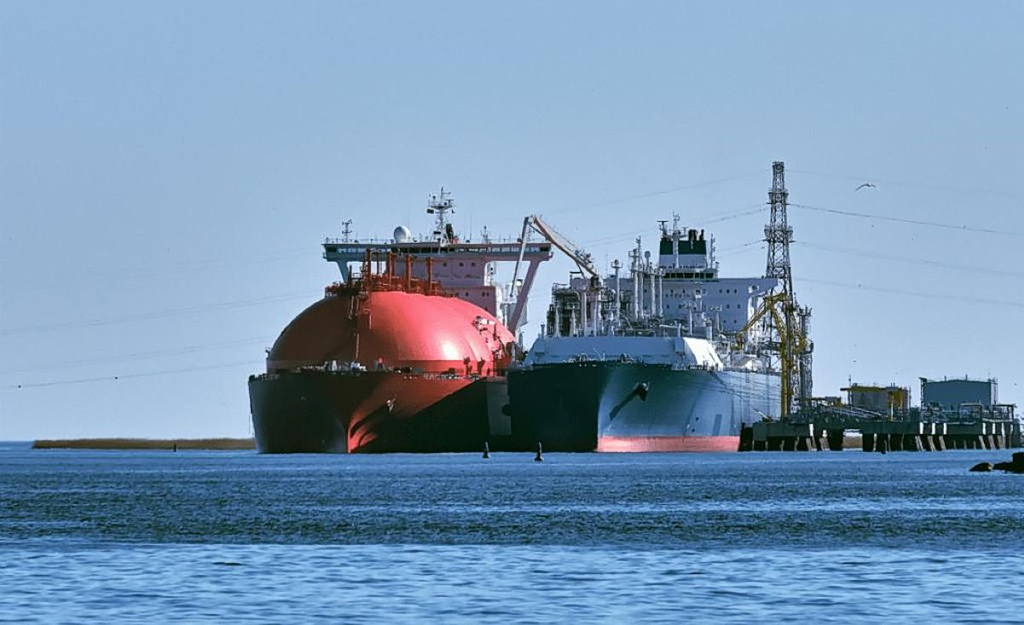
Louisiana is home to several of the largest liquefied natural gas export facilities in the United States. American LNG is already moving to Greece, which has expanded its capacity to receive imported gas and send it onward through regional pipeline networks.
The floating LNG terminal at Alexandroupolis, in northern Greece, and the developing Vertical Gas Corridor are central to that effort. The corridor is intended to allow gas entering Greece to move north through Bulgaria and Romania and toward markets in Central and Eastern Europe.
The United States has backed the project as part of a broader effort to expand American LNG access to European markets and reduce the region’s dependence on Russian energy.
The connection is particularly relevant for Greece because of the role of Greek owned vessels in global energy transportation. Ships controlled by Greek interests represent a major share of global maritime capacity, giving the country an economic stake in both the transport and reception of energy cargoes.
During her visit, Ms. Papadopoulou met New Orleans Mayor Helena Moreno, joined a working breakfast with members of the city’s consular corps and attended services at Holy Trinity. She also met members of Louisiana’s Greek community.
For that community, the return of a Greek consular presence closes a gap that lasted more than two decades.
It also brings Greece back to a place where its official presence in the United States began. A port city shaped by trade, shipping and immigration, and one that has again become relevant to the economic relationship between the two countries.