 Μake us preferred on Google
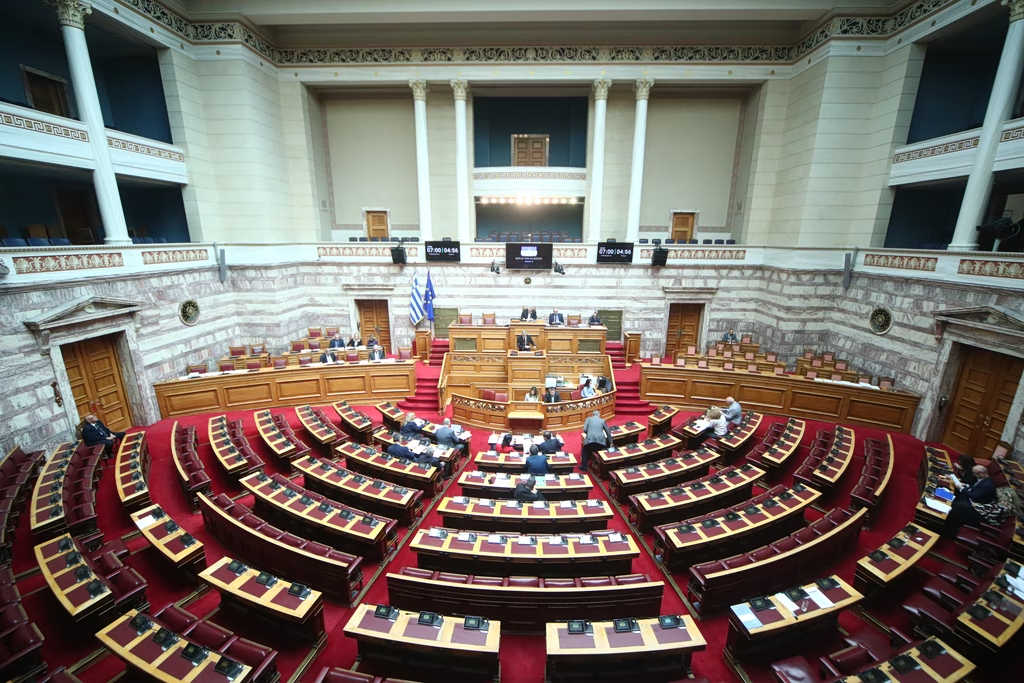
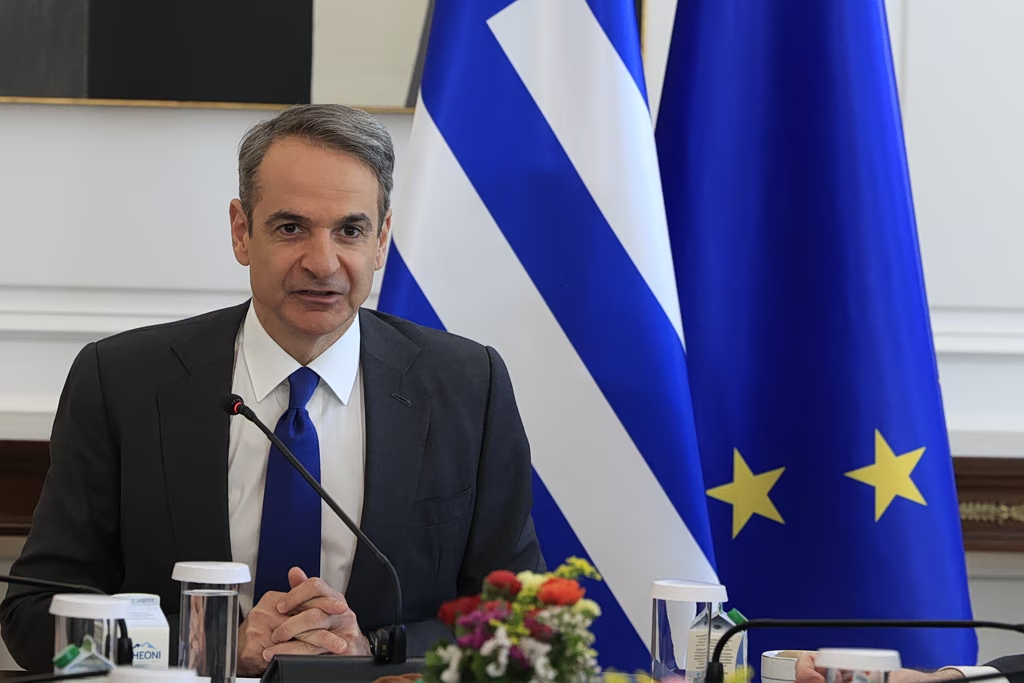
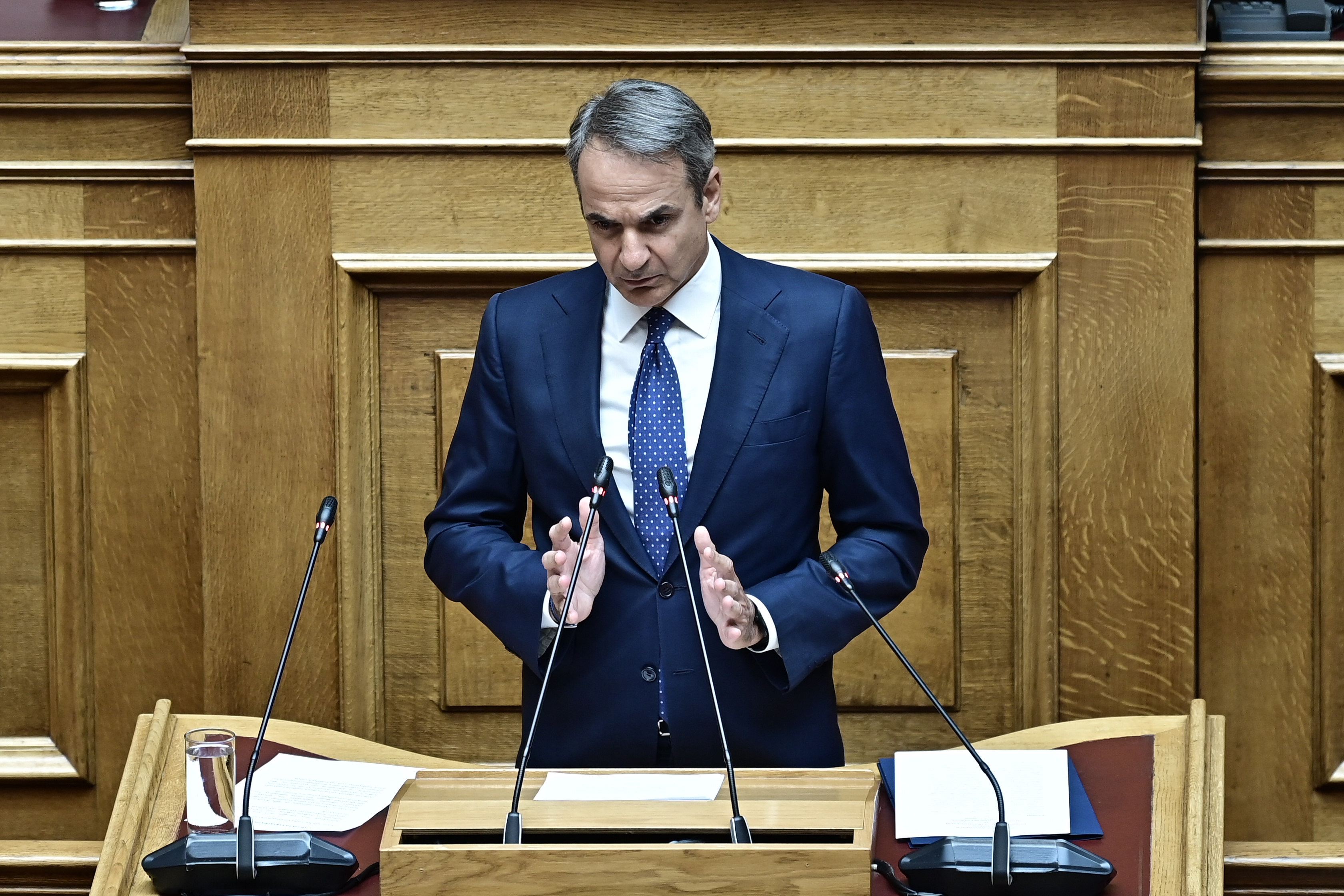
 Kyriakos Mitsotakis told parliament on Friday that Greece needs a constitution written for the present, while he accused the main opposition of obstructing the revision for partisan reasons.
Nikos Androulakis, the leader of PASOK, offered a different premise: A government that had repeatedly disregarded the country’s institutional rules, he said, could not credibly claim the authority to rewrite them.
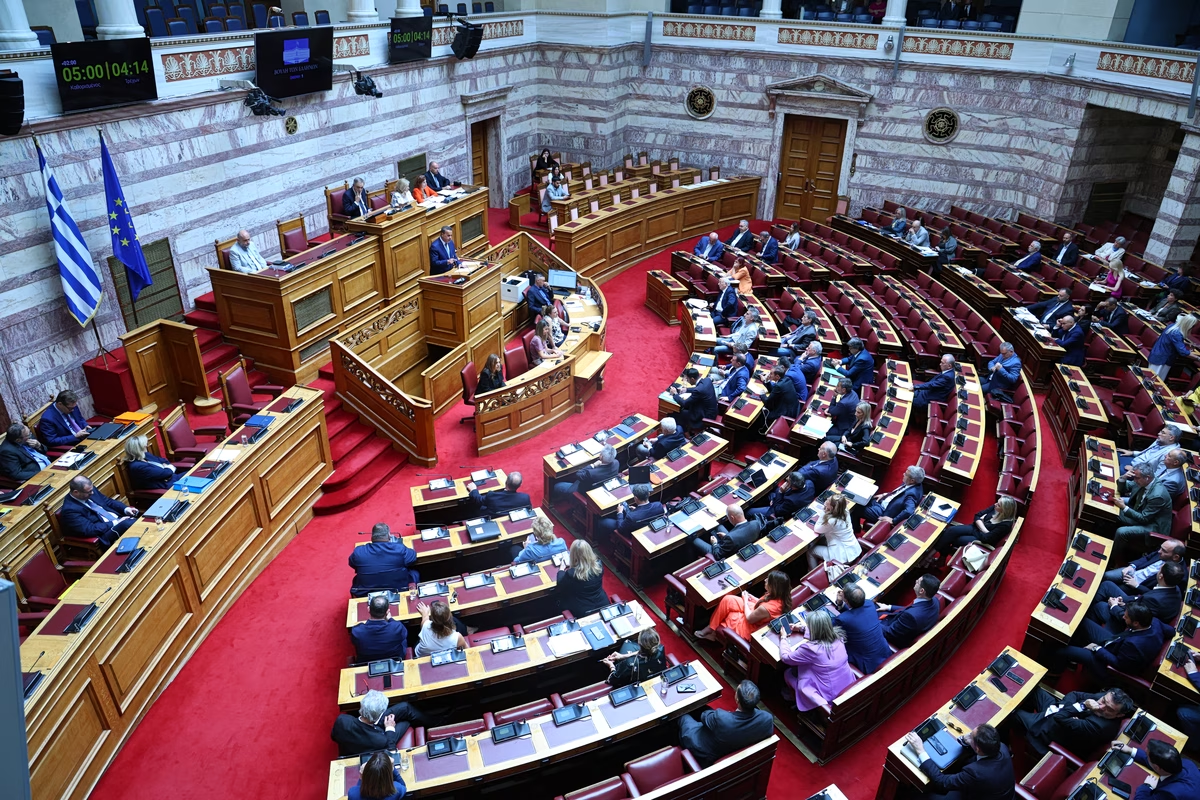
At the center of the dispute was not simply the substance of the proposed amendments, but the threshold required to carry them forward. Under the Greek Constitution, an amendment approved by at least 180 of Parliament’s 300 members can be adopted by a simple majority of 150 in the Parliament elected at the next national election. If it receives fewer than 180 votes now, it must secure 180 in the next Parliament.
PASOK has said from the outset that it will not provide the votes needed to reach the higher threshold. Its lawmakers plan to register a formal abstention, which under parliamentary procedure is recorded as neither a vote in favor nor one against. Mitsotakis called that position a direct violation of the spirit and requirements of the Constitution. He recalled that New Democracy, while in opposition during the 2002 revision, had supported a number of proposed amendments.
The government has submitted proposals covering 33 articles. Mitsotakis said New Democracy and PASOK were in substantive agreement on at least 15 of them, and argued that the opposition was blocking changes it broadly accepted merely because they had been introduced by the governing party. To describe the refusal as an effort to avoid giving the government a blank check, he said, was to disregard the result of the last election. A party that rejected proposals it supported in principle because they came from the majority, he added, was weakening the institutions and casting doubt on its own readiness to govern.
PASOK’s objections rest largely on what the higher threshold would permit in the next Parliament. An article approved by 180 lawmakers now could be amended by 150 after the election, allowing the next parliamentary majority to determine its final wording without the support of the opposition. Androulakis described PASOK’s position as a defense of the constitutional consensus rather than an exercise in political tactics.
Mitsotakis thit back by suggesting that the next government, should welcome the higher threshold because it would make it easier for that government to complete the revision. New Democracy had made its intentions clear, he added, and would seek an electoral mandate for them. Among the changes it supports is the revision of Article 16, which governs higher education and allows for the establishment of private universities. Mitsotakis said PASOK’s longstanding position had helped prevent the article from being amended for two decades.
The debate soon moved beyond the Constitution itself. As it took place on the 52nd anniversary of the fall of Greece’s seven-year military dictatorship in July 1974, Mitsotakis used that opportunity to make the case for institutional renewal. Androulakis accused him of using the country’s experience under the junta to serve the government’s political argument.
Androulakis’s broader argument was that the government had forfeited the moral authority to amend the country’s fundamental law. He described its record as a “derailment,” citing the wiretapping affair, the Tempi rail disaster, the OPEKEPE farm subsidy scandal, appointments to independent authorities, the conduct of parliamentary investigations and the handling of judicial case files.
Mitsotakis rejected the term. A derailment, he said, meant tanks in the streets, not the 41 percent of the vote that returned New Democracy to office.
Androulakis also accused the government of overpaying for recycling equipment, saying that collection units bought for 300,000 euros in Greece cost 60,000 euros elsewhere in Europe. He added that ministers had given similar assurances over OPEKEPE. Mitsotakis, in turn, accused Androulakis of falling back on familiar attack lines rather than defending PASOK’s position on the constitutional revision.
By the second round of speeches, the argument had become more personal.
Androulakis questioned where the government’s loyalties lay, referring to a recent interview by Grigoris Dimitriadis, the prime minister’s former general secretary and nephew. Mitsotakis replied that his government answered to the electorate and pointed to three consecutive victories at the polls.
The rest of the opposition were no less critical. Rena Dourou, speaking as the head of SYRIZA’s parliamentary group, said a democratic Constitution should uphold the rule of law, protect education, water and other public goods, and guarantee human and social rights. She said the government’s proposals failed to meet those standards. She criticized the proposal for a single six-year presidential term, describing it as an attempt to diminish the office. She also accused the government of using Article 16 to open higher education to commercial interests and called for the repeal of the Pierrakakis education law.
Zoi Konstantopoulou, the leader of Plefsi Eleftherias, focused much of her speech on the prime minister’s treatment of her after he said he would not remain in the chamber to hear her remarks. She also criticized the appointment of Makis Voridis as chairman of the constitutional revision committee. Her party has published 16 proposals of its own.
The day’s clearest gesture of cooperation came from Dourou, who yielded her speaking time to Katerina Spyridaki, a PASOK lawmaker, in what she described as an act of solidarity with the women in the chamber.
The first vote is scheduled for Monday. A second will follow after Parliament returns from its summer recess at the end of August.