 Μake us preferred on Google
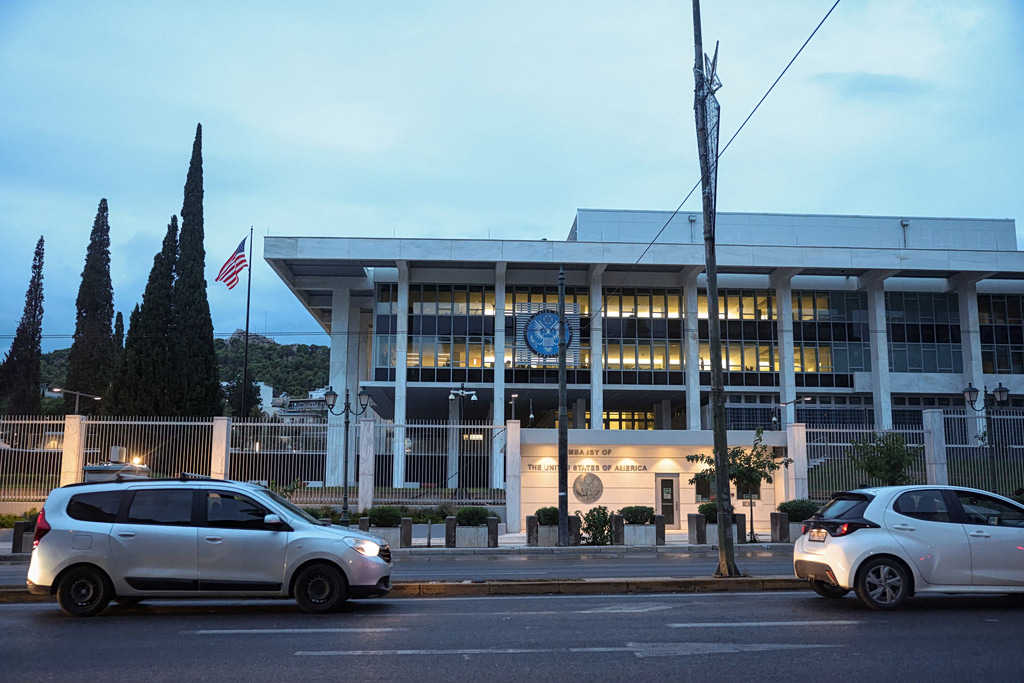
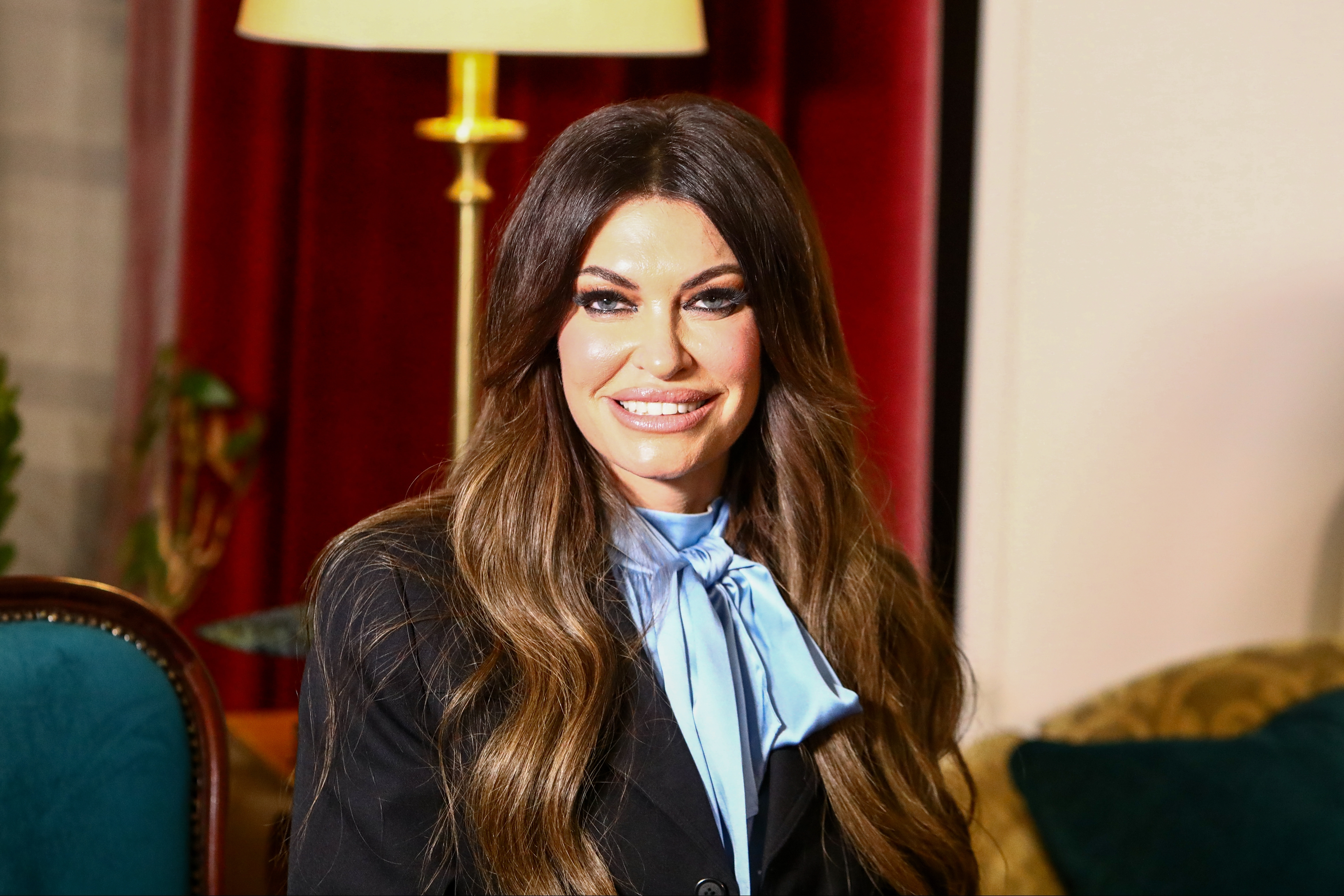
 Not even a year has passed since Greece welcomed Kimberly Guilfoyle with great fanfare, amid thousands of camera flashes and a generally unprecedented atmosphere. As of Tuesday, in another development without precedent in the country’s diplomatic history, Guilfoyle became the first U.S. ambassador to Greece to be pushed toward resigning from the post.
Back then, in early November last year, just days after her arrival, Athens hosted the P-TEC conference in the presence of two senior Trump administration officials. Major agreements were signed to activate the Vertical Corridor, through which “abundant American liquefied natural gas” was to be transported from Greek facilities at Revithoussa and Alexandroupolis to Central Europe.
The deals were widely — and understandably — presented as another geopolitical pact between Greece and the United States, even though one particular company stood to benefit most and the project faced serious implementation challenges from the outset because of the higher cost of imported U.S. energy.
Guilfoyle, however, was enjoying a moment of triumph. Within just a few hours, she appeared to confirm that President Donald Trump’s decision to appoint her had been the right one: she was advancing U.S. interests while simultaneously strengthening Greece’s geopolitical position in the Eastern Mediterranean.
A succession of Greek ministers who welcomed the new ambassador to their offices appeared to compete for the best pose in front of the cameras. As Guilfoyle herself would say, she could speak whenever she wanted, about whatever she wanted, with any member of the Greek Cabinet she wanted. All it took was a phone call.
Trump’s Choice and Diplomacy Driven by Money
It was not, however, the first time Washington had selected someone from outside the diplomatic corps for a “difficult posting” such as Greece. Guilfoyle’s predecessor, George Tsunis, was also a political appointee, though he had an in-depth understanding of the Greek American community as a member of it himself.
By choosing Guilfoyle, Trump was entirely consistent with the political and cultural shift he has sought to impose during his second term. In both Athens and Ankara, U.S. representatives came from the worlds of business and media, lacked experience in crisis management and were selected primarily on the strength of their close relationships with the president.
As Trump, U.S. Ambassador to Turkey Tom Barrack and Guilfoyle appear to believe, no dispute can withstand the prospect of economic gain. Money can resolve everything.
However well-informed the former prosecutor and television host may have appeared before the relevant congressional committee when discussing Eastern Mediterranean issues, her difficulty in analyzing complex matters such as Greek-Turkish disputes and the delicate balance at this critical crossroads between East and West was evident.
She never attempted to delve deeply into those issues, while people who spoke with her said her primary interest was generating returns for the United States, both at the state-to-state and corporate levels, through the familiar method of lobbying.
Everything else was secondary and was usually accompanied by the same refrain: Greek-U.S. relations are excellent; Greece is a pillar of stability and an indispensable partner and ally of Washington in the broader region.
Guilfoyle’s appearances alongside Trump, as is customary at the White House reception marking Greece’s March 25 Independence Day, and the U.S. president’s favorable remarks about her worked to her advantage, particularly in maintaining the perception that “the ambassador is part of Trump’s inner circle.”
That meant the communication channel between the White House and the Maximos Mansion, the office of the Greek prime minister, that Athens had been missing was, at least partially, filled with Guilfoyle acting as an intermediary.
From High-Society Spotlight to Wall Street Journal Reports
As the months passed in Athens, the ambassador gradually moved away from the center of public attention, perhaps as it became apparent that her numerous appearances on the social circuit, along with reports of a luxurious lifestyle and similarly lavish travel, were damaging not only to her personally but also to the image of the United States as the world’s most powerful political and economic force.
Moreover, Guilfoyle’s largely eccentric presence gradually began to acquire an air of normality, much as has happened recently with Trump himself: what they say and do increasingly appears normal, regardless of whether it actually is.
Then, somewhat suddenly, four Wall Street Journal reporters arrived in the Greek capital to investigate Guilfoyle’s activities and those of her closest associate, Christos Marafatsos.
Their article, published on Sept. 25, went viral, first in Greece, in part because it described an episode in which an irritated Guilfoyle allegedly addressed Energy Minister Stavros Papastavrou and warned him that the United States was capable of bringing down any government in the world, as she said had happened in Romania.
According to the same account, the Americans had destabilized Romania’s coalition government because its prime minister opposed purchasing U.S. LNG.
The irony was that, until then, Papastavrou had worked extremely well with Guilfoyle, highlighting the genuinely significant benefits of Greek-U.S. cooperation in energy and, through it, in diplomacy and geopolitics.
The energy minister denied the incident. Thanks to that denial, at least in theory, Guilfoyle was not summoned to provide explanations at the Greek Foreign Ministry.
Whether true or not, the episode was the only incident during her tenure as ambassador that evoked something of U.S. foreign policy in Greece during the 1950s.
Rubio’s Visit and an Avalanche of Allegations
As developments gathered pace, U.S. Secretary of State Marco Rubio’s visit to Athens was announced, giving Guilfoyle some breathing room. At that point, the presence of America’s top diplomat in Greece could still be interpreted as a vote of confidence in her as well.
But anyone listening carefully to Rubio’s remarks alongside Greek Foreign Minister George Gerapetritis would have heard more than an expression of support.
The secretary of state added that matters such as the allegations against the ambassador were discussed only behind closed doors.
At the same time, reports targeting Guilfoyle were turning into an avalanche. In addition to The Wall Street Journal, The Washington Post and the Daily Mail entered the fray.
According to those reports, the ambassador traveled aboard a Greek businessman’s private jet, demanded $100,000 to secure access to Trump, mistreated embassy staff and sent inappropriate messages to the woman who became the next partner of her former fiancé.
That former fiancé was, not coincidentally, Donald Trump Jr., the president’s eldest son and Guilfoyle’s passport into politics. Her transformation into one of the leading figures of the MAGA movement in the United States was clearly attributable to that relationship.
Democratic Pressure and Questions Over Guilfoyle’s Ties
Amid the rapid developments and with the midterm elections approaching, Democrats sensed an opportunity and turned their attention to Guilfoyle, who by the day appeared to be becoming an increasingly weak link within Trump’s labyrinthine circle.
The Democratic leaders of the Senate and House foreign affairs committees challenged the State Department over Guilfoyle on two principal issues: her relationship with a specific Greek company operating in the natural gas sector and Marafatsos’ role at her side.
Why Trump Distanced Himself From His Ambassador
What changed in just a few months? How did Trump go from describing Guilfoyle as “gracious” just the day before yesterday to the emphatic rebuff that “we are looking at removing her”?
Clearly, the explanations Guilfoyle provided through her attorneys were not enough.
According to one interpretation, although Trump himself operates in much the same way — with the economic interests of American businesses as his compass and often moving along the boundaries of legality — he does not want his associates to be caught red-handed.
That appears to have happened in Guilfoyle’s case, and more than once.
Precisely because she was regarded as a member of Trump’s inner circle, the negative publicity surrounding her was increasingly reflecting badly on the occupant of the White House, who faces the prospect of a resounding defeat in the midterm elections unlike anything else during his presidency.
If Republicans lose both chambers of Congress, the outlook for the Trump administration would become extremely difficult. According to analysts across the Atlantic, if it becomes apparent that the president is losing his political support, allegations that trusted associates and members of his family have promoted specific financial interests could become a daily feature of political life in the United States.
Democratic Pressure and Questions Over Her Relationships
According to another interpretation, Guilfoyle’s predicament stems from fierce disputes within the Trump family, particularly among his children and their spouses.
What is certain is that the news surrounding the Guilfoyle affair will be particularly compelling in the weeks ahead, just as her tenure in Athens has been.
And if the former ambassador ultimately helps determine the future of the Trump presidency, her tenure will not simply have been interesting, but historic.
It lasted just 11 months.