 Μake us preferred on Google
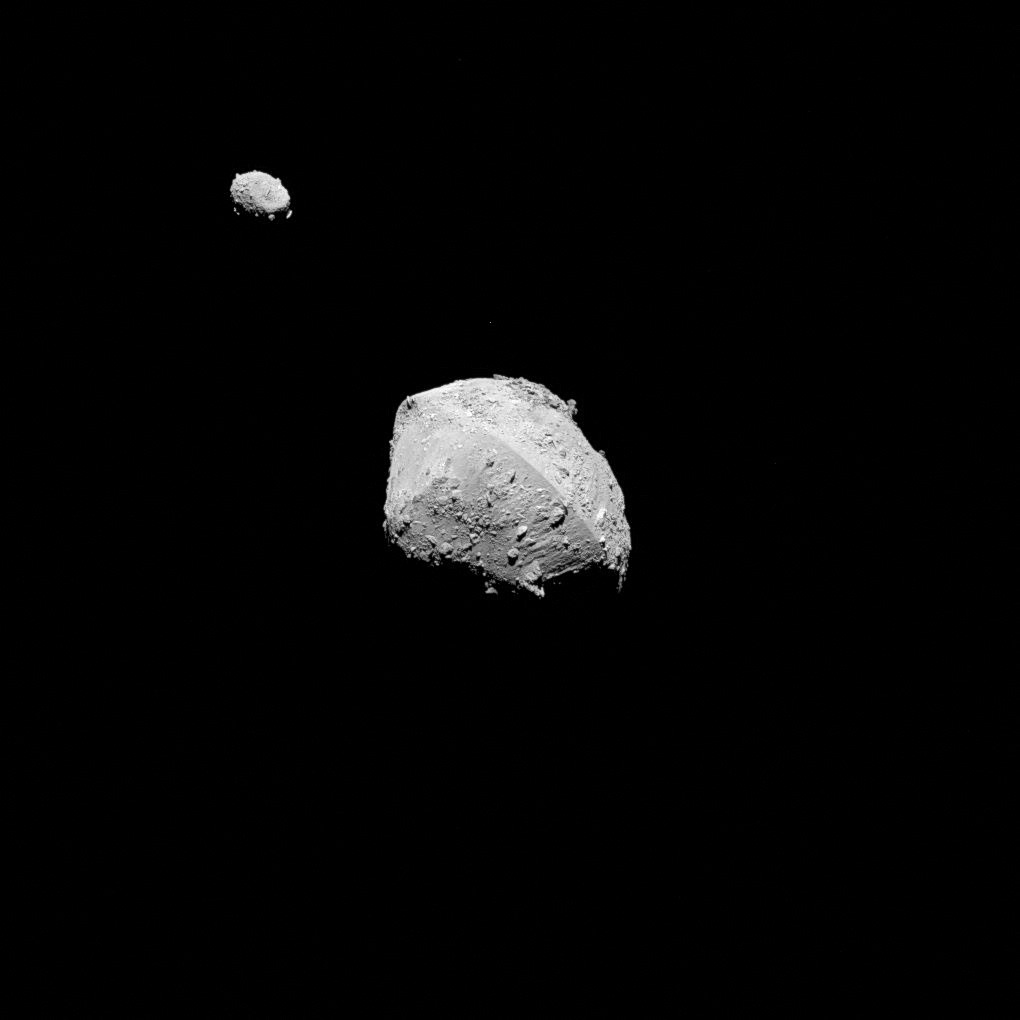
NASA’s DART spacecraft struck the small asteroid Dimorphos in 2022 in the first test of a planetary defense system. New images from the European Space Agency’s Hera spacecraft, released on Wednesday, show the impact flattened one side of the asteroid, left a stadium-sized crater, and sent the space rock tumbling.
A Test of Planetary Defense
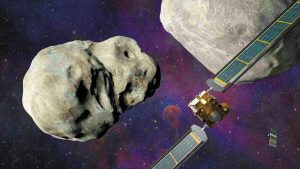
DART, short for Double Asteroid Redirection Test, was a proof-of-principle mission to show that a spacecraft could change the trajectory of a celestial object. It slammed into Dimorphos on September 26, 2022, at about 14,000 miles per hour (22,530 kph).
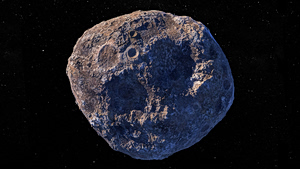
Dimorphos is an oblong, rocky body about 495 feet (151 meters) wide. It orbits a larger companion asteroid, Didymos, which measures about 2,395 feet (730 meters) across. The pair is currently about 120 million miles (193.5 million km) from Earth. Both are classed as near-Earth asteroids, but neither poses any threat to our planet.
Earlier data had already shown that DART succeeded in changing Dimorphos’s path. The impact cut its orbit around Didymos by 33 minutes. That proved a spacecraft could push aside an object heading for a collision with Earth. Hera is now examining how DART physically changed the asteroid.
A Surprising Result
The crater covers almost the entire face of Dimorphos that DART hit. Michael Kueppers, ESA’s Hera mission scientist, told Reuters that the impacted side looks as if a piece of the asteroid had been cut off, while the opposite side shows no evidence of major change. He called the combination of the two observations surprising.
According to ESA’s images, the crater also contains some unusual structures, including an apparent cigar-shaped feature at its center.
Before the impact, Dimorphos kept one face locked toward Didymos as it orbited. The new images confirm the smaller body is now tumbling chaotically instead. Kueppers said hundreds of boulders are floating around in the system.
ESA also published a before-and-after comparison pairing a view from DART’s DRACO camera with Hera’s.
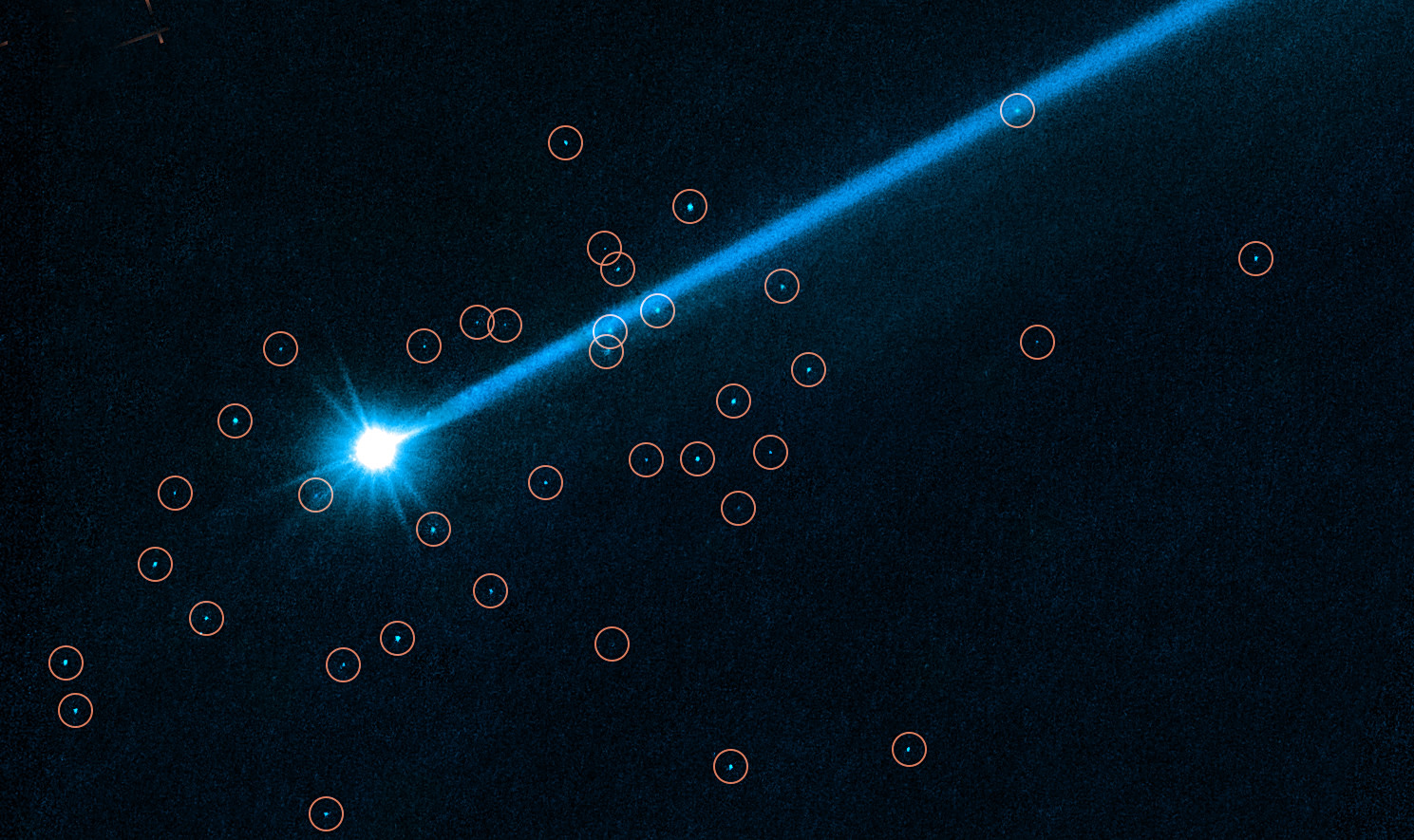
This NASA/ESA Hubble Space Telescope image of the asteroid Dimorphos was taken on 19 December 2022, nearly four months after the asteroid was impacted by NASA’s DART (Double Asteroid Redirection Test) mission. Hubble’s sensitivity reveals a few dozen boulders knocked off the asteroid by the force of the collision. These are among the faintest objects Hubble has ever photographed inside the Solar System. The ejected boulders range in size from 1 metre to 6.7 metres across, based on Hubble photometry. They are drifting away from the asteroid at around a kilometre per hour. The discovery yields invaluable insights into the behaviour of a small asteroid when it is hit by a projectile for the purpose of altering its trajectory.
Getting Closer
Hera, ESA’s first planetary defense spacecraft, launched in October 2024 on a Falcon 9 rocket and made a gravity-assist flyby of Mars on the way. About the size of a small car, it is currently observing the asteroid pair from about 15 to 19 miles (25 to 30 km) away.
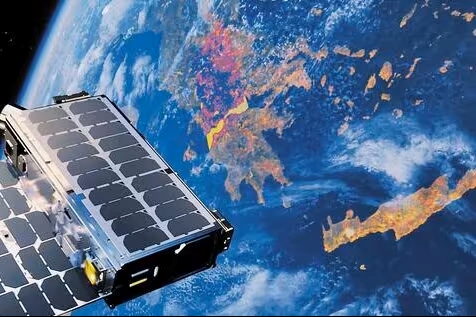
Next month, Hera is set to move within 8 miles (13 km) of the asteroids to capture increasingly sharp images. In January, it is scheduled to release two shoebox-sized satellites, known as CubeSats, which will fly even closer and study the interior structure of both asteroids.
Hera will measure the size and shape of the crater and the momentum transferred by the impact, which will show how efficient the deflection was.
Why It Matters
Hera’s mission manager unveiled the images in the dinosaur hall of Berlin’s Museum für Naturkunde. The setting was a reminder of the asteroid impact 66 million years ago that caused a mass extinction and wiped out the dinosaurs.
Kueppers said scientists knew DART had hit its target and shifted its orbit, but not what had happened to Dimorphos itself. Understanding the impact’s effects, he said, is necessary to apply the same “kinetic impactor” technique to another asteroid if one is ever found on a collision course with Earth.