


 Μake us preferred on Google
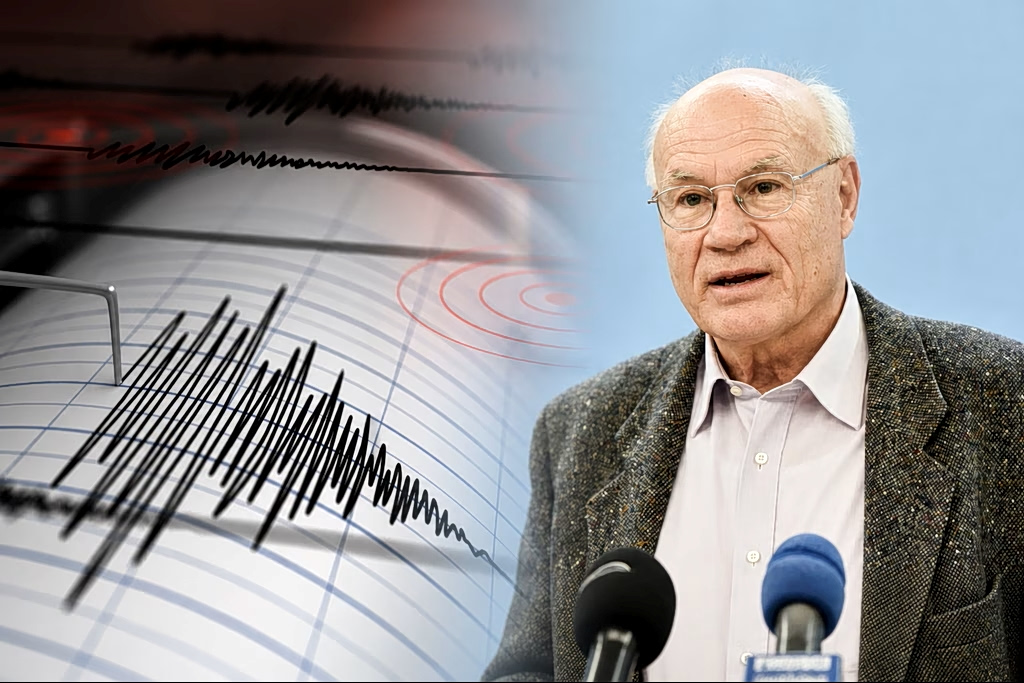
 The powerful twin earthquakes that recently struck northeastern Venezuela have prompted renewed discussion about the largest earthquakes recorded in Greek territory, with noted seismologist Gerasimos Papadopoulos publishing a historical overview of the country’s strongest known seismic events.
Writing on social media, Papadopoulos said he compiled the list in response to the question, “What are the largest earthquakes to have occurred in Greece?” His assessment combines geological, historical and archaeological evidence for earthquakes from antiquity through 1899 with instrumental seismic records from 1900 onward. He said the estimates are based on his own published research and books, while also taking into account findings by other researchers.
The analysis follows last week’s twin earthquakes off Venezuela’s northeastern coast, including a magnitude 7.6 event in the Caribbean Sea that was followed minutes later by a magnitude 6.1 earthquake. The tremors triggered tsunami advisories for parts of the Caribbean but caused only limited damage, largely because their epicenters were offshore.
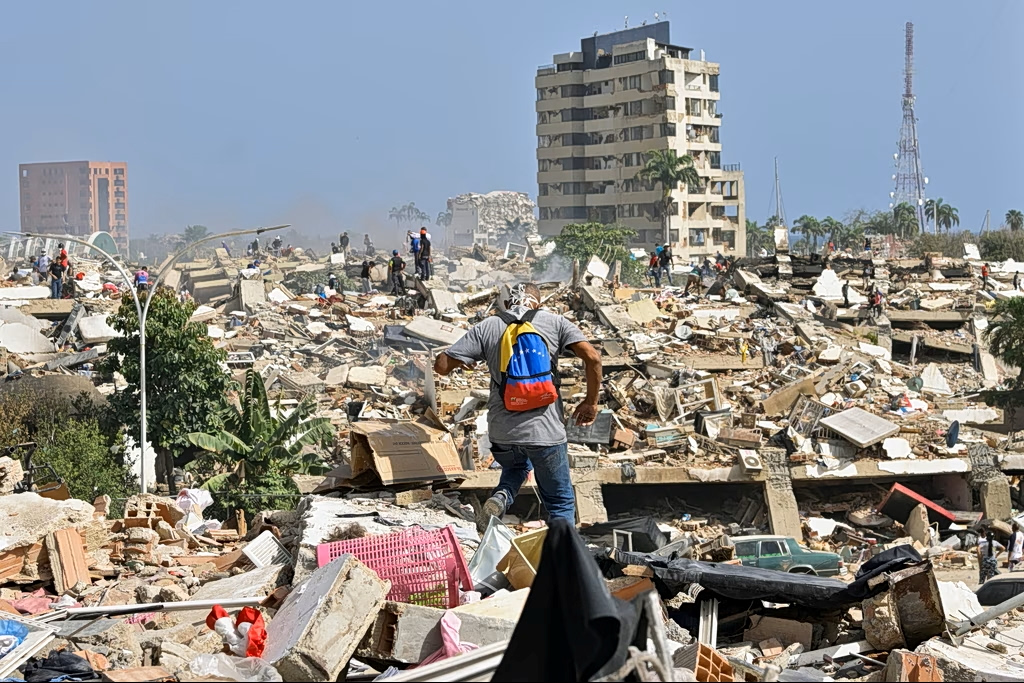
A view of the destruction from the twin quakes in Venezuela in June 2026.
Papadopoulos identified 15 earthquakes with estimated magnitudes of at least 7.2, equivalent to the smaller of the two Venezuelan earthquakes. He cautioned, however, that magnitudes assigned to historical earthquakes should be treated with care, noting they may carry uncertainties of about ±0.3 magnitude units or more because they are reconstructed from historical accounts rather than instrumental observations.
Most of the events were shallow earthquakes, although he identified several intermediate-depth earthquakes with focal depths exceeding 60 kilometers, including those in the Sea of Crete in 1856 and near Rhodes in 1926.
He also noted that several well-known destructive earthquakes do not appear on the list because it ranks events solely by estimated magnitude rather than by the extent of damage they caused. Among them is the devastating 1881 Chios earthquake. Likewise, the 1953 Kefalonia earthquake sequence was excluded because subsequent scientific reassessments placed its magnitude below 7.2.
According to Papadopoulos, the magnitudes listed likely represent the maximum seismic potential of their respective source regions, although he stressed that assessing future earthquake potential requires additional geological and geophysical evidence.
The 15 strongest earthquakes identified in his analysis are:
- 227 BC – Rhodes: magnitude 7.5
- 142 AD – Rhodes: magnitude 7.2
- 365 AD – western Crete: magnitude 8.3
- 1303 – east of Crete and Rhodes: magnitude 8.0
- 1481 – Rhodes: magnitude 7.2
- 1609 – Rhodes: magnitude 7.4
- 1829 – between Drama and Xanthi in northeastern Greece: magnitude 7.3
- 1856 – Sea of Crete: magnitude 7.6
- 1867 – Kefalonia: magnitude 7.4
- 1905 – Mount Athos peninsula: magnitude 7.2
- 1926 – Rhodes: magnitude 7.4
- 1948 – Karpathos: magnitude 7.3
- 1956 – Amorgos: magnitude 7.7
- 1957 – Rhodes: magnitude 7.3
- 1981 – northern Aegean Sea: magnitude 7.2
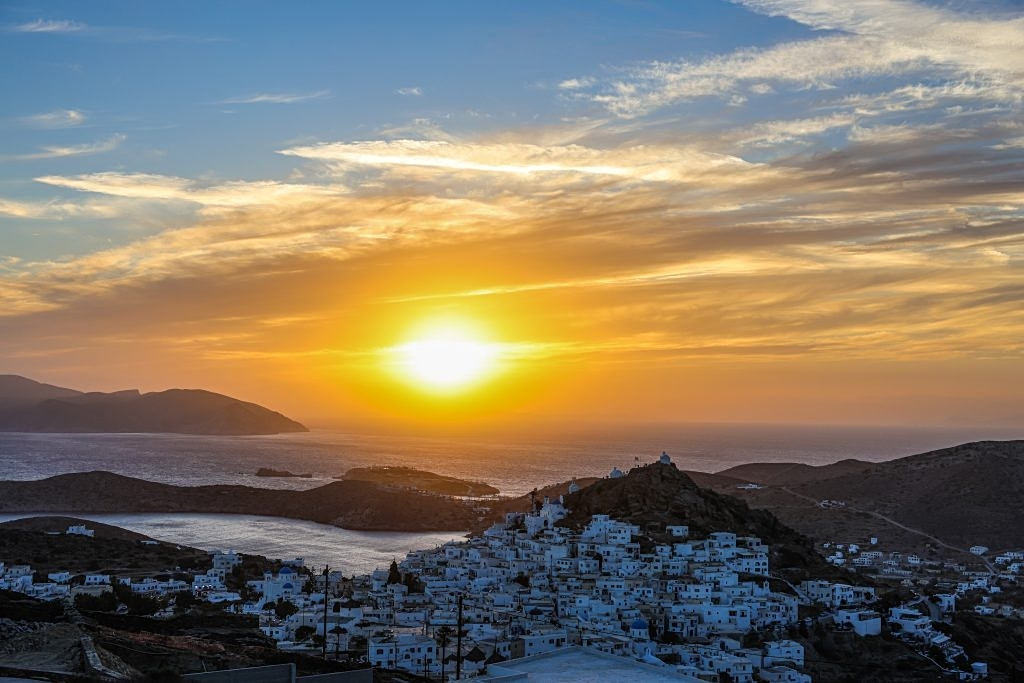
A sunset with Santorini’s famed Caldera in the foreground,
Minoan Eruption of Thera not included
One noteworthy omission from Papadopoulos’ list is the event commonly associated with the destruction of ancient Thera (Thira), now better known as Santorini, and the decline of the Minoan civilization, an event also known as the “Minoan Eruption”.
The omission reflects the fact that the Late Bronze Age catastrophe was primarily a volcanic eruption rather than an earthquake. The massive eruption of the Santorini volcano, generally dated to the mid-second millennium BC, is regarded as one of the largest volcanic events in recorded human history.
It generated widespread ashfall across the eastern Mediterranean, powerful pyroclastic flows and tsunamis that devastated coastal settlements, particularly on the large island of Crete. While strong earthquakes likely occurred before, during and after the eruption, they are considered part of the broader volcanic crisis rather than a standalone tectonic earthquake and therefore do not feature in rankings of Greece’s largest earthquakes.
The eruption is widely regarded as a major factor in weakening Minoan civilization, although modern archaeological and geological research indicates it was probably one of several contributing factors rather than the sole cause of the civilization’s eventual decline.