 Μake us preferred on Google
 At first glance, the European Union appears to have its freshwater resources under control, with only 5.8% of its available supplies—from glaciers, groundwater, rivers and lakes—being used each year.
That headline figure, however, masks stark disparities across the bloc.
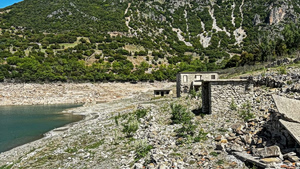
According to Euronews, Cyprus faces by far the most severe water stress in the EU. Data from Eurostat and the European Environment Agency (EEA) show that the island uses 72% of its renewable freshwater resources annually, with the figure surging to as much as 92% during the summer months.
To put that into perspective, a country is considered to be under water stress when it uses more than 20% of its available freshwater resources. Malta ranks second, with annual water use at 33%, rising to 67% in summer.
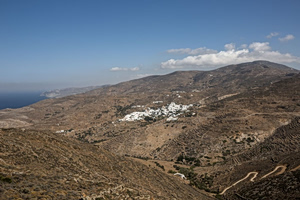
Greece follows closely, with freshwater use reaching 37%, while Romania (34%), Portugal (31%), Italy (27%) and Spain (26.5%) also exceed the warning threshold during the summer season.
The EEA warns that climate change and increasingly frequent droughts are likely to intensify the frequency, severity and impacts of water scarcity across Europe at least until 2030.
A separate EEA report, Overheated and Underprepared, found that around one in 10 EU residents struggles to access sufficient supplies of safe, clean drinking water.
The problem is most acute in Cyprus, where 36.5% of the population faces difficulties accessing safe water, followed by Greece at 31.5%. Interestingly, several countries with relatively poor access to clean water—including Bulgaria, Hungary, Croatia and Ireland—do not experience particularly high levels of freshwater exploitation.
This suggests that water access is not always driven by resource scarcity alone. In many cases, ageing infrastructure and shortcomings in water supply networks appear to play a more significant role than the availability of freshwater itself.
By contrast, despite facing considerable pressure on their freshwater resources, France, Portugal and Spain perform comparatively well in ensuring access to safe drinking water. In all three countries, the share of people experiencing difficulties remains comfortably below the EU average of 9%.