
 Μake us preferred on Google
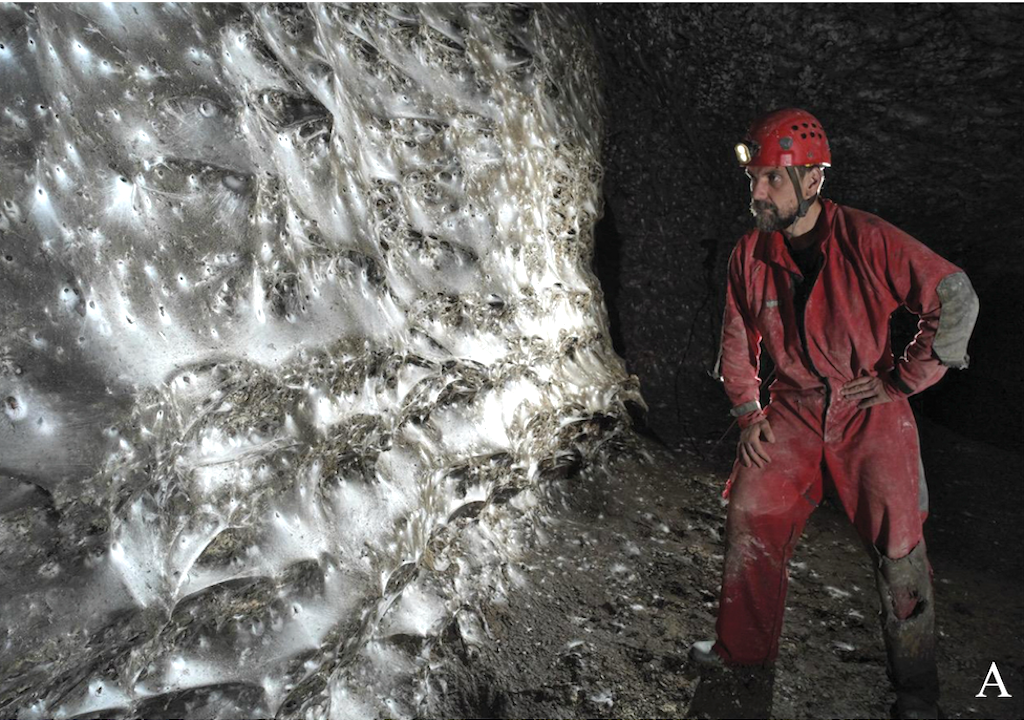
 More than 111,000 arachnids have made “Sulfur Cave”, located on the Greek-Albanian border, their home, creating what scientists believe to be the largest spider web and colony ever recorded.
According to a new study published in the journal Subterranean Biology, the massive web spans about 106m2 (1,140 square feet) along a cavern wall near the cave’s entrance. The intricate structure is composed of thousands of smaller funnel-shaped webs, woven together into one colossal network.
The arachnids live in total darkness, cooperating in ways scientists had never observed before.
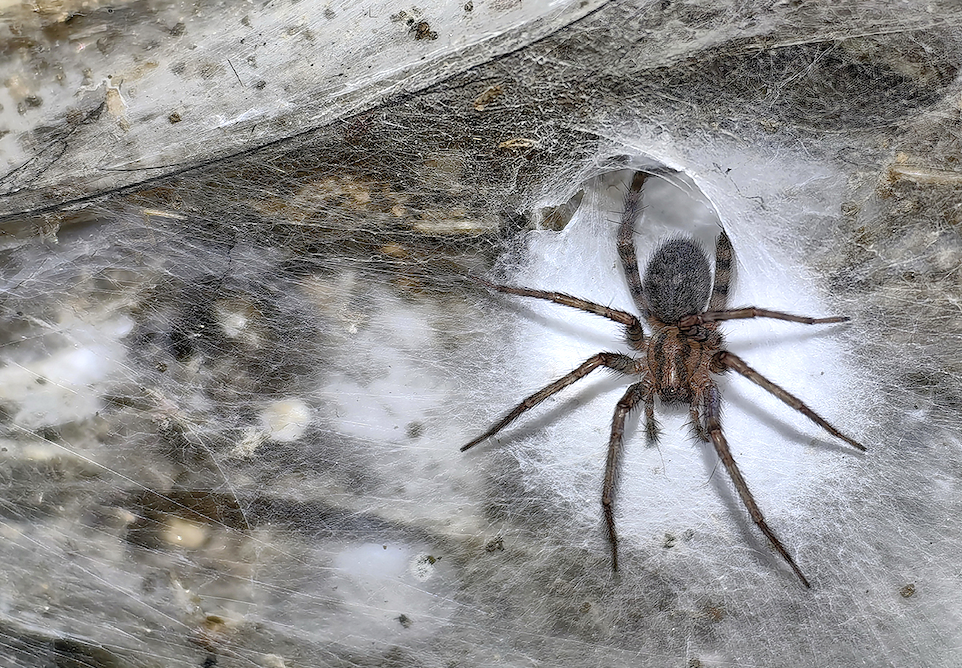
Tegenaria domestica, or the domestic house spider, which has made Sulfur Cave its home. Photo credit: Urák et al. 2025, Subterranean Biology (CC BY 4.0)
More specifically, the research, led by István Urák, an associate professor of biology at Sapientia Hungarian University of Transylvania in Romania, presents the first documented case of colonial behavior in two common European spider species: Tegenaria domestica (the domestic house spider) and Prinerigone vagans.
In an interview to Live Science, Urák said it was “a unique case of two species cohabiting within the same web structure in such huge numbers”.
“The natural world still holds countless surprises for us,” he added.
The discovery challenges long-held assumptions that these species are solitary. Urák and his team estimate that there are approximately 69,000 T. domestica and more than 42,000 P. vagans in the cave.
Formed by sulfuric acid dissolution of carbonate rock, Sulfur Cave is located in the Vromoner Canyon on the Greek-Albanian Border.
The new data follows a previous expedition to Sulfur Cave by the Czech Speleological Society in 2022.