 Μake us preferred on Google
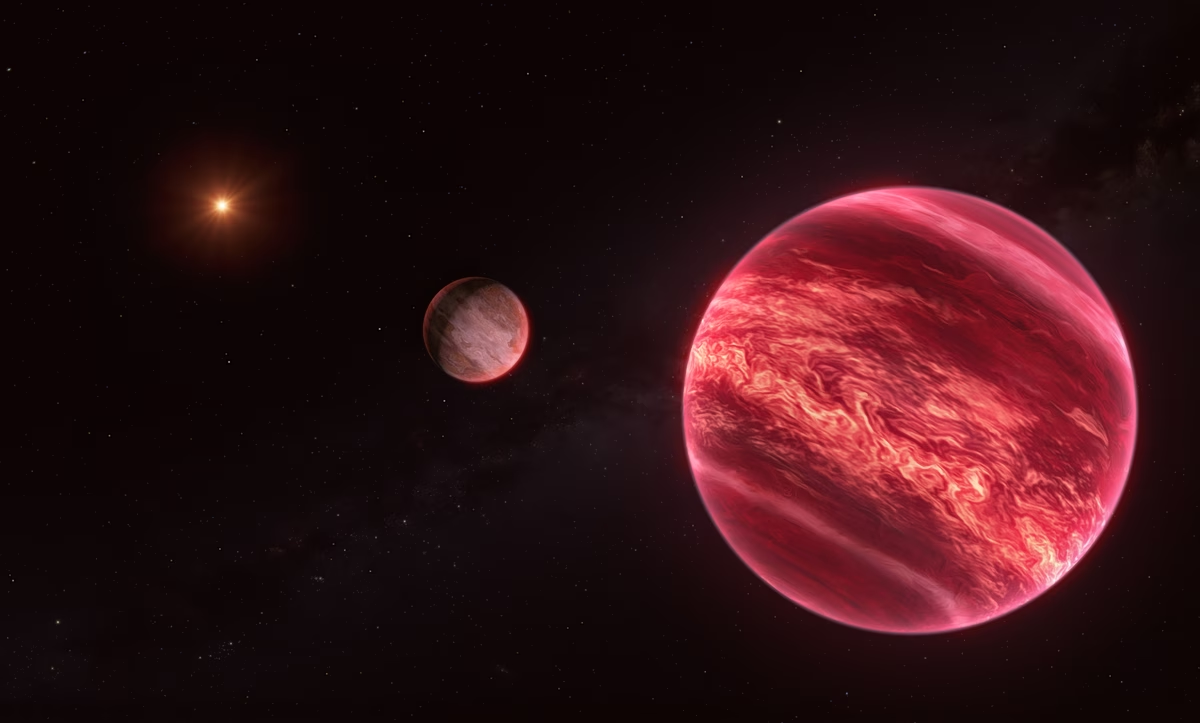
 Astronomers have confirmed the youngest planet ever found: a world less than a million years old that is still taking shape inside the swirling disk of dust and gas where it was born. The planet, named Elias 2-24 b, was identified using data from NASA-funded archives, and it offers a rare look at the earliest moments of a planet’s life.
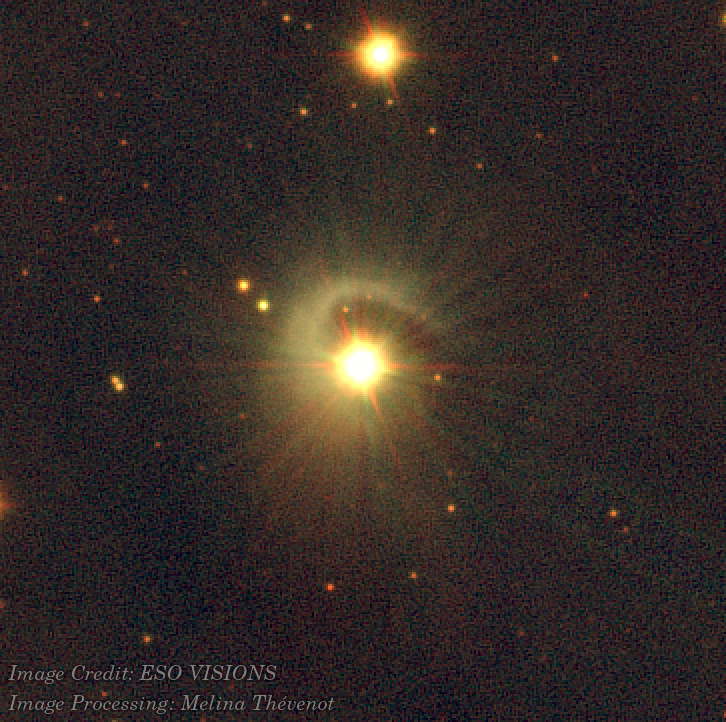
Elias 2-24 b is roughly as massive as Jupiter and orbits a young star about 450 light-years from Earth. Its host star is itself an infant by cosmic standards. Previous studies have estimated its age at around 400,000 years, and possibly as young as 200,000, and it is still drawing in material at a high rate.
The planet takes the record from four worlds that previously shared it, two orbiting the star PDS 70 and two orbiting WISPIT 2, all of which are more than 5 million years old. According to Lucas Cieza, a professor at Chile’s Instituto de Estudios Astrofísicos and a co-author of the study, planet-formation models already had trouble explaining those earlier record holders, and Elias 2-24 b shows that even the best models are still missing some important processes.
Looking in the right place
The findings were published Wednesday in The Astrophysical Journal Letters by a team led by Andrea Bernardi, a doctoral candidate at Universidad Diego Portales in Chile. The researchers examined archived observations of seven stars captured with the coronagraph at the W. M. Keck Observatory in Hawaii, which works with NASA under a cooperative agreement. Each of these stars is surrounded by a disk of dust, gas, ice, and rock, and each disk shows rings and gaps suggesting that planets may be forming within it.
A coronagraph blocks the bright light of a star, allowing astronomers to search for much fainter objects nearby, such as planets embedded in the surrounding disk. Bernardi explained that forming planets should appear inside a disk’s gaps, since they are the ones clearing those paths as they orbit, and that is exactly where the team found Elias 2-24 b.
The planet was also caught in the act of growing. Material from the disk is actively falling onto it as it sits within a prominent gap, a picture that supports the leading theory of how giant planets form. Studying systems like this one gives scientists something like a time machine, offering clues to what our own solar system may have looked like billions of years ago.
Why baby planets are so hard to find
Stars are born inside dense clouds of gas and dust. Planets then form from the leftover material, which gradually clumps together and carves a path around the star. That same dust, however, makes it extremely difficult to see planets in their earliest stages.
Most known exoplanets, meaning planets outside our solar system, have been discovered through transits, the slight dimming that occurs when a planet crosses in front of its star. Transits are hard to detect when a planet is still buried in dust or orbits far from its star. As a result, the overwhelming majority of the roughly 6,000 confirmed exoplanets are billions of years old and orbit close to their stars.
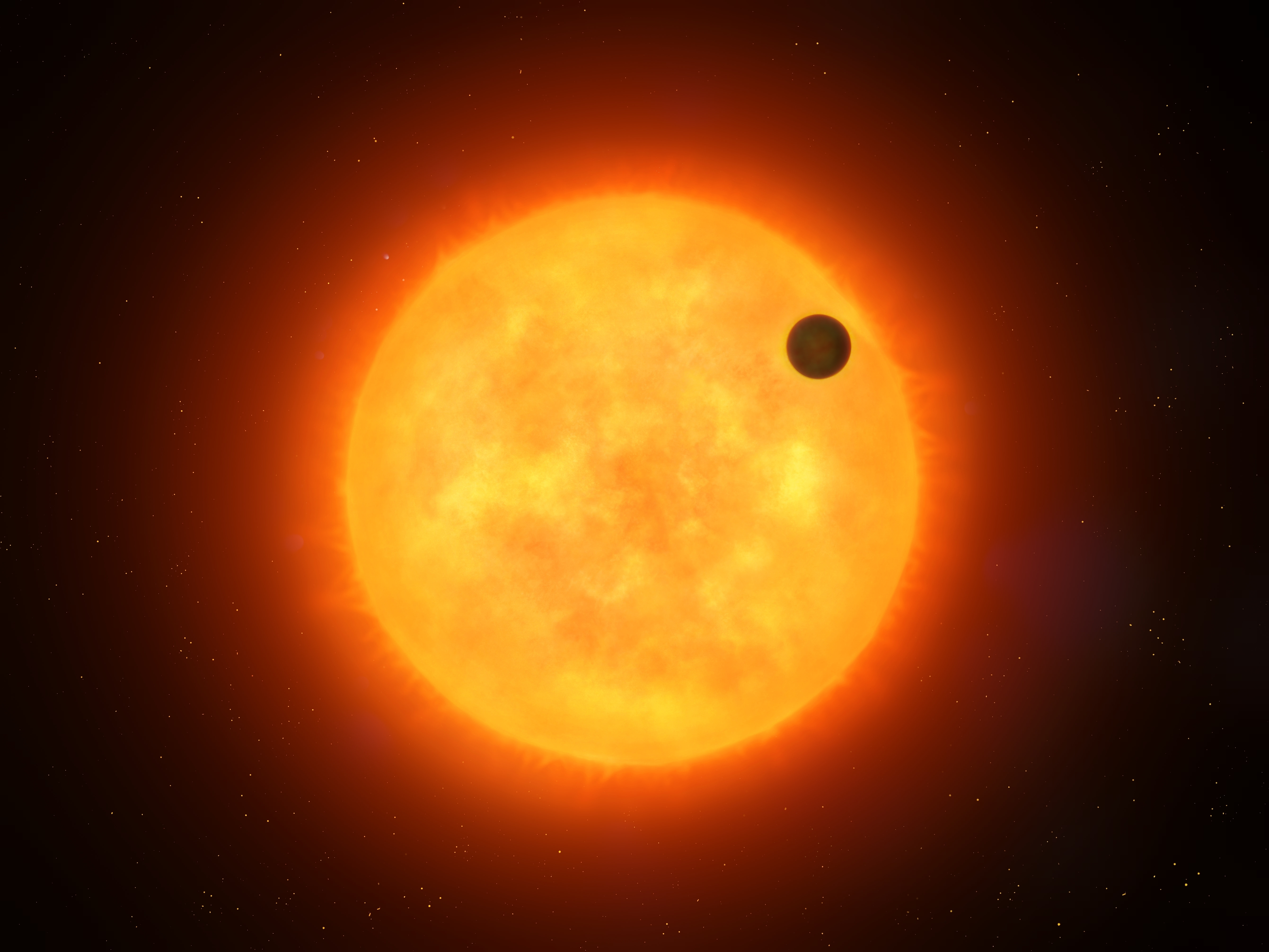
Exoplanet in transit against the background of a star disk in space. Source: Shutterstock
That leaves a major gap in scientists’ understanding. Current planet-formation models combine complex theory and simulations with observations of young disks where planets cannot yet be directly detected. Finding more young planets like Elias 2-24 b will help astronomers refine those models.
Cieza noted that the galaxy continuously produces new stars and planets, so examples exist at every stage of development. In principle, astronomers could observe the entire process, but for now, most telescopes simply can’t see these newborn worlds.
Co-author Alice Zurlo, a professor at Universidad Diego Portales, called the planet a rare find because it is at a stage where theoretical models still struggle to predict properties like its mass and brightness. Once its mass can be measured more precisely, she said, the system should help scientists recalibrate their models of young planets.
A decade-old mystery, solved
The confirmation closes a puzzle that has intrigued astronomers for about ten years. Observations from ALMA, the Atacama Large Millimeter/submillimeter Array in Chile, first revealed a gap in the young star’s disk.
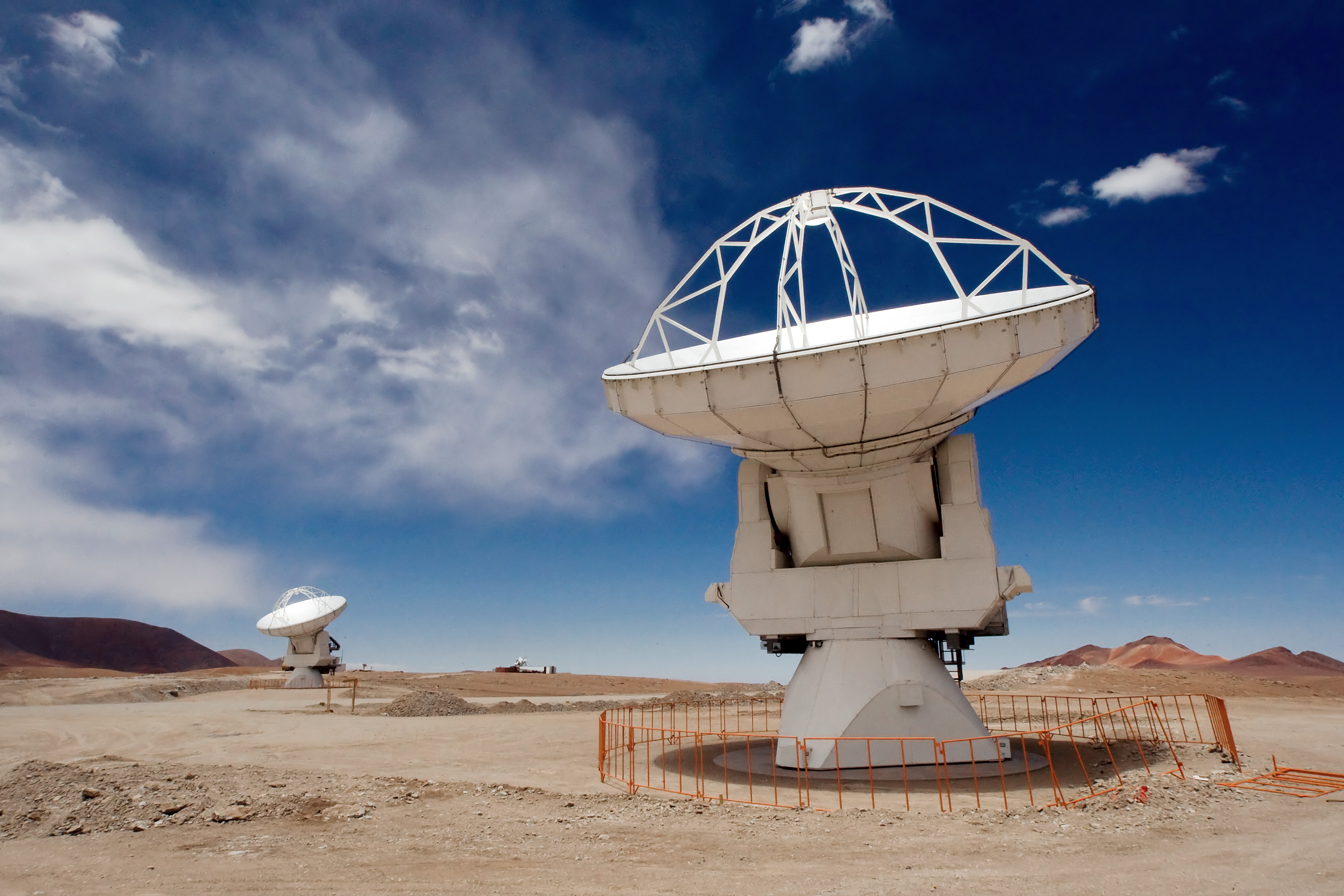
The Atacama Large Millimeter Array (ALMA) Antennas on Chajnantor. Source: Wikimedia Commons
The European Southern Observatory’s Very Large Telescope, also in Chile, later spotted a faint point of light inside that gap.
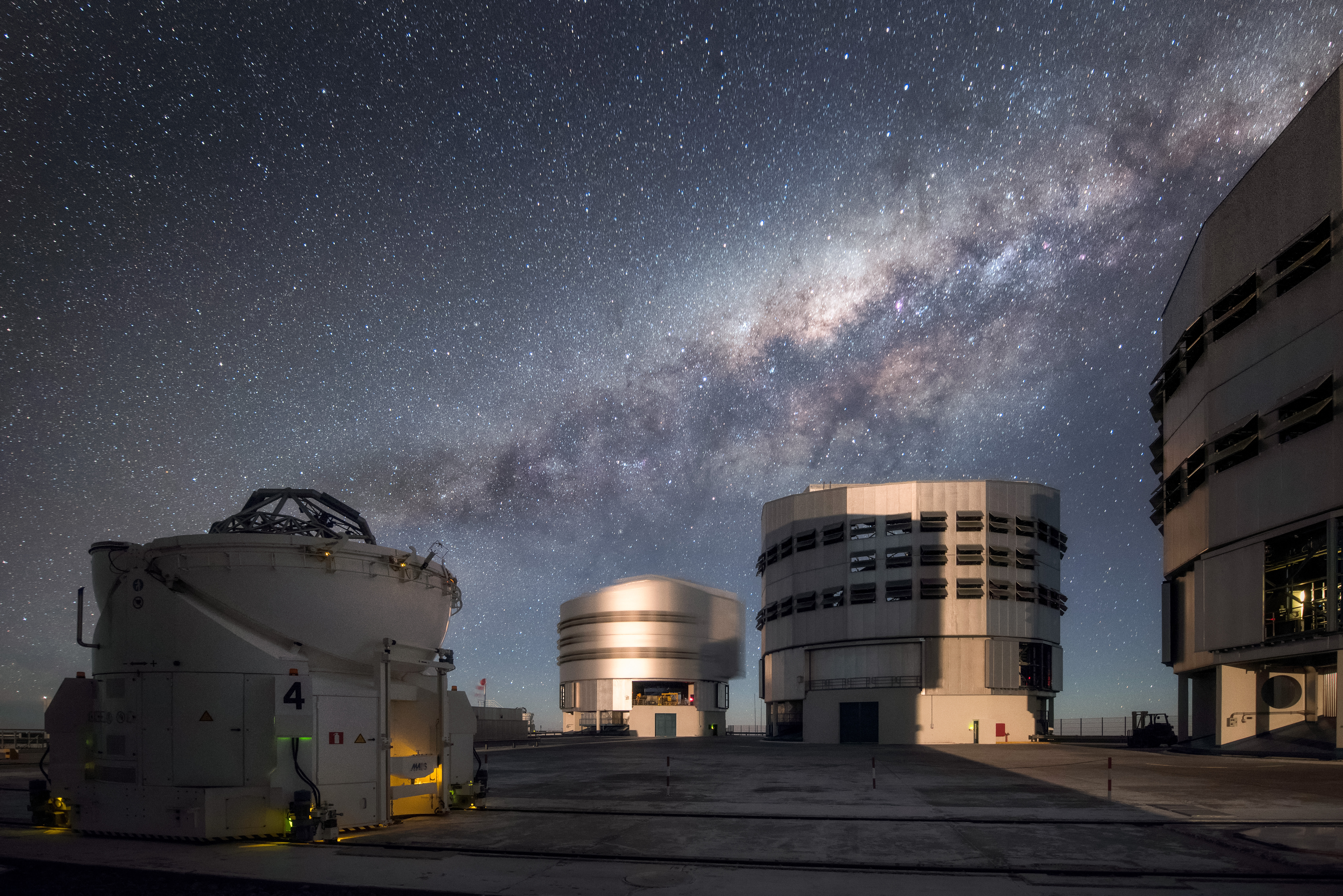
Three of the four Unit Telescopes of ESO’s Very Large Telescope (VLT) sit under the breathtaking sky at the Paranal Observatory, with one of the Auxiliary Telescopes visible to the left in the foreground. The Milky Way is visible overhead, exemplifying one of the 300 clear nights per year that make this location perfect to study the Universe with the VLT, the most advanced optical instrument in the world. Source: Wikimedia Commons
Astronomers debated whether the dot could really be a planet. Under current theories, gaps like this one appear too early and too far from their stars for planets to have had time to form.
Models predict it takes about 5 million years to build a Jupiter-size planet at Jupiter’s distance from the Sun, which is just over five times Earth’s distance, and even longer farther out. Yet this glowing dot sat 55 times farther from its star than Earth is from the Sun, and it was already behaving like a planet in the making.
To investigate, Bernardi’s team turned to the Keck Observatory Archive, a NASA-funded partnership between Keck Observatory and the NASA Exoplanet Science Institute at Caltech/IPAC. They found the same point of light in observations from 2018 and 2020. By combining these images to track its motion over time, the researchers showed that it moved like a planet rather than an imaging flaw or a distant background star, confirming it as Elias 2-24 b.
Bernardi pointed out that while telescopes are usually discussed as working on their own, this confirmation depended on several of them working together. He added that the planet lies at the limit of what today’s telescopes can detect, but that new instruments should make such discoveries easier.
The next generation of planet hunting
One of those instruments is NASA’s Nancy Grace Roman Space Telescope, which launched on August 30 and recently captured its first light. Roman carries the most powerful coronagraph ever flown in space, capable of detecting planets 100 million times fainter than their stars.
Using the same technique that revealed Elias 2-24 b, Roman could find planets in much tighter orbits, including true analogs of Jupiter that are currently lost in their stars’ glare. For comparison, Elias 2-24 b orbits about 10 times farther from its star than Jupiter does from the Sun.
Cieza described the discovery as the start of a new era, marveling that modern technology now lets astronomers watch planet formation as it happens, and he expects Roman to take the search for new worlds even further.
Source: NASA