 Μake us preferred on Google
Greek Prime Minister Kyriakos Mitsotakis has been careful not to reveal when he intends to call the next general election. Asked about the timing again on Tuesday, he repeated that Greeks would not be going to the polls on May 2. That date, however, is Orthodox Easter Sunday, making it an unlikely choice to begin with.
Behind the scenes, government ministers and senior officials of the governing New Democracy party are weighing a much narrower selection of dates, with May 16 emerging as a leading possibility, while June is increasingly discussed as an option as well. The prevailing preference within the party appears to be for an election as late as possible, giving the government more time to manage its declining electoral support. Although a handful of officials are not ruling out an early vote designed to catch political opponents off guard, most discussions now focus on dates from mid-May onward.
Even government spokesman Pavlos Marinakis appeared uncertain about the timing. Speaking on MegaNews radio, he said the elections were coming “in the spring, in May, whenever that is, June, whenever the prime minister decides.”
Why April Matters
The prime minister’s office has signaled to New Democracy officials that April will be the final opportunity to shift the political mood ahead of the election. As a result, few within the party now expect a surprise early vote, although April 25, Palm Sunday, has not been entirely ruled out. Most expect Mitsotakis to use the final weeks of the month to announce additional measures, rather than send the country to the polls.
By then, the higher minimum wage will have been paid to eligible workers, and Mitsotakis is expected to have a clearer picture of the economy’s performance. Party officials believe he may even wait for the final economic figures before unveiling any last-minute fgovernment hand-outs, as he did earlier this year with a 500 million euro package.
Several government initiatives are also expected to move forward in April. On housing, these include the first payments under the renovation program for vacant properties and a tender for the redevelopment of disused military camps. The government also aims to complete consultations with regional authorities on the European Union’s Common Agricultural Policy for 2028 to 2034 and advance plans for a new national high school diploma. In Thessaloniki, progress on the Flyover road project is another priority, although completion is now expected in May.
May 16 Emerges as a Favorite
Within New Democracy, attention has shifted to the Sundays between Orthodox Easter and Greece’s national university entrance exams, with May 16 emerging as the leading possibility. May 23 has not been rulled out, but it presents a complication if the election fails to produce a government and voters must return to the polls for a second time. The second election would then fall on June 20, during the long holiday weekend of the Holy Spirit, a date Mitsotakis has already effectively ruled out.
The national university entrance exams, with the main subjects scheduled between May 28 and June 4, effectively rule out elections during that period. Some ministers and lawmakers are now considering dates from June 13 onward, even though exams in specialized subjects continue until June 15.
The Case for a June Election
Those advocating for a June vote see potential political advantages in holding the election closer to July 1, when Greece is due to assume the rotating presidency of the Council of the European Union. They believe the approaching presidency could sharpen the election’s political stakes and reinforce the government’s argument for continuity. A later election, they argue, would also help Mitsotakis convey that New Democracy is campaigning to win a parliamentary majority outright, rather than planning for a second election.
Despite Mitsotakis’ insistence that a single election should suffice and deliver a clear result, opinion polls and the prevailing political climate suggest a second vote may be necessary. If so, a caretaker government would be in place as Greece assumes the EU presidency.
Mitsotakis Rules Out an Early Exit
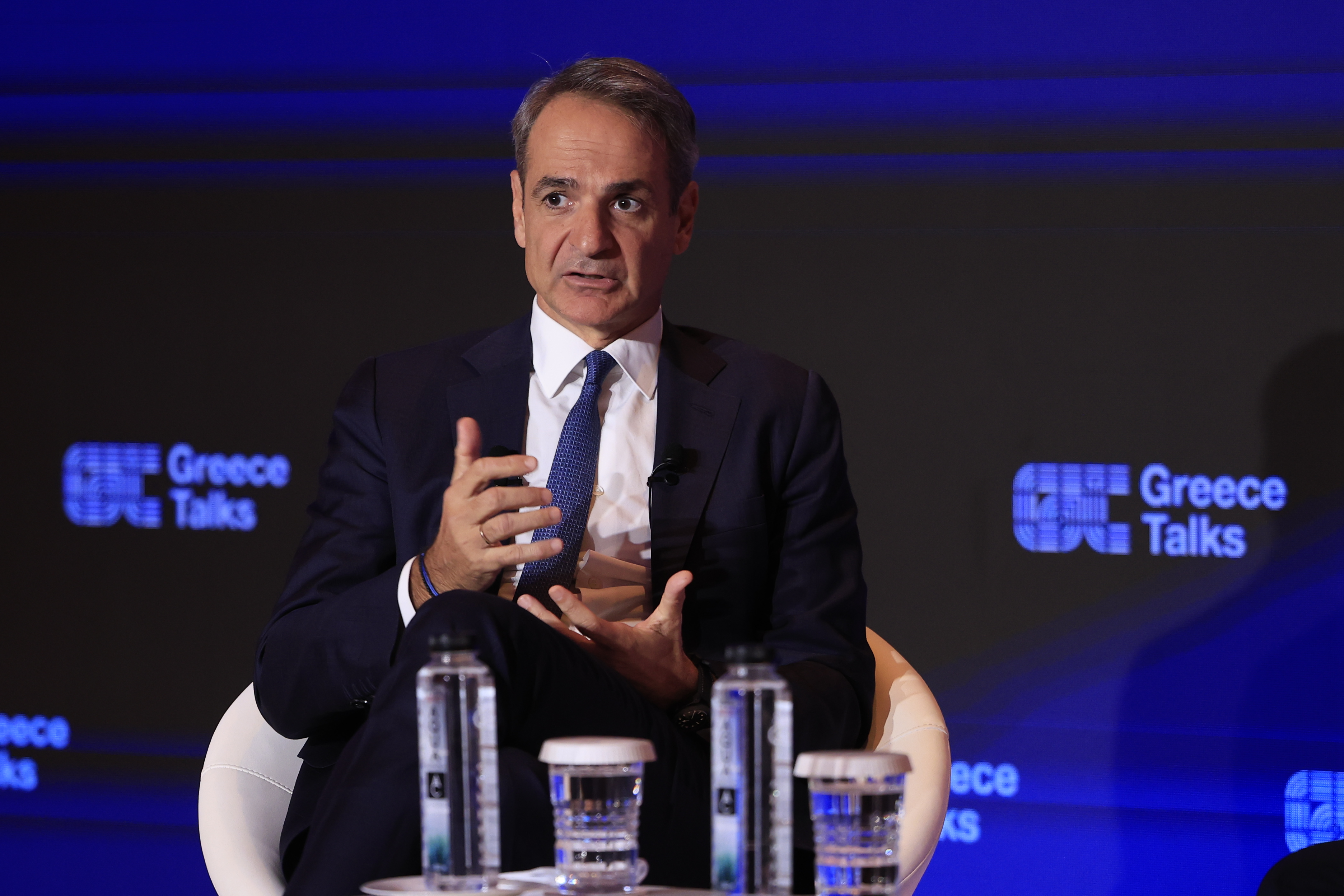
Speaking at a conference organized by travel.gr and Proto Thema, the prime minister again argued against coalition governments, describing them as prone to political paralysis.
He also dismissed suggestions that he might step aside before the election and made an unusually explicit statement about his political future. “When my career as prime minister ends, my parliamentary career will end as well,” he said.
Mitsotakis added that politicians must accept that their careers eventually come to an end. He also reiterated that he would take responsibility if New Democracy received less than 25% of the vote.
Some interpreted his comments as a veiled reference to former prime ministers Antonis Samaras, Kostas Karamanlis and Alexis Tsipras, all of whom have remained politically active after leaving office. New Democracy officials, however, rejected that interpretation.
The prime minister also ruled out cooperation with parties to New Democracy’s right and took issue with a decision made at PASOK party’s congress, when the base of the center-left party ruled out the possibility of a New Democracy- PASOK coalition government.
Addressing recent remarks by Health Minister Adonis Georgiadis about Tsipras, Mitsotakis distanced himself from the language used without directly repudiating his minister. He said he would seek to discourage New Democracy officials from engaging in personal confrontations with the former prime minister, although he acknowledged they would respond when challenged.
Source: TA NEA