 Μake us preferred on Google
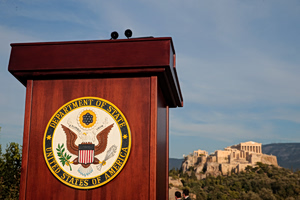
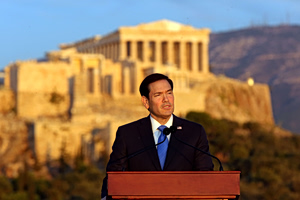
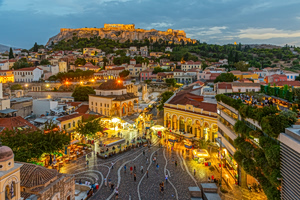
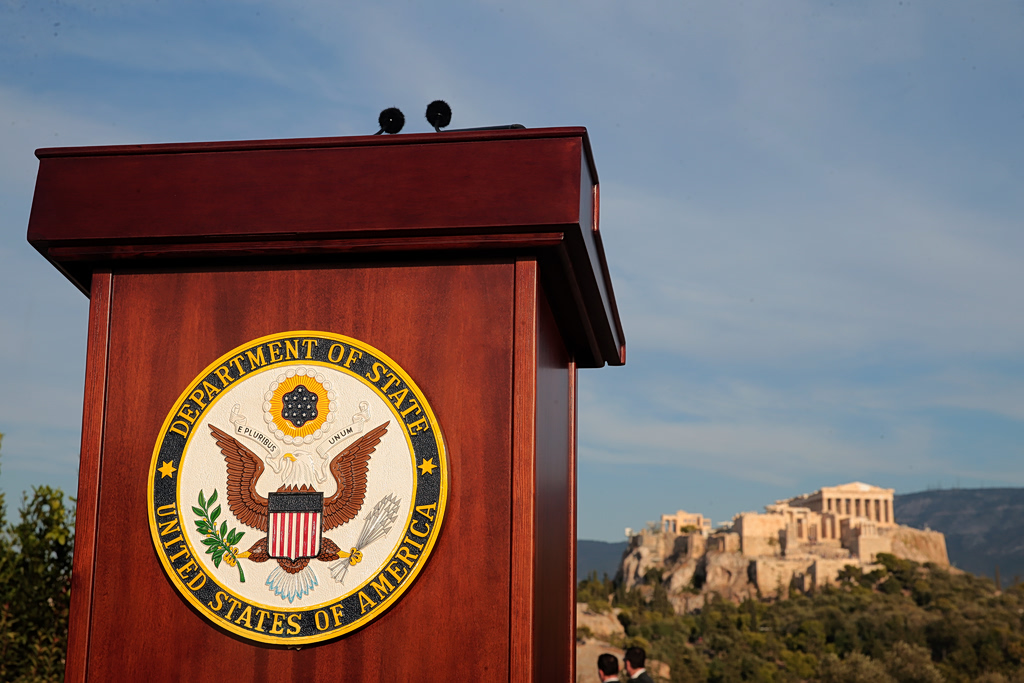
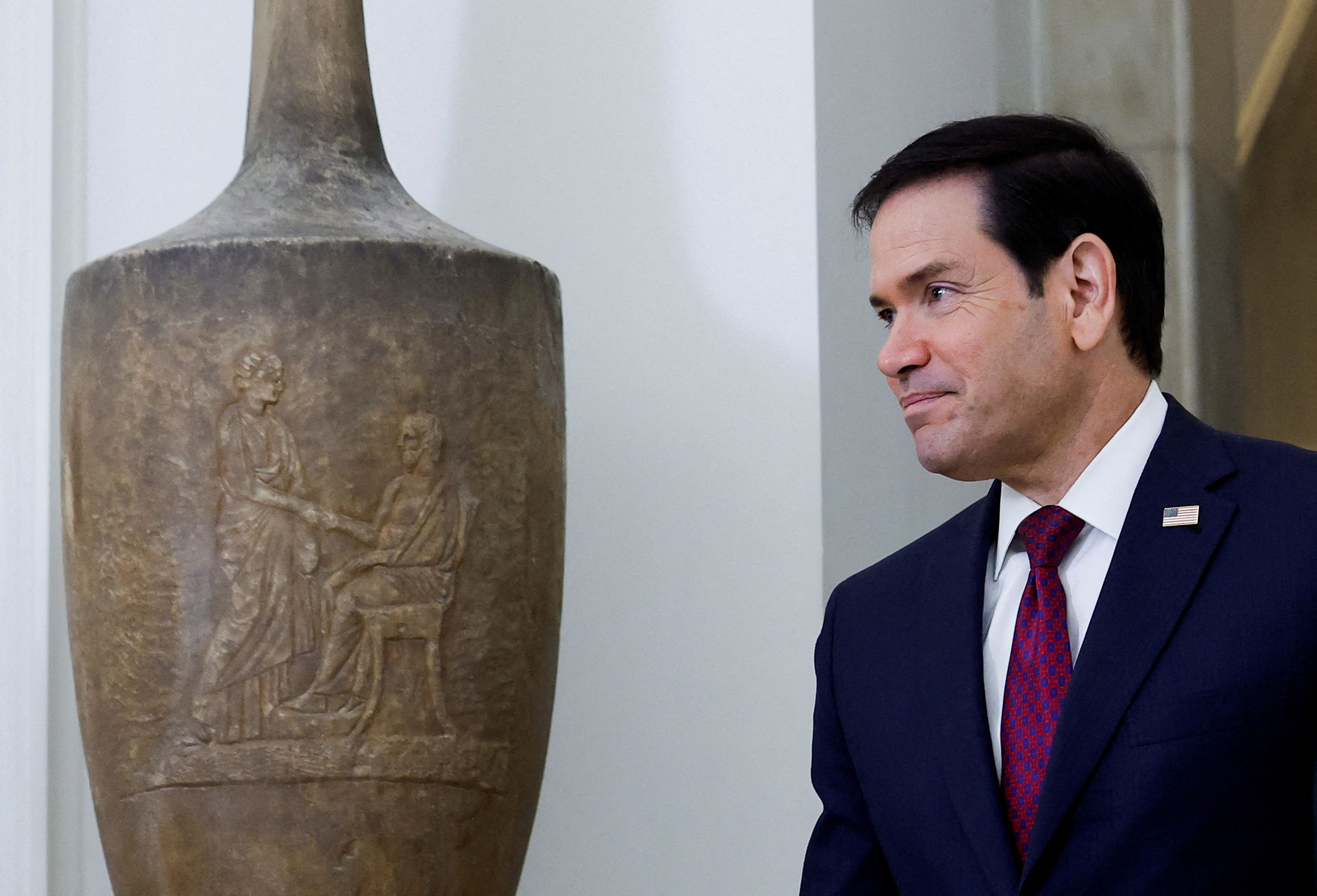
 The “brand,” as we would call it, is very powerful. An appearance there, with the Parthenon in the background, beautifully illuminated by Eleftheria Deko and with no new floors getting in the way, would certainly be “cool.”
Expressing his enthusiasm, someone from Texas or Alabama would draw out the /u/ in cool, as required by the exaggerated manner of the local accent, known on the other side of the Atlantic as the “southern drawl.” The latest user of this “brand,” however, Marco Rubio, is from Miami, Florida. There, people speak “General American,” meaning the standard, neutral accent heard in American movies and news broadcasts, which is why it is also called “broadcast English.” So the Pnyx is cool. Not drawn out, but cool all the same.
The Pnyx is also the latest link in a chain of revivals of ancient Greek culture that began with the humanists of the Renaissance and their motto, ad fontes. “Back to the sources,” where the sources meant ancient literature. It was a forgotten world. In The Name of the Rose, Umberto Eco vividly describes the dispute that preceded this revival in the Middle Ages. The obscurantist monk of an isolated Benedictine abbey in Piedmont wants the second book of Aristotle’s Poetics, devoted to comedy and laughter, to remain buried in oblivion, while the enlightened monk fights to save it and spread its ideas.
The battle was won. Goodbye, Middle Ages. Christianity subsequently proved sufficiently adaptable, and the forgotten world of ancient literature laid the foundations for a new world, enriched by Western thought. This new world was no longer ruled solely by the power of God. The power of Nature and the power of Reason had been added. The thread connecting these three forces, on which Western values were founded, was never broken.
For example, during his discussion at To Vima’s conference with American Homeric scholar Daniel Mendelsohn, Prime Minister Kyriakos Mitsotakis reminded the audience that “the Founding Fathers of the United States were greatly influenced by ancient Greece.” He referred to “the series of political writings known as the Federalist Papers,” explaining that they were “incredibly sophisticated texts in terms of how a democracy is built.”
The thread was not broken even when the obscurantism of the Middle Ages gave way to the barbarity of the totalitarian regimes of the 20th century. A hot war and a Cold War were won so that the Western world could remain free. So free, in fact, that it could not only progress but also mercilessly flagellate itself for its sins and its rigidities. After all, how else can thought advance if it does not constantly seek new freedoms and, to put it in ancient Greek terms, new and wondrous things?
At every stage of history, ancient literature remained unassailable on its pedestal. Although they did not understand it very well, the Ottomans respected the Westerners’ reverence for the monumental evidence of ancient Greek beauty. The Nazis, on the other hand, attempted to appropriate Plato as a source of inspiration and doctrine.
Today, something is happening that could be described as an ancient Greek paradox. The “Classics,” as the ancient philosophers are known, are not enjoying their best days; classical studies are considered rather outdated, the humanities unproductive, and democracy itself is under attack from new internal enemies. At the same time, however, the Pnyx is being sought out as though in a classified ad: “Space available for speeches of great symbolic significance.” Welcome, MAGA.
It was easy to predict, and one could have bet on it, that Marco Rubio would adapt the symbol slightly to suit himself. It is harder to imagine that the “Hillbilly Song” could one day be heard there. But if it is “cool” for Rubio, why should it not be cool for J.D. Vance, too? What is one person’s preference is another person’s taste.
But this was the Pnyx, this was the Agora, and this is liberal democracy. “Who wishes to speak?” And the battle continues.
P.S. A university professor who, by his own account, is also a “digital creator,” denounced the “Dialogues for Athens” conference, organized by To Vima and hosted by the University of Athens, as a “fashion show” on social media. He also shared the cancellation of his own participation as proof of the authenticity of his accusation. Fine, everyone has their own platform. He then went on to claim that the views of the country’s prime minister should not have been heard at a university, the quintessential space for the free exchange of ideas and opinions. Very well, everyone has their own battles.