 Μake us preferred on Google
The number of declared overtime hours in Greece has increased significantly, but a substantial share of employees still receive no pay for working beyond their scheduled hours, according to Labor Ministry data and surveys by recruitment platform kariera.gr and the General Confederation of Greek Workers (GSEE).
Between January and July 2026, approximately 5.7 million overtime hours were recorded in sectors covered by the country’s digital work card system. That was 1.54 million more hours than during the same period in 2025, representing a 36.8% increase. In the first seven months of 2025, declared overtime had risen by 80% compared with 2024.
The sharpest increase was recorded in wholesale trade. Overtime hours in the sector climbed by 212.8%, from approximately 280,000 in 2025 to nearly 880,000 in 2026 — an increase of more than 600,000 hours, the largest rise among all sectors.
Digital work card expands to 2.5 million employees
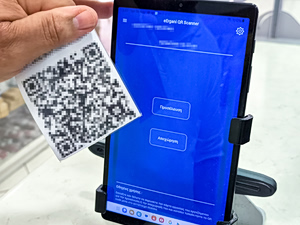
The mandatory digital work card system, which records employees’ working hours, has been extended to an additional 500,000 workers. It now covers approximately 2.5 million employees, or around 63% of the country’s workforce.
Labor Ministry inspections, however, continue to identify violations across the labor market. Authorities recorded:
- 2,994 violations involving the use of the digital work card;
- 2,332 working-hours violations;
- 1,410 cases involving unpaid wages;
- 1,372 cases of undeclared employment.
Four in 10 workers receive no pay for overtime
A September survey by kariera.gr, conducted through LinkedIn, found that only 45% of employees are paid normally for additional hours worked.
Another 42% said their overtime is neither officially recorded nor paid. Meanwhile, 4% receive additional time off instead of money, while 7% said their overtime is handled through other arrangements.
The survey also identified the main reasons employees’ additional working hours are not properly declared. Increased workloads were cited by 36% of respondents, periods of peak demand by 34%, the perception that extra hours are simply an expected part of the job by 21%, and fear of dismissal by 10%.
Earlier research by GSEE found that 43.4% of employees who work overtime do not receive direct financial compensation.
The extent of overtime also varies according to company size. The proportion of employees working beyond their scheduled hours was 32% at very small businesses with up to nine employees, compared with 45.4% at companies employing 250 people or more.
More than one in four work overtime without it being recorded
The GSEE findings also highlight gaps in the official recording of working hours. More than one in four employees (26%) said they continue to work overtime without it being legally recorded.
Another 7% said they do not know whether their additional hours are registered, while just 3% reported that their overtime is recorded normally.
The increase in declared overtime suggests that inspections and digital time tracking are having an effect. However, the figures on unpaid and undeclared work indicate that compliance with labor rules remains incomplete, despite the expansion of the digital system.