 Μake us preferred on Google
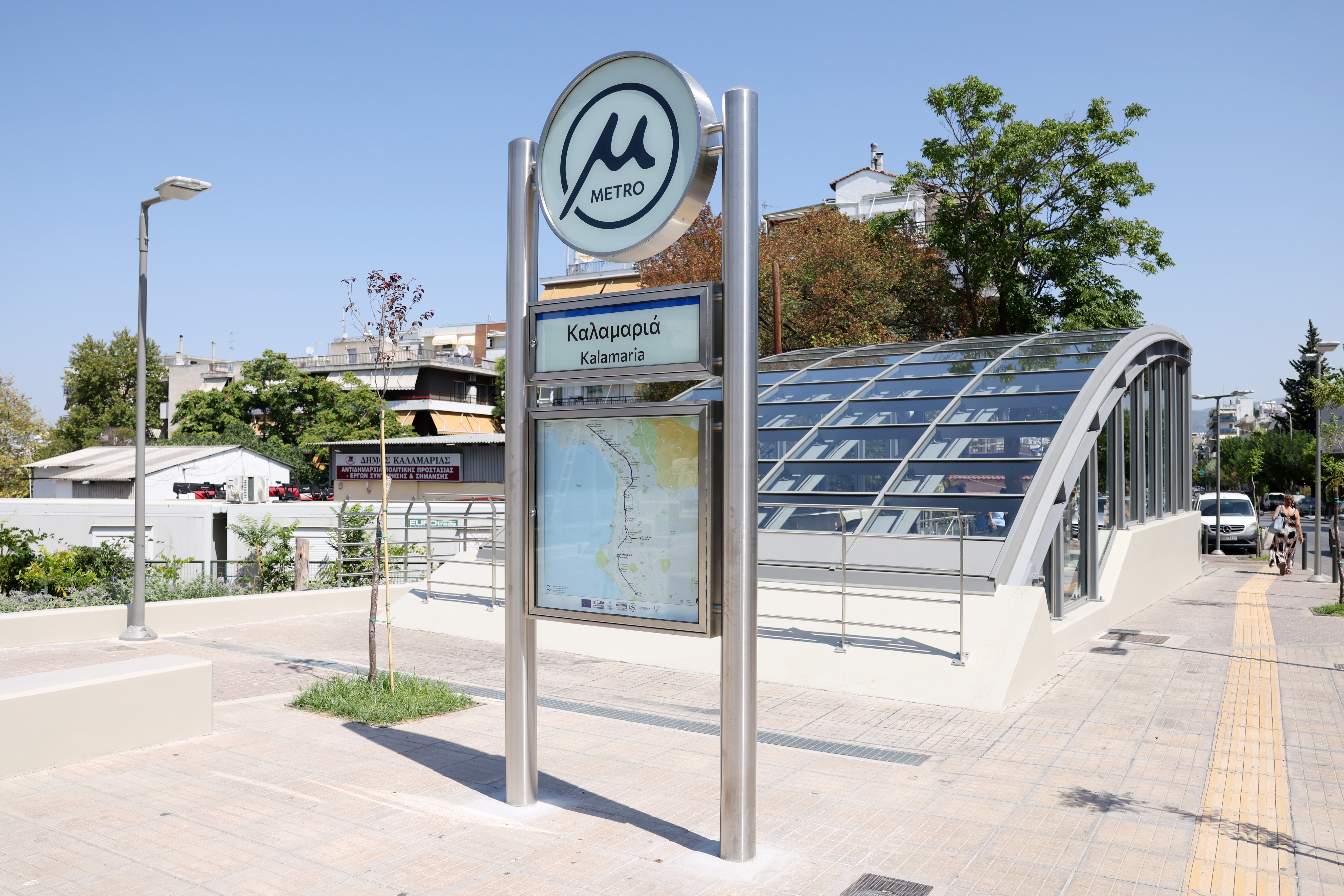
 The extension of Thessaloniki’s main metro line toward the Kalamaria district, southwest of the city officially enters commercial operation on Thursday, August 27, in the presence of Prime Minister Kyriakos Mitsotakis.
The inauguration ceremony for the new line is scheduled for 9:30 a.m. at Mikra station, marking the start of a series of government announcements ahead of the 90th Thessaloniki International Fair, Greece’s largest annual trade and business event.
A test run took place Wednesday morning in the presence of media representatives. According to the Ministry of Infrastructure and Transport, the test confirmed the new line’s “operational readiness” following the completion of testing and certification procedures, during which the new trains and the entire network underwent full simulations of normal operations.
Referring to outstanding work related to the completion of the metro extension, Infrastructure and Transport Minister Christos Dimas said that “our efforts are continuing above ground as well.”
“The extension to Kalamaria is not the final step. We are implementing a specific plan for the expansion of the metro and the overall strengthening of public transportation in Thessaloniki, so that it can meet the current and future needs of residents,” Dimas said.
‘Metro to western Thessaloniki by 2035’
Infrastructure and Transport Deputy Minister Nikos Tachiaos told reporters that, if the studies progress as planned and European funding tools are secured, the metro could reach northwestern Thessaloniki by 2035.
“Yes, it is an achievable goal if everything moves forward without problems and according to our plan,” Tachiaos said.
He also referred to the outstanding issues surrounding the smooth operation of the new line to Kalamaria, the opening of a street under which the metro passes, named Pontou street. The Deputy Minister said such a project would allow for the better better connection between public transportation above and below ground as well as the faster access of emergency vehicles to the metro in case of a crisis.
“We have three stations underneath fields, and this cannot continue. It is also a matter of safety for the metro itself,” Tachiaos mentioned. “The final outstanding expropriation issues, amounting to approximately €7 million, have been resolved, and the contract is undergoing pre-contractual review by the Court of Audit.
“The opening of Pontou Street and the delivery of the metro to residents could not have been achieved without the municipality’s cooperation, and I would therefore like to thank the mayor of Kalamaria, with whom we are in daily communication and cooperation. Pontou Street, together with the metro, will create a different municipality of Kalamaria and, above all, a different Thessaloniki. This will be a different city.”
According to ministry officials, operation of the metro’s main line has already reduced the number of vehicles in central Thessaloniki by 15%, while daily metro traffic is expected to increase by at least 60,000 passengers.
The journey from Mikra to the New Railway Station, the main terminal of the city, will take approximately 24 to 26 minutes, depending on how trains alternate between the network’s two branches, bringing travel time from Kalamaria to central Thessaloniki to less than 20 minutes.
Technical details of the new line
The Kalamaria extension runs entirely underground for 4.78 kilometers, with two independent single-track tunnels. It also includes three ventilation and electromechanical equipment shafts, three railway crossovers and a stabling facility.
The extension includes five new stations: Nomarchia, Kalamaria, Aretsou, Nea Krini and Mikra. The new stations serve their respective neighborhoods and significantly improve access to and from central Thessaloniki.
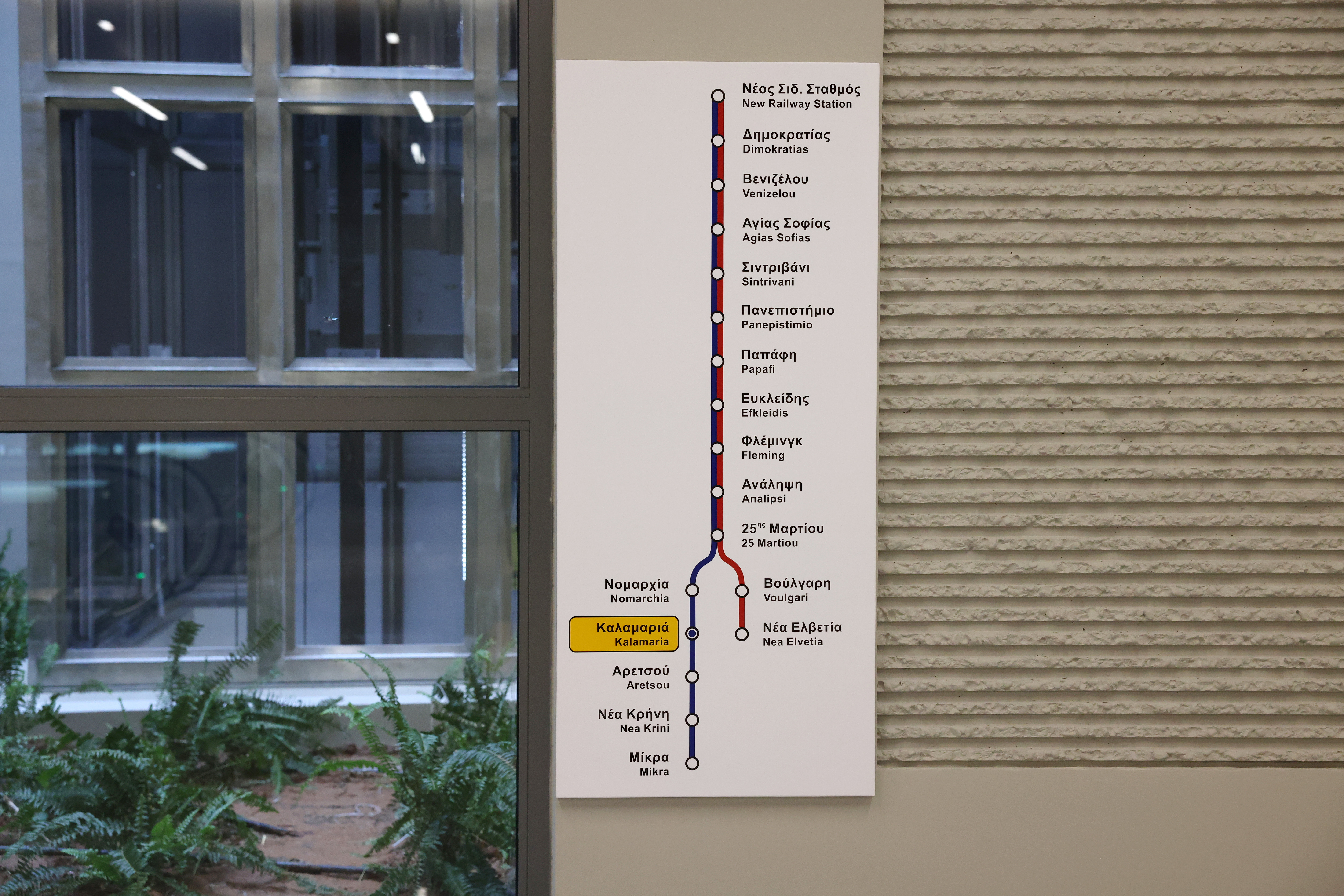
With the completion of the extension, the Thessaloniki metro now has a total network length of 14.4 kilometers, with 18 stations and a total fleet of 33 state-of-the-art automated trains.
According to the Ministry of Infrastructure and Transport, projected demand for the extension is estimated at approximately 63,000 passenger boardings per day. The new line is also expected to remove around 12,000 cars from the road network each day, resulting in a corresponding reduction of approximately 25 tons of CO₂ emissions daily.
From the starting point of the main line at the New Railway Station to the extension’s terminus at Mikra, the full journey will take approximately 25 minutes, providing a fast and reliable connection between Kalamaria, central Thessaloniki and the western entrance to the city.
The extension operates as a new branch of the network and connects to the main line in the area of the 25th Martiou station. According to the Ministry of Infrastructure and Transport, after the split, trains can travel either toward Mikra or toward Nea Elvetia, with both branches sharing the same Operations Control Center.
“The planned headway can reach 90 seconds on the common central section, 2.5 minutes on the branch toward Mikra and four minutes on the branch toward Nea Elvetia. Based on the initial design, of every three consecutive trains, two will head toward Mikra and one toward Nea Elvetia,” the ministry said in its announcement.
The project includes 15 new, fully automated and air-conditioned trains, each consisting of four cars and capable of carrying 450 passengers. Together with the 18 original trains, the fleet now totals 33 trains.