 Μake us preferred on Google
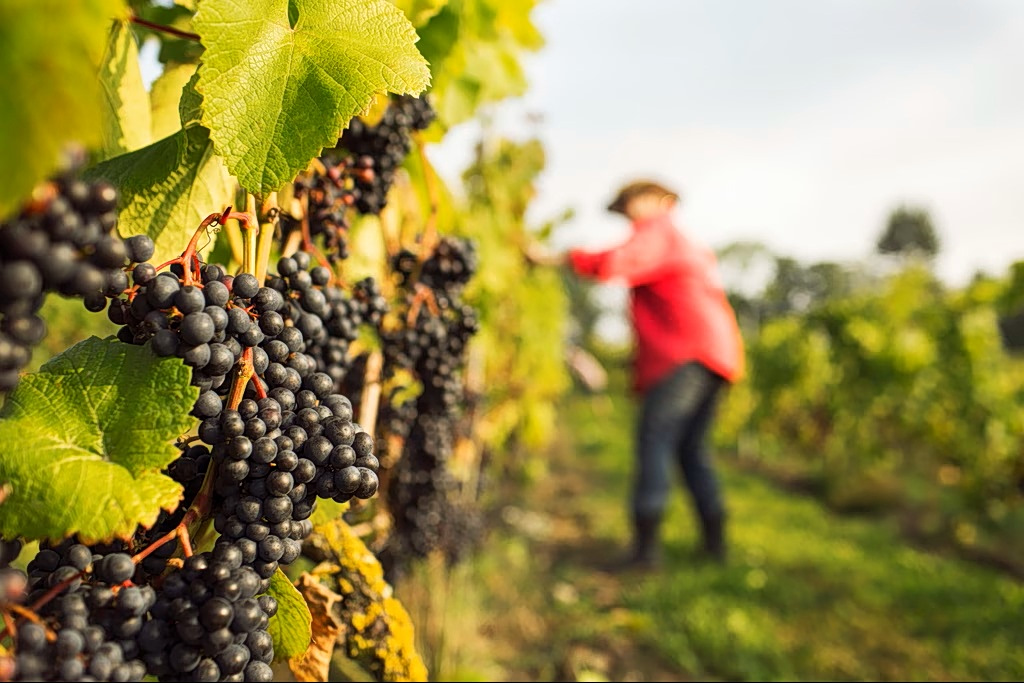
Greek wine production is expected to marginally increase this season (2026/2027), reaching approximately 1.67 million hectoliters, even as high temperatures and what some meteorologists describe as “extreme weather” continue to challenge vineyards across Europe.
At the same time, mounting wine stocks in the continent’s largest producing countries are raising concerns – on the part of producers – about market imbalances and the future outlook for prices; consumers, on the other hand, would benefit from voluminous stocks.
The latest European Commission estimates presented by the Central Cooperative Union of Wine Products (KEOSOE) put Greek output at approximately 1.67 million hectoliters, up 1.2% from around 1.65 million hectoliters in 2025/2026. The increase amounts to roughly 20,000 hectoliters.
The rounded figures are consistent with reports published on Monday.
KEOSOE’s more precise preliminary estimate, released earlier this month, puts production at 1,66 million hectoliters, up 1.31% from 1,64 million hectoliters in the previous wine year. The organization describes the projected volume as the third lowest on record.
The modest recovery does not signal a return to historical production levels. Greek wine output remains below its recent five-year average, reflecting the combined effects of extreme weather and the contraction of vineyard acreage. The outlook is particularly concerning for producers facing pressure on grape prices despite relatively limited domestic supply.
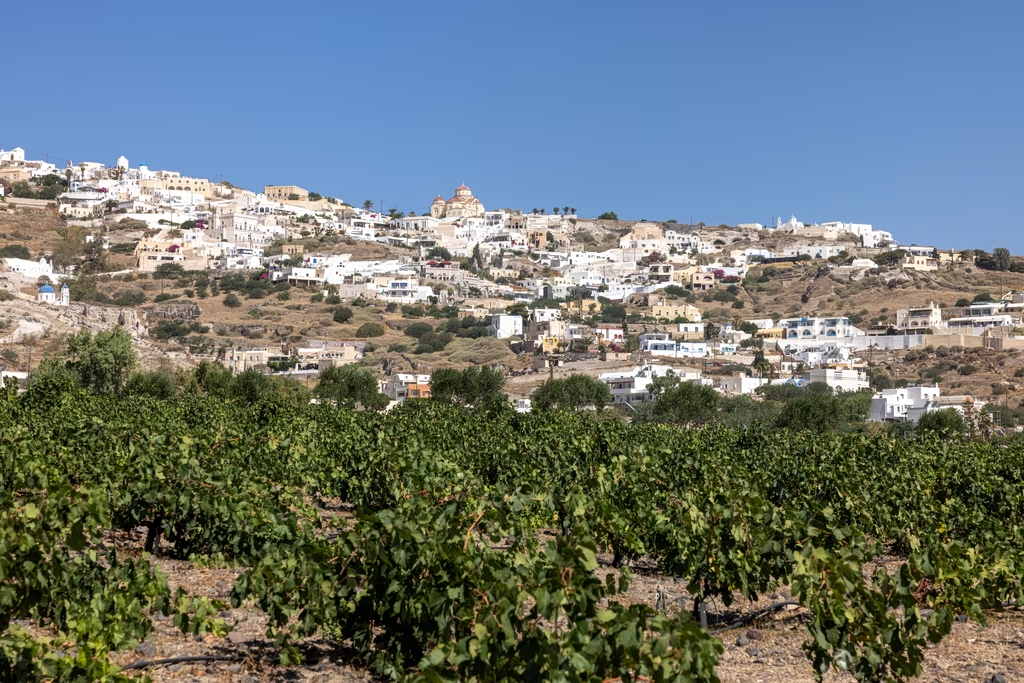
Recent developments in Santorini, for instance, illustrate the scale of the climate challenge facing parts of the domestic wine industry. Prolonged drought and rising temperatures have put the iconic island’s vineyards under severe strain, with the expected grape harvest falling from approximately 2,500 tons in 2020 to as little as 400 tons in 2026. The island’s internationally recognized Assyrtiko production has been particularly affected.
European output remains broadly stable
Wine production across the European Union is forecast to remain almost unchanged at 139.18 million hectoliters in 2026/2027, although national trends vary considerably. Italy remains the bloc’s leading producer, followed by Spain and France.
Italian output is estimated at 41.12 million hectoliters, down 7.6% from 44.49 million hectoliters in 2025. Spain is forecast to produce 37.6 million hectoliters, according to the European Commission.
However, Spanish agricultural cooperatives published a lower estimate in early October, projecting combined wine and must production of approximately 34 million hectoliters, compared with 33.16 million hectoliters in 2025.
In France, the European Commission’s Directorate-General for Agriculture forecasts production of 33.86 million hectoliters, below the 34.9 million hectoliters estimated by French agricultural statistics agency Agreste on Oct. 7. The Commission’s upward revision from its September forecast largely reflects better yields in the Languedoc-Roussillon region.
Germany is expected to record an increase, with production reaching 8.03 million hectoliters, up from 7.55 million in 2025.
Portugal’s output is forecast to rise 12% to 6.67 million hectoliters, while Romania is expected to post a 32.5% increase to 4.57 million hectoliters.
By contrast, Hungary and Austria are facing substantial declines. Hungarian production is projected to fall 42% to 1.75 million hectoliters, while Austrian output is expected to drop 32% to 1.74 million hectoliters.