 Μake us preferred on Google
 China today stands in a complex relationship with the legacy of Mao Zedong, the leader who reshaped the country in the 20th century. Fifty years after his death, the country has moved dramatically beyond the economic and political model he established, while retaining elements of his ideology, political practices and national narrative.
The contrast between Mao’s China and the country of the 21st century is stark. Yet the relationship between the two periods is not simply one of rupture. Modern China has also drawn on concepts, political practices and historical narratives that originated during Mao’s rule.
Mao’s rise and the revolutionary struggle
Mao was born on Dec. 26, 1893, in Shaoshan, in Hunan province, into the family of a relatively wealthy landowner. He trained as a teacher and worked in the profession briefly between 1920 and 1921, but his political path would take him in the opposite direction from his family’s interests.
During his studies, Mao became actively involved in the anti-imperialist May Fourth Movement, which called for an end to foreign influence and associated China’s modernization with abandoning the Confucian code and its emphasis on established hierarchy.
In 1921, Mao participated in the founding of the Chinese Communist Party (CCP).
After the alliance between the nationalist Kuomintang and the Communists collapsed in 1927, following the massacre of Communists in Shanghai and failed uprisings in Nanchang and Guangzhou, Mao increasingly turned toward the countryside as the territorial heart of the revolution and impoverished peasants as its revolutionary force.
A prolonged civil war followed in two phases. The first lasted from 1927 until 1937, when Japan invaded China. The second resumed after World War II and continued until October 1949, when the People’s Republic of China was proclaimed.
One of the defining episodes of that period was the Long March, the arduous military retreat of the Chinese Red Army from Jiangxi province in southeastern China to Shaanxi in the northwest. The journey lasted roughly a year, from October 1934 to 1935, and covered about 12,000 kilometers as the Red Army sought to escape encirclement by nationalist forces.
Beyond its military significance, the Long March became a founding myth of the new regime. Chinese leaders repeatedly invoked it as a metaphor for overcoming difficulties. Xi Jinping most recently referred to the Long March in 2019, during the escalation of the trade and technology conflict with the United States.
The Great Leap Forward and the Cultural Revolution
Postwar China began with promises of peace and rapid industrialization, but it soon became deeply involved in the Korean War, with Beijing providing vital assistance to Pyongyang.
The conflict contributed to a lasting distrust of the United States and the West and reinforced China’s drive for greater autonomy. That impulse intensified after the Sino-Soviet split, which followed Moscow’s move toward de-Stalinization beginning in 1956.
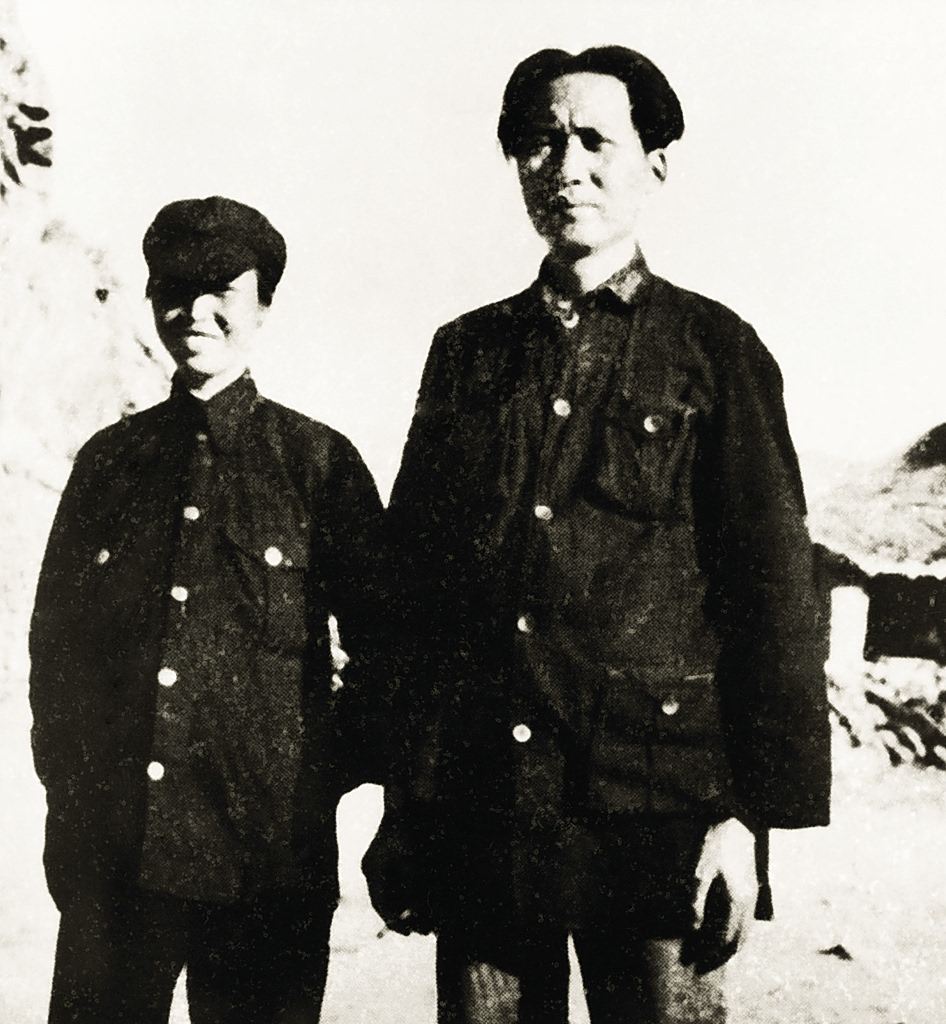
Mao Ze Dong *26.12.1893-09.09.1976+ Politiker; Vorsitzender Kommunistische Partei China; Volksrepublik China Mao mit seiner 2. Ehefrau Ho Zhou Xen (Ho Tzu-Chen, He Zizhen, verheiratet von 1928-1939) – 30er Jahre Mao Ze Dong *26.12.1893-09.09.1976+ Politician; Chairman of the Communist Party of China; People’s Republic of China Mao and his second wife Ho Zhou Xen (Ho Tzu-Chen, He Zizhen), married from 1928-1939 – 30ies
Mao responded with the economic and social campaign known as the Great Leap Forward. It was an extreme variation of the Soviet five-year plans, implemented through a highly decentralized state structure and with practices that went beyond scientific logic, including backyard steel production and the campaign against the “Four Pests.”
The consequences were catastrophic. Agricultural production collapsed, contributing to the Great Famine, which peaked between 1959 and 1961 and is estimated to have caused between 20 million and 45 million deaths.
The experience of the Great Leap Forward was compounded by political repression. Beginning in the late 1950s, the CCP leadership launched a harsh campaign against intellectuals and artists who had taken seriously the earlier invitation to engage in free criticism under the slogan “Let a hundred flowers bloom.”
The repression reached its peak in the mid-1960s with the Cultural Revolution, a political movement aimed at restoring Mao’s control over the party after he had been marginalized following the failure of the Great Leap Forward.
It was during this period that Mao acquired the title “Great Helmsman,” emphasizing his portrayal as the only leader capable of steering the Chinese nation through its historical challenges.
The country descended into widespread disorder. Bloody street battles and the torture of opponents became commonplace, while the situation deteriorated further between 1967 and 1969 into a multifaceted civil conflict involving rival factions across the country.
Mao’s death in 1976 and the arrest of his most hard-line followers in the party leadership, known as the Gang of Four, marked the official end of the Cultural Revolution.
From Mao to economic transformation
Deng Xiaoping, who had been purged twice during the preceding years, eventually took control of the country in 1978. In 1981, he promoted a resolution that described the Cultural Revolution as the “most serious setback” since 1949.
Official party bodies estimated in 1987 that about 1.7 million people had died violently during the Cultural Revolution. The economic and social losses were far greater and difficult to quantify.
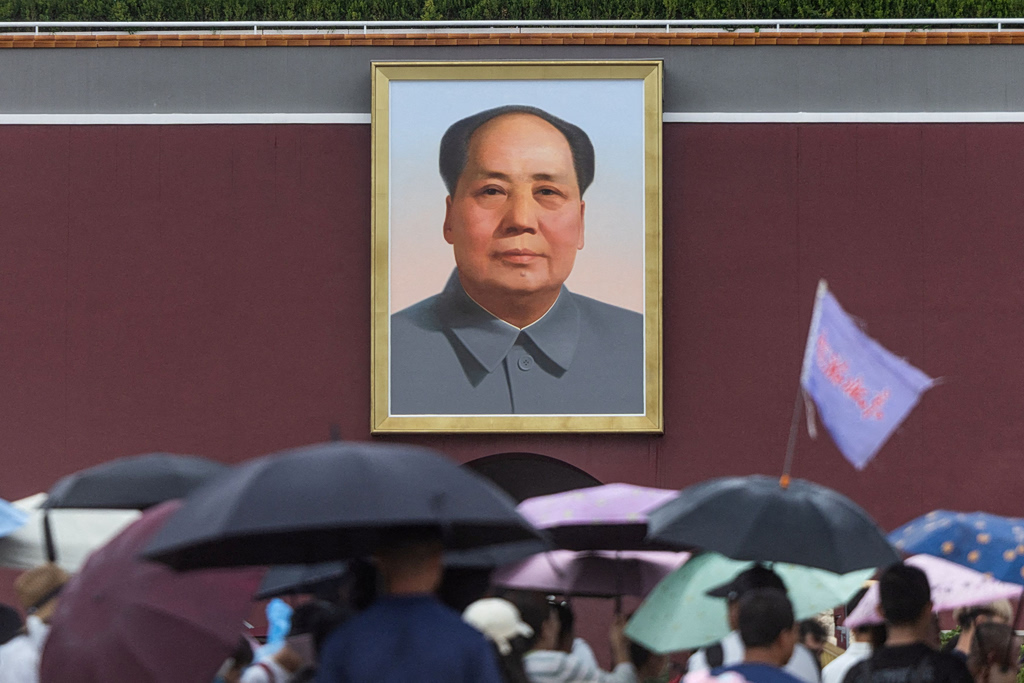
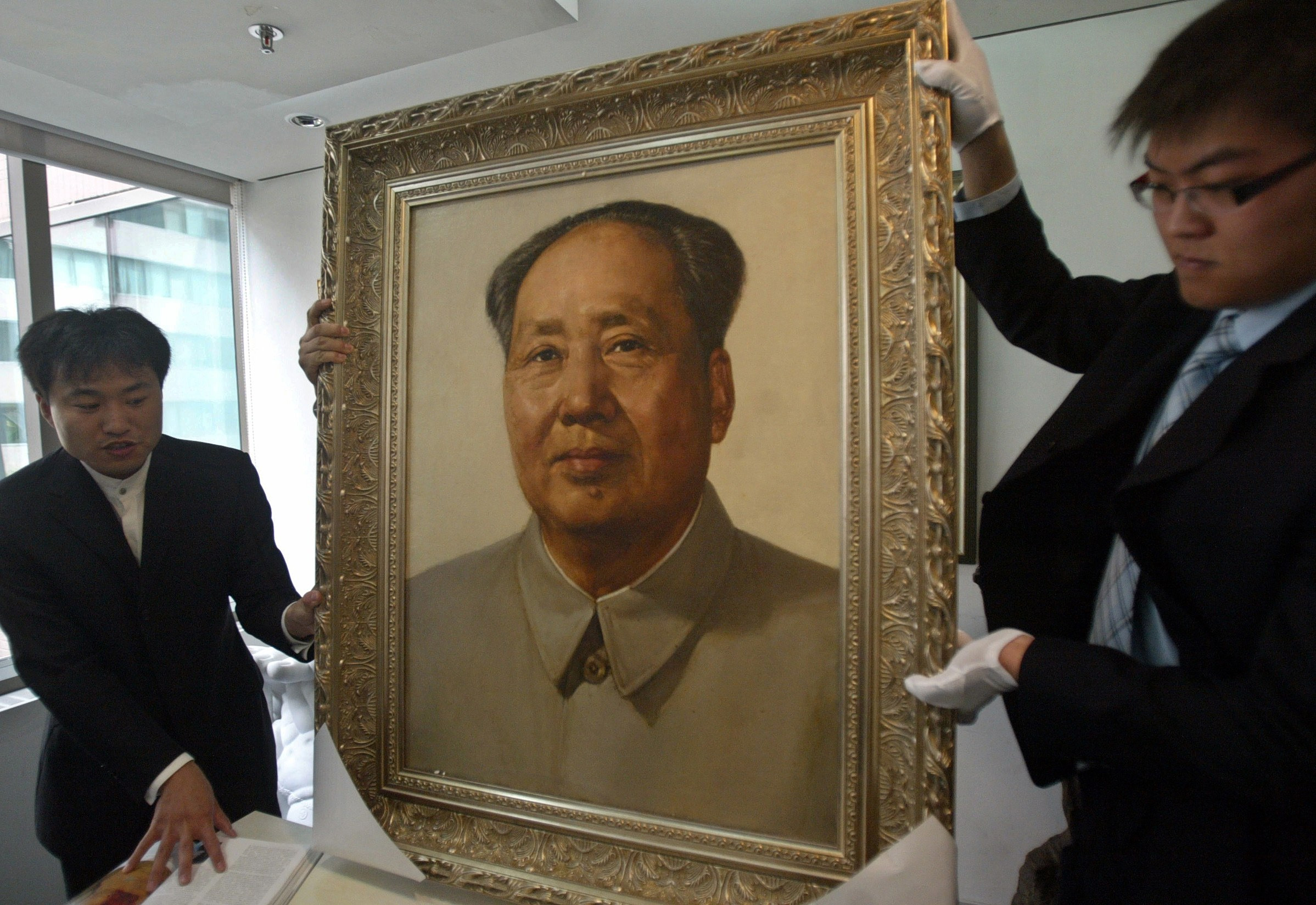
FILE PHOTO: People with umbrellas gather in front of Tiananmen Gate featuring a portrait of late Chinese leader Mao Zedong during the rainy weather in the wake of typhoon Dolphin, in Beijing, China, August 12, 2026. REUTERS/Maxim Shemetov/File Photo
Schools were closed for three years between 1966 and 1969 and reopened in 1970 under strict political control. They did not return to full operation until 1977, leaving millions of young people to reach adulthood without adequate academic preparation.
The political repression that followed Mao’s era was different in scale. Even the crackdown that followed the 1989 student uprising in Tiananmen Square, which included dozens of executions, the imprisonment of more than 1,000 CCP officials and the expulsion of around 80,000 party members, did not lead to a further escalation of political and economic isolation.
Instead, China moved toward greater economic liberalization.
Deng’s 1992 “Southern Tour” was marked by the sidelining of hard-line ideological opponents, closer ties with Hong Kong’s business community and the creation of major technology hubs. The result was China’s transformation from an economic outcast into a global economic power.
What remains of Mao’s political legacy?
There are continuities between Mao’s political system and present-day China, particularly in the use of political purges.
The campaign against corruption has repeatedly served as a central justification for removing political opponents and senior officials. The most recent interventions came at the beginning of 2026, when two senior members of the Central Military Commission were removed.
The commission, the highest body overseeing China’s armed forces, was left with only two of the seven members of its original composition when its current term began in 2022.
Yet the political campaigns of Mao’s successors have not had the same mass character as those of the Mao era.
The contrast between China in 2026 and China in 1976 is even more striking economically. In 1975, China’s per-capita GDP was comparable to that of countries including Bangladesh, Chad, Malawi, Kenya, Cambodia and Sierra Leone.
Today, China’s per-capita GDP stands at about $14,870, placing it roughly between 73rd and 93rd globally, depending on whether International Monetary Fund or World Bank rankings are used.
China’s total GDP is the world’s second-largest in nominal terms, at about $21 trillion, behind the United States. Its military capabilities have also reached global scale, with a military budget of $277 billion that has risen continuously for three decades.
This transformation is the most visible difference between the China Mao left behind and the country that emerged after his death.
A legacy of destruction and opportunity
Some analysts nevertheless attribute China’s later economic rise in part to the low starting point inherited from Mao.
Andrew Walder, a Stanford University sociology professor and author of China Under Mao, described this combination of destruction and opportunity in a 2015 interview with The New York Times.
At the time of Mao’s death, Walder said, China was economically backward and deeply divided. But because the economy was so underdeveloped and bureaucratic interests were comparatively weak, market reform could be combined with a broader project of national rejuvenation, including restructuring the economy along market lines and rebuilding the party and bureaucracy.
The transformation therefore did not simply erase Mao’s legacy. It developed partly in response to the conditions his rule had left behind.
Mao’s influence in China today
Mao’s influence can also be seen in China’s cultural and ideological debates.
Reflecting Mao’s historical description of art as an integral part of the revolutionary machine, Xi Jinping urged artists in 2014 to focus on creating “moral art” rather than becoming “slaves to money.”
The statement reflected a broader concern within China’s leadership about the unchecked individualism associated with rapid capitalist development.
That tension is also visible in debates over China’s work culture and the attitudes of younger generations. The country has struggled to balance economic growth with a growing desire among some young people to step back from an exhausting work culture, reflected in the “tangping,” or “lying flat,” movement.
In December, the official theoretical journal of the CCP Central Committee, Qiushi, published a collection of Xi’s interventions from 2015 concerning the importance of consumption.
Xi repeatedly emphasized the need to boost consumption as a national task and as a means of strengthening the domestic market, rather than framing it primarily as a matter of individual satisfaction.
This thinking is also reflected in the concept of “common prosperity,” formally articulated in a 2021 directive following a meeting of the Central Committee for Financial and Economic Affairs.
The concept has roots in the Mao era, when economic equality was a central goal of the new socialist state. Deng later reinterpreted the idea in 1978 to accommodate the opening to private enterprise and the creation of Special Economic Zones.
Today, common prosperity has returned as a framework for reducing the gap between rich and poor while maintaining the profitability of capitalism.
A new generation’s Mao nostalgia
The continuing tension between Mao’s founding myth and China’s digital, modernized identity periodically produces a distinctive form of nostalgia for the values associated with the country’s early post-revolutionary years.
The popularity of Nanjiecun village in Henan province is one example. The village still operates under a collectivist economic model and is filled with portraits of Mao alongside those of Karl Marx, Friedrich Engels and Joseph Stalin.
Its appeal points to a newer current of nostalgia among some younger Chinese people who are struggling to reconcile national duty with personal fulfillment.
Fifty years after Mao’s death, China is therefore neither simply Maoist nor completely detached from Mao’s legacy. The country has undergone an extraordinary economic transformation, but elements of the political language, historical mythology and ideological concerns of Mao’s era continue to appear in its contemporary identity.