 Μake us preferred on Google
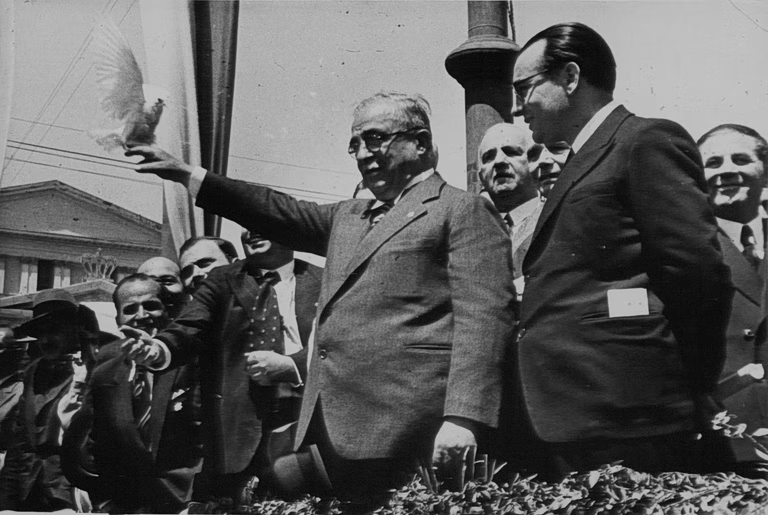
 Ninety years have passed since the establishment of the Aug. 4, 1936 dictatorship, imposed by then-Prime Minister and former military officer Ioannis Metaxas.
After a long military career and later entering politics, Metaxas was appointed prime minister in April 1936 by King George II following the sudden death of Prime Minister Konstantinos Demertzis.
Metaxas’ government received a vote of confidence from 241 of the 300 members of Parliament, while lawmakers also authorized him to suspend parliamentary sessions and govern through legislative decrees carrying the force of law.
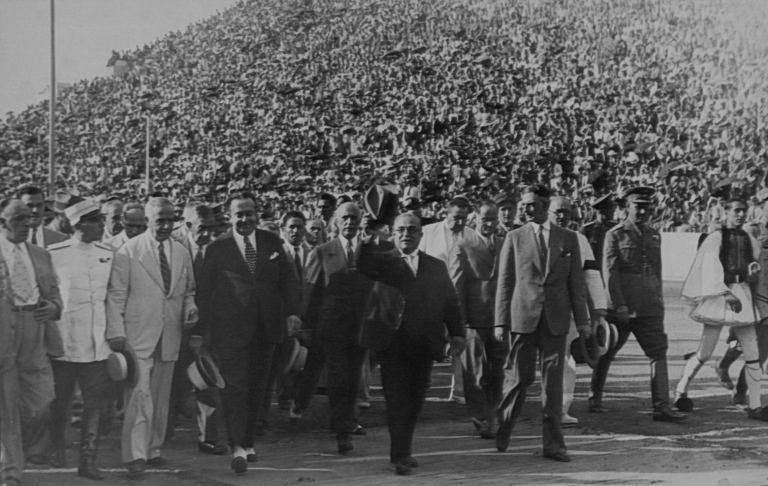
On Aug. 4, 1936, with the consent of King George II, Metaxas suspended several articles of the Greek Constitution and imposed an authoritarian dictatorship. Through imprisonment, exile, arbitrary arrests, propaganda and other measures, the regime targeted the existing political establishment and, above all, the Communist Party of Greece (KKE).
The justification given for imposing the dictatorship was that a planned general strike “would have turned into an insurrection aimed at overthrowing the country’s lawful political and social order.”
Press censorship was imposed immediately. The newspaper Eleftheron Vima, the predecessor of today’s To Vima, published a censored account on Aug. 6, 1936.
How Democracy Was Suspended
The newspaper reported:
“On the evening of Aug. 4, 1936, the Cabinet met at the Ministry of Foreign Affairs under the chairmanship of the Prime Minister to decide how to address the announced general workers’ strike.
“During the meeting, responsible information was received from the competent police and military authorities indicating that the planned general strike would turn into an insurrection aimed at overthrowing the country’s lawful political and social order.
“After a brief discussion, the Cabinet decided to confront the situation by adopting a series of sweeping measures to prevent any disturbance of public order.
“To this end, while the Cabinet meeting was still in session, the relevant decrees were drafted. They were taken by the Prime Minister to the royal palace, where they were signed by the King following the appropriate recommendation.
“These decrees were published that same night in a special edition of the Government Gazette, together with the Cabinet’s proclamation to the Greek people.”
From Lawful Prime Minister to Dictator
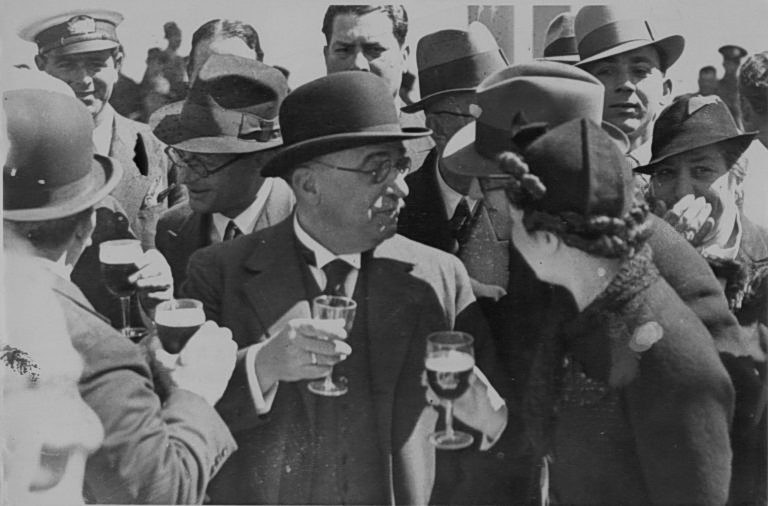
Writing in To Vima on Aug. 4, 1996, I.M. Konidaris, a professor at the Athens Law School, highlighted the significance of the fact that Metaxas was Greece’s lawful prime minister when he established the dictatorship.
“Exactly sixty years ago today, General Ioannis Metaxas, in agreement with King George II, abolished the Constitution and imposed a dictatorship, interrupting the normal course of political and social life in our country,” Konidaris wrote.
“It should not be forgotten that this outcome was decisively aided by the crisis among the political forces of the time and their inability to reach an understanding.
“The culmination of this situation was Parliament’s overwhelming approval of the government led by Ioannis Metaxas and, in particular, the authorization granted to issue legislative decrees with the force of law, which significantly facilitated the establishment of the dictatorship of Aug. 4, 1936.”
As reflected in Metaxas’ explanatory report to King George II, as well as in the decrees dissolving Parliament and imposing martial law, the architects of the dictatorship justified their actions by citing a serious threat to public order.
In his report to the king, Metaxas wrote:
“Your Majesty,
“The Government over which I have the honor to preside considers it its duty to report to Your Majesty that the country finds itself in a state of grave unrest and on the eve of a subversive uprising.”
In the decree imposing martial law, King George II wrote:
“Upon the proposal of the Cabinet, we suspend the provisions of Articles 5, 6, 10, 11, 12, 14, 20 and 95 of the current Constitution throughout the entire state, owing to the threat of a serious disturbance of public order.”
The Aug. 4 Regime and Greece’s 1940 War
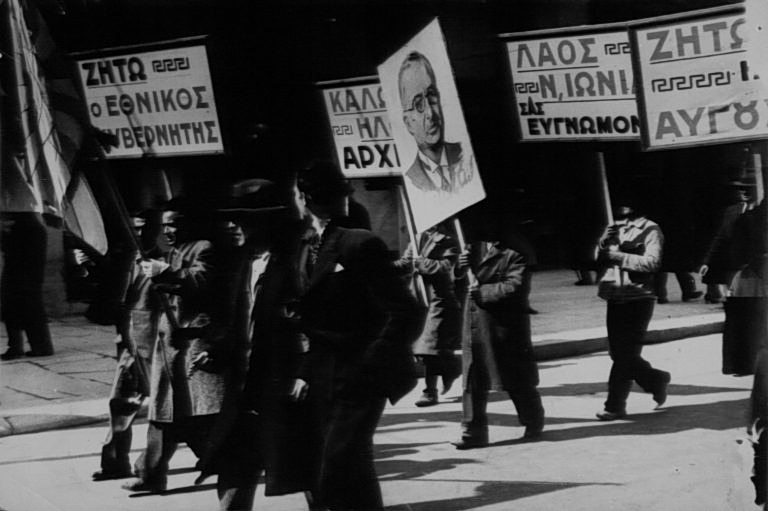
The Metaxas dictatorship ended with Metaxas’ death on Jan. 29, 1941, during the Greco-Italian War, only weeks before Nazi Germany invaded Greece. Press censorship remained in force until the country’s liberation on Oct. 12, 1944.
In May 1945, the newspapers of publisher and journalist Dimitrios Lambrakis resumed publication after years of censorship. Eleftheron Vima became To Vima, while Athinaika Nea was renamed Ta Nea.
In its editorial published on May 17, 1945, Ta Nea expressed its views on the Metaxas dictatorship and its impact on Greece after years of being unable to publish freely.
Among other things, the newspaper wrote:
“Our political development suffered an interruption of almost nine years. Throughout that period we remained motionless, uninformed and isolated, with our doors and windows closed to the currents of ideas circulating throughout the world and to the intellectual exchange made possible by the air of freedom.
“Almost five of those years belonged to the dictatorship, which had frozen Greek public life. It should not be lightly or uncritically argued that one of the most glorious wars in our history was fought under the dictatorship.
“We know this. Yet that unparalleled outburst of Greek heroism—and regardless of the historical observation that it did not achieve its full potential because it was constrained by the secretive and suspicious methods that characterize the conduct of war under dictatorships—cannot be confined within the narrow limits of a political regime.
“Especially not that of Aug. 4. By its very nature, the greatest battle fought by the Greek people in defense of their national freedom, once they realized it too was under threat, cannot be linked to a regime whose origins had already poisoned their political freedoms.
“The Albanian campaign gave expression to the shared Greek desire for freedom, and within the collective determination that drove that powerful effort against the Italian dictator lay, even if unconsciously, the reaction of a people living under oppression.
“The dictatorship was the first to block every channel of intellectual life in Greece, forcing millions of people to breathe, day and night, in the suffocating atmosphere of Fascist doctrine. (…)
“The five-year period of official Greek Fascism, through its systematic assault on every center of democratic tradition, brought about Greece’s most destructive regression.”