 Μake us preferred on Google
 Maria Bonaparte was born on July 2, 1882, in Saint Cloud, near Paris, the great grandniece of Napoleon Bonaparte. Her father was Roland Bonaparte, grandson of Lucien Bonaparte, Napoleon’s brother. Her mother, Marie Felix Blanc, daughter of the Monte Carlo real estate magnate Francois Blanc, died shortly after giving birth to her.
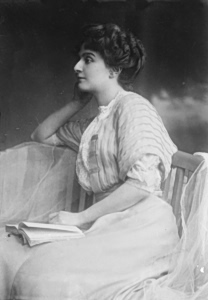
Marie Bonaparte
Heiress to one of the largest fortunes in France, Maria grew up isolated and closely guarded by her father and grandmother, who feared losing control of the family wealth. As a young woman she wanted a husband who could offer her both happiness and the royal title her own family lacked.
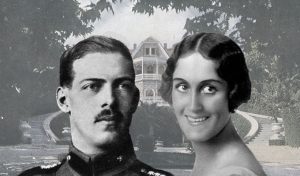
Her father arranged a match with Prince George of Greece and Denmark, second son of King George I of Greece and Queen Olga. As part of the agreement, George gave up any claim to his bride’s fortune. The couple married in a civil ceremony in Paris on November 21, 1907, followed by a religious ceremony in Athens on December 12 of that year. From then on she was formally known as Princess George of Greece.
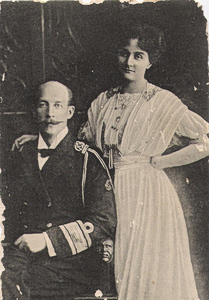
Maria Bonaparte and her husband Prince George of Greece and Denmark
Before the wedding, Maria learned the truth about her husband’s closest bond: George was involved in a long standing, intimate relationship with his own uncle, Prince Valdemar of Denmark. According to her later writings, on one occasion she, George, and Valdemar found themselves together in what she described in her diary as a tender moment shared between the three of them.
The marriage produced two children, Prince Peter, born in 1908, and Princess Eugenie, born in 1910, but the couple rarely lived together. After 1912, disruptions to the Greek monarchy kept them mostly apart, and Maria settled almost permanently in Paris. There she began a long running affair with the French statesman and prime minister Aristide Briand, who visited her regularly, reportedly even in George’s presence. By most accounts, George was aware of his wife’s affairs and unbothered by them, since he had no romantic interest in her himself. Despite it all, the two remained close for the rest of their lives.
It was in Paris that Maria Bonaparte’s own path took shape. Struggling with personal difficulties, she turned to psychoanalysis and became a patient, then a close associate, of Sigmund Freud. She went on to found the Paris Psychoanalytical Society and translate much of Freud’s work into French. Her wealth and connections later proved decisive: in 1938, after Nazi Germany annexed Austria, she helped secure Freud’s escape from Vienna, paying part of the ransom the Nazis demanded and helping arrange his family’s passage to safety in London.
Maria Bonaparte died of leukemia in 1962 at the age of eighty. In keeping with her wishes, she was cremated, and her ashes were interred at the royal cemetery at Tatoi in Greece.