 Μake us preferred on Google
The Trump administration has warned European Union leaders against imposing a tax on Big Tech, as they meet in Brussels to weigh new ways of financing the bloc’s next budget.
In a statement to POLITICO, a US State Department spokesperson repeated Washington’s long-standing position. The spokesperson said the United States opposes the proposed EU-wide digital levy, just as it has opposed other digital services taxes that it says discriminate against American companies and hurt consumers.
Costa Revives the Idea
On Saturday, European Council President António Costa proposed restarting talks on a European digital tax. The aim is to help pay for the EU’s next long-term budget, which the Commission originally put at €2 trillion, and to break the deadlock over its final size.
The levy would apply to companies with global turnover of more than €750 million, at least €50 million of which is earned in Europe. That threshold would capture US tech giants such as Google, Meta and Amazon.
What Costa Is Proposing
According to Reuters, Costa proposed that the EU put a 3% tax on the annual net turnover from online advertising, digital intermediation services and user-generated data. That makes it a tax on revenue, not on profits.
The digital levy is part of a leaner overall package. In his revised negotiating proposal, Costa put the next budget at approximately €1.78 trillion, compared with almost €2 trillion in the Commission’s initial plan, a cut of €204 billion, or about 10%. Costa’s figure is €40 billion below the proposal presented by the Irish EU presidency in October.
Costa’s plan primarily reduces funding for the European Competitiveness Fund, which aims to help European industry compete with China and the United States, as well as defence and external spending. Agriculture and cohesion programs face smaller cuts.
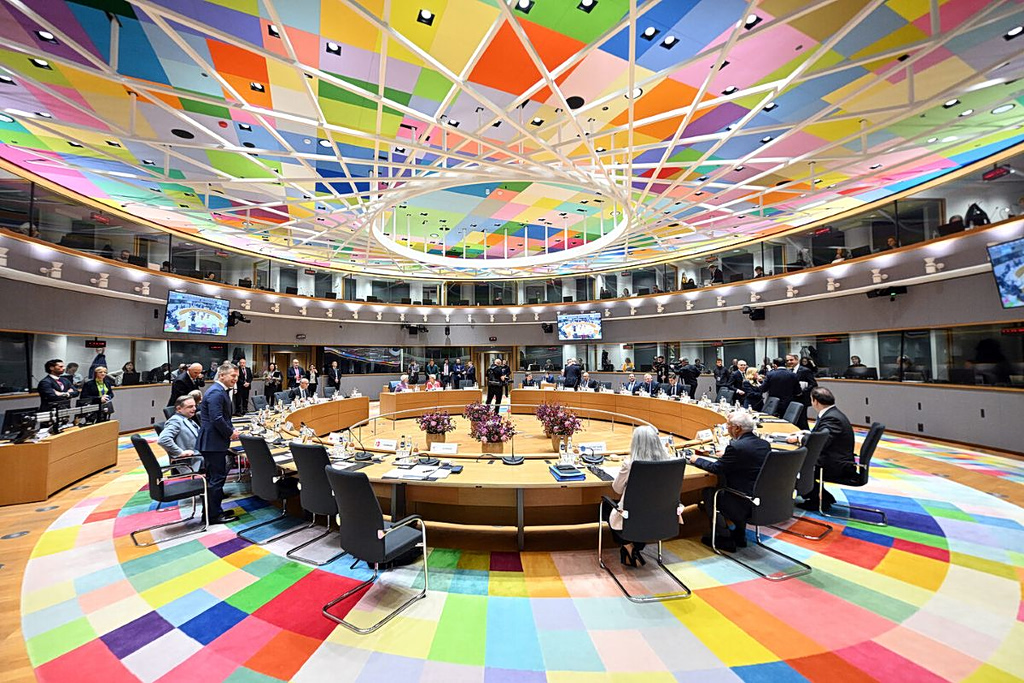
The US warning came as EU leaders opened a two-day extraordinary summit in Brussels on Thursday to discuss Costa’s proposals, with the goal of reaching an agreement in December. They are tackling the budget’s difficult funding question: how much to spend, and how to ease the pressure on national treasuries by raising new revenue through what are known as “own resources.”
An Old Proposal Returns
The European Commission first proposed an EU-wide digital tax in 2018. It later shelved the plan to give negotiations led by the Organisation for Economic Co-operation and Development (OECD) time to reach a global agreement. Meanwhile, countries including France, Austria and Italy introduced their own national levies, prompting threats of retaliation from Trump’s first administration.
Support for the idea had been limited until recently. In September, an Irish presidency note found that only a small group of countries saw the digital levy as worth considering, while the most widely accepted option was expanding the Carbon Border Adjustment Mechanism (CBAM). By October, the Commission was examining whether CORE, the proposed levy on large companies, could be combined with a digital levy, another controversial proposal that risks provoking Washington because most of the world’s biggest technology companies are American.
The idea is now gaining traction again, with France, Denmark, Spain and Italy among its backers. The renewed push comes a day after Washington threatened new tariffs on the EU following a separate investigation into industrial overcapacity.
Briefing reporters on Wednesday ahead of the summit, an EU diplomat argued that the companies concerned gain enormously from the single market while some of their activities are heavily undertaxed.
The diplomat brushed aside concerns that the plan could provoke Washington, saying the US does not consider Europe’s feelings when it takes its own measures. The diplomat also said there had been very little strong opposition in early talks on the proposal.
Divisions Among Member States
However, three EU diplomats said Ireland, Sweden, Malta, Germany and the Netherlands remain cautious. Because a new EU tax requires unanimous approval, Costa’s plan still looks unlikely to succeed.
Still, an internal note seen by POLITICO says the German government will look at the proposal “with an open mind.” According to the note, Berlin wants to know whether the tax could deliver money to the EU budget quickly enough to help solve the funding problem, and it also wants clarity on the international context.
Irish Prime Minister Micheál Martin is leading the opposition. Arriving at the leaders’ meeting, he repeated Ireland’s strong opposition to a digital tax and said such a levy runs counter to the drive to make Europe more competitive. Ireland has also previously said it would be “very strongly opposed to any move on the corporate tax” when it comes to own resources in the next budget.
Tech industry groups are also pushing back. On Thursday, a coalition of 11 trade associations, including the Brussels-based CCIA Europe, DOT Europe and ITI, whose members include US tech giants, warned that digital services taxes have repeatedly led other countries to threaten retaliation.