
 Μake us preferred on Google
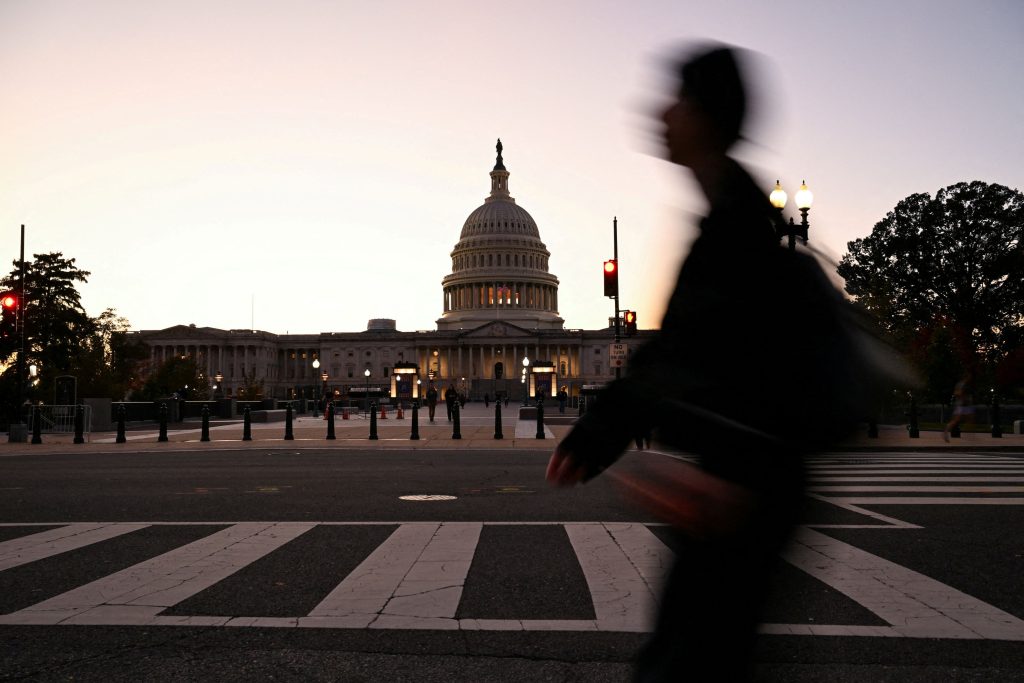
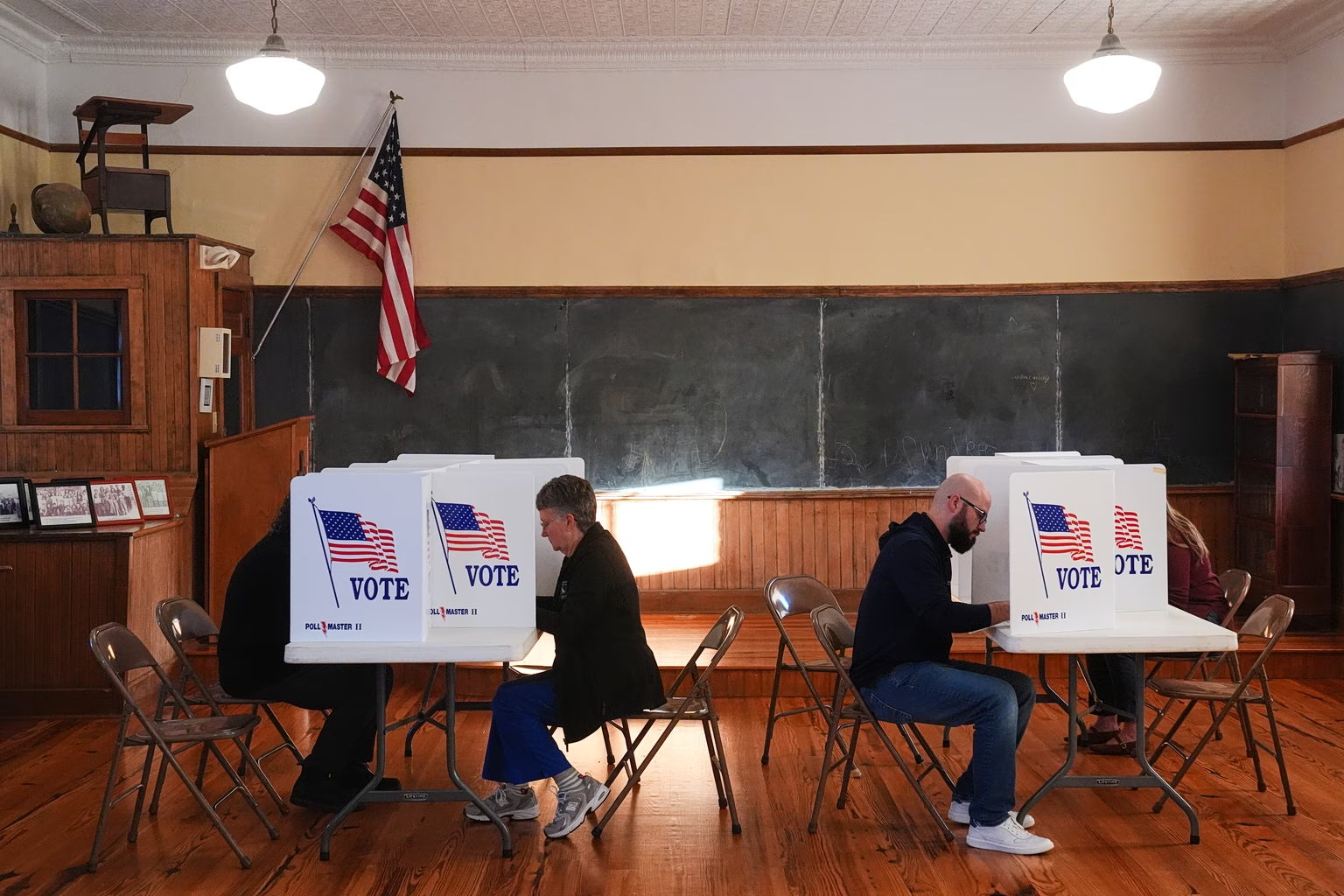
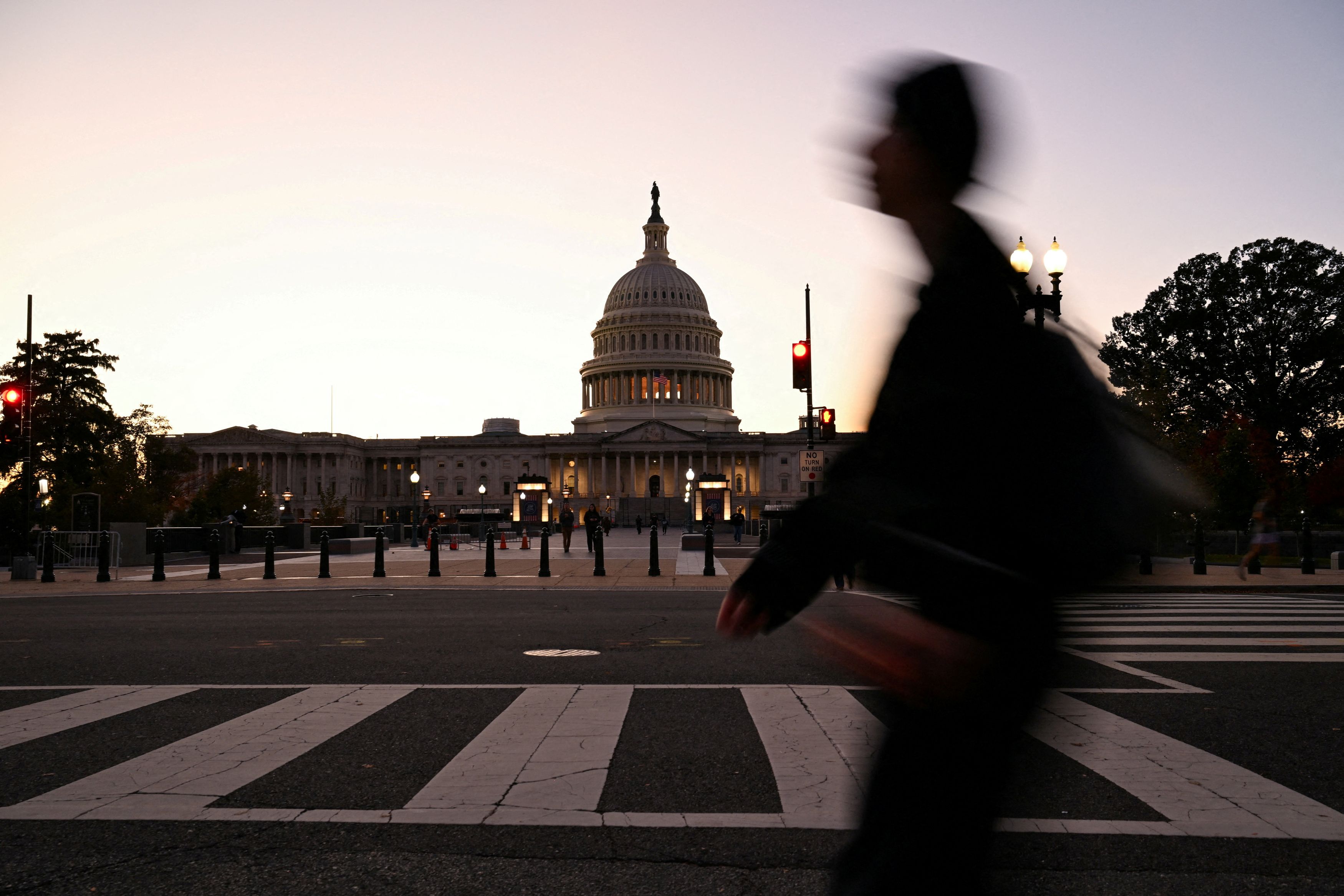
Democrats have captured majorities in both chambers of Congress, delivering a sweeping midterm election victory that extended deep into Republican strongholds and dealt President Donald Trump a major political setback.
The scale of the Democratic gains became increasingly clear as results came in, with the party winning races in states long considered beyond its reach, including Texas, South Carolina and Iowa. The victories reflected widespread voter frustration with Trump’s handling of the economy and his decision to launch a war against Iran in February, which sent gasoline prices sharply higher.
Democrats flipped six Republican-held Senate seats, securing control of the chamber. They also held on to competitive seats in Michigan and Minnesota, where Democratic Lieutenant Governor Peggy Flanagan defeated Republican Michele Tafoya, according to projections by US media outlets.
Tafoya, a former NFL television journalist, had sought to distance herself from some of Trump’s policies.
Flanagan campaigned against the president’s immigration crackdown, which brought thousands of masked federal agents to Minnesota and led to the shooting deaths of two US citizens in Minneapolis.
Flanagan will succeed retiring Democratic Senator Tina Smith, extending the party’s Senate winning streak in Minnesota, which has not elected a Republican senator since 2002.
In Maine, Democrat Troy Jackson defeated veteran Republican Senator Susan Collins, ending a Democratic Senate drought in the state that stretched back to 1988.
Jackson, 58, is a fifth-generation logger and former president of the Maine Senate. He emerged as the Democratic nominee after Graham Platner withdrew from the race in July following sexual assault allegations, which he denied.
Jackson centered his campaign on the cost of living, seeking to link Republicans to the high prices facing voters. He also called for abolishing U.S. Immigration and Customs Enforcement (ICE), the federal agency responsible for immigration enforcement. The agency has been involved in several high-profile fatal incidents this year, including the July 13 shooting death of a 26-year-old Colombian man in Biddeford, Maine.
Jackson now supports abortion rights and same-sex marriage, although he opposed both during his state legislative career until his second term in the state Senate in 2016. His opponents also criticized him over a 2021 incident in which he threw a water bottle during a legislative debate on prescription drug costs. Jackson said he had been passionate about the issue but regretted yelling and throwing the bottle.
The party also flipped at least eight Republican-held House seats in states including Kentucky, New Jersey and North Carolina, putting it on track to take control of the House of Representatives.
Democrats break through in Republican strongholds
Several of the party’s most significant victories came in states that backed Trump by substantial margins in the 2024 presidential election.
In Texas, Democratic state Representative James Talarico defeated Republican Attorney General Ken Paxton, overcoming a major outside spending campaign. Paxton’s candidacy had been dogged by scandal. Trump had backed him over more established Republican contenders.
Texas voted for Trump by a double-digit margin in 2024. Ohio did as well, but Democrat Sherrod Brown reclaimed a Senate seat previously held by Vice President JD Vance.

People attend a rally for Democratic candidate for US Senate from Texas James Talarico at The Espee ahead of the midterm elections in San Antonio, Texas, US, November 1, 2026. REUTERS/Kaylee Greenlee
In South Carolina, pediatrician Annie Andrews defeated Republican Senator Darline Graham. Graham had been appointed to the seat following the death of her brother, Senator Lindsey Graham. Trump carried the state by nearly 18 percentage points in 2024.
Kansas also delivered a historic result for Democrats. Adam Hamilton, a megachurch pastor, became the first Democrat to win a Senate seat in the state since the Great Depression, nearly a century ago.
The victories came despite an intensive late campaign effort by Trump, who held more than two dozen rallies and repeatedly urged supporters to vote as if he himself were on the ballot. He campaigned for Paxton, Graham and Ohio Republican Jon Husted.
As Republican control of Congress came under threat, Trump dismissed the results in a social media post, writing: “I wasn’t on the Ballot and if I was, we would have won IN A LANDSLIDE! Thank you for your attention to this matter.”
Keisha Lance Bottoms makes history in Georgia
Democrat Keisha Lance Bottoms won Georgia’s gubernatorial race, becoming the first Black woman elected governor of a U.S. state and the first woman to lead Georgia.
The 56-year-old former Atlanta mayor defeated Republican businessman Rick Jackson, according to projections by U.S. media outlets. She will succeed Republican Governor Brian Kemp, who is leaving office after serving two consecutive terms.
Bottoms previously served as a senior adviser to former President Joe Biden and as director of the White House Office of Public Engagement.
Her victory marks a milestone for Black women in American politics, who have long been a central part of the Democratic Party’s electoral coalition but remain underrepresented in the country’s highest elected offices.
It also represents a significant shift in Georgia, where Republicans had controlled the governor’s office for more than two decades. Black voters have played a central role in the Democratic coalition that helped turn the traditionally Republican state into a national electoral battleground.
Jackson, the billionaire founder of health care staffing company Jackson Healthcare, campaigned as a political outsider, focusing on tax cuts, public safety and reducing government regulation.
Bottoms’ election comes eight years after fellow Democrat Stacey Abrams became the first Black woman nominated for governor by a major U.S. political party. Abrams lost Georgia’s gubernatorial races in 2018 and 2022, but her campaigns helped build a multigenerational, multiracial coalition that boosted Democratic turnout, contributed to the election of two Democratic U.S. senators and helped deliver Georgia’s electoral votes to a Democratic presidential candidate for the first time in decades.
The same night, Stacey Plaskett was elected governor of the U.S. Virgin Islands, a U.S. territory, becoming the first Black woman elected governor of a U.S. jurisdiction. In Florida, Republican U.S. Representative Byron Donalds won the gubernatorial race, becoming the first Black Republican elected governor in the United States.
Jeffries poised to become first Black House speaker
With Democrats set to take control of the House, House Democratic Leader Hakeem Jeffries is in line to become the next speaker.
Jeffries, a New York representative, would become the first Black American to hold the position if he secures the support of a majority of House members in the formal vote to elect the speaker.
The speaker ranks second in the presidential line of succession, after the vice president, and holds significant influence over the House’s legislative agenda and investigations.
In his victory speech, Jeffries said the election marked the beginning of what he called “the great American comeback.”
“The American people have spoken and made clear that they’ve had enough of the extremism, enough of the corruption. They want a Congress that’s going to deliver for the American people,” he said.
Jeffries said Democrats would focus on the cost of housing and health care and on protecting Social Security, the federal retirement program. He also criticized Trump’s 2025 “One Big Beautiful Bill,” which requires substantial cuts to Medicaid, the health insurance program for low-income and disabled Americans.
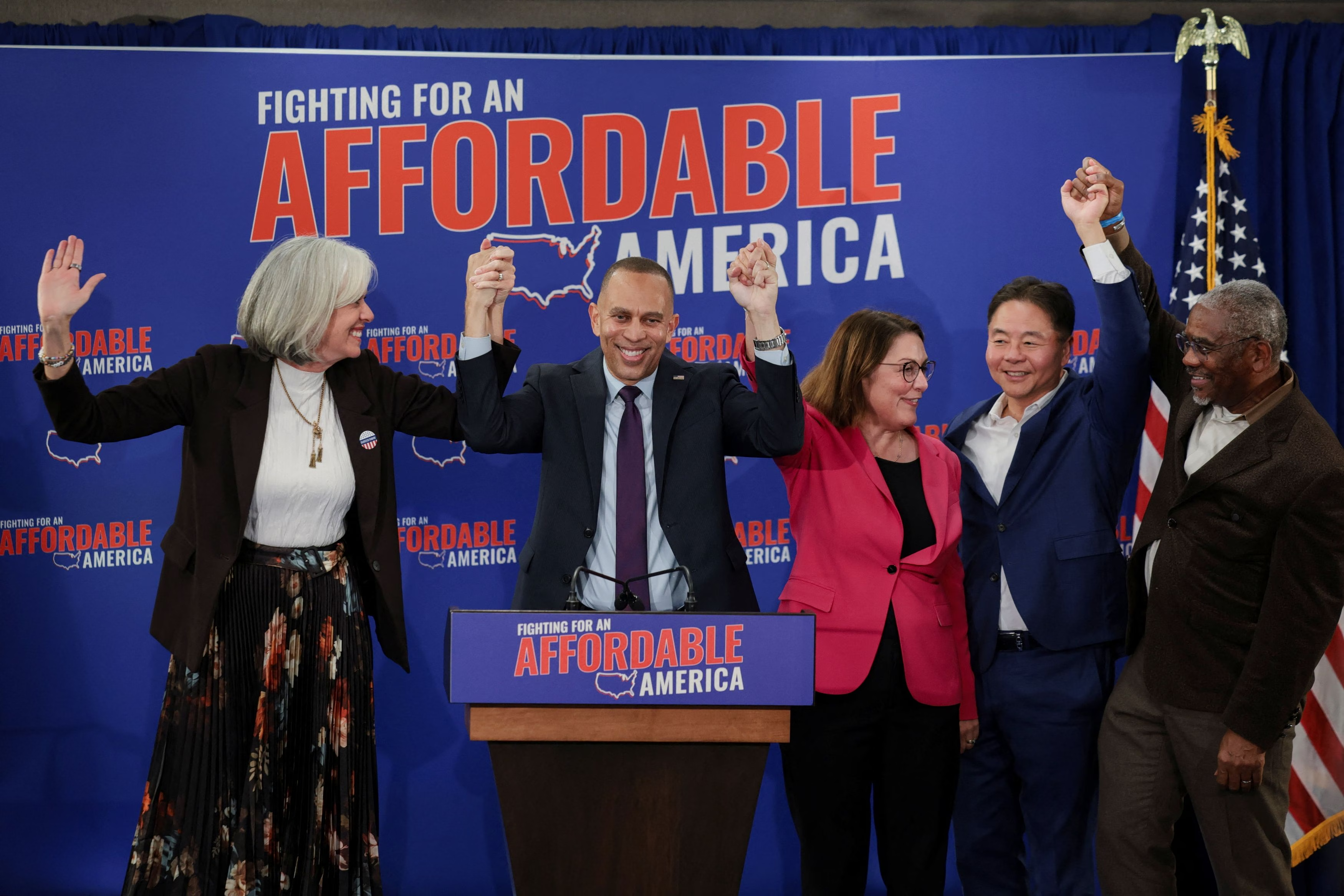
US House Democratic Leader Hakeem Jeffries, House Minority Whip Katherine Clark (D-MA), and Democratic candidate for House of Representatives Suzan DelBene celebrate at a Democratic Congressional Campaign Committee (DCCC) midterm election night watch party as election results point toward Democrats regaining control of the US House of Representatives, in Washington, DC, US, November 3, 2026. REUTERS/Jonathan Ernst
Democrats prepare to investigate Trump administration
A Democratic majority in the House would give Jeffries and his party the power to direct congressional committees to investigate the Trump administration and the activities of the president’s associates.
Jeffries has repeatedly pledged to investigate what he has described as “unprecedented levels of corruption” during Trump’s presidency.
Democrats would also be able to advance their legislative priorities through the House. However, any legislation passed by Congress would still face the prospect of a presidential veto from Trump.