 Μake us preferred on Google
LONDON—The U.K. government is preparing to make a historic apology for its role in the trans-Atlantic slave trade, after decades of pressure from former colonies seeking reparations.
U.K. Prime Minister Andy Burnham in recent days said his government was open to issuing a formal apology following calls from scores of Caribbean and African countries. Burnham said the government shouldn’t pay reparations, but officials said it would look instead at debt restructuring for developing nations.
Traditionally, former colonial powers have skirted the issue, expressing regret for the industrial-scale human trafficking but never apologizing for fear that admitting guilt will open the door to a wave of compensation claims.
In Europe, only the Dutch have issued a formal apology for the slave trade. No U.S. president has formally apologized for slavery, though the House of Representatives has.
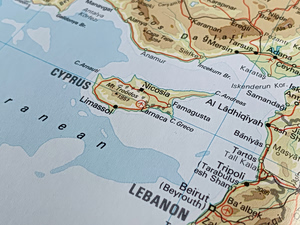
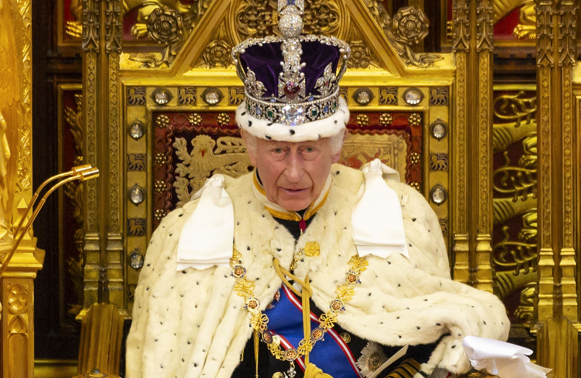
The debate over slavery and reparations has overshadowed a visit to the Caribbean by King Charles III , who is currently on a week-long trip to the region, which is hosting a meeting of the 56 nations that make up the Commonwealth—most of which were part of Britain’s empire.
On Tuesday, Charles attempted a balancing act, calling out a “shameful chapter of history…that fills my heart with horror” but stopping short of a formal apology. Charles, who is head of state of both the U.K. and 14 other countries including Jamaica, has spent years saying he wanted to address historic wrongs. However, the palace has said it isn’t his role to issue a formal apology as it is a decision for the government.
The matter is politically fraught in the U.K., given the country was both a major force in the trans-Atlantic slave trade and played a key role in ending it through its abolitionist movement.
While the Spanish and Portuguese pioneered the practice, British ships accounted for roughly a quarter of the slaves carried across the Atlantic, according to the Slave Voyages database, which says around 12 million Africans were trafficked to the Americas between the 16th and 19th centuries.
After a protest campaign, in 1807 the U.K. government made engaging in the Atlantic slave trade illegal, and deployed its Royal Navy to intercept ships carrying slaves. In 1833, the U.K. agreed to spend 40% of the government’s annual budget to buy the freedom of slaves across its empire. The debt incurred by the British government to compensate slave owners was only fully paid off in 2015.
In recent decades, pressure for compensation and recognition grew. In 2013, the 15 states of the Caribbean Community issued formal demands for slavery reparations. In 2023, the African Union, which brings together 55 countries, endorsed this position. This year, the United Nations General Assembly backed a resolution declaring the trans-Atlantic slave trade “the gravest crime against humanity.” The U.K. and European countries abstained from voting.
Kemi Badenoch , the leader of the U.K. opposition Conservative Party, said that British taxpayers shouldn’t be held responsible for events that took place generations ago and that claims for compensation were an opportunistic cash grab by former colonies.
“I have even less patience for political elites in commonwealth countries who don’t know how to make their own citizens prosperous now looking for another opportunity to blame Britain,” she said.
One estimate made by a consulting firm for the University of the West Indies said the U.K. owed $24 trillion in damages to a group of 14 Caribbean countries for slavery.
Gaston Browne , the prime minister of Antigua and Barbuda, said Tuesday that there needed to be “meaningful and truthful conversations” about reparations. Speaking shortly after, Charles said “history is not ours to choose or to change.” He also mentioned the Royal Navy’s role in helping end slavery.
In 2022, the Dutch government made an official state apology for slavery, followed a year later by Dutch King Willem-Alexander, who also personally apologized for his family’s role. Research published in October concluded that the Dutch royal family, the House of Orange-Nassau, made no money directly out of the trans-Atlantic slave trade but profits from its colonial holdings netted the family around $650 million.
The Dutch government didn’t pay reparations but instead announced a 200 million euro, or roughly $224 million, fund for educational and commemorative initiatives. It has since been sued for reparations by a handful of individuals but hasn’t disclosed any payments.
“Just because you apologize doesn’t mean you have to pay,” said Luke Moffett , a professor at Queen’s University Belfast who has studied reparations. People “keep pointing to the floodgates argument, but I rarely see it.”
Britain’s King James II was a governor and shareholder of the Royal African Company, which was founded in the 17th century and granted a royal monopoly over the trade of gold and enslaved peoples along the west African coast. Later in the 19th century, King Charles’s ancestor King William IV spent decades opposing abolition before eventually giving royal sign off on laws to make slavery illegal.
In September, an official delegation from Jamaica delivered a petition to Charles asking whether the forced transport of Africans to Jamaica was lawful, whether it constituted a crime against humanity, and whether Britain is obliged to pay compensation to Jamaica.
“Up to 2015, Britain was paying the slave masters, because we were being considered property,” said Jamaica Culture Minister Olivia Grange in September. “The question really should be: If in modern times we’re still paying back the slave masters…. then why shouldn’t we be pursuing some remedy at this time?”
A British court will hear Jamaica’s appeal next year.
Write to Max Colchester at Max.Colchester@wsj.com