 Μake us preferred on Google
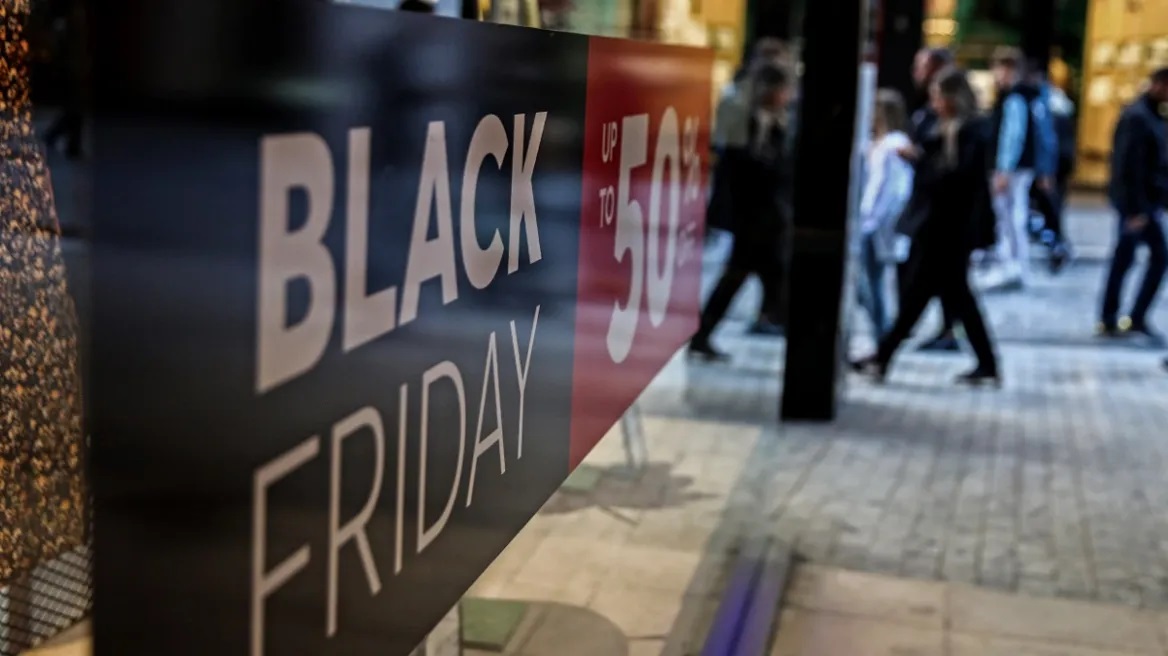
Black Friday, which falls on November 27 this year, has evolved from a single day of discounts into an extended shopping season. Consumers now navigate two parallel retail environments: physical stores, where they can inspect products, try them on and speak with sales staff, and online platforms offering price comparisons, wish lists and discount codes.
With household budgets under pressure from the cost of living, the challenge is no longer simply finding the biggest advertised discount but determining whether a purchase offers genuine savings.
A new survey by EY Greece and MRB, conducted in November 2026, suggests that interest in Black Friday shopping is particularly strong among younger consumers. Some 72% of respondents aged 18 to 29 and 76% of those aged 30 to 39 said they planned to make purchases.
Clothing and accessories were the most popular category, with 61% of respondents intending to buy these products. The figure rose to 74% among younger consumers. Technology followed at 59%, household appliances at 42%, cosmetics at 31% and home goods at 27%.
Despite their shopping intentions, most consumers expect to keep their spending relatively modest. Some 39% plan to spend between €100 and €250, while 31% expect to spend €250 to €500. Only 2% anticipate spending more than €1,000.
The survey also suggests that Black Friday influences when and how people shop. Some 26% said they would have purchased the same product at a later date anyway, while 25% had deliberately postponed a purchase until the sales period. Another 19% acknowledged that they would make additional, unplanned purchases because of the discounts.
Consumers question whether Black Friday discounts are genuine
Despite the interest in shopping, skepticism about advertised price reductions remains widespread. Some 45% of respondents said they doubted whether Black Friday discounts represented genuine price cuts.
Among those expressing doubts, 35% wanted retailers to make products’ price histories publicly available, while 26% favored displaying the lowest price charged during the previous 30 days.
Several international checks have highlighted problems with discount pricing.
In March 2026, a European Commission review found that 30% of the 314 online retailers examined were presenting discounts incorrectly.
In Spain, an examination of more than 15,000 prices across 60 stores found that only 30% of products were cheaper than their lowest prices in previous months, while 43% had become more expensive.
In Norway, only one in four products had a genuine price reduction, with an average discount of 23%. Meanwhile, British consumer organization which found that 83% of the 175 products it examined had been sold at the same or a lower price at another point during the year.
International surveys also point to different shopping patterns. In the United States, Boston Consulting Group (BCG) found that 85% of consumers planned to shop during the year-end sales period, with clothing and footwear leading across all age groups.
A global survey by Sinch, however, indicated a more cautious approach: only 25% of respondents expected to spend more, while 34% planned to spend less.
For consumers trying to identify genuine bargains, the advice is to focus on the final price rather than the advertised percentage discount. Under European rules, the reference price used to announce a reduction is generally the lowest price charged during the previous 30 days. Tracking a product’s price in the weeks before Black Friday can therefore help shoppers assess whether a deal is worthwhile.
Buy Nothing Day challenges the culture of consumption
Beyond the traditional sales, a range of initiatives has emerged to encourage different approaches to shopping. Some promote buying less, others emphasize independent businesses, while some focus on charitable giving.
One of the most direct alternatives is Buy Nothing Day, launched in Canada in 1992 by artist Ted Dave and the Adbusters network as a protest against consumerism.
Its principle is straightforward: consumers are encouraged to make no purchases for an entire day, either in stores or online. In North America, the United Kingdom, Finland and Sweden, the initiative coincides with Black Friday. In other countries, it takes place the following Saturday.
Green Friday encourages sustainable purchases
A less absolute approach is Green Friday, which does not call for a complete boycott of shopping. Instead, it encourages consumers to buy less, make more deliberate choices and support businesses with environmentally responsible practices.
The initiative highlights secondhand goods, repairs, recycling and locally made products. It is particularly relevant to clothing and footwear, sectors associated with overproduction and the rapid disposal of goods.
Its central message is that meaningful savings do not come only from discounts but also from choosing fewer, longer-lasting products.
Colour Friday, meanwhile, encourages consumers to support small, independent and creative businesses rather than major retail chains.
Small Business Saturday puts local shops in focus
The focus on independent retailers continues on Saturday, November 28, with Small Business Saturday, an initiative launched by American Express in 2010.
It encourages consumers to shop at neighborhood businesses, such as bookstores, pharmacies, cafes and clothing stores, instead of relying exclusively on large online platforms.
Other initiatives around the same weekend include Plaid Friday and Artists Sunday, both of which highlight independent creators, artists and craftspeople.
Giving Tuesday shifts attention to charitable causes
The shopping period concludes with Giving Tuesday on December 1, an initiative founded in New York in 2012 and held on the Tuesday after the U.S. Thanksgiving holiday.
Rather than opposing shopping, Giving Tuesday adds a day dedicated to generosity and community support. Participants are encouraged to contribute through financial donations, volunteering, clothing or food donations, and other forms of social solidarity.
These initiatives differ in their aims and are not all organized commercial events. Their shared message, however, is that consumers should have greater control over their choices and consider not only how much a product costs, but also whether they actually need it.