 Μake us preferred on Google
 F-35s take center stage: Trump wants CAATSA sanctions lifted
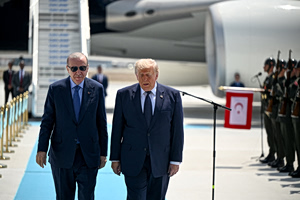
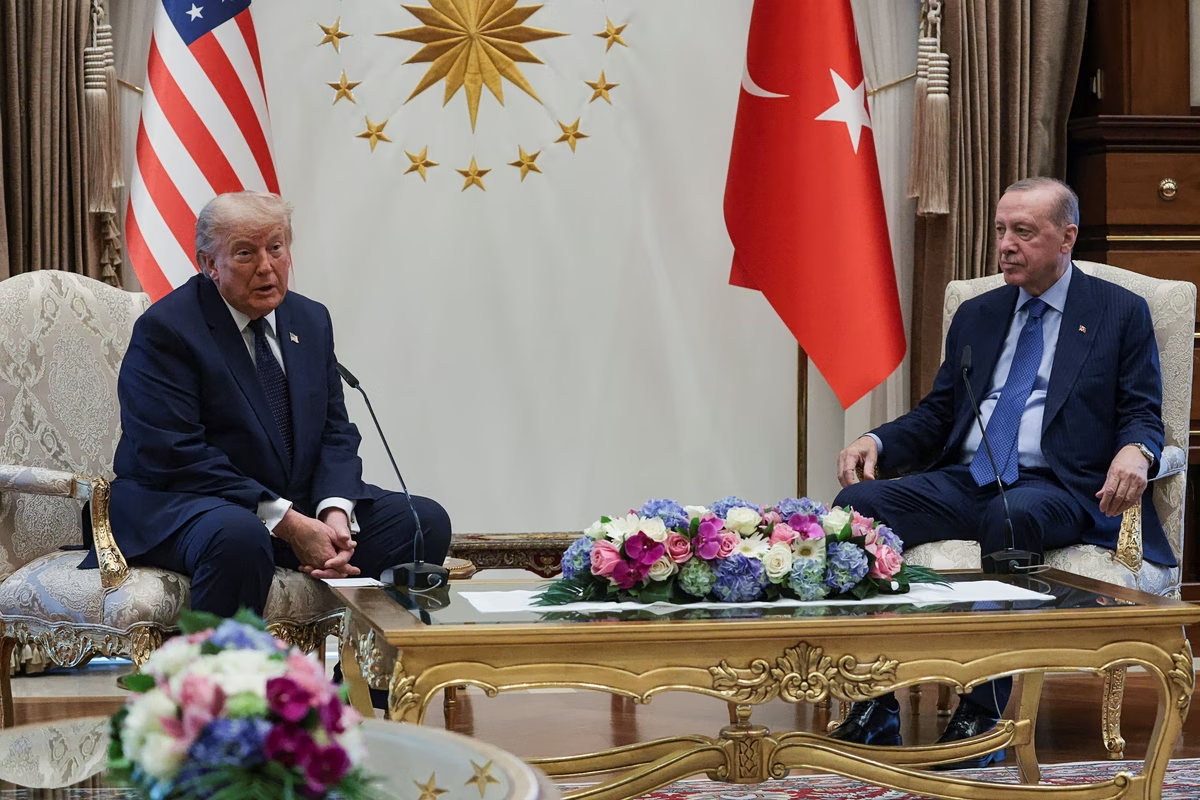
Turkish President Recep Tayyip Erdogan said the F-35 issue isn’t new, noting it had already been discussed with the United States in the past. He said Turkey had received promises for the delivery of five aircraft and expressed hope the matter would move forward positively during the leaders’ summit.
Donald Trump, for his part, said he doesn’t want to impose sanctions on friends, noting that the United States will move ahead with lifting sanctions. The two sides are also expected to discuss the engines for Turkey’s Kaan fighter jet program. Trump said Turkey has purchased aircraft from the U.S. and that he “believes there’s an obligation” to maintain their engines.
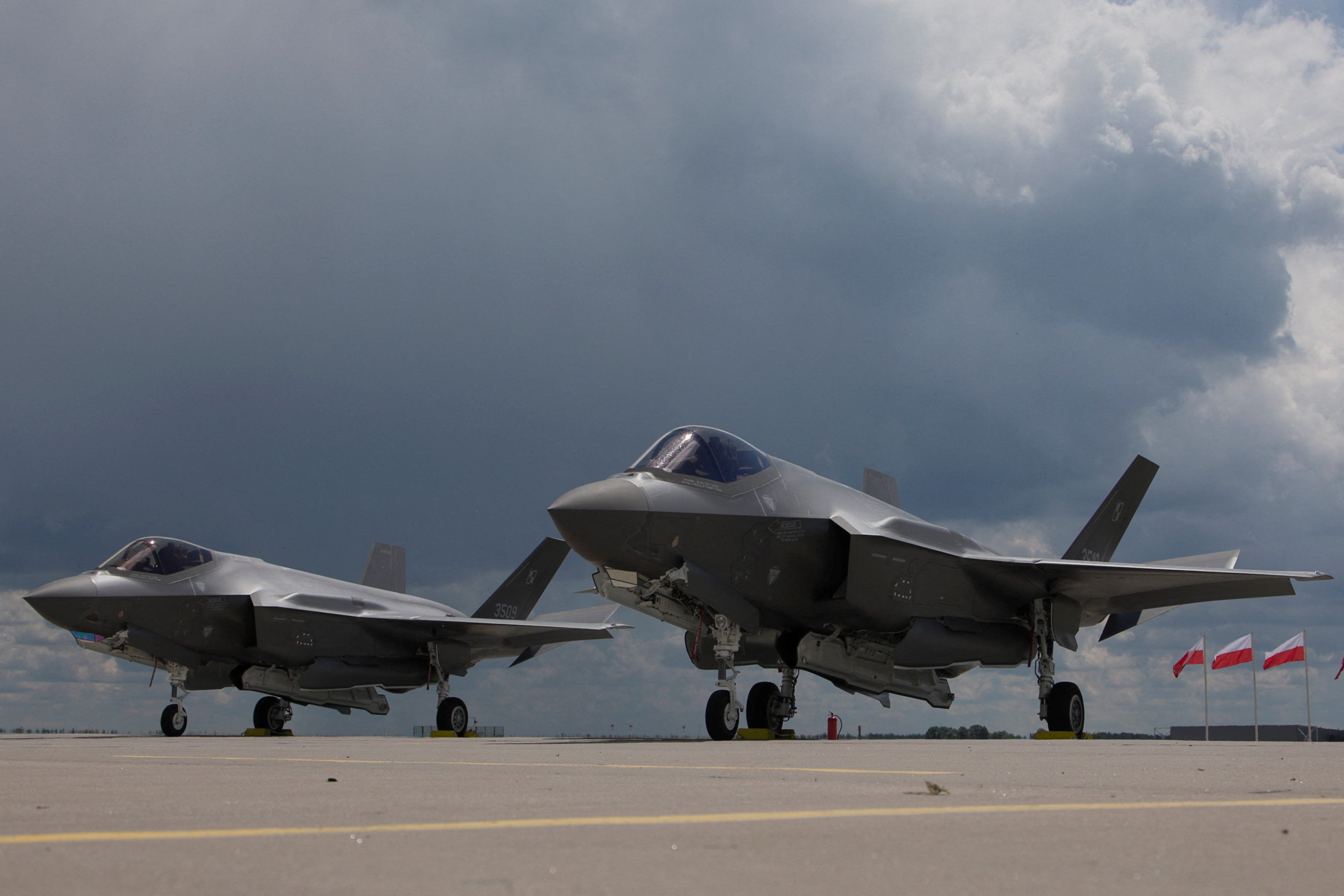
Newly acquired Polish F-35 Lightning II stealth strike fighters, named ‘Husarz’ in reference to the Polish “winged hussar” cavalry units, are presented at the military airport in Lask, Poland, June 12, 2026. REUTERS/Kuba Stezycki
Turning to the war in Ukraine, the American president said he “believes both sides want to reach an agreement.” Erdogan added that he would discuss the latest developments in the Russia-Ukraine war with the American side.
A “coalition of the willing” for the Strait of Hormuz
France and Britain are expected to present plans for a multinational naval mission in the Strait of Hormuz during a meeting of NATO foreign ministers with their counterparts from Gulf Arab states. Diplomatic sources say Iran’s rejection of the initiative makes it unlikely the deadlock over the strategically vital waterway will be resolved anytime soon.
The meeting, held on the sidelines of the NATO summit, brings together the foreign ministers of Bahrain, Kuwait, Qatar, and the United Arab Emirates, following weeks of tension in the region despite a temporary de-escalation deal between the U.S. and Iran.
The UK Maritime Trade Operations agency reported early Tuesday that a tanker was hit east of Oman’s Limah region. Earlier, Axios reported that Iran’s Revolutionary Guards had fired at least two missiles at commercial ships transiting the Strait of Hormuz.
“In the Gulf region, Bahrain, Kuwait, Qatar, and the United Arab Emirates found themselves directly in the crosshairs of Iranian attacks this spring,” said Belgian Foreign Minister Maxime Prévot. “Their stability and ours are inseparably linked. The issue goes well beyond the Strait of Hormuz, as critical as it is to Europe’s energy security,” he added.
European countries have made clear they don’t want to be drawn into the conflict, noting they were never consulted or informed before it began. At the same time, they say they’re ready to help secure shipping through the strait once the conflict de-escalates or ends.
France and Britain are leading efforts to build a coalition of roughly a dozen countries aimed at ensuring safe passage for vessels through the strait, though diplomatic sources acknowledge any long term arrangement would ultimately require Tehran’s consent.
Iran has repeatedly voiced opposition to any foreign military presence in the region, using the issue as a bargaining chip in its talks with Washington. Just last week, it rejected French President Emmanuel Macron’s claim that the mission would move forward.
A European diplomat suggested Macron, who was heading to Ankara after becoming the first European head of state to visit neighboring Syria, was trying to project European strength so the bloc could present itself as a credible ally to Donald Trump during the summit.
Several NATO member states have already deployed minesweepers, warships, and support vessels to the wider region. Paris and London reportedly hope a first mission could be deployed in the Gulf of Oman, the waters linking the Arabian Sea to the Strait of Hormuz and bordering Iran, Oman, and the UAE. In a joint statement on July 3, France and Britain said Oman had agreed to work with them to secure safe navigation in its territorial waters.
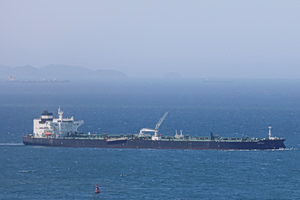
FILE PHOTO: FILE PHOTO: Crude oil tanker Odessa, carrying UAE crude after passing through the Strait of Hormuz with its Automatic Identification System transponder turned off, navigates the waters at Daesan port, where it is expected to discharge crude oil, in Seosan, South Korea, May 8, 2026. REUTERS/Kim Soo-hyeon
Canada buys German submarines in a deal worth over $12 billion
Canada has picked a German consortium to build 12 state of the art submarines in one of the largest defense contracts in the country’s history, deepening its ties with NATO in the process. Prime Minister Mark Carney announced Monday that Germany’s ThyssenKrupp Marine Systems (TKMS) won the competition to replace Canada’s aging submarine fleet, beating out South Korea’s Hanwha Ocean.
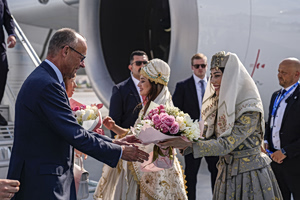
ANKARA, TURKIYE – JULY 7: German Chancellor Friedrich Merz arrives at Ankara Airport for the 36th NATO Heads of State and Government Summit in Ankara, Turkiye, on July 7, 2026. Osmancan Gurdogan/Pool via REUTERS
The two firms had competed for months over the lucrative contract, each offering advanced submarine technology and significant economic benefits for Canada. TKMS is the world’s largest builder of conventional, non-nuclear submarines and a key supplier to the navies of several NATO countries. Canada had determined that both TKMS’s Type 212CD and Hanwha’s KSS-III Batch II met the Royal Canadian Navy’s operational requirements.
The order for 12 submarines marks the first time Canada has purchased brand new submarines. The Royal Canadian Navy currently operates four Victoria class submarines, bought secondhand from Britain in 1998, three of which are currently undergoing maintenance. The new submarines are expected to significantly strengthen Canada’s presence in the Arctic.
TKMS’s vessels feature advanced stealth capabilities, allowing them to operate in high tension zones with a reduced chance of detection, and to carry out long duration missions along strategic Arctic routes such as the Northwest Passage.
The submarine order is valued at more than $12 billion, and with a roughly 50 year maintenance package included, the total cost of the program could exceed $70 billion. Before the deal is finalized, the Canadian government and TKMS still need to complete negotiations, a process expected to take several years.
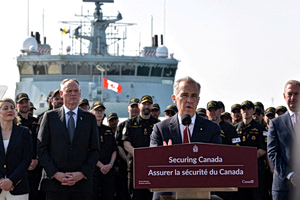
Canada’s Prime Minister Mark Carney announces that Canada has picked Germany’s TKMS to build 12 submarines for its navy, at HMC Dockyard in Halifax, Nova Scotia, Canada July 6, 2026. REUTERS/Ingrid Bulmer TPX IMAGES OF THE DAY
UK invests in long range precision missiles
Britain announced it will boost its army’s long range strike capability, investing 190 million pounds (about $254 million) in the Precision Strike Missile (PrSM) program, acquiring a weapons system capable of hitting targets up to 500 kilometers away. Outgoing Prime Minister Keir Starmer is attending the NATO summit in Ankara, where he’s seeking to convince U.S. President Donald Trump and other allies that Britain’s defense spending trajectory is heading in the right direction.
According to the UK Ministry of Defence, the PrSM purchase will strengthen Britain’s contribution to NATO’s deterrent capability, with first deliveries expected in 2027. The purchase is funded through the UK’s Defence Investment Plan, which has drawn criticism for lacking a clear path to meeting NATO’s target of 3.5 percent of GDP on defense, a goal adopted last year after pressure from Trump on European countries to take on a greater share of their own defense responsibilities.
The next generation PrSM hypersonic ballistic missiles are built by Lockheed Martin under a joint U.S.-Australia program. The British government left open the possibility of joining the weapon system’s further development down the line, while London reaffirmed its commitment to other joint European arms programs, including Deep Precision Strike and the European Long Range Strike Approach.
Europe and Canada’s defense spending still lags target
A senior NATO official said Tuesday that European member states and Canada spent an average of 2.31 percent of GDP on core defense spending in 2025, a figure expected to rise to 2.53 percent during 2026, still below the Alliance’s newly adopted targets.
Leaders’ dinner with spouses opens the summit
The official dinner hosted by the Turkish presidency for NATO member state leaders and their spouses begins at 7:15 p.m. Ankara time (also 7:15 p.m. in Athens). The dinner marks the formal opening of the NATO summit. The schedule continues with a dinner for NATO member states’ foreign ministers at 7:45 p.m., followed by one for defense ministers at 8:15 p.m.