 Μake us preferred on Google
 The confirmed death toll from the flash floods in Nepal rose to 469 early Friday, while nearly 1,000 people remained missing in Nepal and neighboring Tibet.
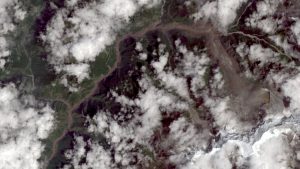
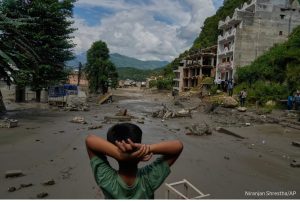
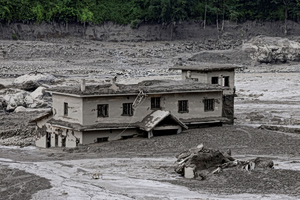
The disaster struck on Wednesday morning after a glacier collapse sent a huge torrent of rock, ice, mud and debris through Himalayan mountain river systems. The floods tore through villages and valleys, destroying power stations, roads and bridges along a route linking Kathmandu with Lhasa in Tibet that is popular with trekkers and pilgrims.
At least 540 of those reported missing are foreigners.
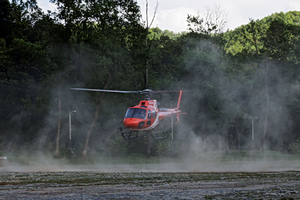
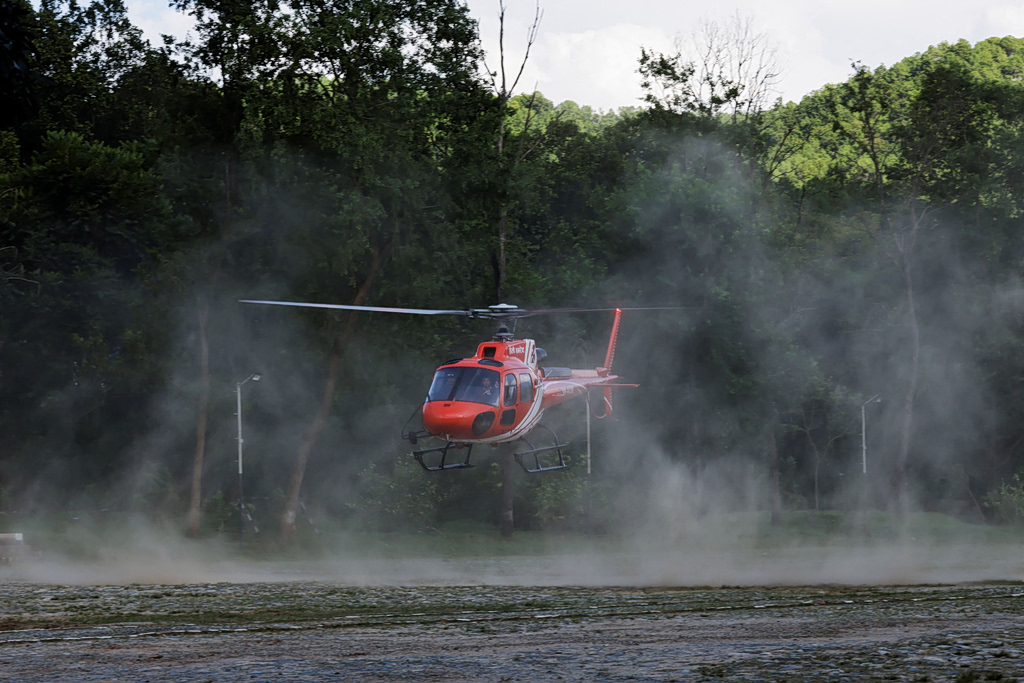
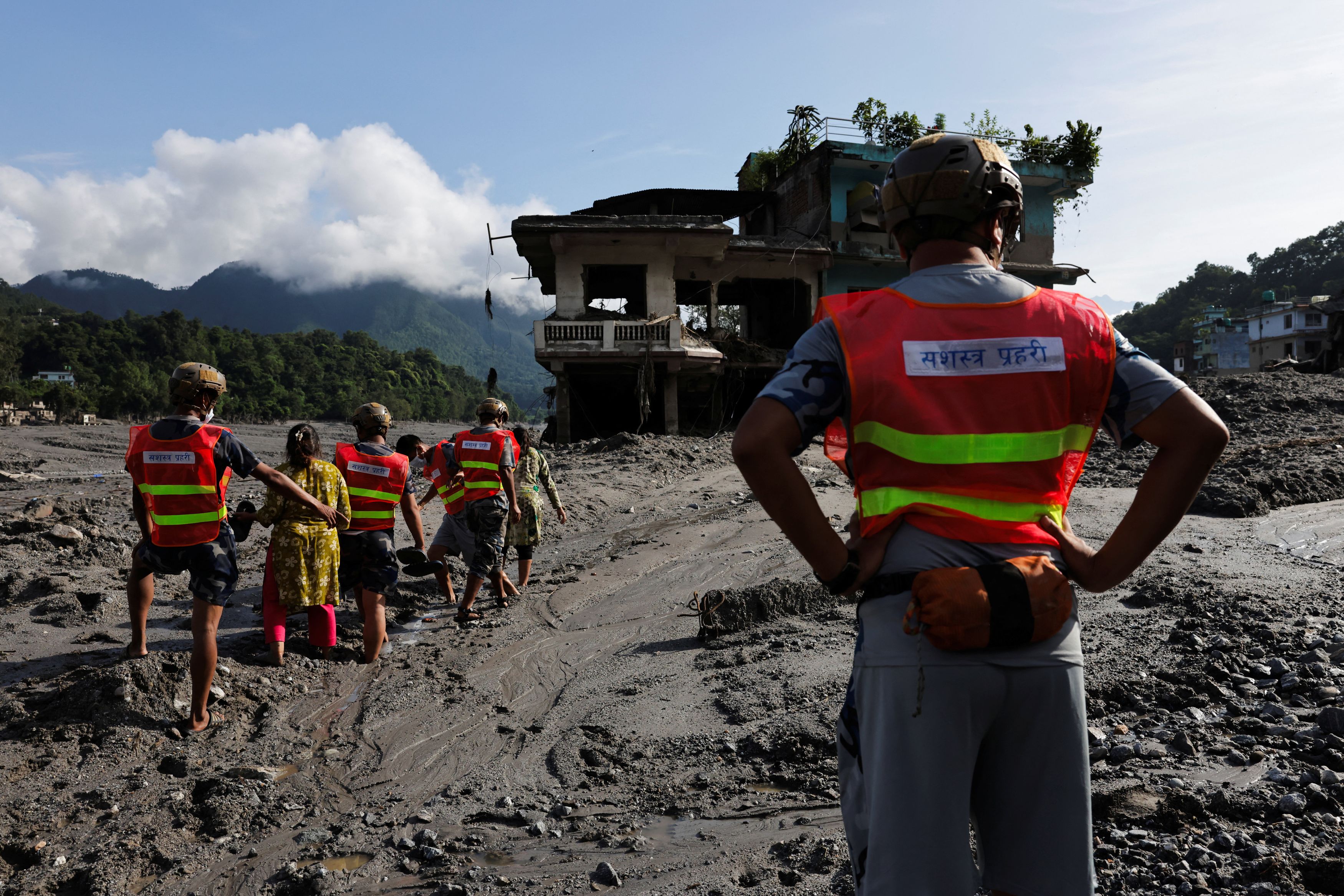
Rescue teams have used helicopters to search for survivors and deliver emergency supplies to thousands of people cut off in towns and valleys. Emergency services, including teams using sniffer dogs, have also recovered dozens of bodies swept into the plains.
In the hard-hit town of Rasuwa, Dibga Tamang was among the last people rescued on Thursday. He was airlifted with three others to an army camp in Nuwakot.
“All of our people have gone. They are dead,” Tamang said. “I have no one left waiting for me. Everything and everyone is gone. The end.”
Risk of another flood
The large amount of water and debris has created a new threat, with authorities warning that another catastrophic flood could occur.
Nepal’s disaster management authority said a lake formed after debris blocked the Bhotekoshi River was rising and could burst its barrier.
Across the border, China said about 3 million cubic meters of water — equivalent to roughly 1,200 Olympic-sized swimming pools — was expected to flow into an already dammed lake over the next three days.
Chinese state media, citing the country’s water resources ministry, said there was a high risk that the lake could breach, with peak flow expected around September 1.
China has sent an eight-member engineering team to carry out aerial surveys and 3D modelling of the barrier lake. Engineers said they were considering excavating a drainage channel at a lower point of the dam, but calculations were needed to determine its width and depth based on how quickly the water was flowing and the lake was filling.
The team was also expected to monitor the lake, collect data from its floor and track weather conditions in the coming days.
Hundreds still missing in Tibet
Chinese rescuers had not yet reached the worst-hit area on the Chinese side of the border, the Gyirong border crossing, by Thursday evening, according to state media reports. Crews were working to clear debris from the key road leading to the area.
Footage from Wednesday showed torrents of muddy water and debris tearing through structures at the border crossing within seconds and engulfing people attempting to flee.
CCTV reported that 558 people were missing in Tibet’s Gyirong County, including 260 foreign nationals. Three people had been confirmed dead on the Chinese side.
Chinese Premier Li Qiang visited the disaster-stricken site in Gyirong on Thursday afternoon, according to state-run Xinhua news agency.
Families await news
Relatives around the world were still waiting for information about missing family members.
Sneha Sudhir was among 10 women whose husbands had traveled from Nepal on a trek to Tibet’s Mount Kailash when the disaster struck. The men, all from northern Virginia, are among dozens of Americans reported missing.
“Where are they?” Sudhir said tearfully from her home in Chantilly, Virginia, on Thursday.
She said the women were supporting one another while contacting officials, politicians, friends and relatives in the United States and India in the hope of receiving information.
U.S. President Donald Trump said the United States had offered support to Nepal.
Ganesh Aryal, administrator of Chitwan district, said authorities had recovered 103 bodies from the river system there, about 100 kilometers (62 miles) from the worst-hit region of Trishuli.
Local hospitals could not accommodate all the bodies, so district authorities were setting up tents and making arrangements for families to identify and claim their dead relatives.
Nepalese Prime Minister Balendra Shah, who visited flood-hit Nuwakot on Thursday, said the situation remained difficult.
“All the state agencies are operating at full capacity,” Shah said, adding that the government’s priorities were saving lives, searching for missing people, treating the injured and providing immediate relief to affected families.
The disaster poses a major challenge for Shah’s five-month-old government, although officials said Nepal has systems and experienced personnel for responding to major tragedies, including the 2015 earthquake that killed nearly 9,000 people.
If you want, I can also make this more Reuters-style and tighter, or give it a more engaging international-news website treatment while keeping every fact strictly within the supplied material.