 Μake us preferred on Google
 The guiding motto of PepsiCo’s snack division was “Frito-Lay Five Forever”, the goal being to grow Frito-Lay’s revenues by 5% every year for decades. And that is exactly what the snack-making company did.
Frito-Lay was PepsiCo’s golden goose. Unlike PepsiCo’s beverage brands, which face fierce competition from Coca-Cola, Frito-Lay became dominant in savory snacks, controlling nearly 60% of the US market according to RBC Capital Markets, which gave it significant pricing power.
During the pandemic, like all food companies, PepsiCo raised prices to manage rising costs. At first, consumers, buoyed by pandemic stimulus support, didn’t pay much attention. But when increases became dramatic and reached double digits, by the third quarter of 2022, net pricing had risen 20% year-on-year, the “five forever” target was far exceeded. Revenue growth shot into double digits for the next two years, and PepsiCo CEO Ramon Laguarta declared in early 2023: “The Frito business is the jewel of PepsiCo,” confident that “whatever happens with the consumer, we will be, I think, the preferred choice.”
The Beginning of the Decline
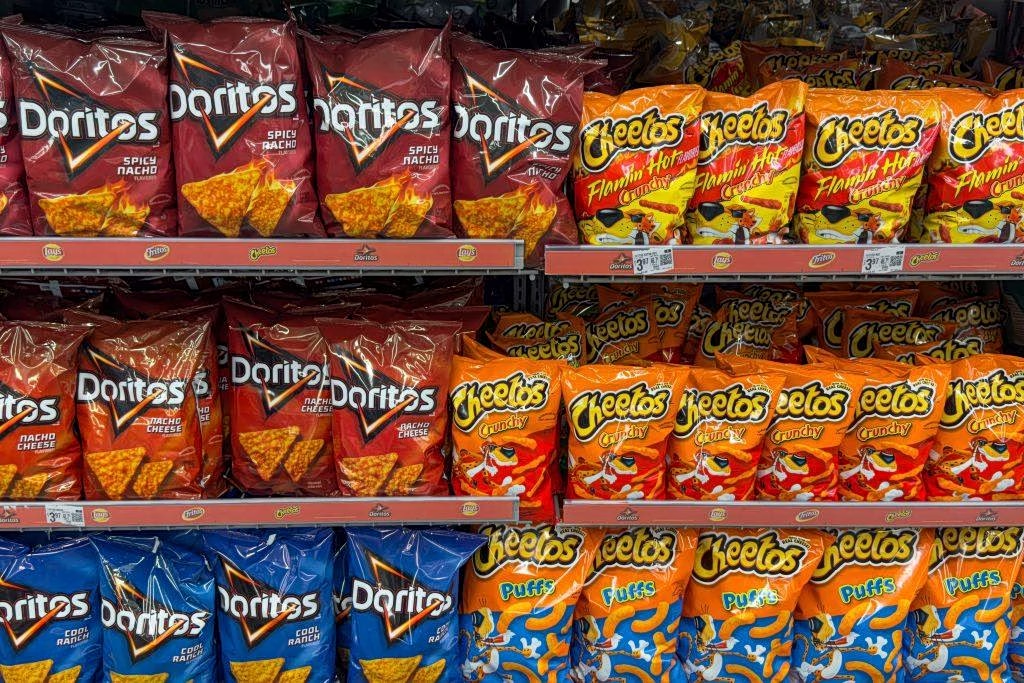
Out in the real world, however, shoppers had already begun to think twice before reaching for a bag of chips due to the price. PepsiCo’s chip prices had become too high. Walmart had been sounding the alarm to the maker of Doritos, Lay’s, Cheetos and many other beloved snacks for over a year.
PepsiCo executives were aware. Sales at Frito-Lay were sinking. Some of its chips cost over $7 a bag in the US. At Walmart, Doritos prices had risen by nearly 50% since 2021.
Yet even as Walmart stocked fewer Frito-Lay products and more of its own cheaper private-label brands and competitors like Takis, prices were not reduced.
The Bold Decision to Cut Prices
In February, PepsiCo announced it would cut prices by up to 15% on certain savory snacks. By that point, Frito-Lay had missed its internal revenue targets for two consecutive years by more than a billion dollars each, according to sources close to the company cited by Bloomberg.
PepsiCo executives had been debating what to do about the pricing issue since at least 2024, when Frito-Lay’s revenues turned negative. No one wanted to take the blame for a short-term revenue hit that price cuts would cause. So the company tried everything else it could to attract customers: promotions and shrinkflation. These proved ineffective.
When Rachel Ferdinando took the helm of the company’s US food division in early 2025, she made the decision to push ahead with price reductions.
Meanwhile, pressures were mounting. Frito-Lay’s revenues, which had been growing for more than 13 years, were now declining. PepsiCo was losing market share to cheaper private-label brands, and negotiations with major retailers were taking place under intense pressure to lower prices.
At PepsiCo’s New York headquarters, the growing consumer trend toward healthier options was yet another headache for the company’s leadership. The CEO pushed the company to shift more toward protein- and fiber-rich foods, which tend to cost even more than chips, while also preparing to open a Lay’s-branded restaurant in Spain.
In September, with the company’s stock down more than 20% from its 2023 highs, Elliott Investment Management acquired a $4 billion stake in the company and presented a list of demands, including more affordable product pricing.
By year-end, PepsiCo announced it planned to cut prices, and in February it spelled out how: discounts of up to 15% on certain snacks, focusing on larger pack sizes for some of its most popular brands including Doritos and Cheetos. The CEO then followed up with a series of cost-cutting measures, including layoffs.
With the company’s market value having fallen by more than $50 billion since 2023, lower prices began appearing in stores in early 2026.
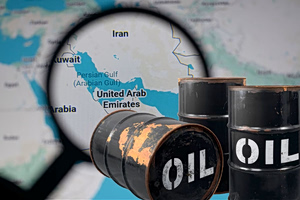
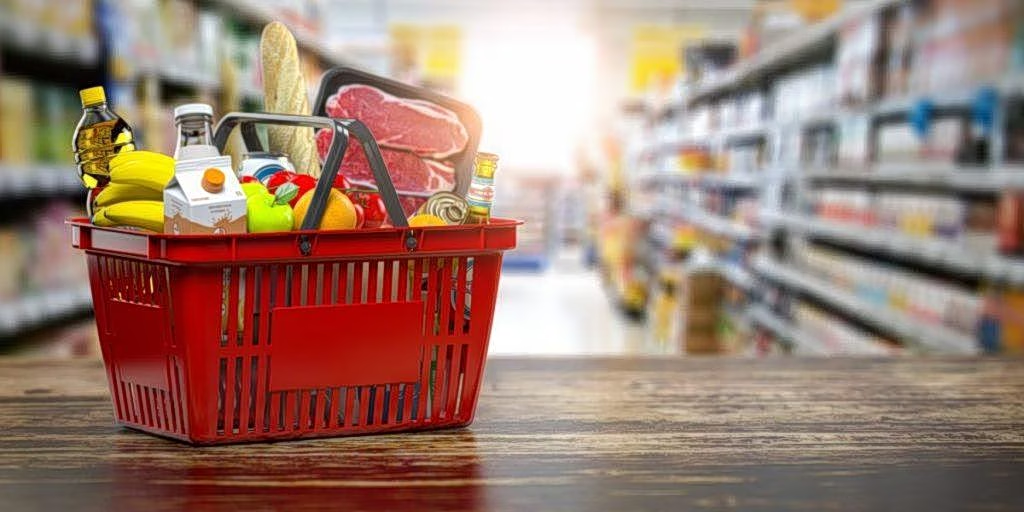
Now that the price-reduction plan is underway, new challenges have emerged, starting with rising oil prices due to the war in Iran, which are squeezing consumer disposable income, meaning shoppers may not be tempted enough to return to PepsiCo snacks. At the same time, higher food and packaging costs could further erode the company’s profit margins.