Ankara has moved to extend its long-running challenge to Greek maritime rights into a new arena this month, unilaterally declaring marine parks in the northern Aegean and eastern Mediterranean through presidential decrees.
The move comes amid a broader Turkish effort over the past few years to institutionalize its disputed maritime claims through domestic administrative measures, marine spatial planning and other revisionist efforts of what Athens regards as “Turkography.”
The latest initiative follows a buildup of “environmental virtue signaling” in Turkey, including calls for joint management of the Aegean and the creation of joint marine parks. The latest narrative heavily promoted by Turkish media over the recent period quotes Turkish marine researchers citing the discovery of a large coral reef between Imbros and Samothrace in the northeastern Aegean, arguing that urgent action is needed to protect this sea area from overfishing and pollution. Imbros, renamed Gökçeada by the Turkish state, belongs to Turkey, with Samothrace is a Greek isle.
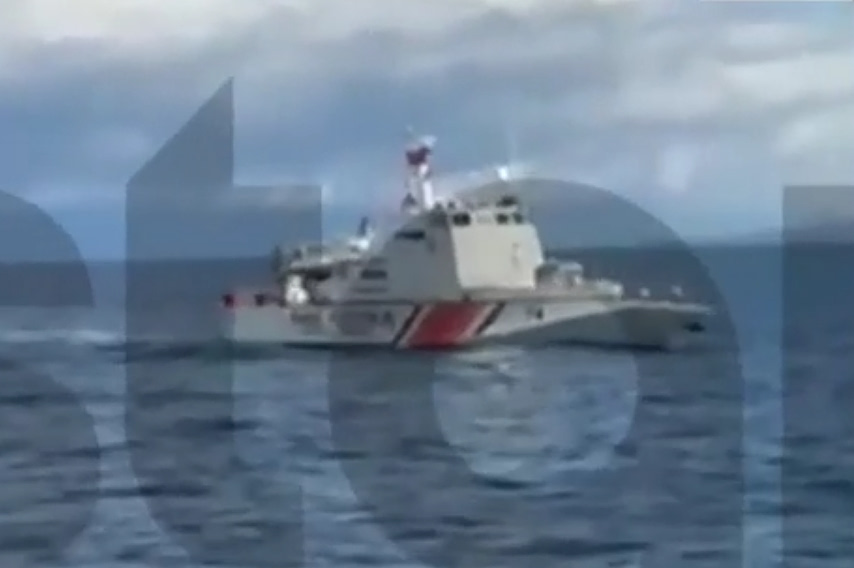
The proposal for joint management, however, has a clear geopolitical dimension from the Greek perspective. Athens has consistently maintained that environmental protection cannot be used to establish or imply Turkish jurisdiction in areas falling within Greek sovereign rights or maritime zones.
Ankara subsequently proceeded unilaterally with the establishment of the “National Marine Park of the Northern Aegean,” covering about 1,742 square kilometers. The designated area extends beyond Turkey’s territorial waters of six nautical miles into international waters of the Thracian Sea, including waters along the maritime area between Lemnos and Samothrace.
The geographic choice is significant as the Thracian Sea, stretching from the island of Thasos toward the port of Alexandroupoli, is an important fishing ground for Greek fishermen and an area where Turkish fishing vessels have frequently operated. Turkish vessels have also been observed in the maritime triangle between Samothrace, Alexandroupoli and Maroneia.
The central concern in Athens is that assigning administrative responsibility for marine protection in international waters to Turkish authorities could create an implied right to regulate fishing, navigation or scientific activity beyond Turkey’s jurisdiction. This follows Ankara’s broader efforts to codify its maritime claims, including its marine spatial planning map, which largely disregards the maritime zones generated by Greek islands.
Athens has rejected the Turkish initiative as legally baseless. The Greek position is that marine parks are environmental measures and that the Greek state has the right to exercise sovereign rights in areas under its jurisdiction. In 2025, the foreign ministry stressed that the legal status of the Aegean is clearly established and that the exercise of Greek sovereign rights is not subject to negotiation.
The dispute also comes against the backdrop of Ankara’s longstanding rejection of key UNCLOS provisions concerning maritime delimitation. Turkey has not signed or ratified the UN Convention on the Law of the Sea, while continuing to dispute Greece’s interpretation of maritime rights in the Aegean. At the same time, Ankara has invoked international maritime agreements, such as the BBNJ, or High Seas Treaty, despite the broader dispute over UNCLOS.
The issue is particularly sensitive for Greek fishermen and the coast guard, which could face increased encounters with Turkish fishing, research or oceanographic vessels operating in areas included in Ankara’s new “marine parks”. The development adds another practical dimension to a dispute that has increasingly moved beyond diplomatic statements and maps toward competing regulatory and administrative actions at sea.