
 Μake us preferred on Google
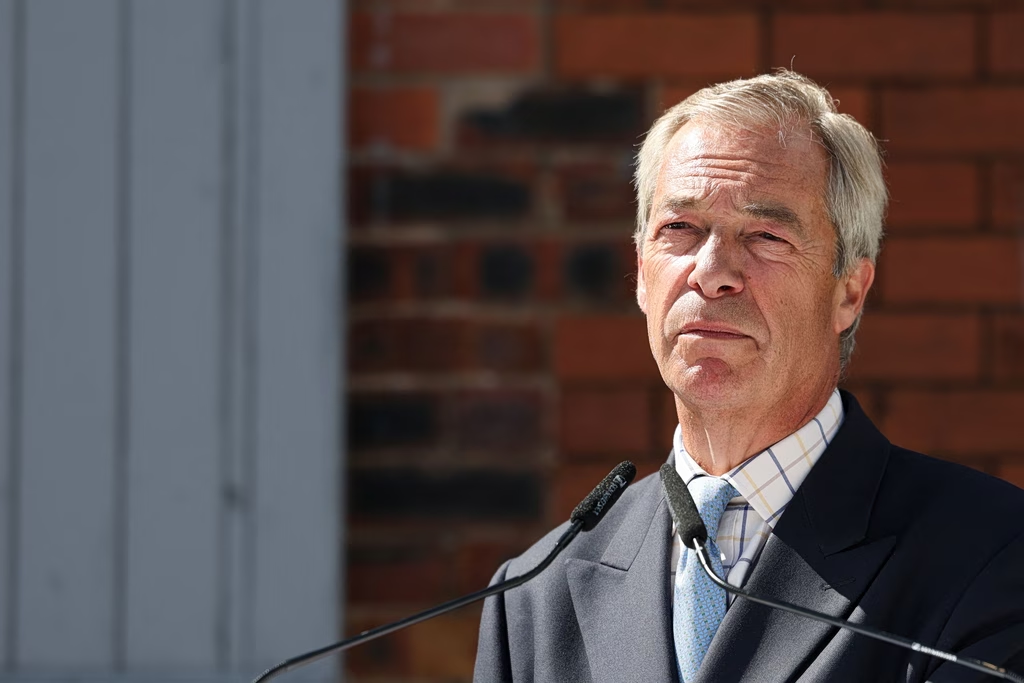
 Nigel Farage’s Reform UK party is in an impressively strong position by mid-2026. The latest YouGov polling puts it first nationally, around 25 to 27 percent, ahead of both Labour and the Conservatives, and several polling averages have it holding a lead of roughly 26 to 28 percent for many months running. That momentum has translated into local power too, with significant gains in local elections and control of numerous local councils.
There are still limits, though. The emergence of Rupert Lowe’s harder-right Restore Britain is siphoning off a small but real share of votes from Reform, and some analysts believe Farage’s support may hit a ceiling if it doesn’t expand beyond socially conservative voters. Britain’s first-past-the-post electoral system also means that even coming first in the popular vote doesn’t guarantee winning the most seats.
Overall, Reform stands today at the strongest point in its history. The big political story in Britain is no longer whether Farage’s party is just a protest vote, but whether it can evolve into one of the two main poles of the British political system.
Farage’s political prospects are far greater now than at any earlier point in his career. He has already achieved the core goal of his political life: he is no longer just “the Brexit guy.” Many voters now see him as the politician who forced his agenda onto the British establishment, giving him credibility when he insists he can reshape the political system again.
Both Labour and the Tories face problems of identity and trust. Farage benefits from voter frustration that the two traditional parties look too much alike, and many voters see him as more credible than his rivals on illegal immigration, social cohesion, and national identity, which remains his core political advantage.
Few British politicians can match his ability to communicate simple messages and dominate public debate; his name recognition often exceeds that of his own party. The electoral system is what constrains him, since it doesn’t favor new parties, meaning a 25 to 30 percent vote share could translate into far fewer seats than a proportional system would deliver.
Politically, new Labour leader Andy Burnham may represent the most serious attempt yet to revive a British center-left brand of “worker patriotism” since the Blair era, but with more emphasis on the regions and less on London-style cosmopolitanism.