 Μake us preferred on Google
 As Turkey’s shipbuilding and broader arms program accelerates with an eye on dominating the Aegean and Eastern Mediterranean, Greece is countering with a cheaper, smarter approach centered on new technologies that provide naval power and deterrence without heavy costs or risking lives on the front line.
As part of this shift toward autonomous systems, Greece has decided to create a new specialized unit, the Naval Autonomous Systems Operations Command. The General Staff and the defense ministry are moving quickly on an ambitious plan to fully integrate robotics, unmanned platforms, and artificial intelligence into naval operations, building a new network-centric deterrence doctrine. Notably, the defense minister plans to visit Australia, whose defense sector has strong expertise in this area. The decision responds directly to the asymmetric, hybrid, and technologically advanced threats Turkey is developing through its domestic defense industry.
Under Fleet Command
The new command will operate directly under Fleet Command, underscoring its strategic and operational importance to national security. Its headquarters will likely sit outside the Attica basin, probably on Syros, reflecting Greece’s broader strategy of dispersing forces and decentralizing key command centers, positioning the unit closer to the main Aegean theater and farther from large urban centers that could be targeted in a crisis.
The command will gradually absorb all of the Navy’s current and future unmanned assets, aerial drones, unmanned surface vehicles, and unmanned underwater vehicles, though it will not include the small onboard drones or remote systems built directly into individual frigates or strike units for their own tactical surveillance and self-protection. This centralization will turn the new command into a powerful hub managing the Navy’s medium- and long-range unmanned fleet nationwide.
Up to 300 units a year
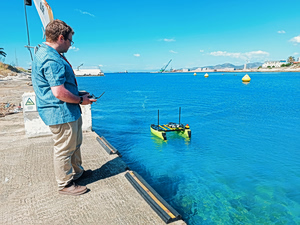
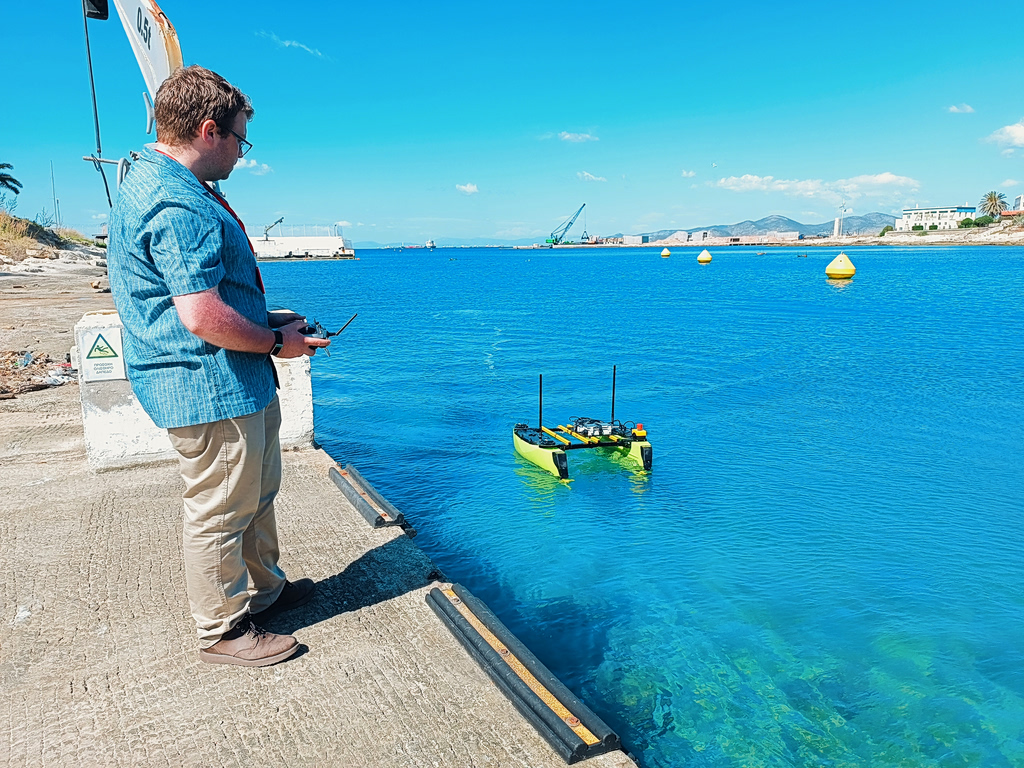
According to well-placed sources, a factory in Malakasa, plus another planned elsewhere, will produce up to 300 units annually, most between 5 and 8 meters long, with larger models also in development.
The command’s mission is broad: continuous surveillance, reconnaissance, and intelligence-gathering (ISR) in key maritime zones; anti-submarine warfare using specialized underwater drones; and strikes on surface and subsurface targets using loitering munitions or autonomous suicide vessels. Technology gained from a Ukrainian naval drone recovered near Lefkada reportedly contributed useful know-how to the program.
Electronic warfare is another pillar, with autonomous units able to jam enemy signals or protect friendly communications, all coordinated through a secure command-and-control network operating in real time alongside traditional Fleet units.
The new command is expected to bring unprecedented reaction speed and flexibility, letting Greece operate in high-risk, access-denial environments without risking personnel, and cutting the political, military, and psychological cost of operations. It will run 24/7 in coordination with the rest of the armed forces, focused primarily on the Aegean and the Central and Eastern Mediterranean, at a time when the region’s geopolitical balance remains volatile and revisionist pressures are increasing.