 Μake us preferred on Google
 Maria Corina Machado was on her way home.
A private jet took off from Virginia on Friday last week to carry her to the Caribbean island of Curaçao, where the Venezuelan opposition leader planned to launch a trip back to her country for the first time since she fled in secret in December, said people familiar with the matter. Twin earthquakes had just devastated Venezuela’s coast, causing thousands of casualties. This was the moment, she believed, to return from exile.
But about an hour into the flight, the dispatcher of the jet’s charter company abruptly told the pilots to turn the Hawker 800 around over North Carolina and return to the Washington area, said a person familiar with the trip plans.
Machado and her aides were stunned. They believed that senior Trump officials had given them sufficient assurances that she could make the journey, said the people familiar with the matter.
Flight plans and landing rights had been approved, as well as permission for Machado, whose passport is expired, to land in Curaçao, said people familiar with the trip plans.
Thinking there had been a mistake, Machado texted a top State Department official seeking an explanation. The official said he didn’t know why the trip had been aborted, the people familiar with the matter said.
The sudden reversal happened after U.S. officials came to believe that Machado planned to return to Venezuela by boat from Curaçao, retracing the risky route she used to escape her country on Dec. 9 to receive her Nobel Peace Prize in Norway, one of the people said. The same private contractors who had extracted her then were already staged on the island.
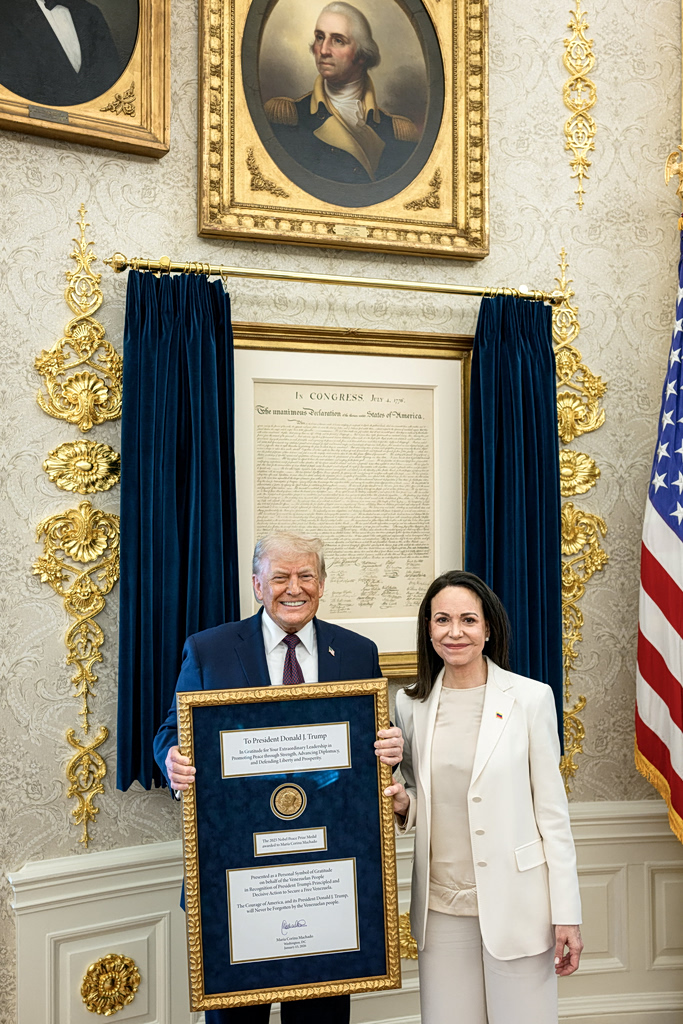
U.S. President Trump meets with Venezuelan opposition leader Maria Corina Machado in the Oval Office, during which she presented the President with her Nobel Peace Prize, in Washington, D.C, U.S., released January 15, 2026. Daniel Torok/The White House/Handout via REUTERS THIS IMAGE HAS BEEN SUPPLIED BY A THIRD PARTY
Dutch authorities, who handle Curaçao’s foreign affairs, initially believed the U.S. backed her trip but withdrew permission for the plane to land after Washington made it clear it wasn’t supportive, the people familiar with the matter said. Netherlands officials didn’t comment.
Machado has been planning for months to return from exile and revive efforts for new elections following the U.S. military operation that captured the country’s former leader , Nicolás Maduro, and sent him to New York to face drug charges, which he denies. Machado was banned from running in Venezuela’s 2024 presidential election, but her endorsed candidate won overwhelmingly, according to tallies recognized by the U.S. Maduro assumed office for a third term anyway, forcing Machado into hiding.
Machado’s insistence on returning now has infuriated some White House officials, who argue her arrival could ignite a political crisis. A State Department spokesperson said that injecting contentious political issues at this moment would be counterproductive to earthquake response efforts.
For months, U.S. officials, including Secretary of State Marco Rubio , have urged her to be patient and that an early return would risk her safety. Machado had strongly aligned herself with the U.S. president, even presenting him with her Peace Prize.
But the White House has thrown its support behind Maduro’s former vice president, Delcy Rodríguez , an unpopular figure at home whom Trump has praised for carrying out Washington’s wishes by working to stabilize the country and courting foreign investors.
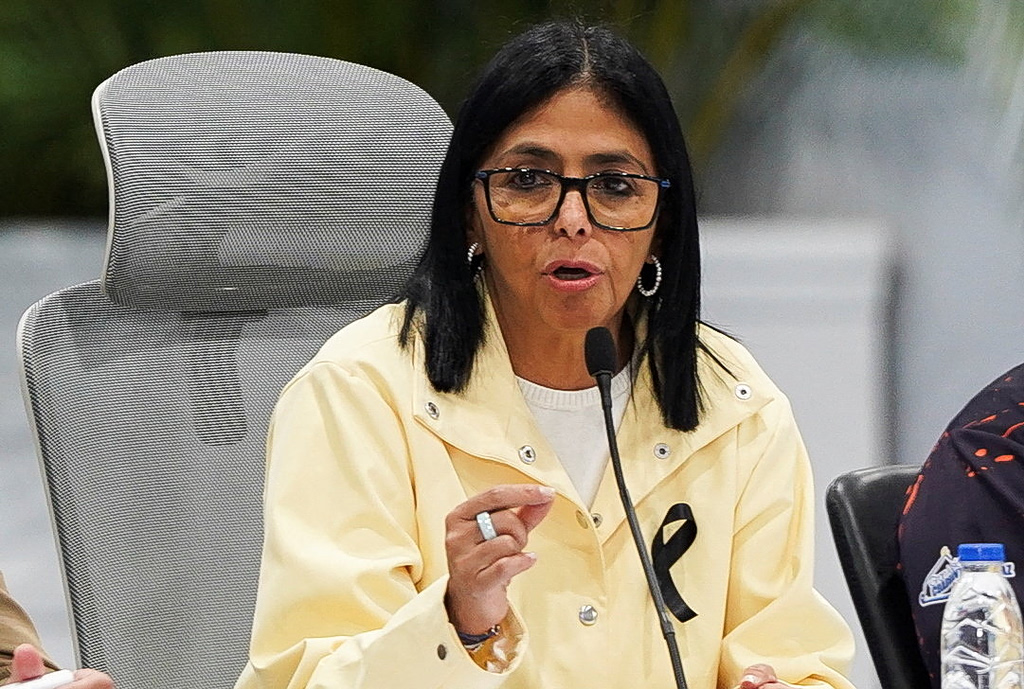
Venezuela’s interim President Delcy Rodriguez addresses the media following the June 24 earthquakes that struck the country, in Caracas, Venezuela, July 2, 2026. REUTERS/Marian Carrasquero
In a blunt message delivered through intermediaries close to the White House on Friday last week, Machado was warned that if she pressed ahead with a plan to return, she risked losing Trump’s support and derailing his Venezuela strategy, which would push off elections even further, said some of the people familiar with the matter.
The aborted flight marked an inflection point in a dayslong clash between Machado’s allies and Trump officials over her long-awaited return to Venezuela in the aftermath of the devastating earthquakes that have killed 2,595 people and injured 12,400. The flight had cost a Venezuelan supporter $35,000.
The timing is especially sensitive for Trump, as the Iran war and its economic impact threaten to become a political liability ahead of November’s midterm elections. The White House has promoted Venezuela as a foreign-policy and economic success—one that depends on preventing the U.S.-backed interim government from sliding into chaos as it encourages American businesses to invest.
U.S. officials have come to realize that if they can’t stop or dissuade Machado, who has pressed for elections to free Venezuela from an authoritarian regime as soon as next year, they should try to manage her return as best they can.
Trump raised Machado’s possible return in a phone call with Rodríguez last Friday, telling her not to move against or interfere with Machado if she came back, said people familiar with the conversation. If authorities arrested Machado, or endangered her safety, it would set off a crisis for Trump’s Venezuela policy in Washington, where the opposition leader has strong support in both parties.
The day after her plane was turned around, Rubio told Machado that while the U.S. wouldn’t keep her from leaving, it wasn’t the right time to return amid earthquake relief efforts, a Trump administration official said.
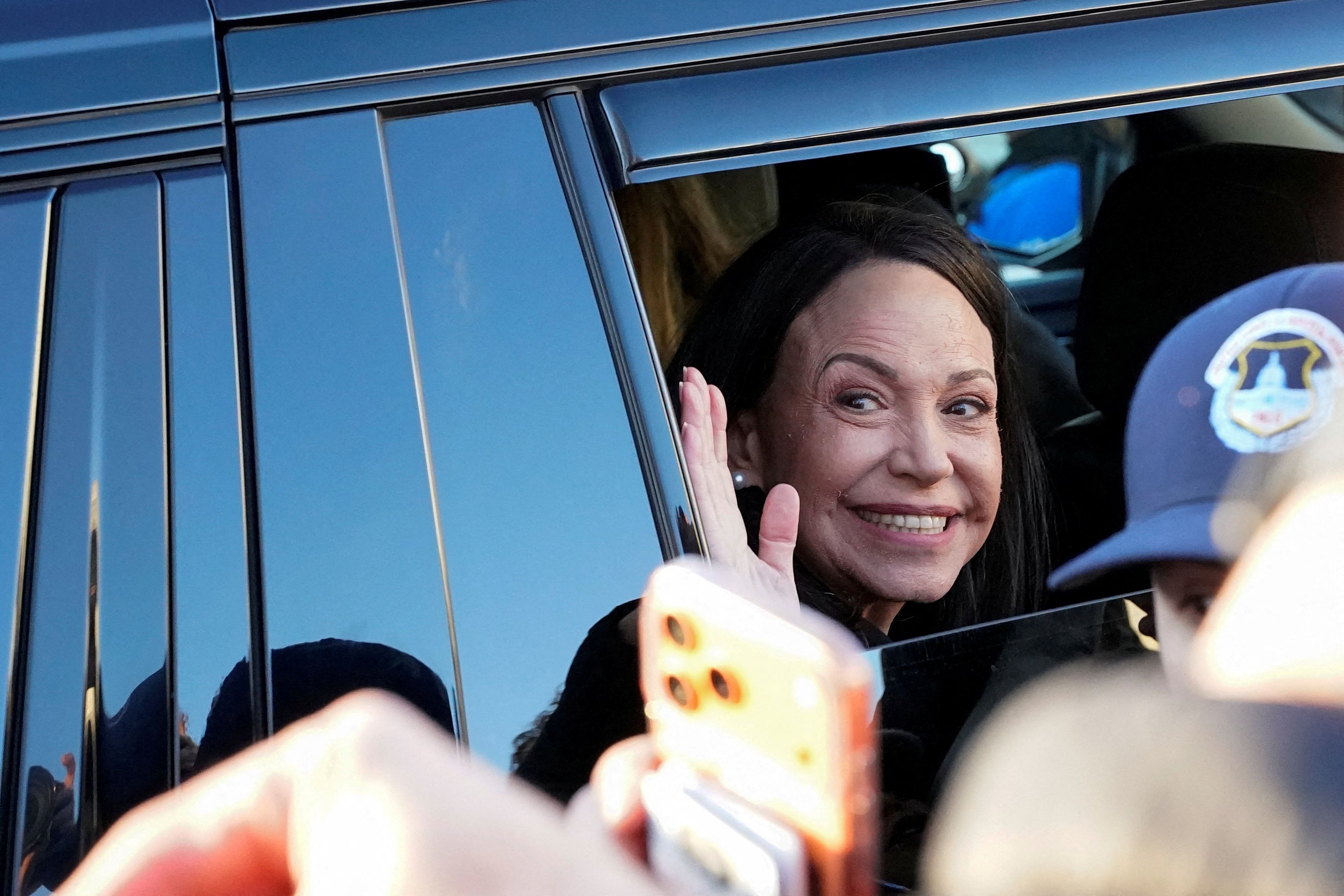
Undeterred, Machado decided to try again on Sunday, this time through Panama. Copa Airlines declined to carry her to Venezuela when she tried to board, people familiar with the incident said, citing concerns that Venezuelan authorities could retaliate against one of the few commercial airlines still flying into the country. A representative for Copa declined to comment.
From Panama City, Machado said in a video posted on social media on Monday that the earthquake catastrophe made it “impossible to postpone” her return. She blamed the Venezuelan government for blocking her and threatening those helping her, but hasn’t mentioned the U.S. role.
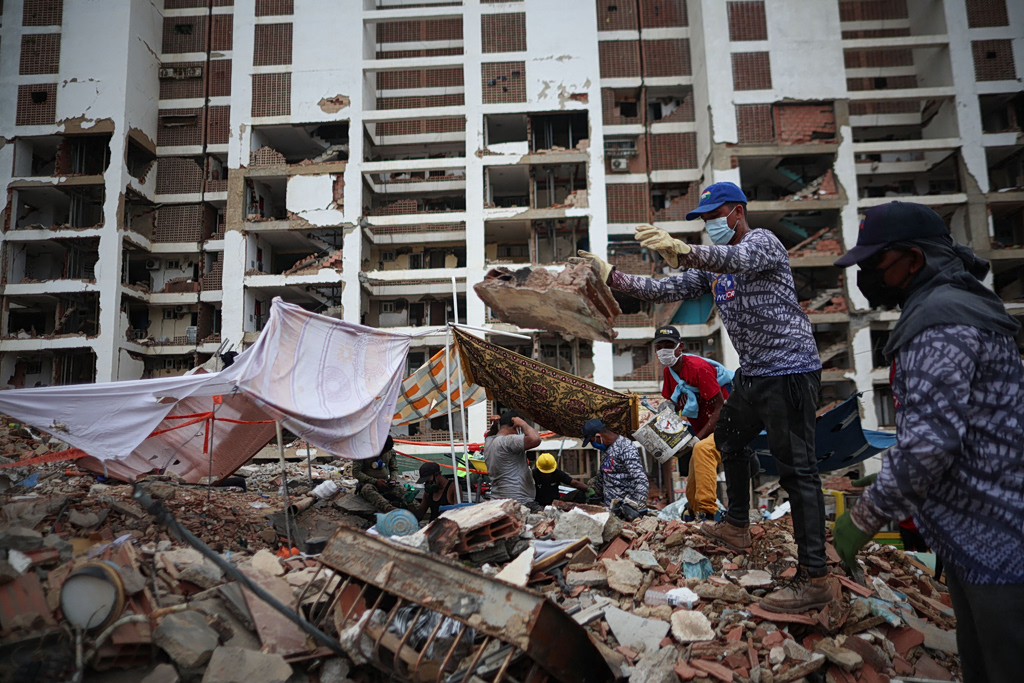
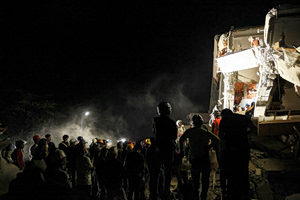
Rescuers work at the site of a collapsed building in the aftermath of the June 24 earthquakes, in La Guaira, Venezuela, July 3, 2026. REUTERS/Adriano Machado
“Like any political leader, she has to be down there with her people and her voters,” said Elliott Abrams, a former U.S. diplomat who was Trump’s envoy for Venezuela and maintains communications with Venezuela’s opposition leadership. “That is generally true, but it’s even more true when there’s a national tragedy like this. She has to go back.”
Machado’s attempts to return highlight the mixed messages from the U.S. being delivered behind closed doors, in what multiple people described as a “good cop, bad cop” dynamic.
Machado and her allies have sensed that Rubio is broadly sympathetic to her desire to return and move the country toward elections, people familiar with his conversations with Machado say. Other Trump administration intermediaries have delivered a much harsher message, accusing her of political opportunism, said people familiar with the interactions.
Supporters of Machado, including many Florida Republicans, have watched with dismay as the U.S. arrangement with Rodríguez looks increasingly open-ended. There has been little movement toward a democratic transition while a host of U.S. government officials and American executives have flown to Caracas and posed for photos with Rodríguez, discussing opportunities for collaboration and foreign investment.
After the earthquakes last week, Machado and her allies began calling contacts at the White House, the State Department and Capitol Hill urging them to support her return. It was now or never, they argued. As the country’s top opposition leader, it was her right to be with her people during a national catastrophe and help with the recovery, they said.
They also argued that she wanted to help mobilize her nationwide network with as many as 60,000 volunteers to help distribute water, food and supplies.
To Machado’s supporters, the mounting anger over Rodríguez’s disaster response showed that Washington’s reliance on the interim government was untenable in the long run without laying the groundwork for a transition.
“She has to be able to do what she does,” said Roger Noriega, a former top U.S. diplomat to Latin America. “She cannot do that outside of Venezuela.”
Write to Vera Bergengruen at vera.bergengruen@wsj.com and Juan Forero at juan.forero@wsj.com