 Μake us preferred on Google
 Unlike in the United States, few people in China appear openly anxious about the possibility that artificial intelligence could pose an existential threat to humanity. Across the country, residents already rely on AI-powered systems for local government services, students get instant feedback on assignments by uploading photos, and hotel guests have packages delivered to their doors by robots.
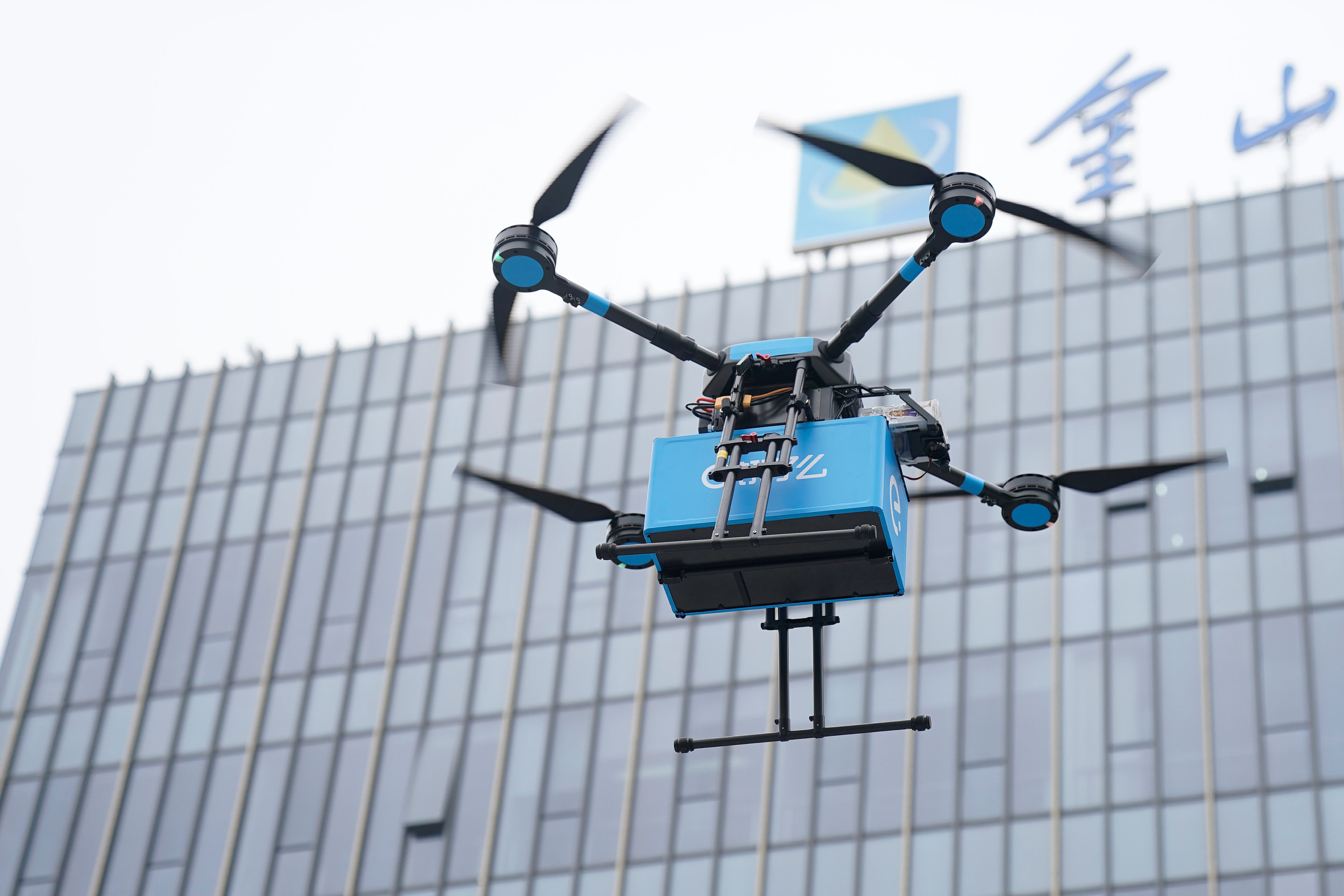
A drone is seen during a demonstration for the media before a news conference by Chinese food delivery company Ele.me on its drone delivery service, in Shanghai, China May 29, 2018. REUTERS/Aly Song
This everyday integration of AI reflects how deeply China has embraced the technology. A Morgan Stanley survey released Monday found that 80 percent of Chinese respondents use AI at least weekly, compared with 54 percent in the US. Even as American tech leaders and researchers call for slowing AI development over concerns about existential risk, the Chinese public remains largely unbothered.
“This technology was created to serve humanity,” said Xu Jingyuan, a 22-year-old business student in Beijing, adding that it should be seen as a source of convenience rather than fear. He said he believes the government is fully capable of managing any risks that arise, a sentiment echoed by several other people interviewed this week, pointing to a broader divide in how the two societies view AI and how much they trust their governments to handle its dangers.
Lian Jye Su, chief analyst at research firm Omdia, said Americans tend to assume that without whistleblowers, large corporations could dodge accountability given weak oversight, whereas in China there’s a strong public confidence that the government will intervene if something goes seriously wrong.
Analysts also point to differences in how much exposure people have had to the technology, how it’s discussed publicly, and broader cultural context. An Ipsos survey from earlier this year found 83 percent of Chinese respondents found AI products exciting, compared with just 33 percent in the US. Separately, an Edelman survey found 86 percent of Chinese respondents trust their government to do the right thing, versus only 39 percent in the US.
The two countries’ political systems differ sharply. Whistleblowing and messy public policy debate are common in the US, particularly amid rising political polarization, while China’s centralized, one-party system allows the state to set its agenda largely without open pushback.
Behind the embrace
The everyday presence of AI, its commercial uses, and visible robotics have all helped drive broad public acceptance in China. Shi Hongchao, 51, from Liaoning province, said AI feels like it has already worked its way into every part of daily life and seems almost unstoppable at this point.
Fierce competition among Chinese tech firms has led to a flood of free AI chatbots and built-in features in apps people already use, while industries ranging from filmmaking and e-commerce to manufacturing increasingly adopt the technology, with productivity and convenience gains speaking for themselves.
Poe Zhao, founder of the newsletter Hello China Tech, said most Chinese people first encounter AI as an inexpensive, useful product rather than as a subject of debate, so they tend to judge it by what it does for them rather than by hypothetical dangers.
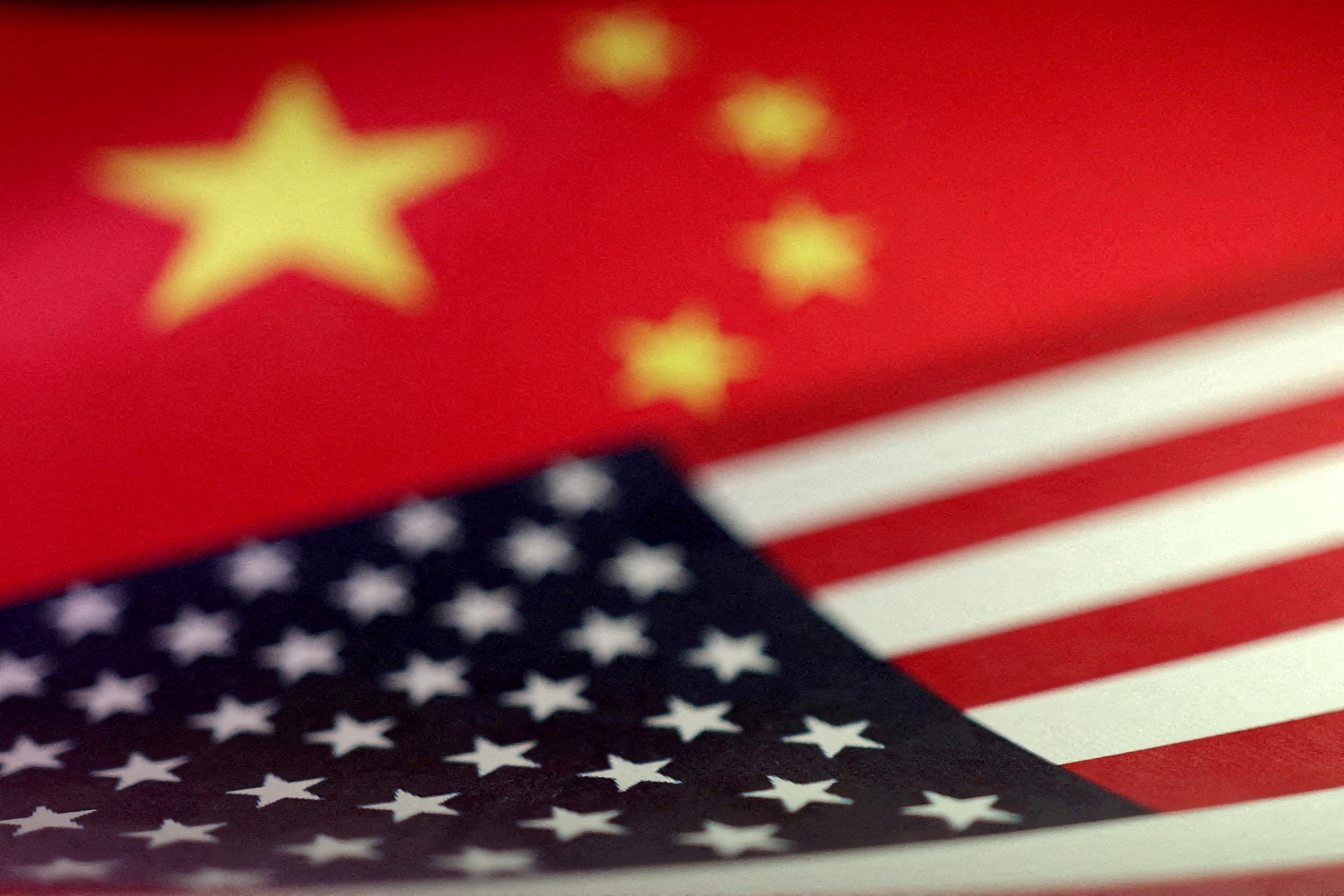
That stands in sharp contrast to the US, where tech executives and researchers have voiced serious concern about AI’s rapid progress and potential existential risks. China, widely seen as the other major AI power capable of rivaling the US, has stayed comparatively quiet on that front.
Zhao noted that when warnings do surface in China, they’re quieter and framed differently, centered on losing operational control, malicious misuse, and social disruption rather than human extinction. China’s intelligence chief, Chen Yixin, published an article last Sunday outlining the need to treat AI as a strategic economic priority while also laying out what Beijing sees as its major risks. Beyond familiar concerns like hostile actors using AI for cyberattacks, disinformation, or espionage, Chen warned the technology could destabilize society and threaten political security, and pointed to what he called “monopolistic practices” by certain countries, an apparent reference to US export controls, as another concern.
Rather than playing out through public debate or open letters, Zhao said, most AI governance in China happens quietly, through companies complying with government technical standards, security reviews, and administrative filings.
Chinese AI firms are also developing along a different path than their American counterparts. While Chinese labs have closed much of the gap with leaders like Anthropic and OpenAI, their models still lag behind the most advanced US systems, partly due to limits on computing power and capital. DeepSeek founder Liang Wenfeng said in a leaked investor call in July that the biggest gap between Chinese and American labs comes down to access to top-tier AI chips, restricted by US export controls, along with lower capital investment.
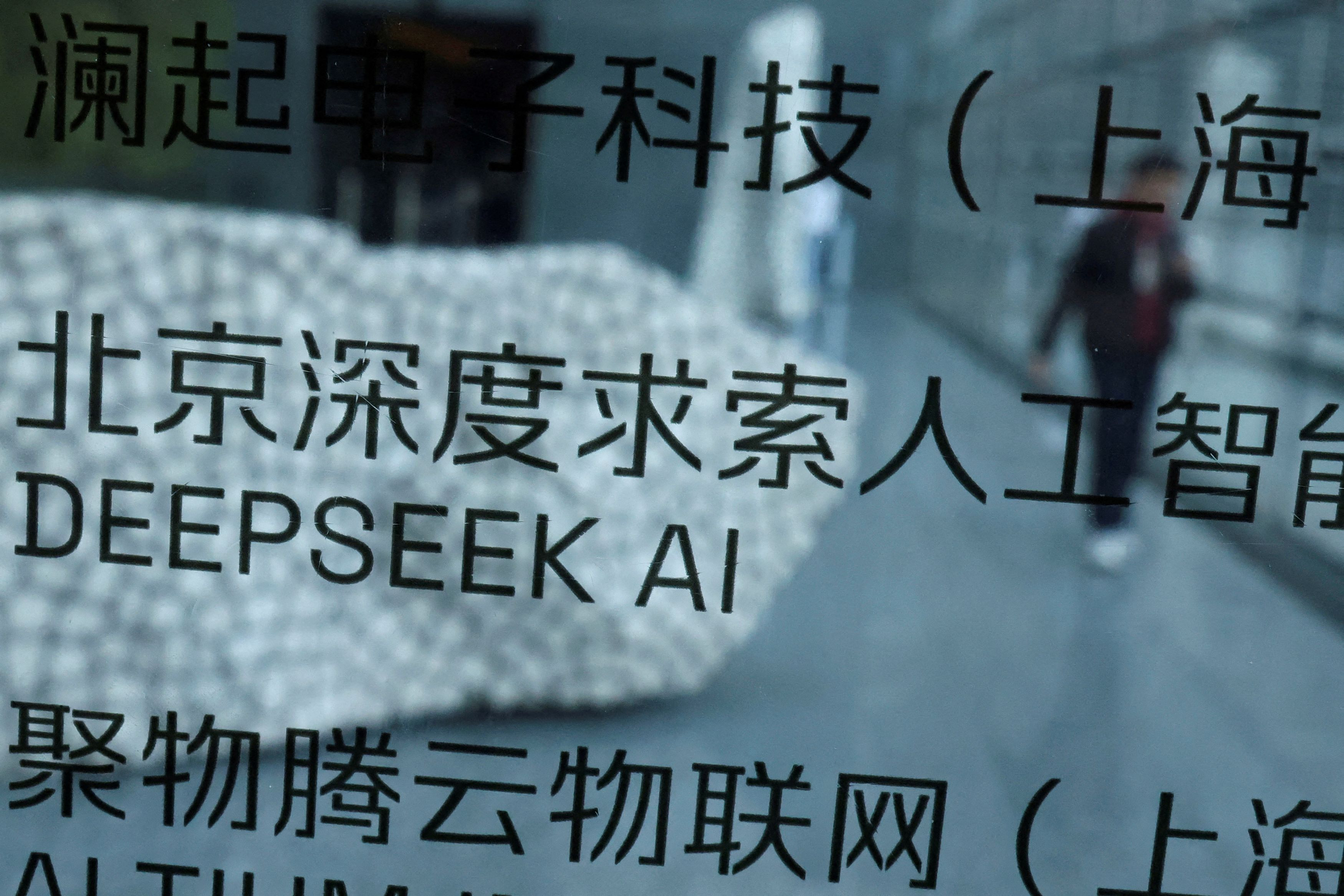
FILE PHOTO: A DeepSeek AI sign is seen at a building where the Chinese start-up’s office is located in Beijing, China, February 19, 2025. REUTERS/Florence Lo/File Photo
Commercial pressure to turn a profit also shapes Chinese AI companies’ priorities, potentially steering them away from the kind of frontier research that could carry extreme risk. “The US is really keen on pushing the boundaries more,” Su said. “In China, there may be less focus on frontier capability, but more focus on how to make AI more productive and commercial.”
China’s rise
China’s technological progress has tracked its broader economic rise over recent decades, and as its AI industry has grown more capable, many Chinese people see that as further proof of the country’s technological ascent. “In China, there is this very pro-AI culture,” Su said. “Technology has always been viewed as a national pride.” That’s a notable contrast with the US, where distrust of both corporations and government has grown alongside pushback against AI data centers.
Over the past ten years, Chinese technology, from smartphones and electric vehicles to batteries and supercomputers, has increasingly competed with and in some cases surpassed its US counterparts. Grace Shao, founder of the newsletter AI Proem, said that track record has created an unspoken expectation among many Chinese people that new technologies bring both economic benefit and national strength, since they’ve already seen how much prosperity and convenience past technologies delivered.
Shao added that Chinese citizens also tend to look to their government for protection, noting Beijing’s repeated willingness to rein in even its most powerful companies. In 2020, for instance, Chinese regulators launched a sweeping crackdown on major firms across tech, gaming, and education, erasing more than $1.5 trillion in market value. “There is built-in trust by the people that the government will act as a parental figure again to draw out the guardrails and guidelines for this new technology,” she said.
Shi, from Liaoning, shares that view. He believes AI’s benefits still outweigh its risks and argues development shouldn’t be slowed just because dangers exist. “I think we should continue to invest more heavily in AI and keep developing it,” he said. “After all, restricting the technology doesn’t mean it will stop advancing. China is a major country. It has an even greater reason to prioritize the development of AI.”
Source: CNN