

 Μake us preferred on Google
 The powerful, low-cost attack drone the U.S. is using in its war with Iran doesn’t come from one of America’s more than 400 venture-backed drone startups. And it isn’t the product of Silicon Valley ingenuity.
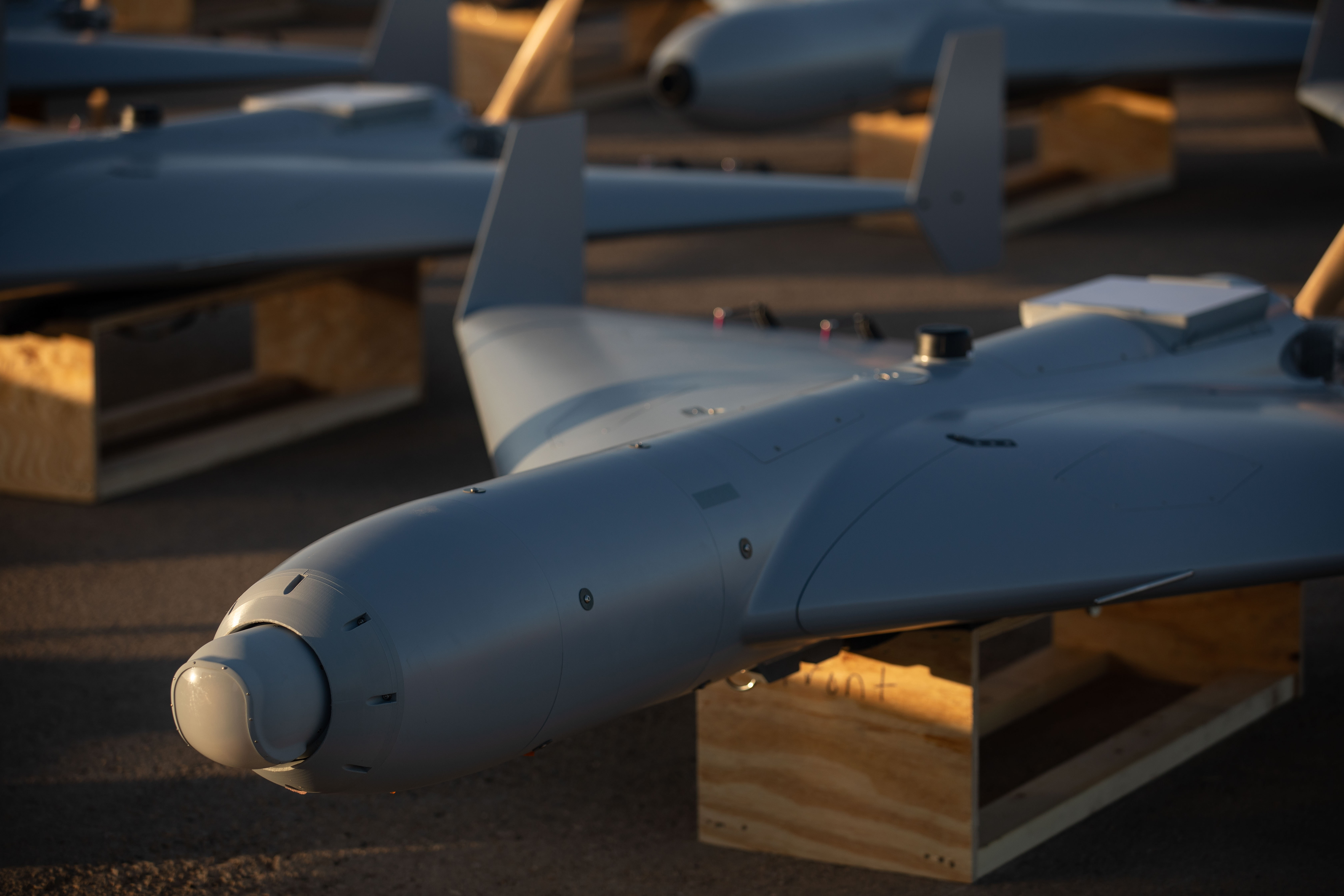
Instead, the drone having its moment in the Middle East conflict was designed by the U.S. military itself, using reverse-engineered Iranian technology. From the earliest days of the war, the FLM 136, or Lucas , as it is known, has been wiping out Iranian military targets, while better-funded hardware systems and drones from defense startups have had little involvement.
It is a victory for the U.S. military, which went from blueprint to battle-ready drone in less than two years, jettisoning its tradition of slowly buying very expensive equipment. The creation of Lucas is an early proofpoint of a new strategy of making cheap drones quickly and a sign that the Pentagon can change the way it does business to better prepare for modern conflict.
Data on Lucas’s performance in the Iran war is limited, but according to senior defense officials, the autonomous drones were part of successful strikes on military and Islamic Revolutionary Guard Corps sites, such as weapons facilities, Iran’s Shahed drone manufacturing sites and air-defense nodes. That contributed to an 83% drop in Iranian drone attacks over the first few days of the war, they said.
The low-cost drones, the first one-way attack drones the U.S. deployed in the Iran war, have roots in America’s preparation for a separate potential conflict between the U.S. and China.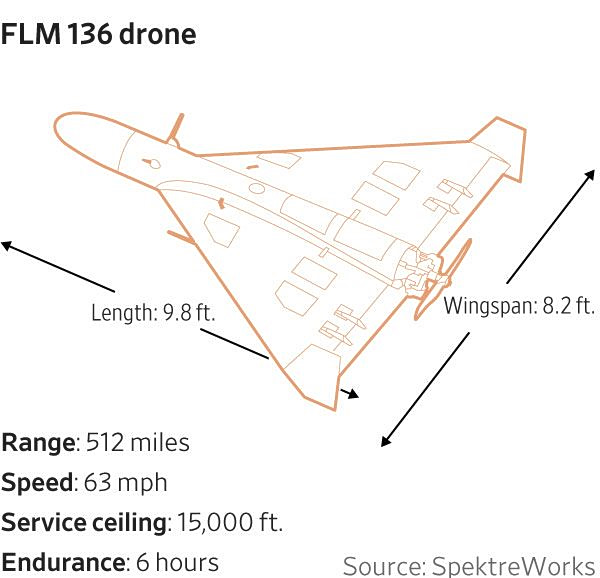
In simulated wargames to analyze how a conflict with China might play out, national-security experts said they found that the U.S. would run out of critical munitions in two weeks or less. The military wanted a drone that could be built quickly and in large quantities, fly far, and be cheap enough not to break the bank.
During the Biden administration, a small group in the Defense Department seized on the idea of America building its own version of the Iranian Shahed, a fearsome attack drone that militaries and proxy militias across the globe have sought to duplicate. Russia, which is lobbing about 4,000 modified Shaheds at Ukraine every month, according to Ukrainian government data, did more than any other country to demonstrate the drone’s capabilities.
A small team in the U.S. military’s research and engineering office put together plans to build an attack drone based on deconstructing a Shahed the military had recovered from Ukraine. It was the first known occasion in around half a century that the U.S. had reverse-engineered another country’s military technology for its own use, former defense officials said. The last time, it was a Soviet-made pontoon bridge.
A former senior defense official described Lucas, which stands for low-cost unmanned combat attack system, as “the Toyota Corolla of drones.” It may not have all the features or top-end components, but it was built to be affordable and plentiful.
The cost of Lucas ranges from $10,000 to $55,000, according to a Pentagon spokesman, in line with the Iranian model. Tomahawk long-range cruise missiles, several hundred of which have been used in the war with Iran, cost at least $2 million apiece.
The Defense Department “is committed to scaling cost-effective autonomous solutions for the joint force and Lucas continues to be a prime example,” the spokesman said.
Former senior Pentagon official Michael Horowitz , who was one of the leaders of the team that developed Lucas, said other militaries had the ability to make their own low-cost, long-range precision strike weapons. “The issue was the U.S. was spending nothing, zero dollars, on that kind of system,” said Horowitz, who is now at the Council on Foreign Relations.
Lucas was given a spot in 2024 in a Biden-era initiative to field thousands of autonomous weapons by last August. Its inclusion was controversial, said former military officials: Lucas was just a mock-up, but it beat out more mature systems on the offering .
Because the government owns Lucas’s intellectual property, it is using the same approach it employed in building ships during World War II, enlisting a cross section of second- and third-tier manufacturers to crank out the drones on demand during wartime.
Little-known Scottsdale, Ariz.-based SpektreWorks and Huntsville, Ala.-based Integration Innovation were tapped to build the drones. A total of five manufacturers will be selected, each set up to produce 300 drones a month, a former senior defense official familiar with the plans said.
SpektreWorks and Integration Innovation didn’t respond to requests for comment.

A Low-cost Unmanned Combat Attack System (LUCAS) successfully launches from the flight deck of the Independence-class littoral combat ship USS Santa Barbara (LCS 32) while operating in the Arabian Gulf, Dec. 16. (U.S. Army photo by Spc. Kayla Mc Guire)
The Marine Corps was the first to use the drones, and ordered around 6,000, destined for the Indo-Pacific. But then the war with Iran began. The drones were handed over to U.S. Central Command and in February made their first appearance in combat.
The Trump administration has enacted sweeping reforms in defense procurement, making it easier for the military to quickly buy weapons and emphasizing commercial technology to modernize the U.S. arsenal. In particular, an August decision by Defense Secretary Pete Hegseth to rescind long-held requirements processes for acquiring technology made the rapid deployment of Lucas possible, current and former defense officials said.
Still, other changes will take longer to trickle through the Pentagon’s bureaucracy, and it will take time to reorient America to a new way of fighting wars, even as China is developing advanced ways to strike the U.S., say intelligence and military officials.
While Lucas has been a success against Iran’s degraded air defenses, that isn’t a guarantee it will be a battlefield star in more complex environments, said Jack De Santis, an electronic warfare expert who fought in the war in Ukraine and is now working with the U.S. government. In the Middle East, there is no meaningful jamming of GPS, which can cause drones to crash or fly off course, as military officials expect in a conflict with China.
“Every technology gets defeated at some point,” he said.
There is also still a worrisome lack of cheap U.S. counterdrone technology, which has allowed Iranian-backed militias to continue using small drones to menace U.S. military bases in the Middle East. The small number of unmanned surface vessels in the region are still years away from being the autonomous fighting machines their manufacturers have promised, military officials said.
The absence of a broader supply of modern, cheap U.S. systems in the Iran war has served as a wake-up call.
“We’re not ready,” said Julie Bush , co-founder of defense-tech firm Valinor Enterprises and a former Palantir Technologies executive. “The government doesn’t have what it needs at the scale that they need it.”
Write to Heather Somerville at heather.somerville@wsj.com