 Μake us preferred on Google
 Israel’s intelligence operatives spent weeks tracking Hezbollah’s unit commanders as they dispersed from their strongholds and regrouped in hide-outs around the country to evade Israeli attacks.
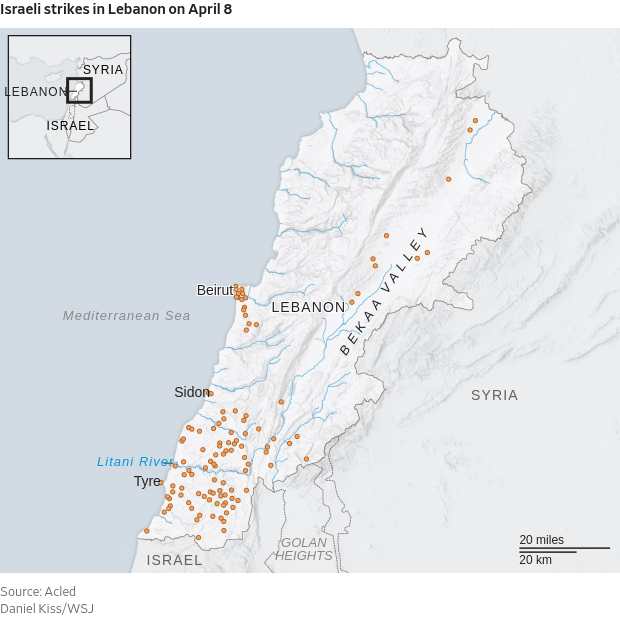
Israel waited for enough of its targets to be in position. When it saw an opening last week, it struck, hitting 100 sites in 90 seconds in one of Israel’s deadliest bombing campaigns in Lebanon in the past two years.
On the ground in Beirut, pharmacist Diana Chawki had just sent her stock boy upstairs for lunch with his family and sat down herself to eat when the shock from an airstrike sent the pharmacy’s ceiling panels tumbling down on her head.
A second shock and then a third hit the seven-story seaside building and knocked her to the floor. Chawki said she looked up and could see fire and the sky above. Somehow, she was unscathed. The stock boy died along with his mother and siblings as the building partially collapsed.
“If I was a few paces away from where I was sitting, I would be dead with absolute certainty,” Chawki said. “The bombs fell like rain.”
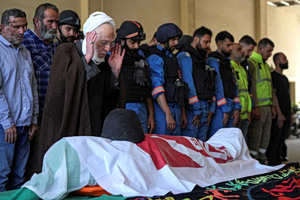
The April 8 Israeli bombings hit in the middle of the afternoon and left more than 350 people dead, including more than 130 women and children, according to Lebanon’s health ministry.
Israel said it killed 250 militants and released the identities of a handful, saying they were unit commanders and intelligence officers. It wasn’t clear why the pharmacy’s building was hit. Israel said it didn’t know of a strike at the location.
The attack had diplomatic repercussions as well. It came on the first day of President Trump’s cease-fire with Iran and rattled the fragile truce. Tehran reacted by threatening to scrap the agreement and rained missiles and drones down on targets across the Persian Gulf.
Trump told Israeli Prime Minister Benjamin Netanyahu to dial back strikes on Beirut. On Thursday, Trump announced Israel had agreed to a cease-fire with Lebanon, which was highly unpopular among the Israeli public, putting Netanyahu in a difficult spot.
“Israel will not be bombing Lebanon any longer,” Trump said on social media Friday. “They are PROHIBITED from doing so by the U.S.A. Enough is enough!!!”
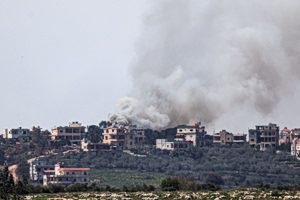
In its April 8 attacks, Israel targeted tents in south Lebanon, homes in the country’s central Bekaa Valley and apartments in crowded Beirut. The strikes damaged residences, restaurants, religious buildings and offices in some areas previously spared from attacks.
Lebanese civil defense said strikes hit half a dozen sites in the heart of Beirut—upscale neighborhoods and tourist areas outside of Hezbollah’s traditional Shia Muslim strongholds in the southern suburbs.
Residents screamed and ran from the explosions as plumes of smoke rose one after the other into the sunny Mediterranean sky.
Ragheda Sharara, who was chased out of her home in Beirut’s southern suburbs at the beginning of March by the fighting, was staying at the Manara Riva Suites hotel by the sea when the bombs hit.
The 34-year-old was sitting in the lobby when she felt the airstrikes and saw falling glass and smoke. Worried the building would fall, she ran outside and saw rescuers with a naked elderly woman who had been bathing and whose legs were severed in the blast.
“I came here because this area was supposed to be safe,” Sharara said. “Now I know there is nowhere safe to go.”
Strikes in at least 40 of the 100 target locations resulted in civilian harm, according to preliminary data from Airwars, a nonprofit affiliated with the University of London that investigates civilian casualties in conflict zones.
“The attacks caused significant material damage and resulted in substantial civilian casualties,” said Bassel Doueik, a Lebanon researcher at Acled, another international conflict tracker. “These areas could probably have been targeted with drone strikes to minimize civilian casualties, but it seems the attacks were carried out by fighter jets.”
Israel says its targets weren’t top officials but rather midlevel battlefield commanders who it said were responsible for directing strikes at Israel and Israeli forces.
The goal was to create a psychological shock by hitting them simultaneously without warning, an aerial version of the pager attack that decimated the Hezbollah’s ranks two years ago, people familiar with the operation said. Israel named the operation “Eternal Darkness.”
Lebanese call it “Black Wednesday.” Israeli military officials acknowledged that attacks in Beirut pose a greater risk of harm to noncombatants and that uninvolved civilians were killed in last week’s strikes. But they said Hezbollah commanders directing attacks on Israeli cities and soldiers don’t have immunity just because they are among civilians.
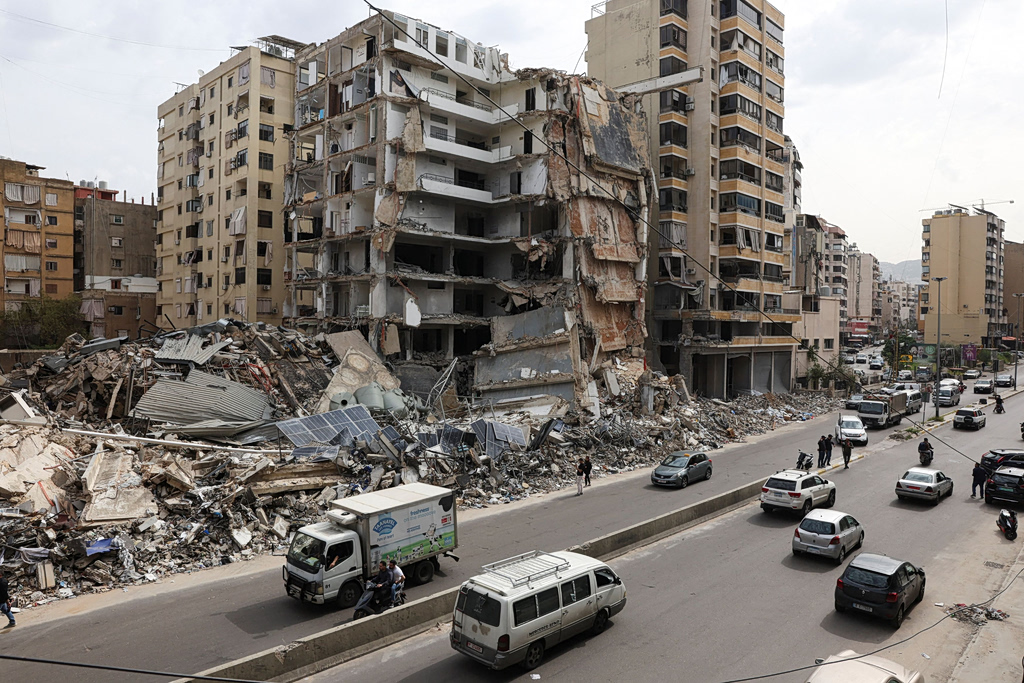
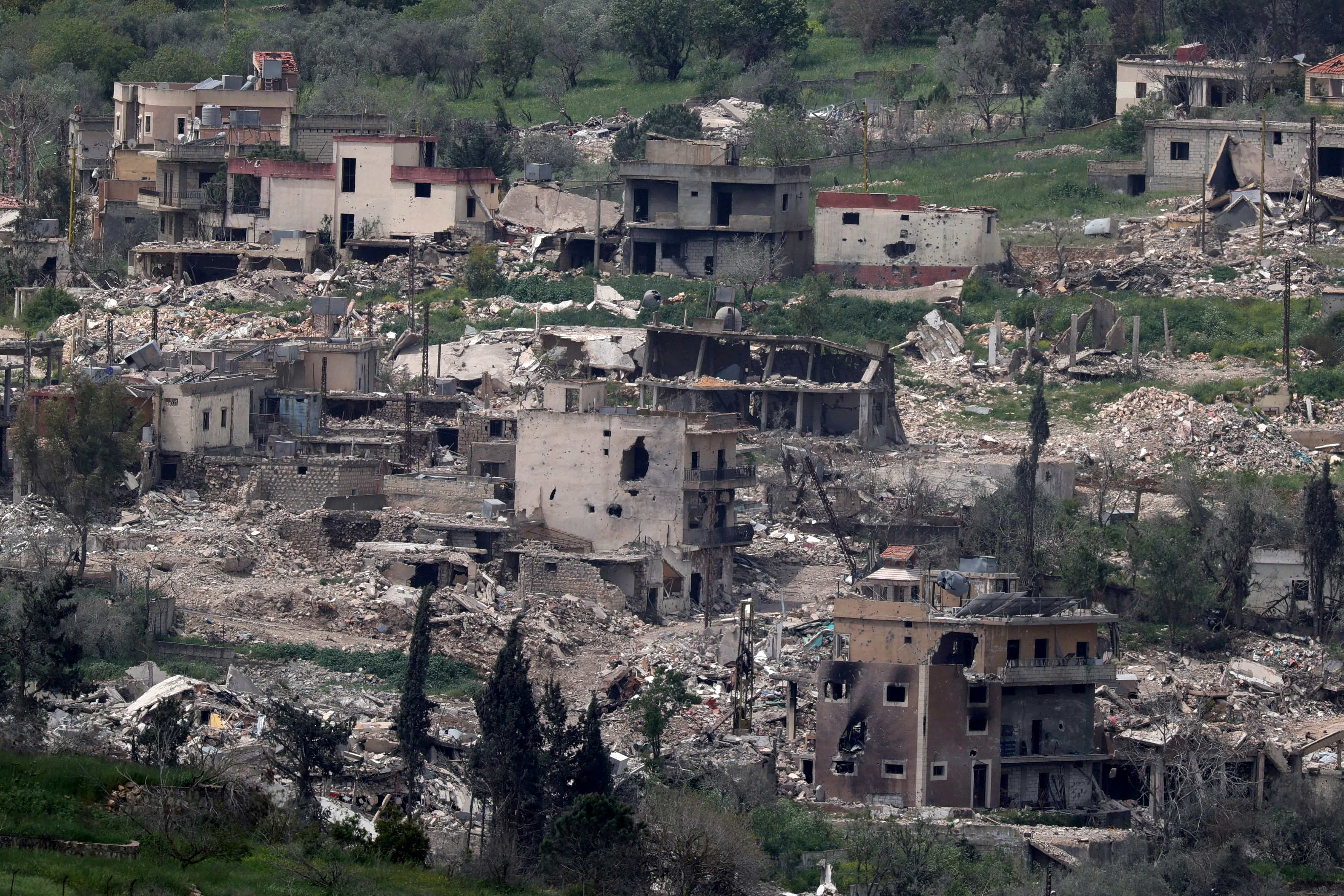
Vehicles drive past damaged buildings as displaced people make their way to return to their homes after a 10-day ceasefire between Lebanon and Israel went into effect, at the southern suburbs of Beirut, Lebanon, April 17, 2026. REUTERS/Mohamed Azakir
Many of the attacks on urban targets such as apartment buildings used precise munitions with smaller explosives to minimize damage, one official said.
Israel and Hezbollah—the Iranian-backed Lebanese militia—have been fighting for decades. The conflict flared up in 2024, after Hezbollah attacked Israel over the war in Gaza, and again last month, when Hezbollah began firing at Israel over its strikes on Iran.
Israel responded by invading southern Lebanon, razing villages and clearing Hezbollah positions. It has struck hard at the group’s strongholds in Beirut’s southern suburbs, saying it has sent militants scrambling for new spots to hunker down and direct the fighting.
Hezbollah has kept up the fight since the strikes, firing an average of more than 100 projectiles a day into Israel and at Israeli forces in Lebanon, while also clashing fiercely on the ground—including in Bint Jbeil, where encircled militants have injured a number of Israeli soldiers.
Luna El Bizri, the owner of Luna Pharm, the store destroyed in the attack, said her pharmacy’s neighborhood of Ain al-Mraiseh along Beirut’s seaside corniche had always been a haven.
The American University of Beirut is nearby, drawing professors and international students. The area also is home to a hospital and lots of hotels, thanks to the heavy turnout of Gulf Arab tourists during the summer. Its mosques and churches reflect its religious diversity, and streets are named after John F. Kennedy, a former French prime minister and a 20th-century Syrian intellectual. Beirut residents never considered it likely to be hit.
The first strike on April 8 hit a higher floor in El Bizri’s building, which was showing its age. It only took moments for it to collapse, she said.
El Bizri and other residents said two dozen people were killed in the strike. The toll would have been higher if the strikes had come later in the day when more people were home from work, they said.
Whatever the target was, it wasn’t worth it, El Bizri said.
“Everything ruined in one decision,” she said.