
 Μake us preferred on Google
 On March 13, a massive billboard appeared in Tehran’s Enqelab Square. It showed Iran’s newly selected supreme leader, Mojtaba Khamenei , standing in a trench and instructing commanders of the Islamic Revolutionary Guard Corps to fire missiles at their enemies. The text suggested the mission is divinely inspired, comparing Khamenei to Imam Ali, a revered Muslim figure known for his legendary victory over Jewish tribes.
For opponents of Iran’s regime, the image is the visual representation of their worst nightmare: a militarized Iran ruled by a younger, hard-line leader where the Revolutionary Guard plays an even more dominant role.
The U.S. and Israel launched the war with the hope that killing top Iranian officials—starting with Mojtaba’s father, Ali Khamenei—would create the conditions for regime change or at least the emergence of leaders more willing to bend to America and Israel’s interests. In an address to the nation one month into the war, President Trump called the new leadership “more reasonable.”
Instead, the void is being filled by radical new leaders who have shown little interest in political compromise at home or abroad.
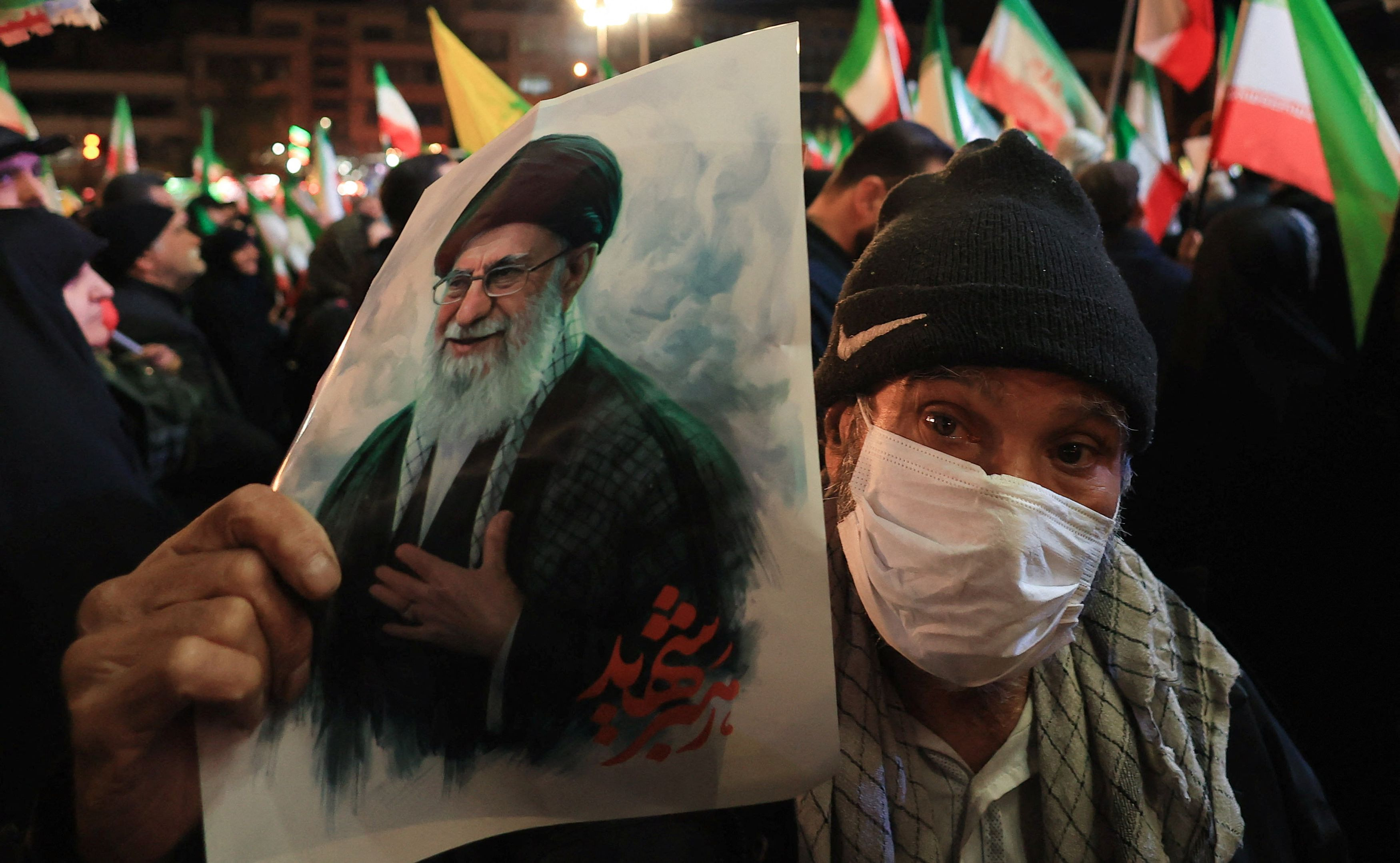
A man holds a poster of Iran’s late Supreme Leader Ayatollah Ali Khamenei during an anti-U.S. and anti-Israel rally at Enghelab Square amid a ceasefire between U.S. and Iran, in Tehran, Iran, April 15, 2026. REUTERS/Thaier Al-Sudani Foreign media in Iran operate under guidelines set by the Ministry of Culture and Islamic Guidance, which regulates press activity and permissions
“The war changed the regime—and not in a good way,” said Danny Citrinowicz, who formerly headed the Iran desk for Israeli military intelligence. “We created a reality that is worse than what Iranians were facing before the war.”
Iran’s hard-liners—anti-Western ideologues with no tolerance for domestic dissent—have always had a place in the country’s overlapping and competing circles of power, their influence rising under the patronage of the elder Khamenei. But they now dominate Iran’s political and military leadership, energized by a war that many of them believe presages the return of a Shiite Muslim messiah.
At the center is Mojtaba Khamenei, who was chosen by clerics after surviving the airstrike that killed his father and several other members of his family. He hasn’t appeared in public since his appointment last month, fueling speculation that he was so badly injured he might not be involved in the day-to-day running of the country.
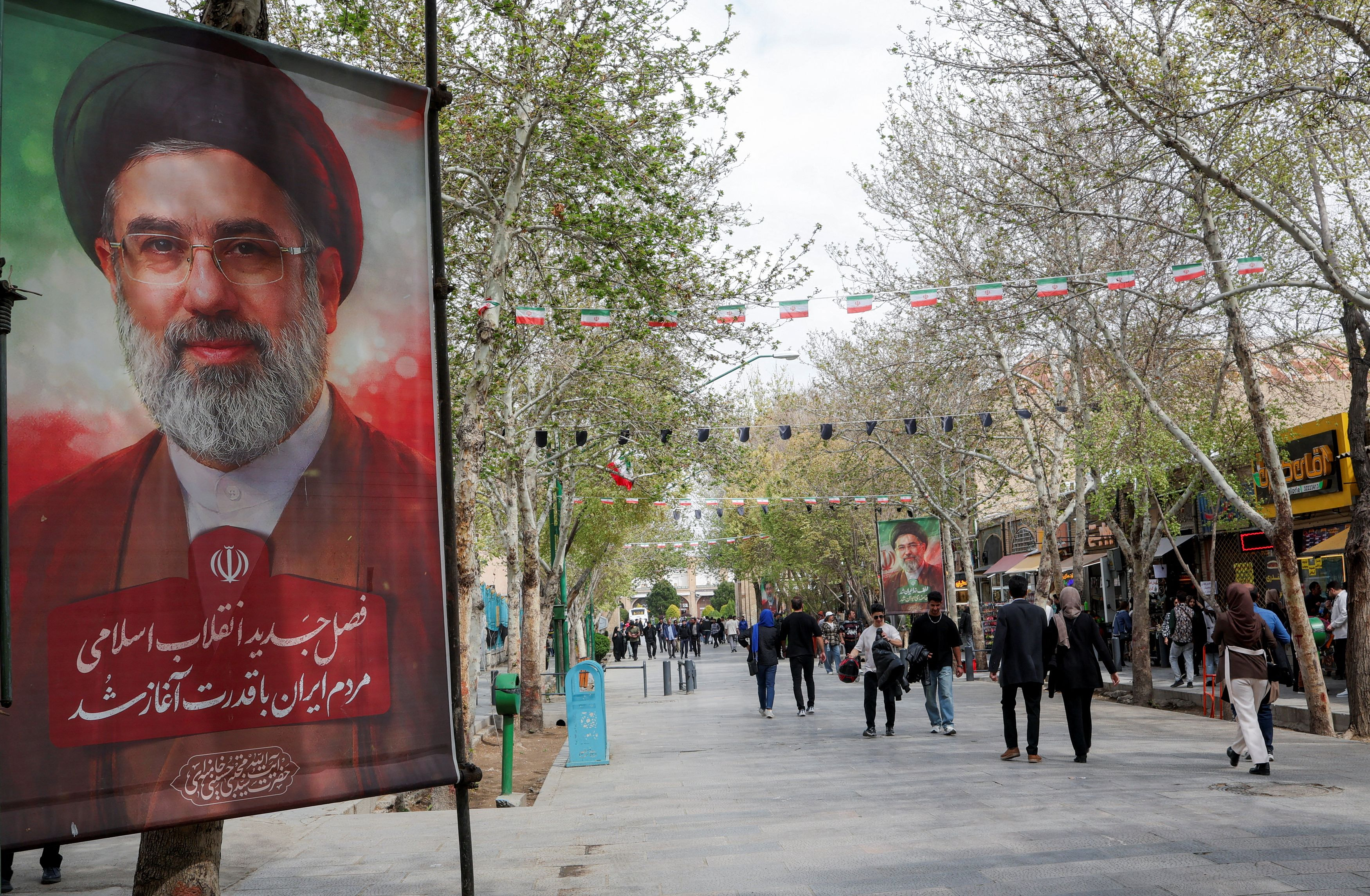
People walk past posters of Iran’s new Supreme Leader, Mojtaba Khamenei, displayed along a street in Isfahan, Iran, March 24, 2026. REUTERS/Alaa Al Marjani
The leaders who are representing Iran in his absence have remained defiant in the face of a punishing bombing campaign that has inflicted severe damage to the country’s military capabilities, energy facilities and civilian infrastructure.
They have flexed their muscles at home, intensifying their crackdown against domestic opposition through arrests, executions and threatening would-be protesters with lethal force. They have deployed regime supporters on the streets instead.
Rather than looking for a quick end to the conflict, they have launched repeated, unprovoked attacks on their Arab neighbors. They have found new leverage in their de facto control of the Strait of Hormuz, transit point for 20% of global oil supplies.
The Iranian delegation sent to Islamabad for the failed weekend talks with the U.S. included parliament speaker Mohammad Bagher Ghalibaf , a pragmatic conservative, as well as politicians such as Ali Bagheri Kani, known for his fierce opposition to dialogue with the West in the past. The wartime losses are putting Iranian leaders under economic pressure to reach a deal. But the enmity between the two sides is likely to endure.
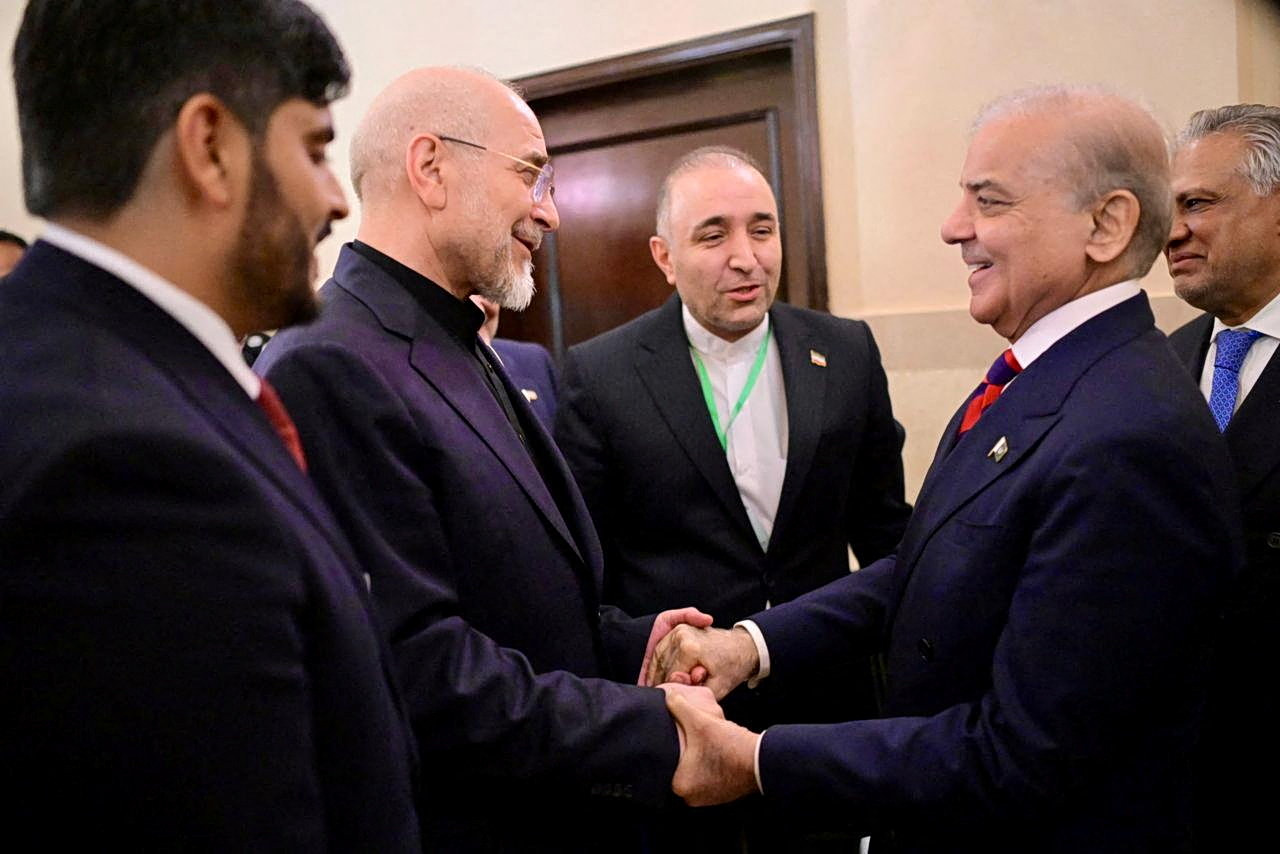
Prime Minister Shehbaz Sharif meets with Iranian Parliament Speaker Mohammad Bagher Ghalibaf, as delegations from the United States and Iran are expected to hold peace talks, in Islamabad, Pakistan, April 11, 2026. Pakistan’s Prime Minister Office/Handout via REUTERS THIS IMAGE HAS BEEN SUPPLIED BY A THIRD PARTY. BEST QUALITY AVAILABLE.
Promoting assassins
The Khamenei family, through its alliance with the Revolutionary Guard, was prepared for this moment.
The 56-year-old Mojtaba Khamenei kept a low profile even before he was injured. But he has long been a central figure who connected and promoted hard-line officials and helped shape Iran’s political orientation.
He rose at the center of his father’s political and religious authority. From an informal post in the Supreme Leader’s Office, the younger Khamenei worked closely with the Revolutionary Guard, the paramilitary group tasked with protecting the regime, and the Basij, its street-level enforcers, to crush opponents and elevate allies in Iran’s security and intelligence establishment.
He relies on a network of trusted allies that analysts call the Habib Circle. Its members include many veterans of the war with Iraq who served in the Revolutionary Guard’s Habib Battalion, renowned for attracting radicals and named after a seventh-century figure in Shia Islam revered for sacrificing his life in battle. Its recruits included Khamenei himself, who was a teenager when he enlisted toward the end of the war.
A congressional bill introduced in November called the Habib Circle “one of the regime’s highest informal security-intelligence networks, which has committed human rights violations and is involved in terrorist activities.”
The new leadership has proved resilient and adaptable, emerging from the first five weeks of the war with its command and control intact. Their hard-line approach is evident in their appointments. They include Iran’s new national security chief, Mohammad Bagher Zolghadr, a former Revolutionary Guard commander with a violent background.
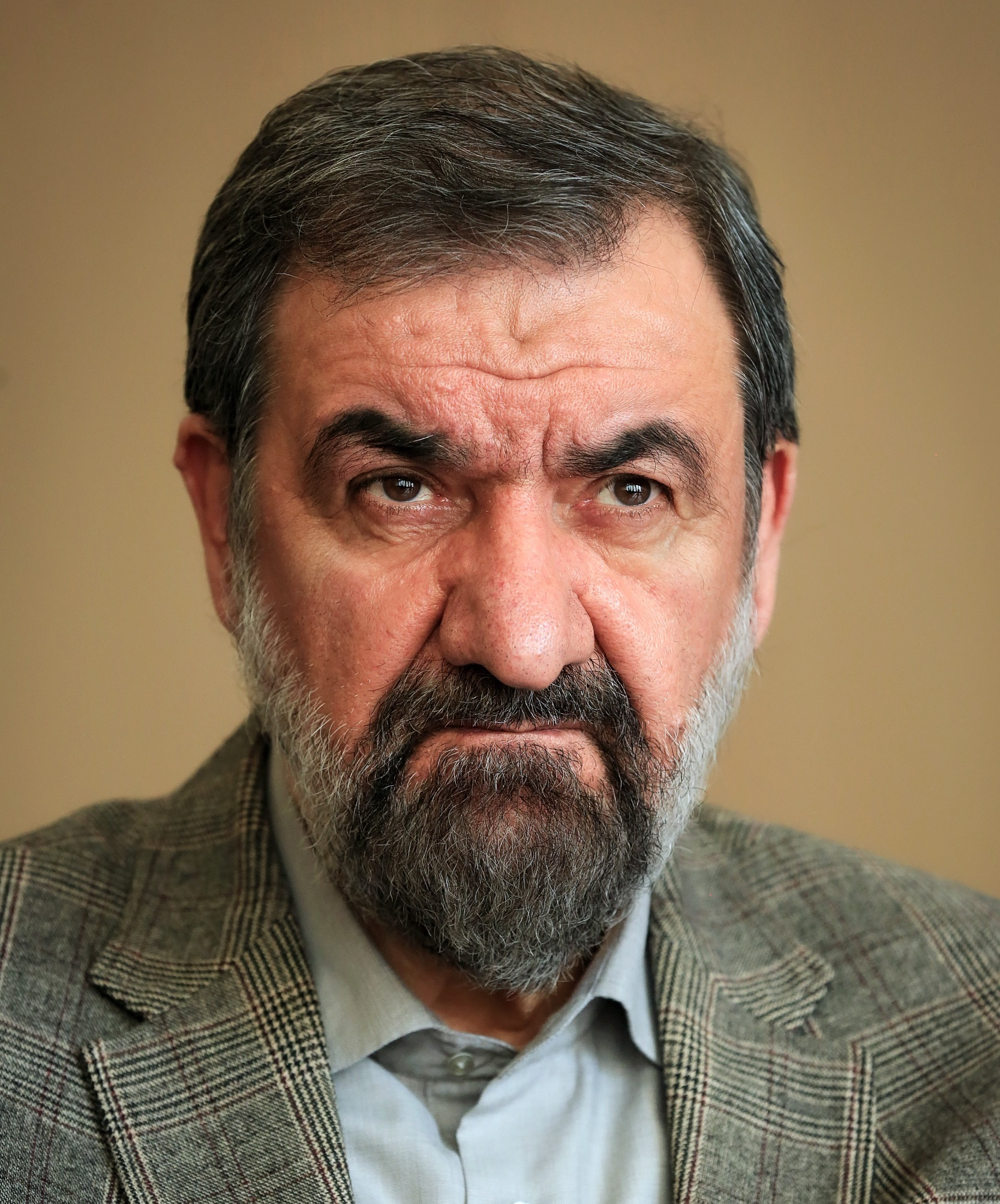
Before the revolution, Zolghadr was a leader of a guerrilla group that killed an American petroleum engineer. He was personally involved in the assassination of two policemen, according to a memoir he published in an Iranian journal of history.
He rose through the ranks of the Revolutionary Guard during the Iraq war. Later he helped found the Quds Force, which specialized in training foreign militias to attack Iran’s enemies, as well as another paramilitary group that specialized in violence against political opponents.
His views were so extreme that one of his subordinates—Qassem Soleimani, the notorious Quds Force leader later killed by the U.S.—temporarily quit in protest, according to Vali Nasr, a Middle East-focused professor at the Johns Hopkins School of Advanced International Studies in Washington. Zolghadr has written about defeating Israel and taking over its territory.
Mediators say Zolghadr is highly influential in talks with the U.S., taking reports from the negotiators and helping steer their decisions. His predecessor, Ali Larijani, who was killed last month, was no dove. But he was a political operator who studied the works of German philosopher Immanuel Kant and built a reputation as a pragmatic negotiator during nuclear talks.
The Revolutionary Guard’s new commander in chief, Ahmad Vahidi, is accused of participating in the 1994 bombing of a Jewish community center in Buenos Aires that killed 85 people and injured hundreds. He established a training school for public officials—Tehran’s Shahid Beheshti School of Governance—that is shaping a new generation of Iran’s political leaders under the oversight of the Revolutionary Guard. As interior minister, he helped oversee the crackdown against the women’s rights protests of 2022. His predecessor was killed on the first day of the war.
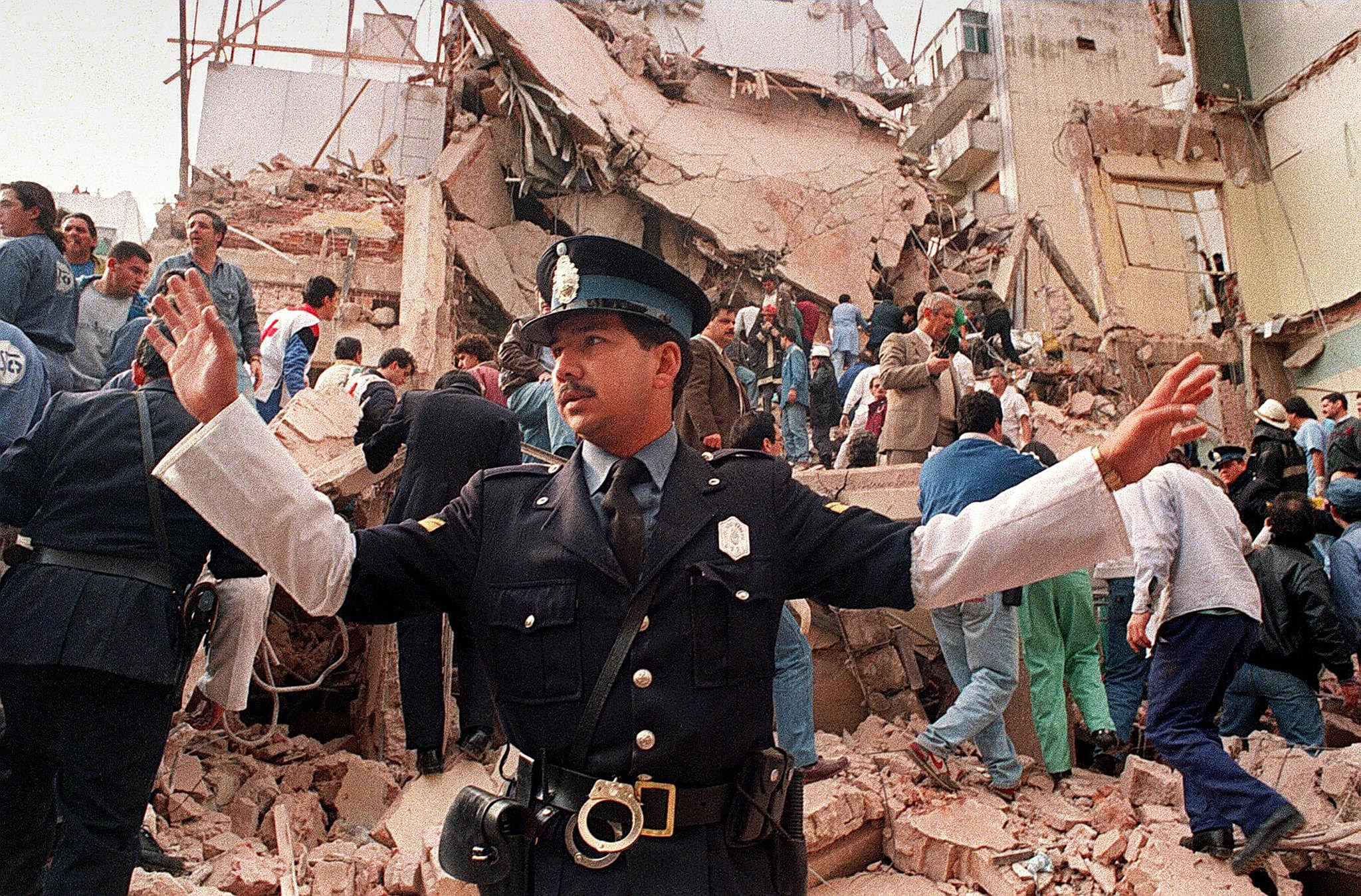
MVD51 – 19940718 – BUENOS AIRES, ARGENTINA : (FILES) This file photo dated 18 July 1994 shows the demolished seven-story building of the Mutual Israelite Association of Argentina (AMIA), an umbrella group for Jewish charities, in Buenos Aires. The 22 July 2002 edition of The New York Times reports the Iranian government organized and carried out the bombing that killed 85 people and then paid Argentina’s president at the time, Carlos Menem, $10 million USD to cover it up, an unidentified Iranian intelligence agency defector in a sealed testimony told investigators.
EPA PHOTO AFPI FILES/DANIEL LUNA
Khamenei’s new military adviser, Mohsen Rezaie, is also accused of participating in the Buenos Aires attack. As commander of the Revolutionary Guard in the 1980s, he implemented a strategy designed to topple Iraqi dictator Saddam Hussein, extending a disastrous war of attrition that the U.S. government says caused at least 250,000 deaths.
Rezaie recently articulated a similar stance in relation to the continuing conflict. “The confrontation will continue until several conditions are met,” he said in televised remarks, listing requirements that included lifting sanctions and compensating Iran for the damage caused by the war. “The Iranian response will no longer be an eye for an eye. It will be a head for an eye, a hand and a foot for an eye.”
“The more extreme group in the IRGC are taking charge,” said Saeid Golkar, an expert in Iran’s security services at the University of Tennessee at Chattanooga. “That makes the prolongation of the conflict more likely.
Ousting reformists
Mojtaba Khamenei and his inner circle began their assertive ascent in politics a quarter-century ago as a reaction to the growing popularity of reformist politicians who advocated for change from within.
Khamenei first showed his political cards in 2002, when he picked an ultraconservative to lead Iran’s influential state propaganda organization, which controls cultural centers and media outlets, according to the diaries of the late Iranian President Akbar Hashemi Rafsanjani.
A few years later, Khamenei and his entourage orchestrated successive victories for hard-line President Mahmoud Ahmadinejad, according to allegations by prominent reformist politician, Mehdi Karroubi.
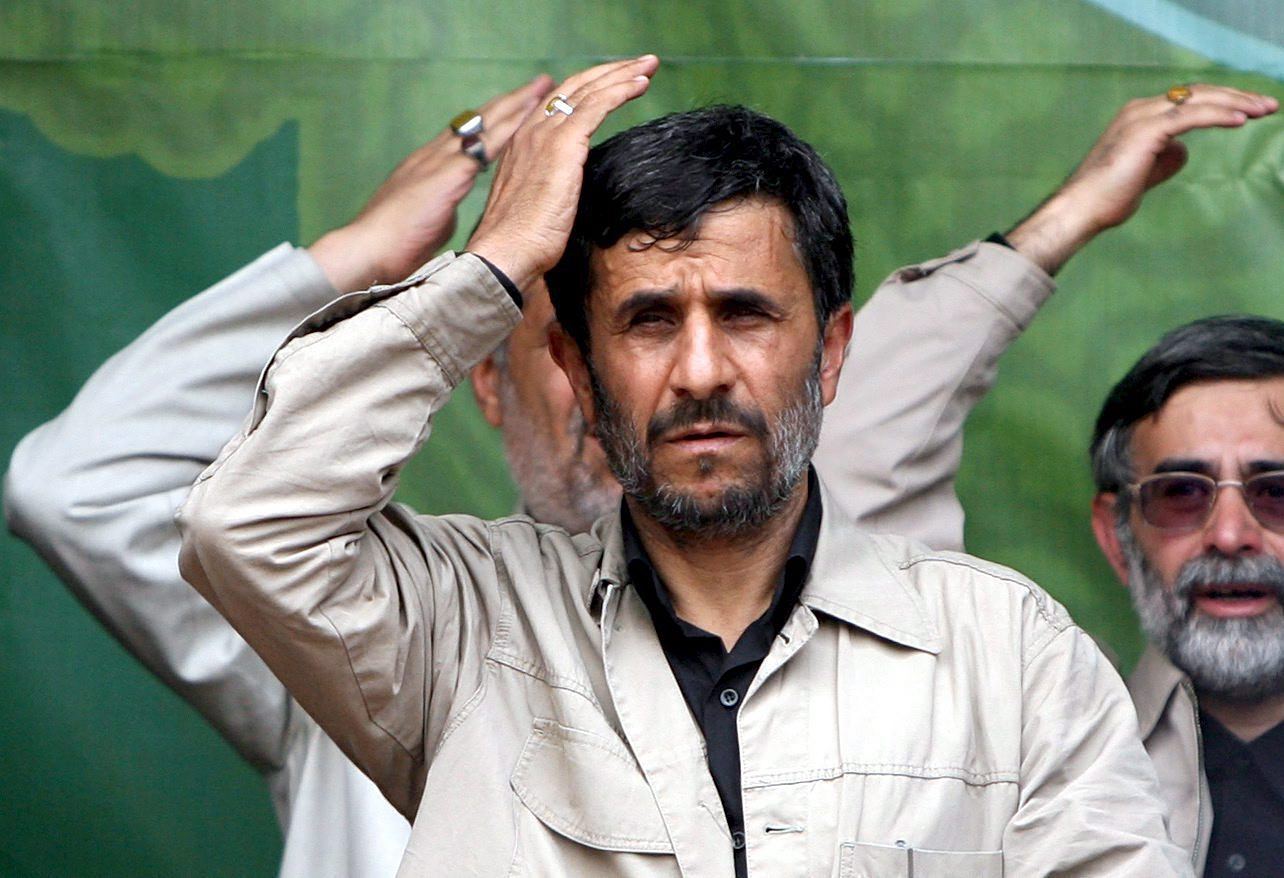
epa01921082 YEARENDER 2009 MAY Iranian President Mahmoud Ahmadinejad mourns as he attend a mourning ceremony in Tehran , Iran , on 28 May 2009. Ahmadinejad blamed his challengers in the June 12 presidential election for wanting a policy of detente with the West. Ahmadinejad will compete for the presidential office with Former Iranian Prime Minister Mir Hossein Mousavi , former parliament speaker Mehdi Karubi and Former commander of the Iranian Revolutionary Guards, Mohsen Rezaei for the 12 June presidential election. EPA/ABEDIN TAHERKENAREH
In an open letter addressed to the supreme leader, Karroubi accused Khamenei of mobilizing the Basij and the Revolutionary Guard to help Ahmadinejad win in 2005 and of carrying out an “electoral coup” in 2009. Karroubi ran and lost against Ahmadinejad both times.
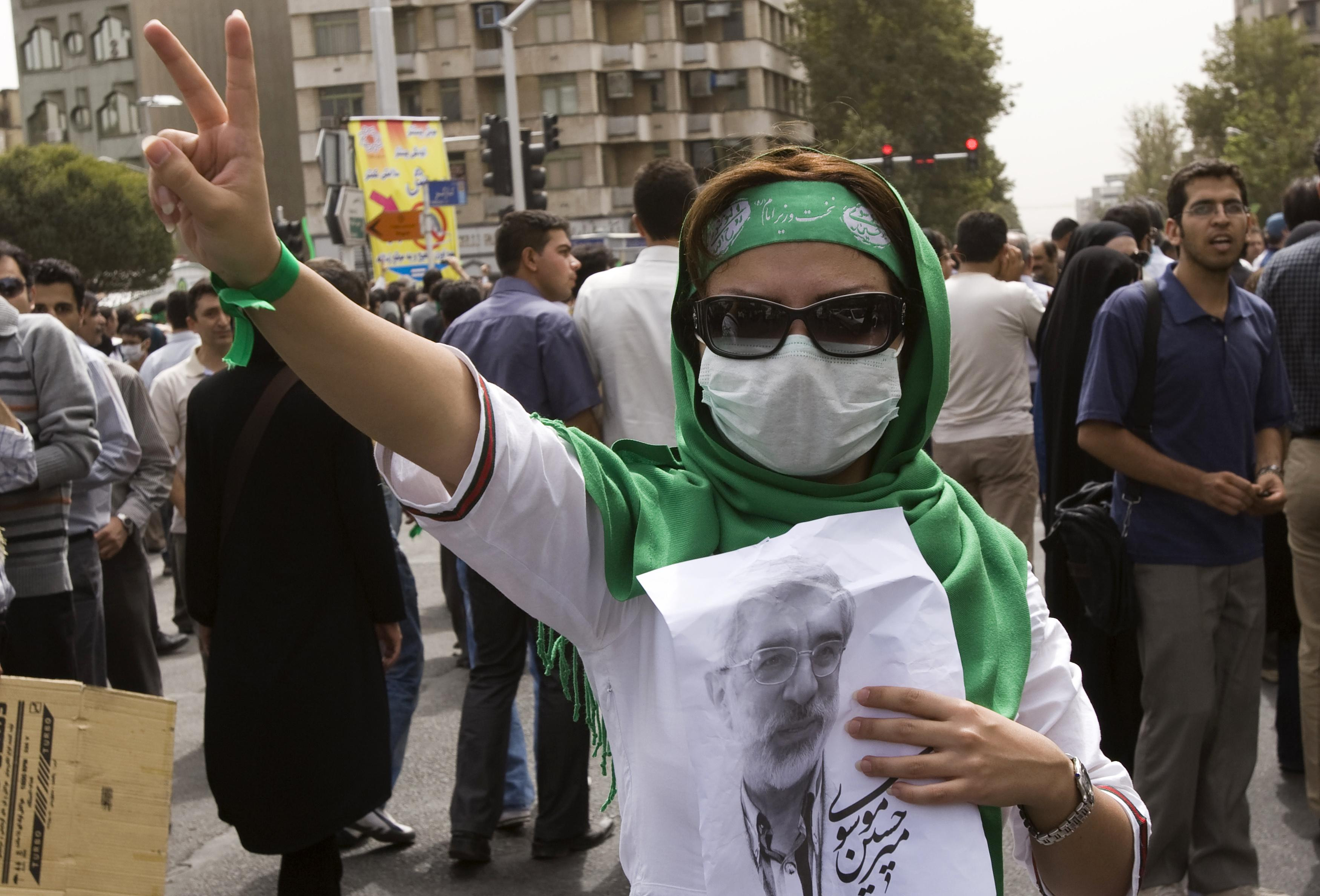
It was a crucial moment in Iran, tipping the country away from popular reformist politicians and leaving it firmly on a more conservative path. It also triggered one of the biggest outbursts of the protests that have periodically rocked the country.
Angered by the allegations of electoral fraud, demonstrators took to the streets in June 2009 chanting “Die, Mojtaba. May you never achieve leadership.”
EDITORS’ NOTE: Reuters and other foreign media are subject to Iranian restrictions on their ability to film or take pictures in Tehran.
An Iranian woman holds a picture of defeated presidential candidate and opposition leader Mirhossein Mousavi during a rally marking Qods (Jerusalem) Day in Tehran September 18, 2009. Iran security forces clashed with supporters of opposition leader Mirhossein Mousavi and arrested at least 10 of them during annual anti-Israel rallies in Tehran on Friday, a witness said. Qods Day, held on the last Friday of the Muslim holy fasting month of Ramadan, is observed as a show of support for the Palestinian people. REUTERS/Caren Firouz (IRAN)
Apocalyptic ideology
After the Iraq war, Khamenei spent time in the city of Qom, where he was mentored by Ayatollah Mohammad Taghi Mesbah Yazdi, a radical cleric who is considered the spiritual father of Iran’s hard-liners.
Mesbah Yazdi—who argued that obeying the Supreme Leader was akin to obeying God—propagated a modern adaptation of an ancient messianic Islamist doctrine known as Mahdism.
The ideology, which is taught in Iran’s religious seminaries and during paramilitary training, promotes the view that building a genuine Islamic society and destroying Iran’s enemies—above all Israel—will hasten the return of Imam Mahdi, a figure Shia Muslims believe will bring peace and justice to the world.
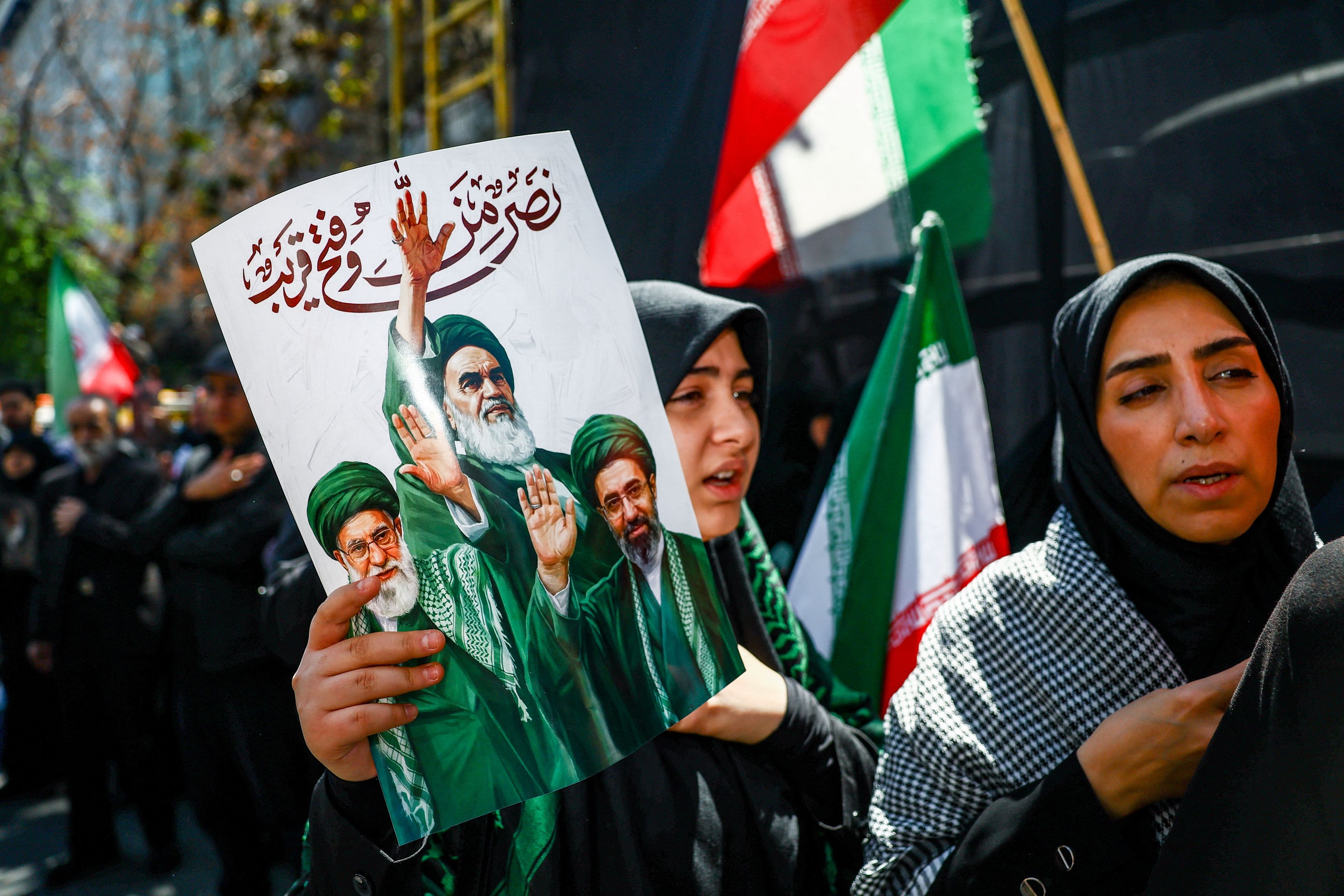
A woman holds a placard with a picture of late leader of the Islamic Revolution Ayatollah Ruhollah Khomeini, late Supreme Leader of Iran Ayatollah Ali Khamenei and Iran’s new Supreme Leader Mojtaba Khamenei, during a ceremony marking 40 days since Ayatollah Ali Khamenei was killed in Israeli and U.S. strikes, in Tehran, Iran, April 9, 2026. Majid Asgaripour/WANA (West Asia News Agency) via REUTERS ATTENTION EDITORS – THIS PICTURE WAS PROVIDED BY A THIRD PARTY
Hossein Yekta, a senior Revolutionary Guard commander and close associate of Khamenei, on state television recently appealed to mothers to send their children to war under the name of the Mahdi.
“The Infallible Imam said that the Iranians would enter Jerusalem, and carry out a massacre there. The Iranians say: ‘Kill! Kill!’ The Infallible Imam said: ‘Kill! Kill!” said Yekta, who the European Union describes as a recruiter and indoctrinator for the Revolutionary Guard.
Once regarded as a fringe idea, Mahdism gradually became central to the ideology of the Islamic Republic thanks to the Khamenei family and their inner circle. It also became a key component of the indoctrination of the Revolutionary Guard.
“How much of this is empty narrative, how much is true belief? If you look at their behavior, you can tell that they are guided by the principles of their ideology,” said Kasra Aarabi, an expert on the Revolutionary Guard at United Against Nuclear Iran, a policy organization that opposes the Iranian regime. “The apocalyptic doctrine of Mahdism has guided the regime’s wartime behavior, and has provided justification for actions that could otherwise be viewed as irrational,” such as the expansion of the conflict to the Gulf states.
Half of the minimum six-month orientation for new recruits is spent on ideological training through sermons, lectures and the compulsory reading of booklets, according to research by Aarabi and Golkar. There are annual and compulsory refresher courses, they said.
Jaber Rajabi, who served in the Revolutionary Guard and studied with Khamenei in a religious seminary in Qom before defecting in 2016, warned Iran’s Arab neighbors about him before his elevation. In a televised interview in Arabic, Rajabi described Khamenei as a Shia Muslim extremist who regards not just Israel as an enemy but also potentially Sunni Muslim Arabs.
He also said Khamenei told him about dreams he had indicating he is the so-called Khorasani, a prophesied leader who heralds the end of time. Believers say he will emerge in the historical region of Khorasan to lead forces in support of the Mahdi and against the enemies of Islam.
“If anyone asks: What is the most dangerous thing that could happen to Iran and the region?” he said. “The answer is: Mojtaba Khamenei.”
Write to Margherita Stancati at margherita.stancati@wsj.com and Benoit Faucon at benoit.faucon@wsj.com