 Μake us preferred on Google
SÃO PAULO—President Luiz Inácio Lula da Silva clung to power in Sunday’s presidential election by orchestrating a surprise victory over Flávio Bolsonaro, winning an unprecedented fourth term and cementing his place as one of the world’s longest-serving democratically elected leaders.
The leftist leader, just two days away from turning 81, won 51.8% of the vote against 48.2% for Bolsonaro, electoral authorities said with over 99% of the votes counted. The victory came after da Silva’s Workers’ Party requested that voting be extended Sunday, after reports that some local governments had reduced the number of buses serving poorer voters, who tend to support the president.
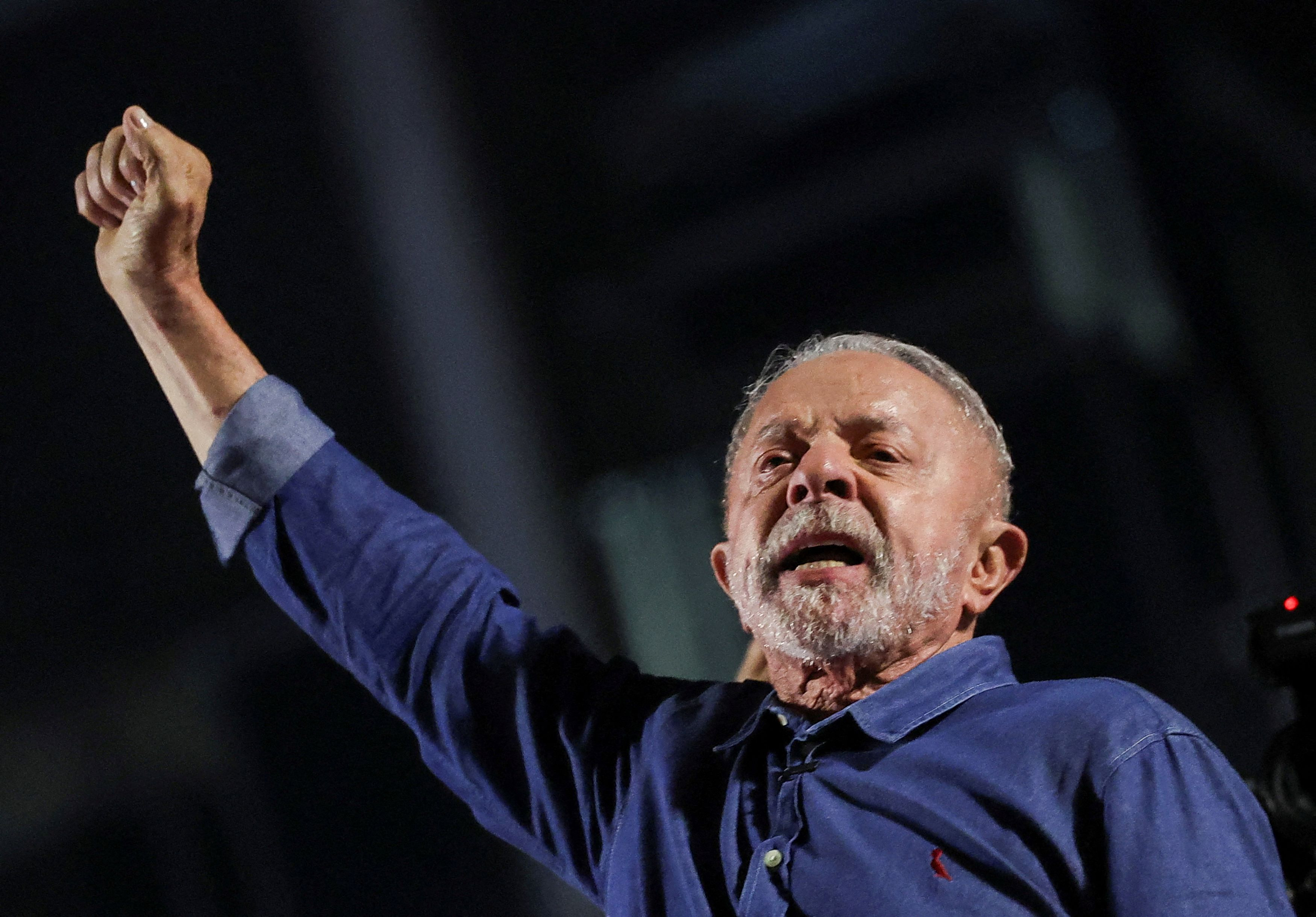
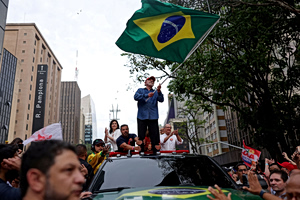
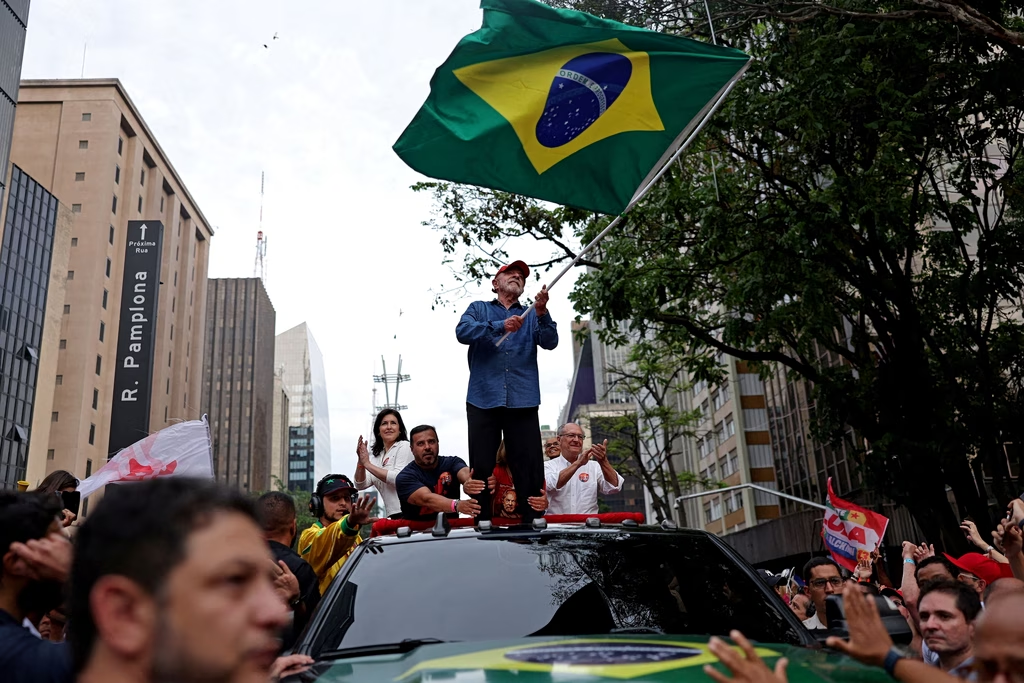
Brazil’s President Luiz Inacio Lula da Silva, the Workers’ Party (PT) candidate for re-election, gestures as he addresses supporters after his victory in the presidential runoff election, at Paulista Avenue, in Sao Paulo, Brazil, October 26, 2026. REUTERS/Amanda Perobelli TPX IMAGES OF THE DAY
That request was granted by Supreme Court Justice Cristiano Zanin—a decision that came a minute after voting was supposed to end, prompting chaos at some polling stations. While Bolsonaro’s camp also requested an extension to voting in some parts of the country because of flooding, the move by Zanin, who served as da Silva’s personal defense lawyer during the so-called Car Wash corruption scandal that entangled the leftist, drew criticism of bias.
Bolsonaro called Zanin’s intervention “unacceptable” and refused to recognize the election result, vowing to seek its annulment.
Da Silva became the first presidential candidate in Brazil’s modern democratic history to lose the first round of voting but win the runoff. His adversary was the eldest son of Jair Bolsonaro , a bitter rival who served as president and was convicted of trying to overturn da Silva’s 2022 victory.
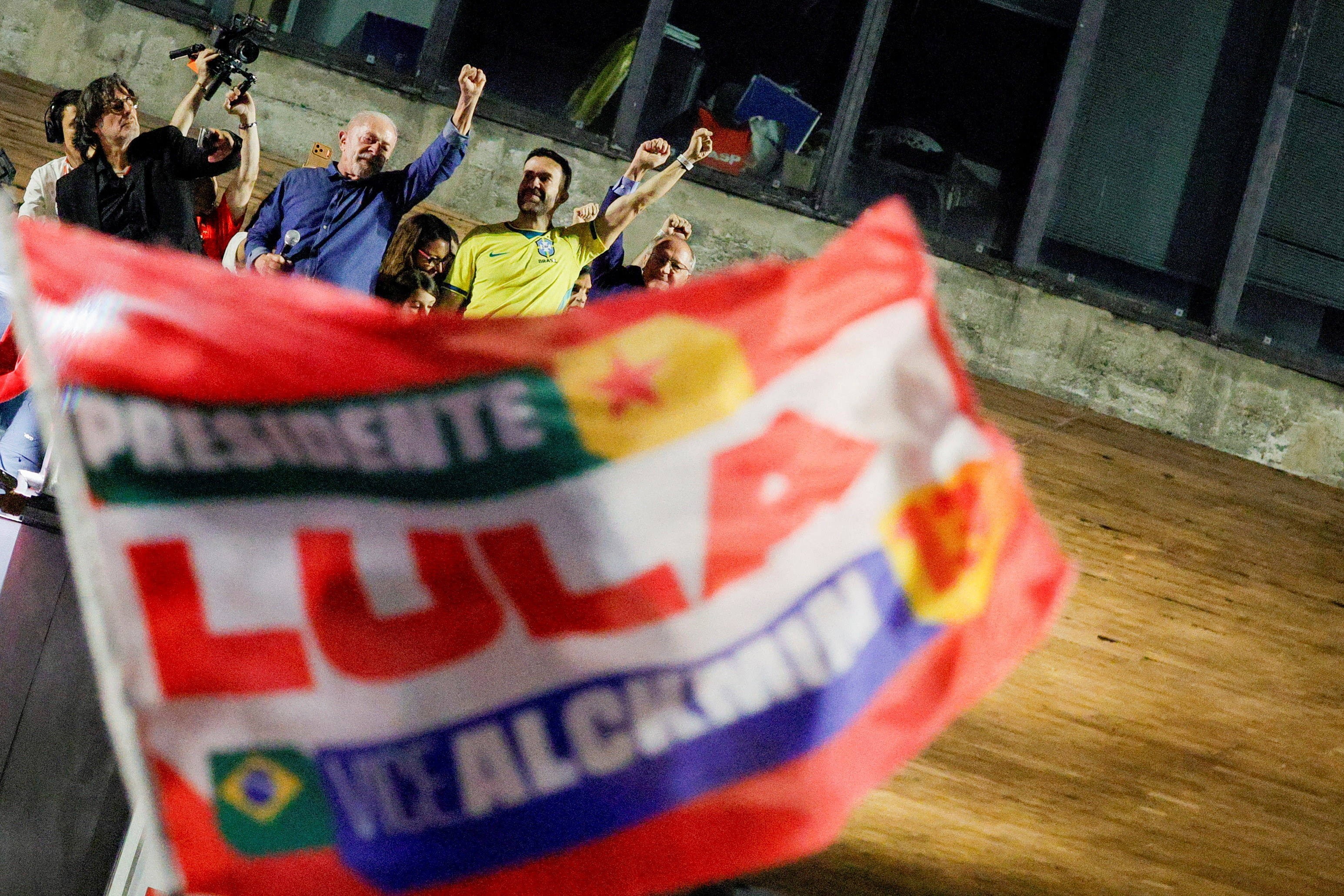
Brazil’s President Luiz Inacio Lula da Silva, the Workers’ Party (PT) candidate for re-election, gestures as he addresses supporters after his victory in the presidential runoff election, at Paulista Avenue, in Sao Paulo, Brazil, October 26, 2026. REUTERS/Brian Snyder TPX IMAGES OF THE DAY
Cheers erupted from apartment windows and car horns blared across São Paulo after a frantic last-minute push by musicians, celebrities and campaigners to mobilize first-round abstainers and secure da Silva’s victory. Despite widespread apathy at the start of the campaign, Sunday’s 19% abstention rate was one of the lowest on record—and essential in delivering victory to the president.
“I want to thank the Brazilian people for the generosity they have shown me for such a long time,” da Silva said late Sunday, his voice so hoarse he could barely speak. He dedicated his victory to elderly voters and others who turned out at the last minute. “We managed to convince them.”
Da Silva vowed to defend Brazil’s interests against pressure from Washington, which he has long accused of trying to interfere in this year’s election on behalf of the Bolsonaros as President Trump seeks to expand U.S. influence across Latin America. “We won’t be anybody’s backyard,” he said.
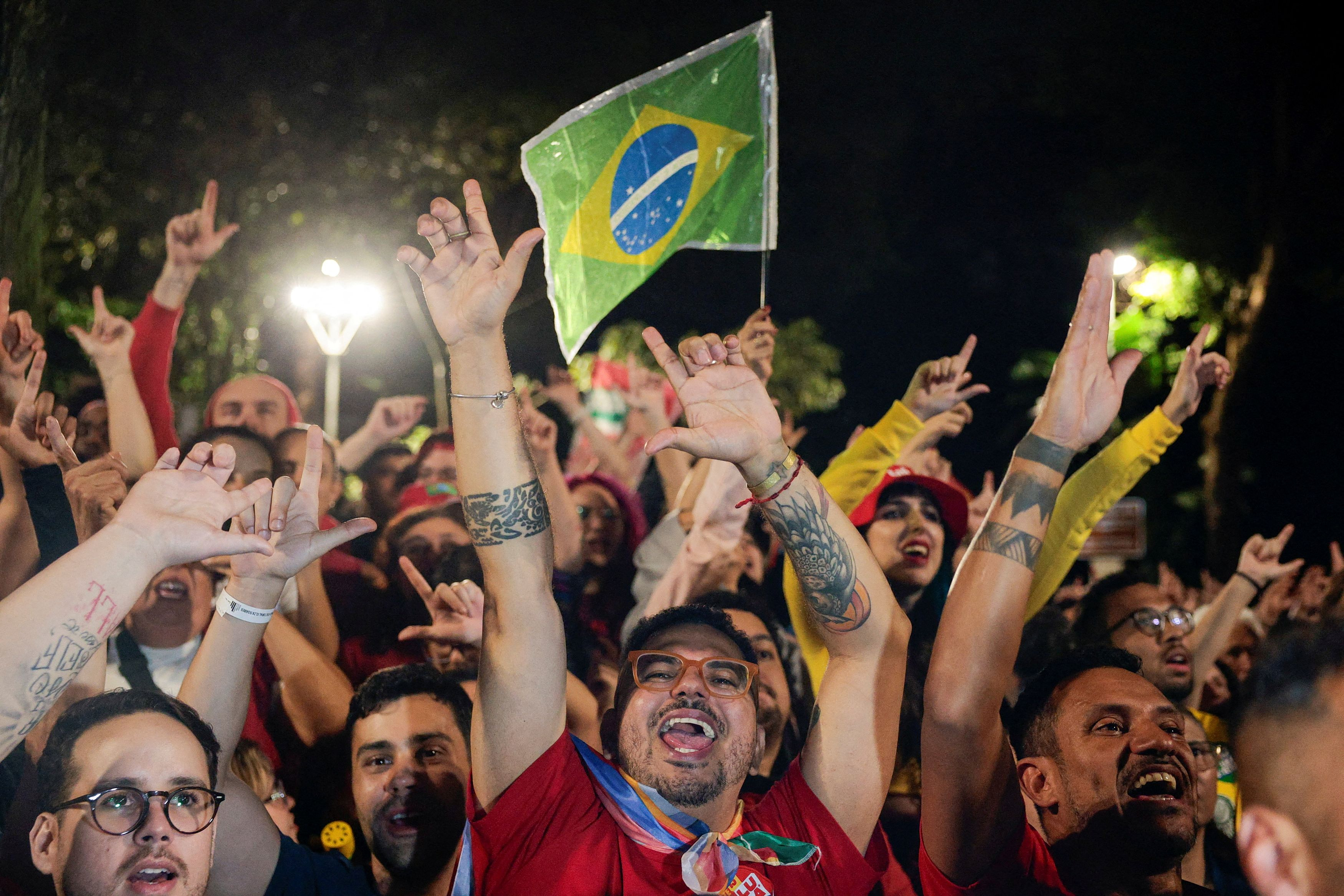
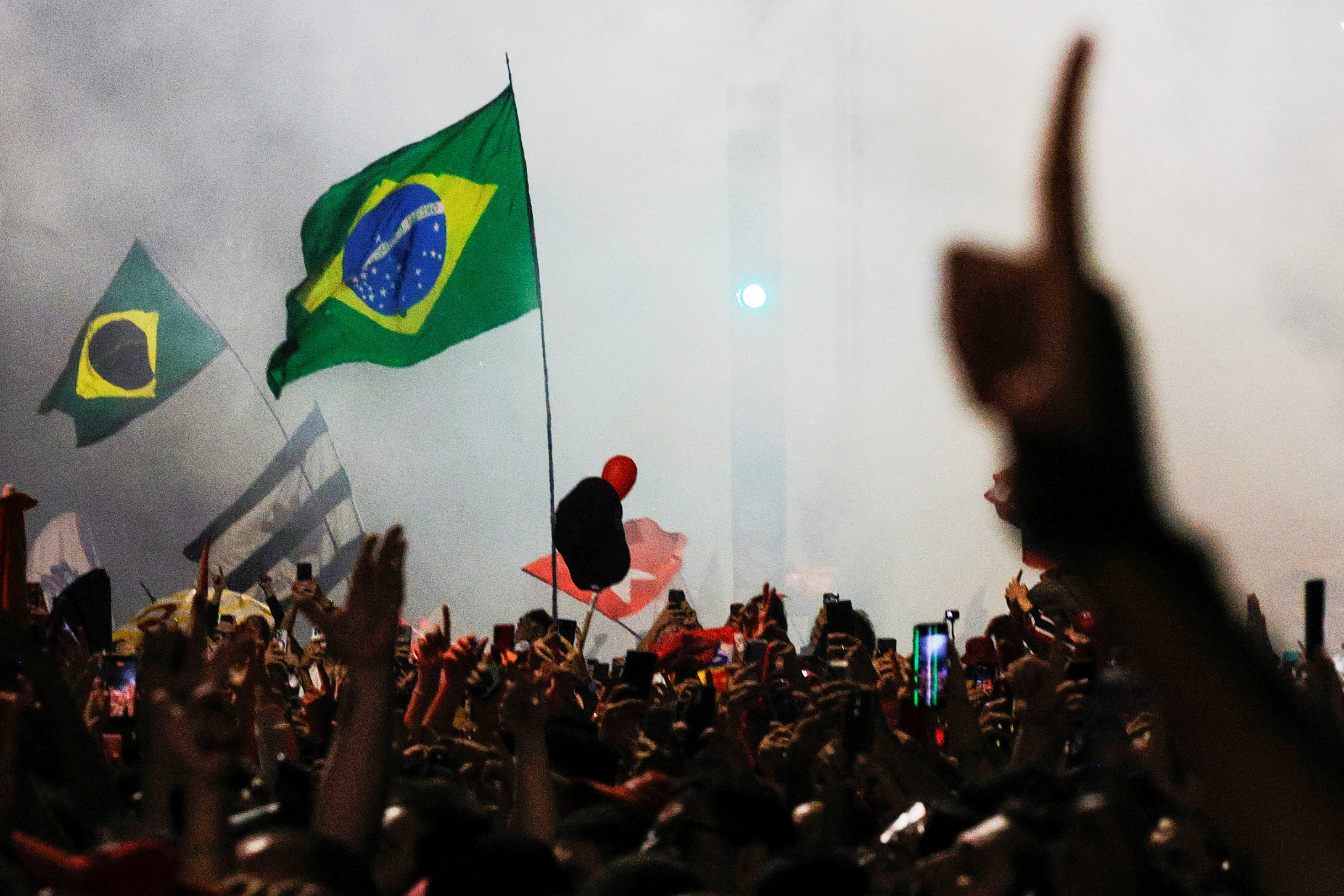
Supporters gather to watch Brazil’s President Luiz Inacio Lula da Silva, the Workers’ Party (PT) candidate for re-election, speak after his victory in the presidential runoff election, at Paulista Avenue, in Sao Paulo, Brazil, October 25, 2026. REUTERS/Brian Snyder TPX IMAGES OF THE DAY
For many Brazilians, the election was more than about keeping da Silva in power. They saw a vote for him as a vote to keep the Bolsonaros out and preserve the country’s hard-won democracy.
“We must do what we can to protect Brazil’s democracy,” said Karina da Silva Pereira, a 50-year-old lawyer in São Paulo, who braved torrential rains to vote for da Silva. Following Jair Bolsonaro’s attempt to seize power by force four years ago, she said she felt compelled to vote to keep the family out of power. “It was a risk we couldn’t take.”
Da Silva had trailed 45% to Bolsonaro’s 47% in the first round on Oct. 4, but the race tightened sharply in the final weeks. Even on the eve of the runoff, major polls showed Bolsonaro with a narrow lead within the margin of error, with Datafolha and Quaest both putting him at 51% to da Silva’s 49%.
A quarter of a century after first winning the presidency, da Silva is now the last remaining stalwart of South America’s left, which has suffered a string of defeats as the region takes a rightward turn driven by economic and crime concerns. New leaders from Honduras to Colombia to Chile and beyond have allied themselves with the Trump administration.
Da Silva’s surprise victory Sunday came after he persuaded millions of Brazilians who had skipped the first round of voting to cast ballots for him in the second round, despite heavy rains that pounded much of the country.
Starting as a factory worker and trade union leader during what was then a dictatorship, da Silva has weathered throat and skin cancers, a corruption scandal that put him behind bars in 2018, and a plot by Jair Bolsonaro’s allies to assassinate him.
Da Silva’s victory puts him on course to complete 16 nonconsecutive years in office, matching Angela Merkel’s tenure as German chancellor, placing him among a small group of modern democracy’s longest-serving elected leaders.
The victory marks another chapter in da Silva’s bitter struggle with the Bolsonaro family, whose right-wing movement has proved remarkably resilient. Da Silva narrowly defeated Jair Bolsonaro in 2022, winning 50.9% of the vote to his rival’s 49.1%.
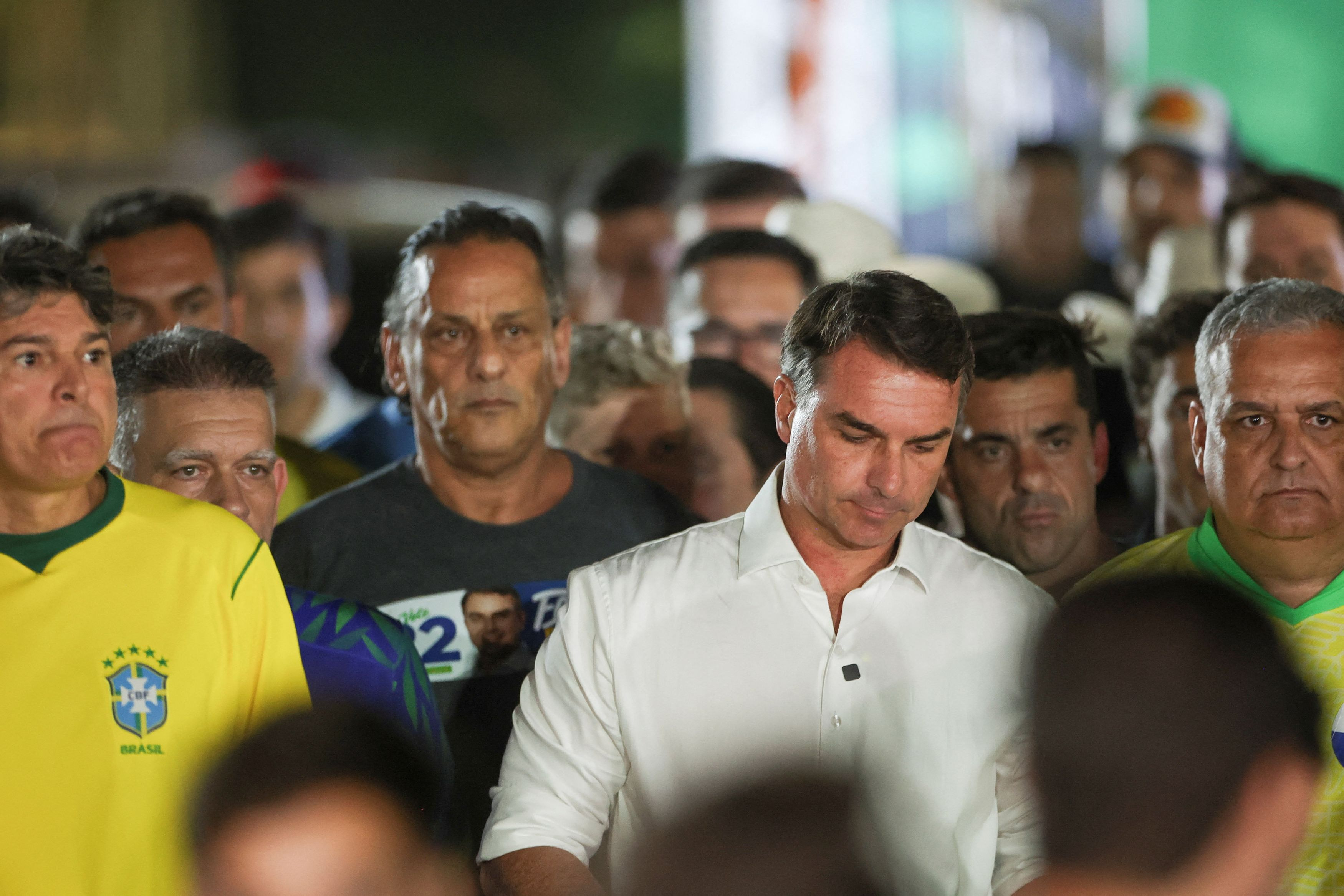
Brazilian presidential candidate Flavio Bolsonaro of the Liberal Party (PL) arrives to speak after losing the presidential runoff election, in Brasilia, Brazil October 25, 2026. REUTERS/Adriano Machado
The former president was subsequently convicted and imprisoned for plotting a coup to prevent da Silva from taking office. But rather than fade away, the movement rallied behind his eldest son, turning this year’s election into a rematch by proxy and forcing da Silva into another bruising battle to keep the family out of power.
But da Silva now faces an uphill struggle to govern after the right swept congressional elections held alongside the first round of voting this month. The Bolsonaro family’s Liberal Party emerged as the largest in both chambers, winning 121 of 513 seats in the lower house and securing a 28-strong bloc in the 81-seat Senate, leaving da Silva increasingly dependent on deals with conservative and centrist lawmakers to advance his agenda.
Born to illiterate farmworkers in Brazil’s impoverished northeast, da Silva lost a finger in a metalworking plant before rising through the labor movement to become president in 2003. Even among poorer Brazilians who associate him with corruption, many still see him as their strongest advocate in a deeply unequal nation, where the poorest half of the population—more than 100 million people—owns less than 3% of household wealth.
After his first-round setback, da Silva shifted his campaign away from warnings about U.S. interference in Brazil’s election and toward the economic frustrations of ordinary voters. He promised to increase payments under the Bolsa Família welfare program, championed a shorter working week without a cut in pay and proposed sweeping debt relief for struggling households. He also floated free public transportation on weekends, seeking to reconnect with poorer voters who had long formed the backbone of his support.
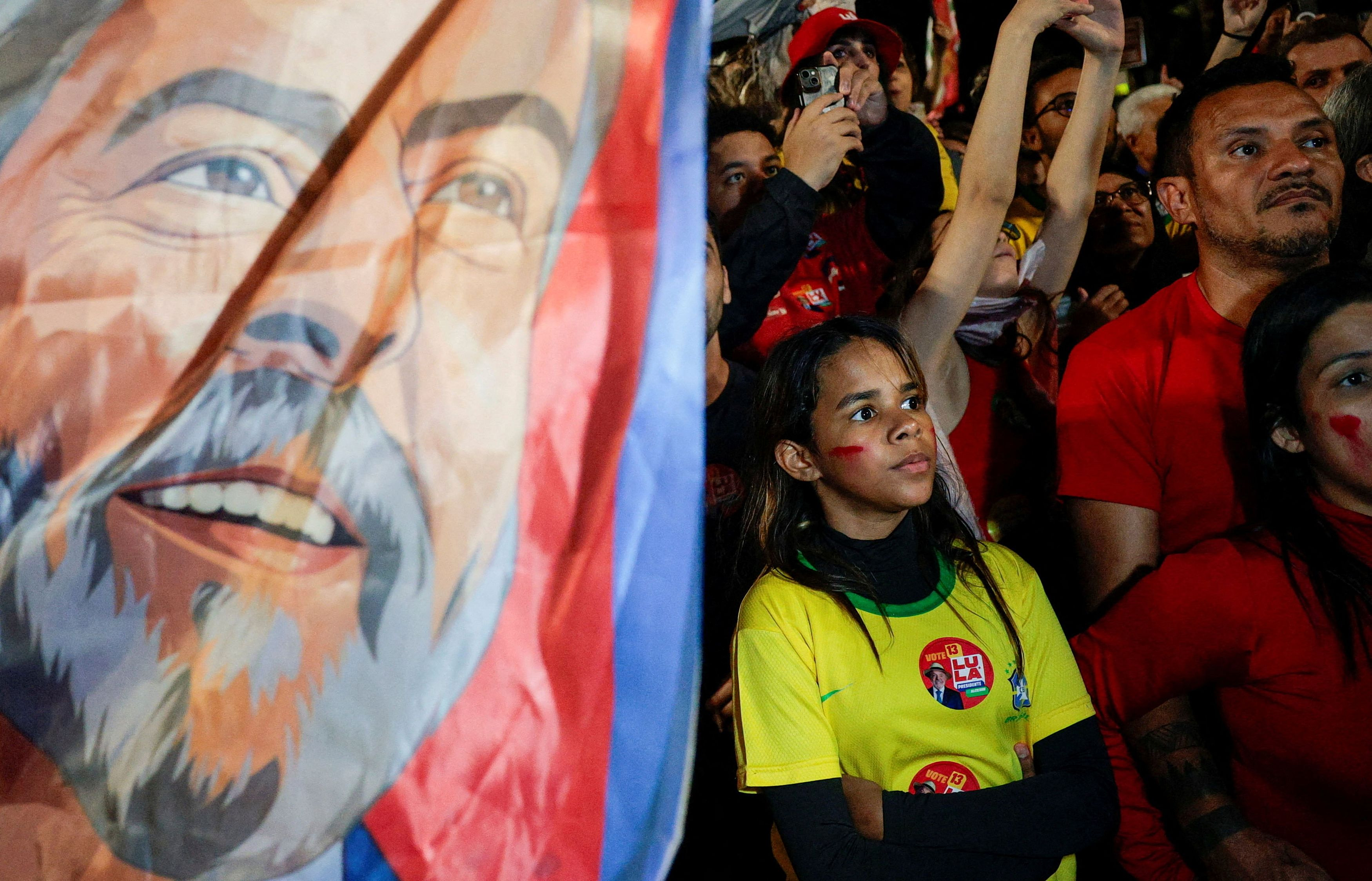
Supporters gather to watch Brazil’s President Luiz Inacio Lula da Silva, the Workers’ Party (PT) candidate for re-election, speak after his victory in the presidential runoff election, at Paulista Avenue, in Sao Paulo, Brazil, October 25, 2026. REUTERS/Brian Snyder
Da Silva also toughened his message on crime, breaking with his party’s traditional position to support prosecuting 16-year-olds as adults for particularly serious crimes. His campaign intensified efforts to mobilize voters who had stayed home in the first round, while portraying Bolsonaro’s proposed spending cuts as a threat to public services and social benefits.
Da Silva’s victory sets the stage for renewed tensions with Washington. Following a string of victories by conservative candidates from Argentina and Chile to Colombia and Peru in recent years, Brazil’s decision to stick with the left denies Trump a powerful ally in Latin America, one that is a major source of critical minerals needed for everything from electric vehicles to weapons systems.
Trump has praised Bolsonaro and clashed repeatedly with da Silva over trade, Brazil’s prosecution of the former president and what the Brazilian leader has called U.S. interference in the election. The dispute escalated into tariffs and a diplomatic row over visas, although the two governments have continued negotiating a trade agreement.
Write to Samantha Pearson at samantha.pearson@wsj.com