 Μake us preferred on Google
 INGLEWOOD, Calif.—As soon as the World Cup draw was announced, Behnam Mohebbi knew which game he just had to see in person. Iran was kicking off its tournament against New Zealand, and the 68-year-old would finally have a chance to see his country of birth play in the World Cup.
Mohebbi grew up loving the game in Iran, attending games with his father. And his passion for the sport never subsided after he left for the U.S. following the revolution in 1979. Now, he views soccer as a way to share Iranian culture with his family—regardless of war or his own concerns about Iran’s current regime.
“Put all the politics aside,” he said as he brought his four sons, his grandchild, his sister and her daughter to SoFi Stadium on Monday. “This is a once-in-a-lifetime experience for all of us.”
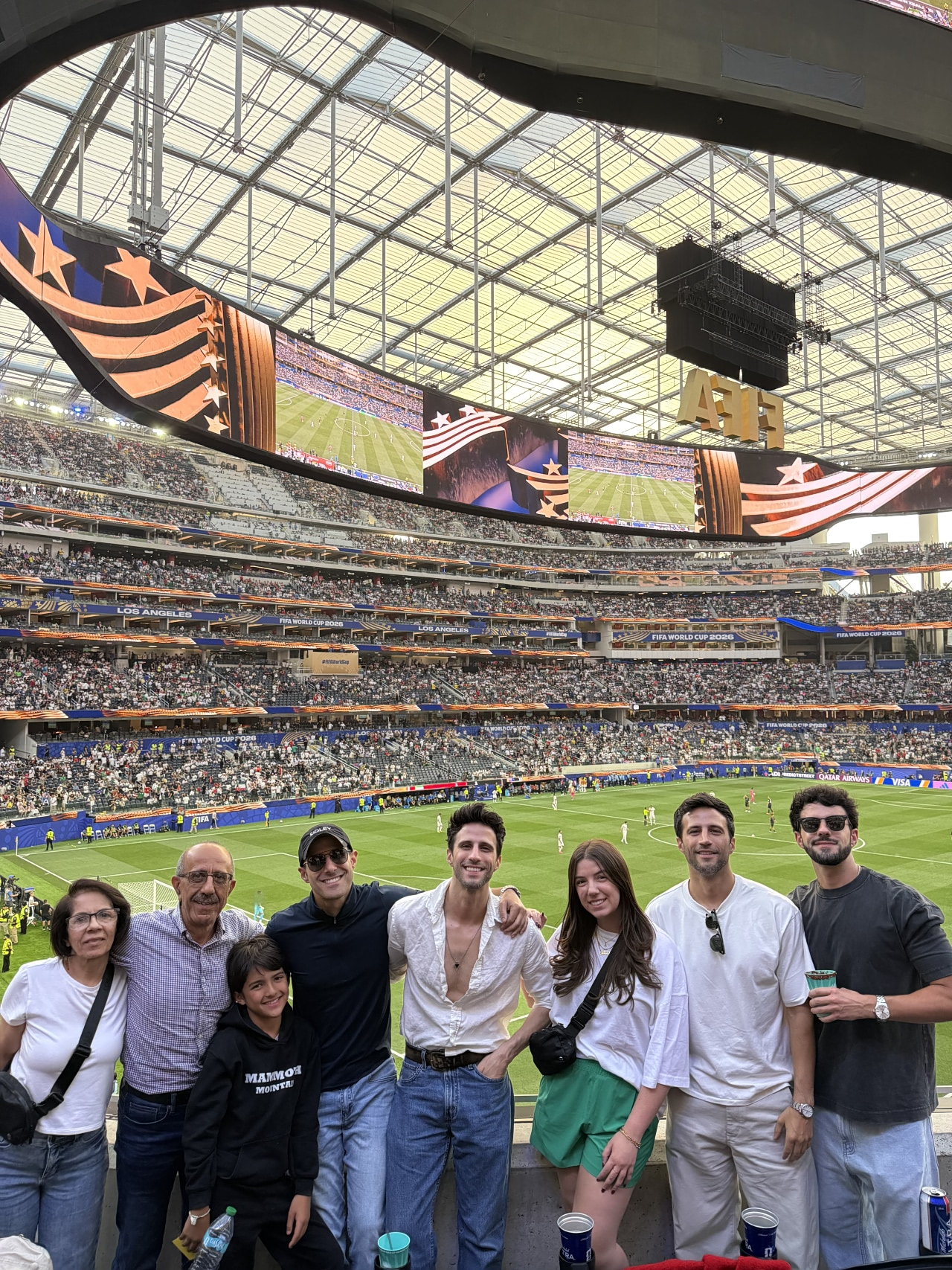
Behnam Mohebbi with his four sons, grandson, sister and her daughter. Photo Courtesy of Behnam Mohebb
When the match began, it sounded like a home game for Iran. Which was hardly surprising since the L.A. metro area is often dubbed “Tehrangeles” because of its large Iranian-American community.
The night, which ended in a 2-2 draw against the Kiwis, was equally charged for the Iranian players. After the final whistle, striker Mehdi Taremi thanked the adoring crowd but decried the impact of the war on his squad, from absent staff to grueling travel.
“We have a lot of problems,” he said, even as a FIFA official attempted to whisk him away. “It’s so bad and it affects our team.”
For fans, supporting Team Melli , as the squad is known, can be a complex and intensely personal judgment. Just last week, protestors including former national team members stood outside city hall in Los Angeles saying the team should be kicked out of the tournament. They argued that their presence at the World Cup serves to whitewash the country’s killing of dissidents. Then there were the tens of thousands in attendance here who swelled with pride, not because they support the current regime, but because it was a chance to connect with their heritage.
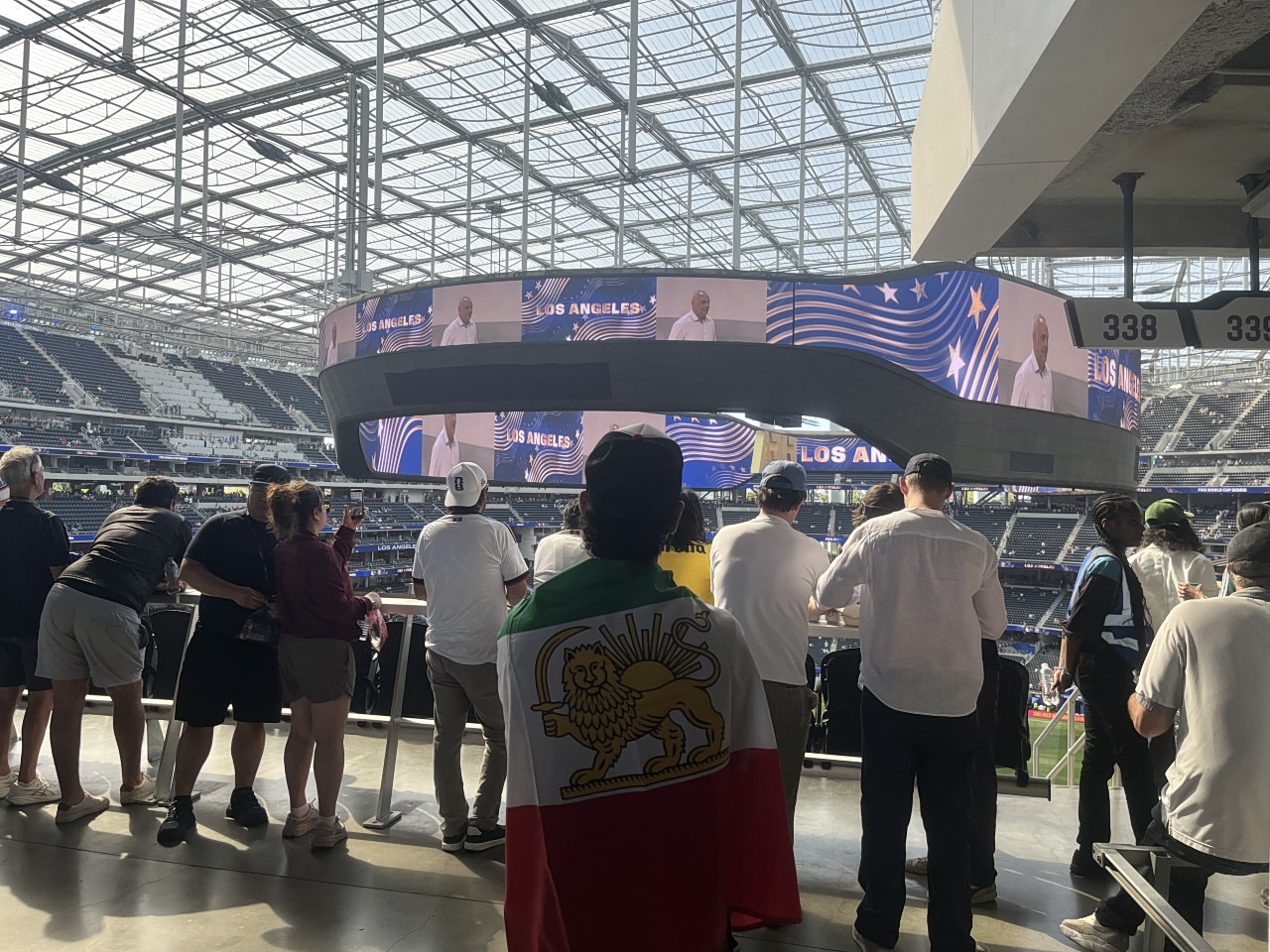
As a symbol of protest against the country’s leadership, many fans tried to enter with the pre-revolutionary flag, which features the sun and a lion holding a sword and is banned in Iran. Those were confiscated upon entry by stadium security after a Los Angeles judge on Monday upheld FIFA’s decision to ban the flag from matches hours before kickoff.
One Orange County resident born in Iran who asked to be identified only as Mark out of fear of retribution against family and friends still in the country, was among the fans who tried to bring in the banned flag. Before it was taken away, he called the game a “bittersweet moment.”
“I always wanted to go to the World Cup. Now it’s happening in my backyard,” he said. “But now we all have mixed feelings. What are we going to do?”
The optics of Iran’s presence in this tournament are unprecedented: Never before had a host nation been at war with one of the participating teams. Only after the tournament began—and one day before the country’s opening game—did President Trump and Iran announce that they had reached an initial peace deal.
Until that point, Iran’s participation in the tournament had been in doubt. Problems continued to surface in the days leading up to the opener when some officials from Iran’s delegation weren’t granted visas to come into the U.S. Those issues also led Iran to move its base camp from Arizona to Tijuana, Mexico.
Iran’s players said after the match that those problems are far from resolved. Taremi said the team is hindered by their missing staff and because they were instructed to fly back to Mexico immediately after the game rather than spending the night in California to recover properly. Taremi added that the team brought these concerns to FIFA president Gianni Infantino in the dressing room here.
“Everything is like a disaster,” Taremi said.
FIFA didn’t immediately respond to a request for comment.
But if there was one place the Iranian team could feel comfortable in the U.S., it was the Los Angeles area, where Iran will also play its next group stage match against Belgium. There are nearly 800,000 Iranian-Americans here, according to the UCLA Center for Near Eastern Studies, with 166,151 in Los Angeles County—the highest concentration anywhere in America.
“I want to mention our supporters in Los Angeles,” Taremi said. “It was like a home for us.”
As Iranian fans began to flood the stadium, the complexity of their feelings became clear before the game began. They roared as the players took the field, though some booed when the national anthem was played.
And despite FIFA’s efforts, some of the pre-revolutionary symbols made their way into the stadium on t-shirts and caps anyway. A smattering of fans even managed to sneak the banned flag inside.
Standing on the concourse, Amir Guerami proudly had it tied around his neck and draped over his back. Having successfully made it inside, he figured he was in the clear.
“Everyone is in this limbo of you’re rooting for a team,” Guerami says, “but you’re not rooting for the government.”
Write to Andrew Beaton at andrew.beaton@wsj.com