 Μake us preferred on Google
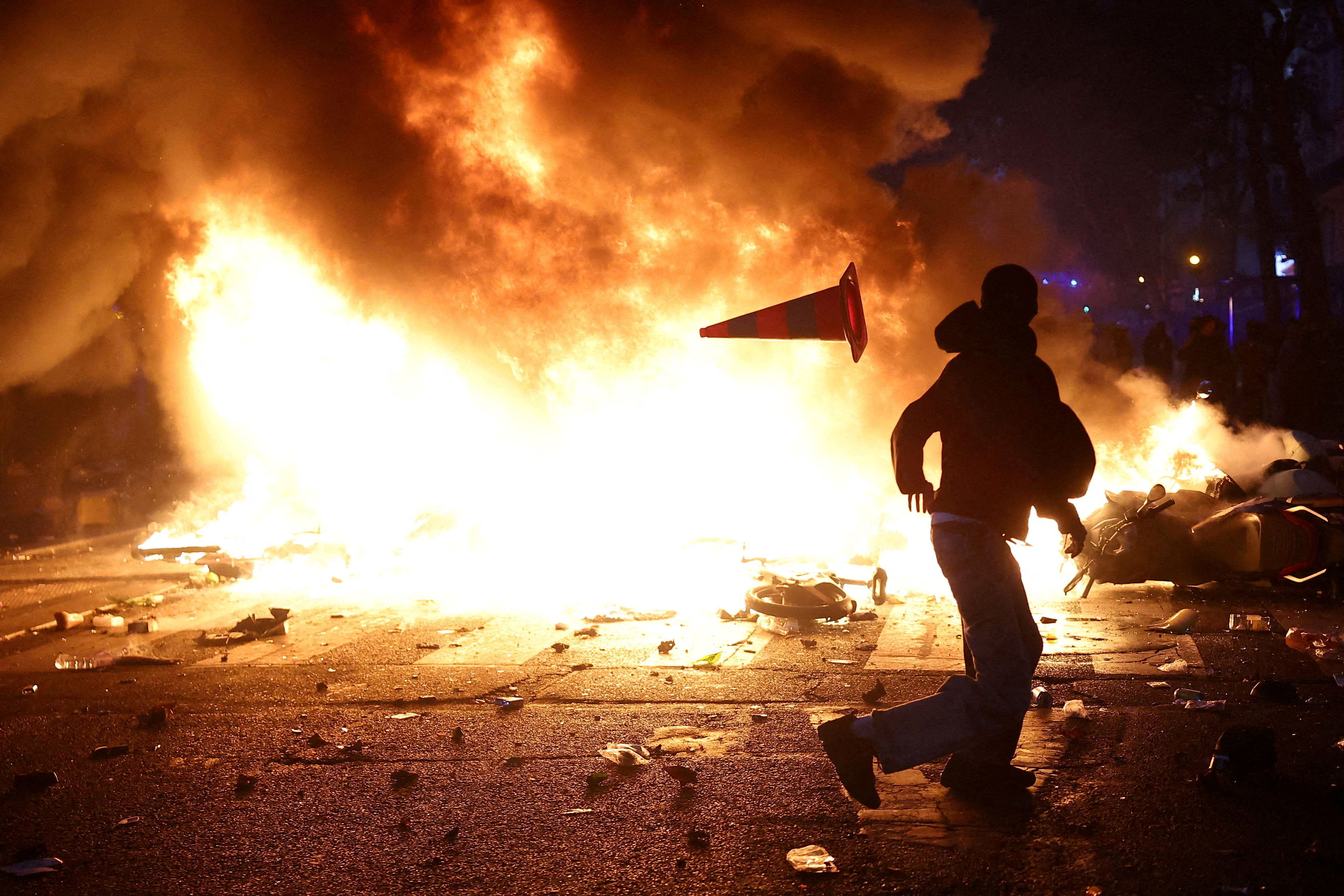
Some of the worst riots in recent French history swept across the country over the weekend, as weeks of student-led protests escalated into nationwide demonstrations marred by widespread violence and destruction that left hundreds injured and more than 2,000 people under arrest.
Here’s what to know.
What are the demonstrations in France about?
The wave of rioting, arson and looting that swept across France followed weeks of student-led protests over conditions in the country’s schools. Those protests have since broadened into a wider movement across society against the rising cost of living, cuts to public spending and dissatisfaction with the government.
Who’s been demonstrating?
The demonstrations have spread beyond students to include trade unions, left-wing activists and supporters of the gilets jaunes , or yellow vests, whose protests against fuel taxes in 2018 developed into a broader revolt over economic inequality.
The unrest comes against a backdrop of mounting economic and political tensions. France is struggling to contain its public debt , while pressure on household budgets and public services has fueled discontent. Students have demanded greater investment in education, while other protesters have raised concerns over wages, pensions and living standards.
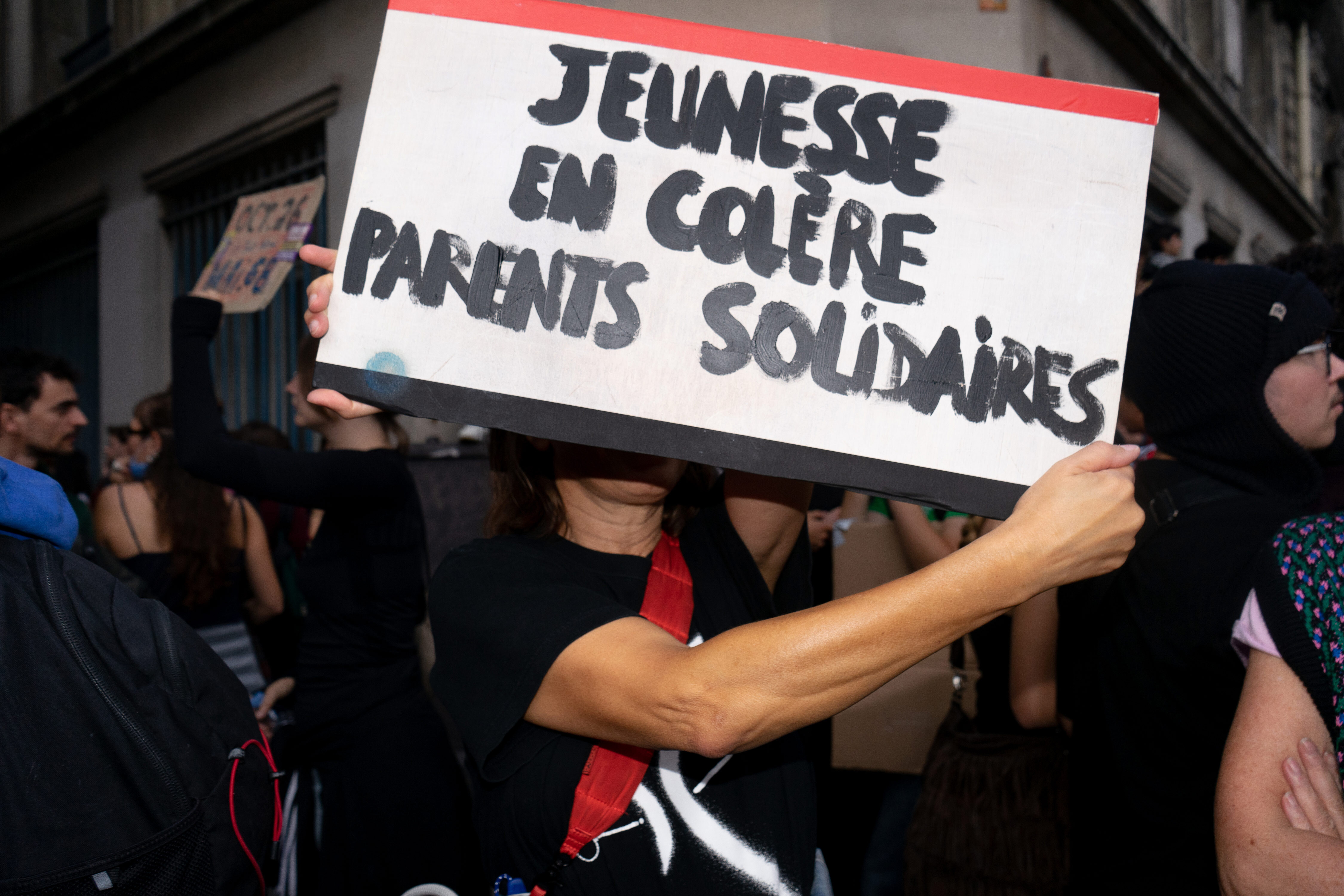
Demonstration against the high cost of living at boulevard de Montparnasse in Paris, France, on October 19, 2026.
Who has the government blamed for the recent violence?
President Emmanuel Macron has blamed organized ultraleft groups and opportunistic criminals who exploited the unrest to loot shops. Prime Minister Sébastien Lecornu accused radical-left militants of deliberately targeting state institutions, including government buildings, in what he described as an attempt to intimidate the authorities.
The government has also accused Jean-Luc Mélenchon’s radical-left France Unbowed party of inflaming tensions. Mélenchon has rejected the accusations, blaming the government’s handling of the protests and police tactics for allowing the violence to escalate. He insisted that supporters of his movement hadn’t been taking part in looting or destruction.
Macron has sought to distinguish between the rioters and most demonstrators, whom he said had legitimate grievances over living standards and education.
And what has the opposition said?
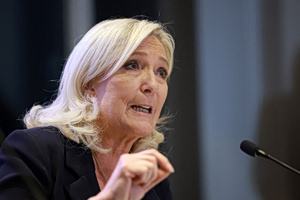
Marine Le Pen , a far-right politician and leader of the main opposition party, has accused Macron’s government of losing control of the country, warning that France faces a deep crisis of authority that threatens its democracy. She also blamed the violence on the radical left, accusing France Unbowed of encouraging disorder.
Other opposition figures have also criticized the government’s handling of the unrest. Édouard Philippe , a former prime minister and center-right presidential candidate, called for a tougher response to rioters, while center-left politician Raphaël Glucksmann condemned the violence and warned that it risked strengthening the far right ahead of next year’s presidential election.
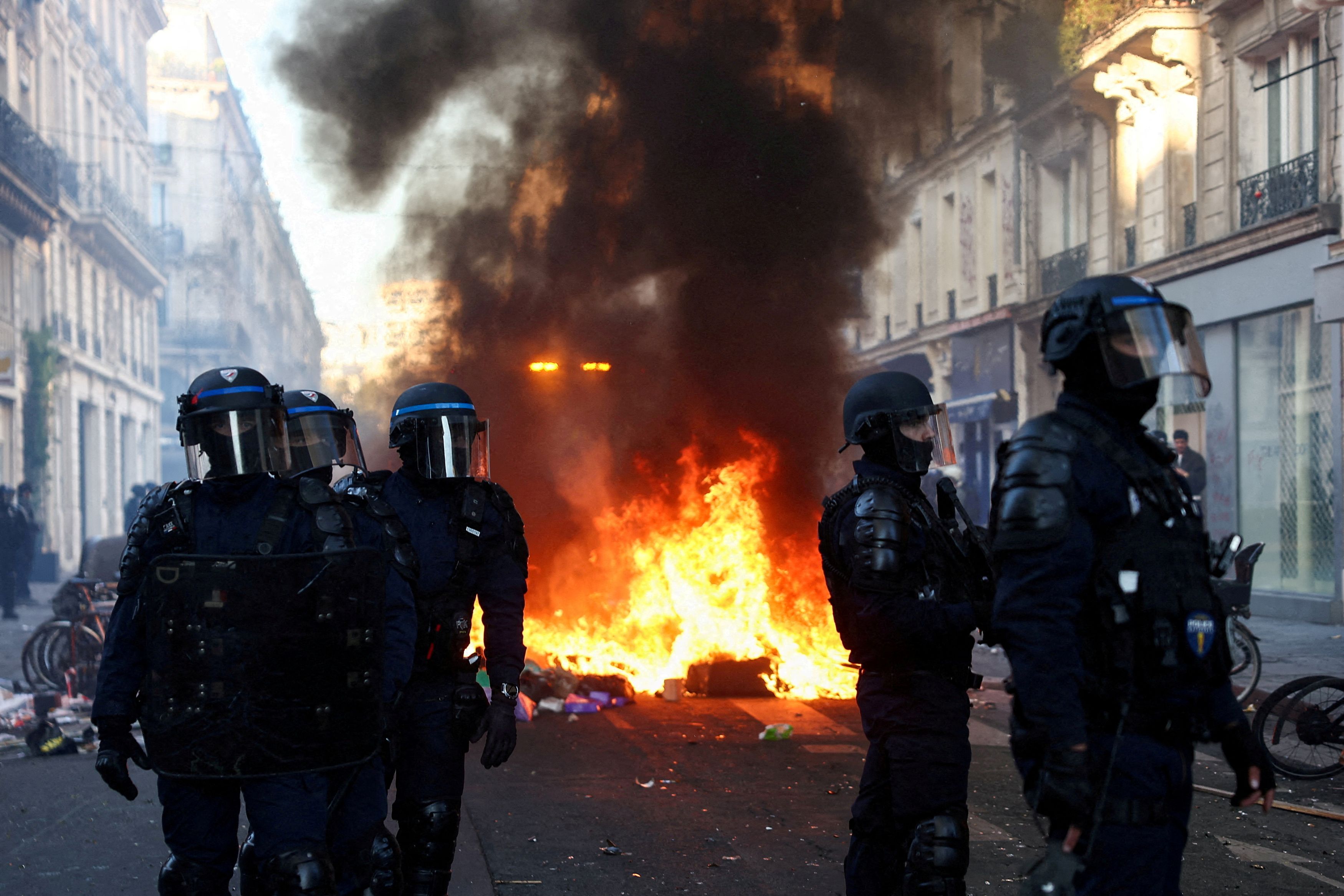
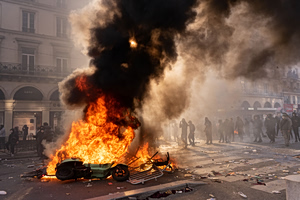
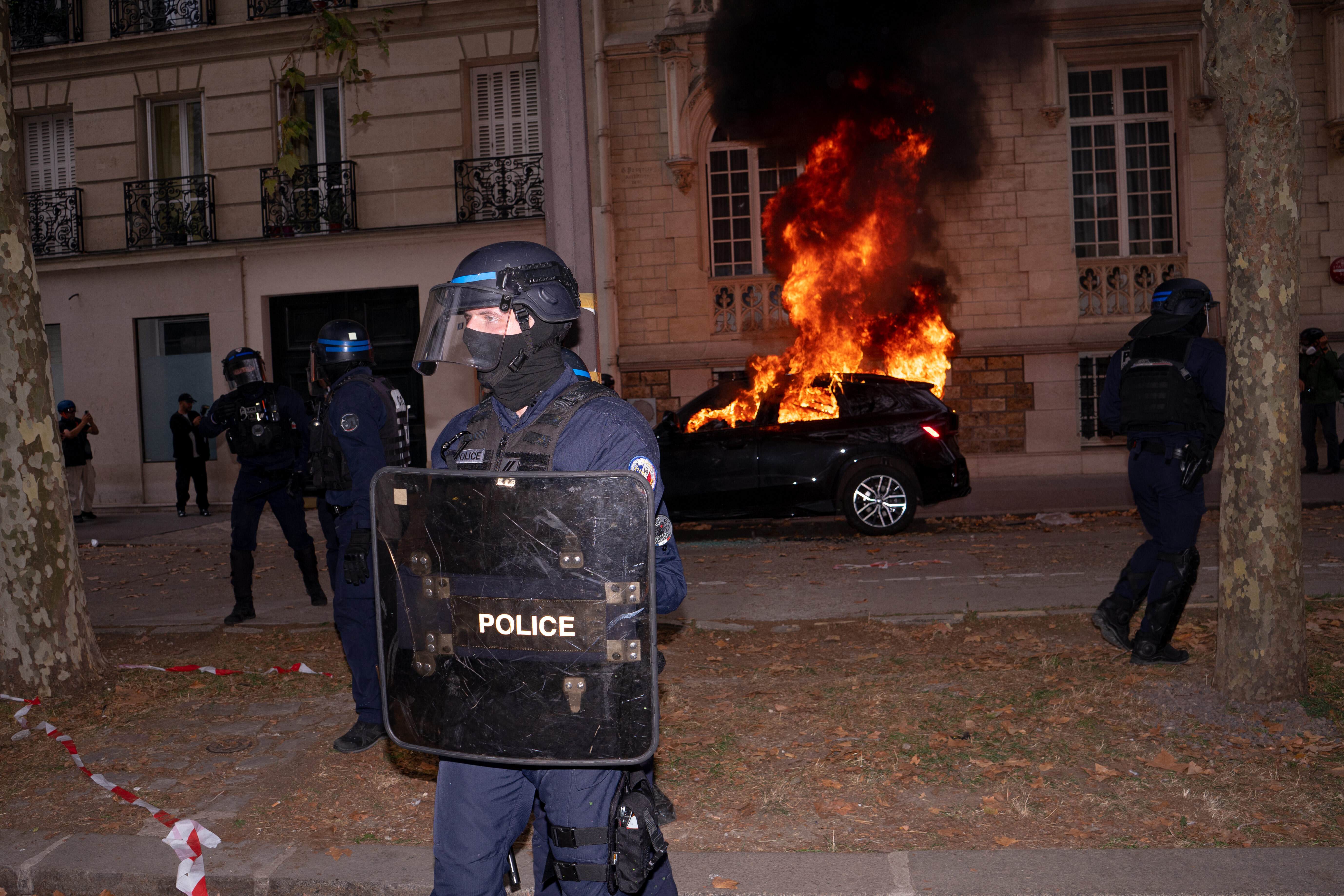
FILE PHOTO: A fire burns, as Police officers in riot gear stand guard, during civil unrest, the day after a national day of demonstrations against the cost of living and rising fuel prices, in Paris, France, October 18, 2026. REUTERS/Abdul Saboor/File Photo
How many people have been injured?
Nearly 1,000 police officers and gendarmes, who belong to the military, were injured during Saturday’s violence, seven of them seriously, according to French Interior Ministry figures. Protesters and bystanders were also hurt, although there isn’t an official nationwide toll. One demonstrator died after suffering a cardiac arrest during protests in Paris. The violence follows weeks of clashes between police and students, with government figures saying that 937 police officers and gendarmes, 248 students and 149 teaching staff had been injured before the weekend’s unrest.
What damage has been done?
Rioters damaged or looted at least 3,000 businesses across France over the weekend, according to government estimates. The French retail federation estimated losses running into hundreds of millions of dollars. Rioters targeted supermarkets, electronics retailers, banks and luxury boutiques, ransacking shops in Paris and vandalizing or looting dozens of businesses in Bordeaux.
Some shopkeepers barricaded themselves inside their premises as masked looters smashed their way into neighboring businesses, while others tried to fight off attackers in desperate attempts to protect their livelihoods. Cosmetics retailer Sephora said its employees had faced violence and feared for their safety as rioters ransacked several of its stores.
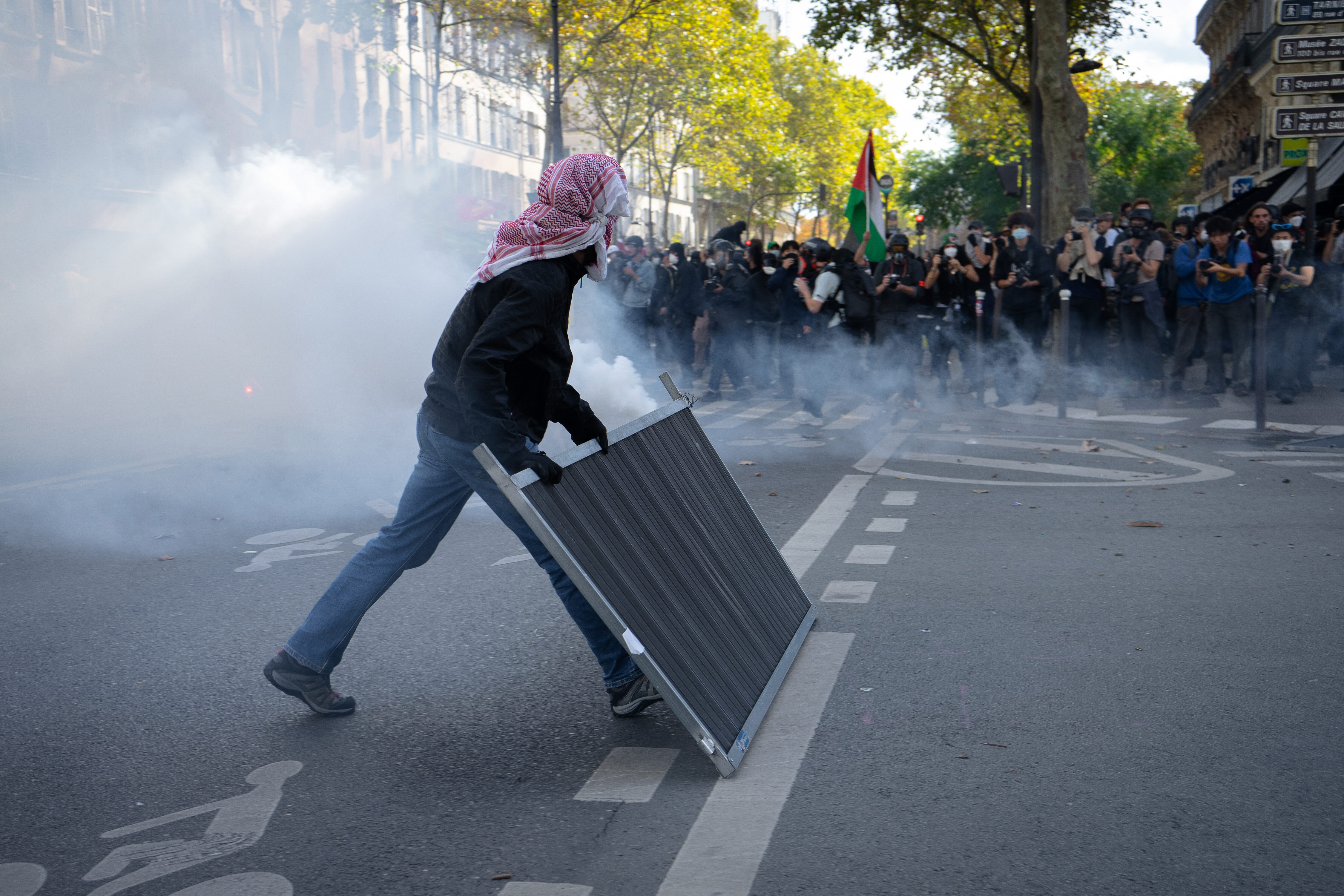
Demonstration against the high cost of living in Paris, France, on October 19, 2026.
The violence also caused extensive damage to historic and public buildings, including the 19th-century town hall in Limoges, a town in central France known for its porcelain. Across the country, rioters also torched vehicles, erected barricades and damaged bus shelters, street furniture and other public infrastructure.
What is Macron’s government doing about it?
The French president’s administration has vowed to punish those responsible for the violence while acknowledging failures in the police response.
Prime Minister Lecornu instructed local officials to impose partial curfews in specific areas in an effort to quell the violence, with restrictions introduced in parts of Paris, Lyon, Lille and Nice. He also refused to rule out declaring a state of emergency, which would give authorities sweeping powers to restrict public gatherings and ban demonstrations.
The government has pledged to deploy more police ahead of further protests planned for next weekend and promised a tougher crackdown on rioters. Lecornu also announced tax relief and unemployment funds to assist those businesses affected by the violence.
Is this the same as Yellow Vest protests?
Not quite. Yellow Vest activists helped mobilize Saturday’s demonstrations, tapping in to renewed anger over fuel prices and the cost of living. But unlike in 2018, the latest wave of unrest began with student protests over deteriorating conditions in schools, before expanding to include trade unions, left-wing activists and other groups dissatisfied with the government.
Demonstration against the high cost of living in Paris, France, on October 19, 2026.
The result is a more diverse and loosely organized protest movement. It remains unclear whether the disparate groups can sustain the mobilization that made the original Yellow Vest movement such a challenge for Macron.
Is it safe to travel to France?
The State Department’s travel advice, last updated in May, says those traveling to France should avoid demonstrations, which it adds are common in the country and on rare occasions turn violent. The official advisory remains at Level 2, “Exercise Increased Caution.” It warns that police may use tear gas and water cannons to disperse violent crowds.
Write to Nick Kostov at nick.kostov@dowjones.com