 Μake us preferred on Google
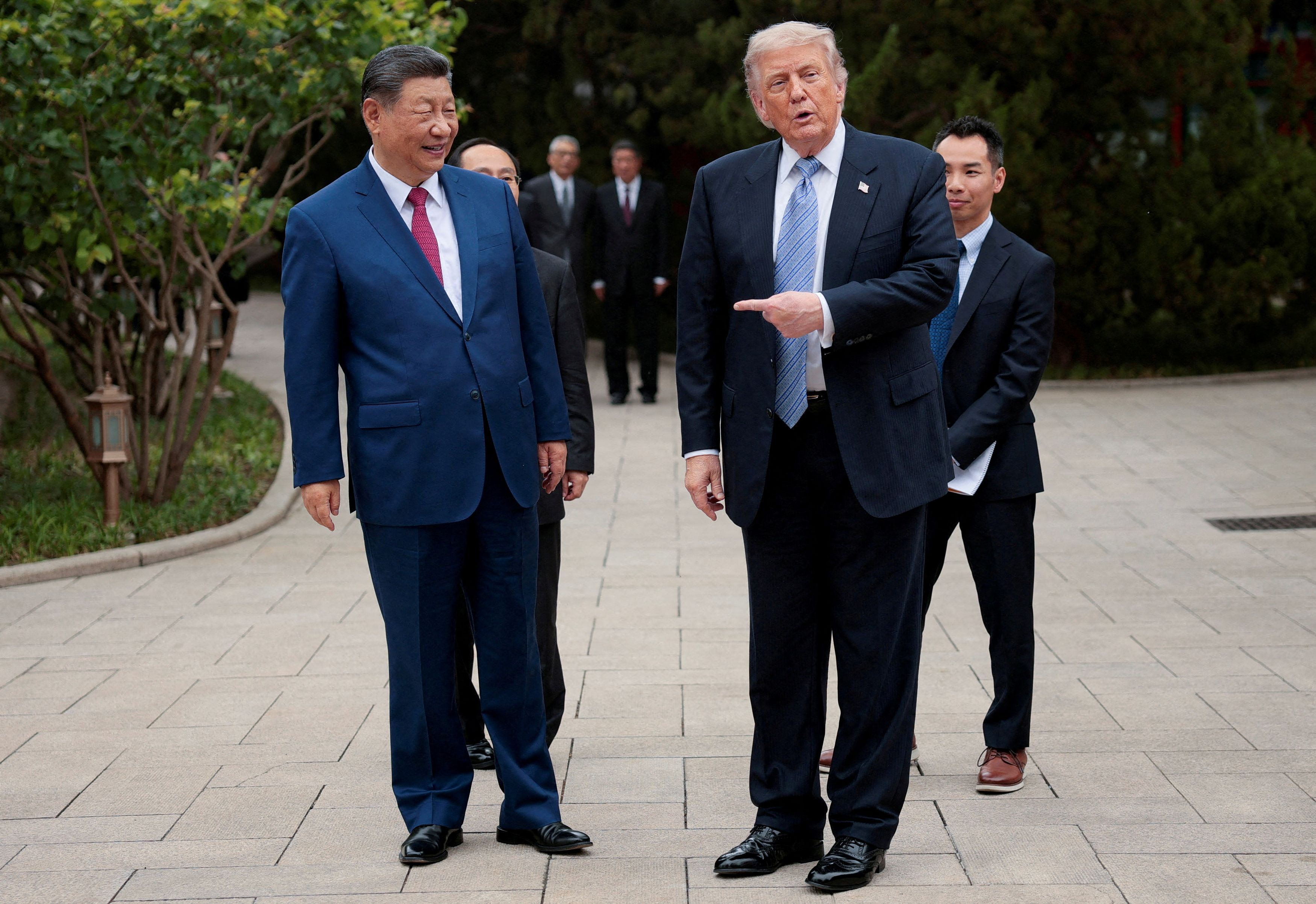
 BEIJING—At a state banquet hosted by Xi Jinping last week, President Trump was treated to a Chinese military band playing one of his favorite songs , “Y.M.C.A.”
Also on the set list was another familiar melody: “Edelweiss.”
Trump, more of a “Phantom of the Opera” fan, didn’t react in any discernible way.
The Rodgers and Hammerstein show tune, written in the style of an Austrian folk song, may not be a cornerstone of the Mar-a-Lago soundtrack, but it’s a mainstay of U.S.-China diplomacy. Songs from “The Sound of Music” have long been used to welcome American dignitaries to China.
When Vice President Walter Mondale visited in 1979, he quipped that he heard “two Chinese classics, ‘Jingle Bells’ and ‘Do Re Mi.’” In 2002, President George W. Bush was greeted at the Great Wall by a gaggle of children singing “Edelweiss.” A singer from the Chinese military serenaded then-Defense Secretary Jim Mattis with the song during his 2018 trip.
The musical’s tunes are among the most widely known English-language songs in China, embraced as a wholesome and earnest tale about love of one’s homeland and taught in classrooms across the country for decades.
“Edelweiss” was one of the first English songs Josephine Zhou learned growing up in the 1980s, when China was undergoing economic reforms and opening up to the rest of the world.
“It was so melodious, and I found it different from the music I heard before,” said the 59-year-old retired accountant in Shanghai, who sometimes finds herself humming it randomly.
The musical, based on the real-life story of the von Trapp family’s escape from Nazi-occupied Austria, made its debut on Broadway in 1959. The movie , starring Julie Andrews and Christopher Plummer, came out in 1965.
At that time, China was still recovering from a devastating famine known as the Great Leap Forward and soon entered the Cultural Revolution, a decadelong wave of mass upheaval that sought to eradicate “bourgeois” elements, including anything Western.
But beginning in the late 1970s, as censorship receded, “The Sound of Music” started to be screened widely in China. Its songs were played on repeat on the radio.
When Kaiser Kuo first visited China in the summer of 1981, his extended family there would ask him and his brother to sing some American tunes. Kuo would croon standards like “Take Me Out to the Ball Game.” Then, his relatives would show off with “Do Re Mi.”
“Edelweiss,” in particular, seemed to resonate with people he met thanks to its simple melody, few words and patriotic theme.
“In the years since, I’ve seen many Chinese men sing it, either drunk at the karaoke, or even occasionally accompanying themselves on guitar just like Christopher Plummer did in the film,” said Kuo, who hosts the Sinica Podcast about current affairs in China and founded two pioneering Chinese rock bands.
In Beijing’s diplomatic sphere, the song was often heard at official functions and gatherings where American culture was shared, said Chas Freeman, who ran the U.S. Embassy there from 1981 to 1984.
“Edelweiss,” mistaken at times for an actual Austrian folk song instead of an American creation, hasn’t always been a welcome olive branch. In 1984, President Ronald Reagan quoted the song while welcoming the Austrian president for a state visit, which some in Vienna took offense to, according to news reports at the time.
As more Americans visited China in the following decades, “The Sound of Music” became a common cultural touchstone. Exchange groups and their hosts often sang the songs together.
Mary Millben first traveled to China in 2006 as an exchange student from the University of Oklahoma. As a musical-theater performance major, she often discussed classic Broadway shows with students and others there, including “The Sound of Music.” One evening in Shanghai, after watching a performance of “The Lion King,” she met with the leadership of the Shanghai Grand Theatre and soon enough they were all singing “Edelweiss.”
Now a professional singer who has performed for Presidents Bush, Obama, Biden and Trump, Millben has continued to connect with Chinese people over the song, even at the highest levels.
When she met with Cui Tiankai , China’s then-ambassador to the U.S., in 2021 to discuss U.S.-China relations, Cui suggested they end with something fun, like singing together. They considered a tune by Andrew Lloyd Webber , but settled on a song they both love: “Edelweiss.”
“I understand why this is such a meaningful song to the Chinese people,” said Millben. “‘Edelweiss’…is a song of deep patriotism and love to one’s country. Patriotism, like music, is a universal language.”
For Zhou, the retiree, the scene in the movie where Captain von Trapp plays guitar and sings “Edelweiss” to his seven children has always left her with feelings of warmth and tranquility. Sometimes, she sings the song at family gatherings.
“The song is beautiful and easy to follow,” she said. “It’s great for all occasions, from a family reunion to a high-profile state banquet.”
—Yijing Shen contributed to this article.
Write to Hannah Miao at hannah.miao@wsj.com