 Μake us preferred on Google
 For centuries, the sanctuary at Ancient Olympia evolved around the religious, athletic and social life that made it one of the most important centers of the ancient Greek world. Now, a new round of work is set to further reveal that long history to visitors, with three initiatives carrying a combined budget of 3.6 million euros.
The new phase follows a broader program already underway at the archaeological site, where three major Roman-period monuments are being upgraded with approximately four million euros in Recovery and Resilience Fund resources. The culture ministry says the broader effort aims to protect important remains, highlight the site’s historical continuity and expand the areas accessible to visitors.
Culture Minister Lina Mendoni said the works were important not only for protecting and making significant monuments accessible to visitors, but also for expanding the areas open to exploration and encouraging visitors to spend more time at Ancient Olympia, with wider benefits for the local economy.
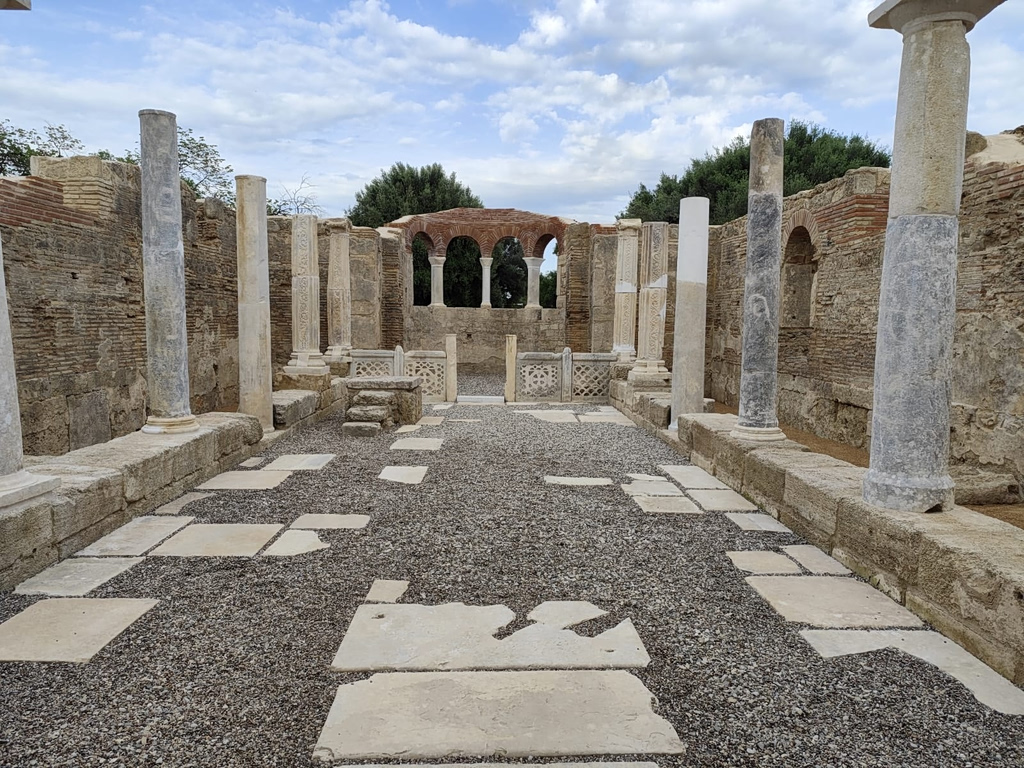
The new works, approved under the Sustainable Urban Regeneration program of the Western Greece regional program for 2021-2027, focus on three significant parts of the sanctuary: the Gymnasium, the terrace of the Treasuries at the foot of Mount Kronion and the so-called House of Nero.
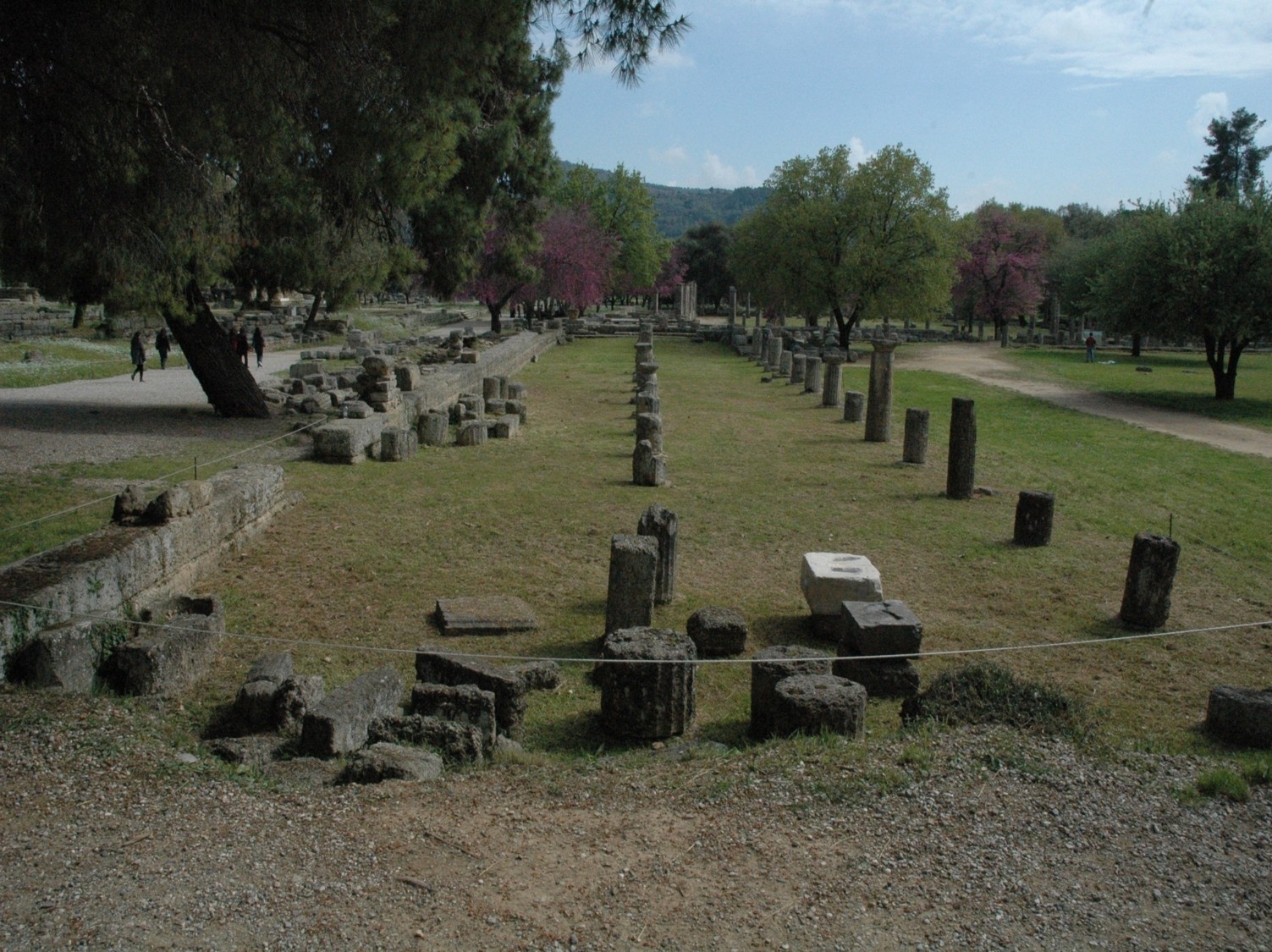
The third phase of work at the Gymnasium will build on earlier efforts at what is described as the only surviving monument of its type and Olympic dimensions. Together with the Palaestra and Stadium, it formed part of the sporting infrastructure of the sanctuary.
Another initiative concerns the retaining wall of the treasuries terrace at the foot of Mount Kronion. The treasuries were small buildings erected by Greek city-states and colonies to house offerings within the sanctuary and remain among Olympia’s distinctive architectural features.
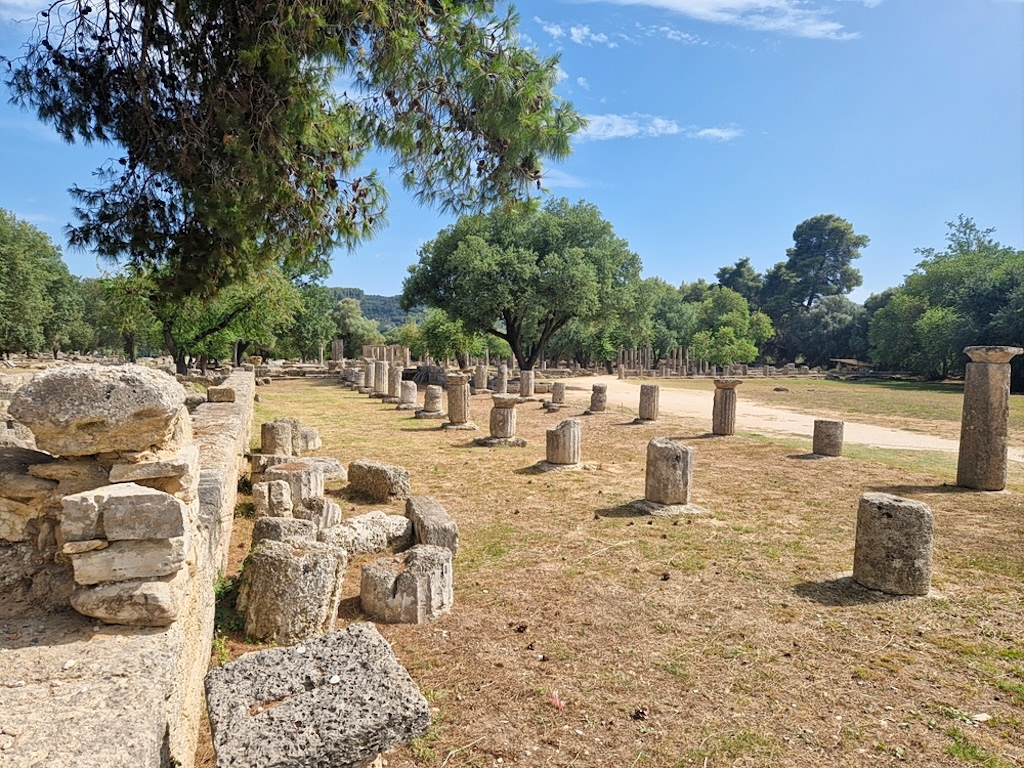
Colonnades of the ancient gymnasium at the Olympia archaeological site, Greece.
The third project focuses on the Octagon, part of the Eastern Baths dating to the 3rd century A.D., and associated with the so-called House of Nero. The complex reflects the transformation of Olympia during the Roman period and includes surviving mosaic floors depicting marine creatures.
The Roman-period works form part of a broader effort to highlight a chapter of Olympia’s history that is often overshadowed by its classical monuments. The sanctuary continued to evolve long after the classical era, acquiring thermal complexes and other structures that reflect its changing role under Roman rule.