 Μake us preferred on Google
For a Greek visitor traveling through Asia Minor and historic Smyrna, now Izmir, the emotional weight of the past is difficult to escape. More than a century after the destruction of 1922, remnants of the region’s centuries-old Greek presence remain scattered among modern Turkish cities, bearing witness to a history of displacement and loss.
Yet the same journey offers a striking view of contemporary Turkey: a country undergoing extensive construction, developing its industrial base and expanding its exports, even as its economy struggles with severe financial imbalances. This contrast lies at the heart of what might be called the Turkish paradox.
The surviving traces of Smyrna’s Greek past
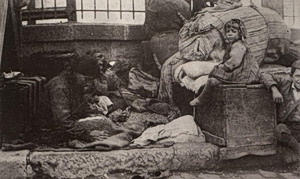
The destruction of Smyrna in September 1922 left deep scars on the city’s historic landscape. The mansions of its wealthy Greek residents were burned during the devastating fire that lasted several days. Along the waterfront, where massacres and the expulsion of Greek residents took place, few historic buildings have survived.
Among them is the neoclassical Kapetanakis House, which, after years of efforts, was transferred to the Greek state and now houses the Greek Consulate. Nearby stands the Spartalis House, which has been converted into a museum dedicated to Mustafa Kemal Atatürk.
A handful of traditional Smyrna-style homes also remain in the narrow streets near the former Franco-Levantine neighborhoods. Although now privately owned by Turks, many retain the initials of their original owners and the dates of their construction on their facades.
Further inland, the former Greek Central Girls’ School survives in the area once known as Hatzifrangkou Street. At Konak Square, the city’s iconic clock tower stands in front of an imposing government building whose Ionic architectural features reflect its historical roots. It was there that Metropolitan Chrysostomos of Smyrna met his death in 1922.
Of the city’s dozens of Orthodox churches, only St. Voukolos, dedicated to Smyrna’s first bishop, has survived. Built with donations from the women of the prosperous port city, the church has been restored and is open to visitors. However, there is no functioning Orthodox church in Smyrna today. The city’s small Orthodox congregation, numbering a few hundred people who are not necessarily Greek, gathers in a Catholic church.
More Greek properties and houses have survived in areas south of Smyrna, although they remain under Turkish ownership.
Churches, mansions and memories along the coast
In Cesme, across from the Greek island of Chios, Greek neoclassical buildings dominate the main tourist street leading toward the sea. The recently restored Church of St. Charalambos now serves as a cultural center.
Nearby Alacati preserves the Church of the Dormition of the Virgin Mary, also known as Panagia Alatsatiani. Its courtyard was paved with small black and white pebbles brought from Mavra Volia beach on Chios.
The church now operates as a mosque. A large green curtain conceals its surviving marble iconostasis, sculpted by Ioannis Chalepas, a marble artist from the Greek island of Tinos and the father of renowned sculptor Yannoulis Chalepas. According to accounts cited in the article, Chalepas was offered 750 gold sovereigns for the work, an exceptionally large sum at the time.
The church was converted into a mosque after the 1922 catastrophe, but the iconostasis survived intact and was cleaned and fully restored as part of the building’s renovation. In 2011, Ecumenical Patriarch Bartholomew held a service there.
A few miles away, the town of Vourla, known in antiquity as Klazomenai, preserves numerous Greek houses. The town had 35,000 Greek residents in 1922. Today, its narrow streets still contain many buildings dating from the period before the population’s displacement.
At the coastal settlement of Skala, the old Batis café stands beside the summer home of the Seferiadis family. Poet George Seferis and his sister, Ioanna Tsatsou, spent their summers there until they were around 14 or 15 years old.
Further north, approximately 100 kilometers from Smyrna, lies Pergamon, dominated by its ancient Acropolis. Many of its archaeological treasures have been transferred to Berlin’s museum collections. On the eastern outskirts of the city, the ancient Asclepieion, including its theater, recalls the medical practices of antiquity.
Patients were treated with herbs and the medicines available at the time before passing through an underground tunnel. Ceramic speakers embedded high along its walls allowed physicians to transmit words of encouragement and healing suggestions, creating the impression that the god Asclepius himself was speaking to those seeking treatment.
Ayvalik’s Greek architectural legacy
Across from the Greek island of Lesbos, about 45 kilometers from Pergamon, lies Ayvalik, known in antiquity as Kydonies. The town remained almost entirely Greek until 1922, but no Greek community lives there today.
Its old town has retained much of its traditional character. Former churches, now converted into mosques, remain prominent landmarks. The historic Church of Panagia Orfani is still standing, while the ruins of the Church of the Holy Trinity can be found in the upper neighborhood.
Opposite the ruins stands the house of Ilias Venezis, the Greek writer whose sister, Agapi, identified the property during a visit in 1970 with her husband, Petros Molyviatis. After the building was threatened with collapse, sustained pressure led its Turkish owner to undertake restoration and maintenance work in 2024.
The town’s narrow streets, lined with Greek mansions and grand houses dating from before 1922, also contain the former home of Fotis Kontoglou, the influential icon painter and writer associated with Greece’s Generation of the 1930s.
On the nearby Moschonisia islands, Greek architecture remains prominent. The Church of the Archangels, purchased and restored by 95-year-old Turkish billionaire Rahmi Koç, now operates as a museum. At its entrance, Koç has placed a British tractor dating from 1949, a sight that the article says can be unsettling for Greek visitors with religious attachments to the site.
Koç also holds a 49-year lease on the marina in Mytilene, has purchased a landmark olive mill and has restored a historic café on Lesbos, where he is held in high regard by local authorities.
A modern industrial powerhouse
Beyond its historical legacy, Smyrna and the surrounding coast offer a view of Turkey’s economic transformation under President Recep Tayyip Erdogan.
The country has developed into a modern manufacturing center, producing a wide range of goods, from wedding dresses and automobiles to wind turbines. Its defense industry has also expanded.
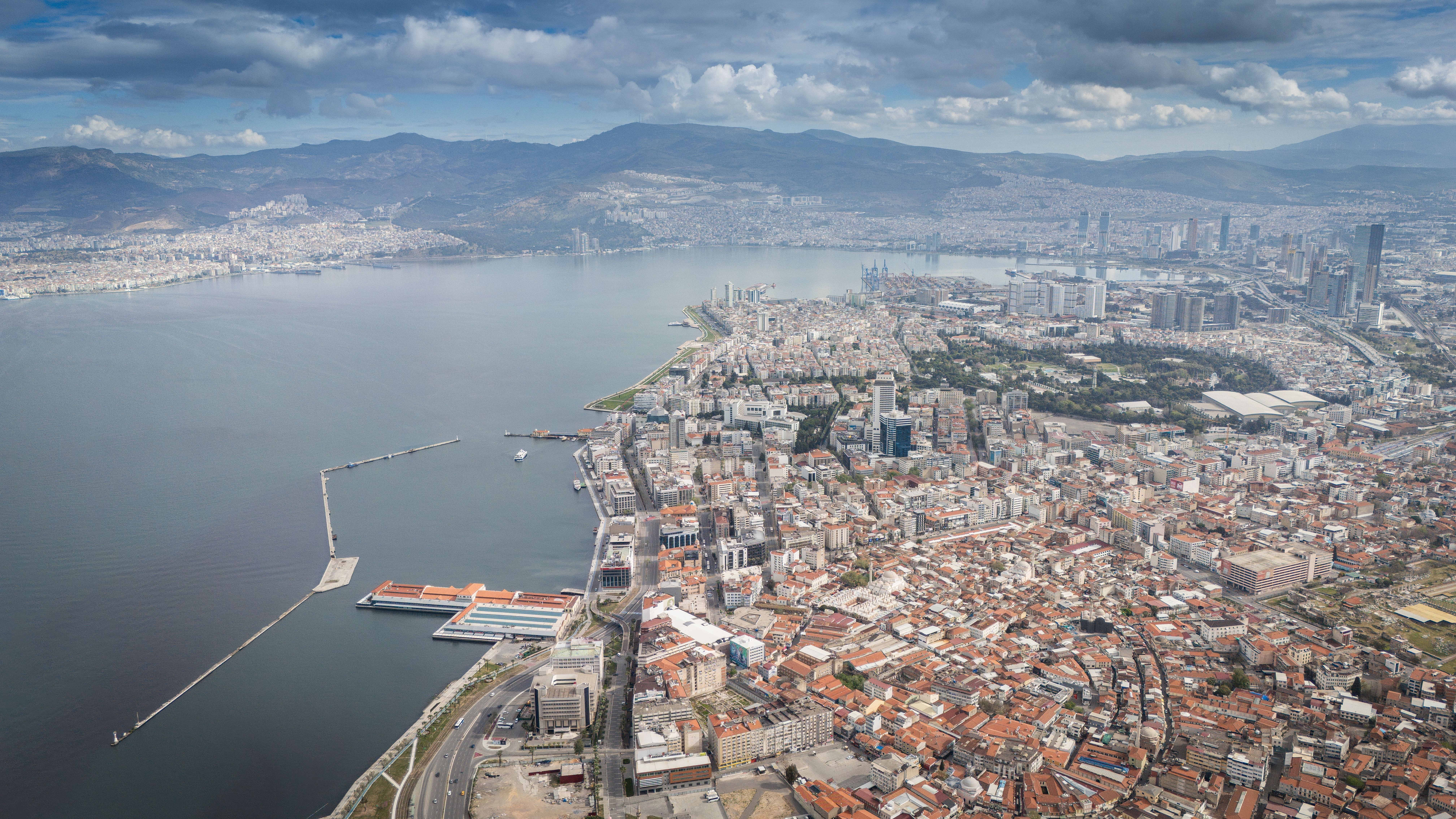
Izmir, Turkey’s third-largest city, has a population of nearly five million and an extensive industrial and commercial infrastructure. It has three free-trade zones, 17 officially designated industrial zones and a large exhibition center that hosts more than 65 major specialized trade fairs each year.
Its universities attract students from across Central Asia. Young Azerbaijanis, Turkmen, Kazakhs and Uzbeks are a visible presence at Izmir’s airport. A new technical university in Agrilies, around 30 kilometers from the city, is connected to the Massachusetts Institute of Technology (MIT) and covers an area three times the size of the National Technical University of Athens, according to the article.
Construction is equally prominent. Across the approximately 200-kilometer stretch from Cesme to Izmir and onward to Ayvalik, new neighborhoods of modern earthquake-resistant homes have replaced many older settlements. The developments feature organized street layouts, open spaces and supporting infrastructure.
Much of this construction is overseen by TOKI, Turkey’s Housing Development Administration, a state body responsible for mass housing and social housing projects.
TOKI identifies public land for residential development, designates housing zones and organizes the necessary infrastructure, including roads and connections to water, natural gas and electricity networks. It then holds public tenders, awarding contracts to private developers that agree to build according to specified standards and take responsibility for marketing and selling the apartments.
The state body receives a share of the proceeds from property sales and reinvests the money in new residential areas. According to the article, the system operates without placing a burden on the state budget and is also responsible for large-scale urban regeneration projects.
One of its major achievements has been the redevelopment of approximately 30 kilometers of Izmir’s Gulf coastline, a project that has substantially improved the city’s waterfront.
Housing prices in Izmir’s working-class neighborhoods reportedly remain below $1,500 per square meter. In the more affluent district of Karsiyaka, where wealthy Smyrna residents once maintained summer homes, prices do not exceed $3,000 per square meter.
Strong exports alongside inflation and currency weakness
Turkey’s economic performance presents a striking contrast. The country has recorded growth of around 3.5% in recent years, although expansion has slowed this year because of international instability. Economic authorities expect growth to accelerate to 4.2% next year.
Its gross domestic product stands at $1.6 trillion, making Turkey the world’s 16th-largest economy and a member of the Group of 20 major economies.
Yet the country’s macroeconomic indicators reveal significant strains. While the government runs no budget deficit and public debt stands at just 25% of GDP, inflation has reached 30% and interest rates are around 35%. The Turkish lira loses between 1% and 2% of its value each month.
The currency’s depreciation affects daily life. Residents face frequent exchange-rate changes, long lines at ATMs and the need to carry large bundles of banknotes to pay for a meal.
The private sector remains dynamic and fast-growing, but it is also heavily indebted and vulnerable to currency shocks and rapid exchange-rate movements. Despite these pressures, businesses continue to produce and export goods.
Turkey’s exports over the latest 12-month period exceed $270 billion, while exports in September rose 15.4% year over year, according to the article.
The Turkish paradox and its implications for Greece
The central question is how an economy with such pronounced imbalances, operating contrary to the prescriptions of international institutions, continues to grow and develop into a major manufacturing hub that aspires to replace China as Europe’s principal production base.
The scale of Turkey’s industrial expansion, its housing developments and its export performance stand in sharp contrast to the inflation, high borrowing costs and currency depreciation experienced by its population and businesses.
For Greece, the question is what this rapid Turkish development could mean for its own economic position.
The visit to Smyrna and the coast of Asia Minor was organized by the Association of Domokos Residents of Athens, with assistance from G. Archontakis, a former high school teacher in Domokos who is now president of the Athens-based Union of Smyrniots. Archontakis helped select historical sites and provided guided tours.