
 Μake us preferred on Google
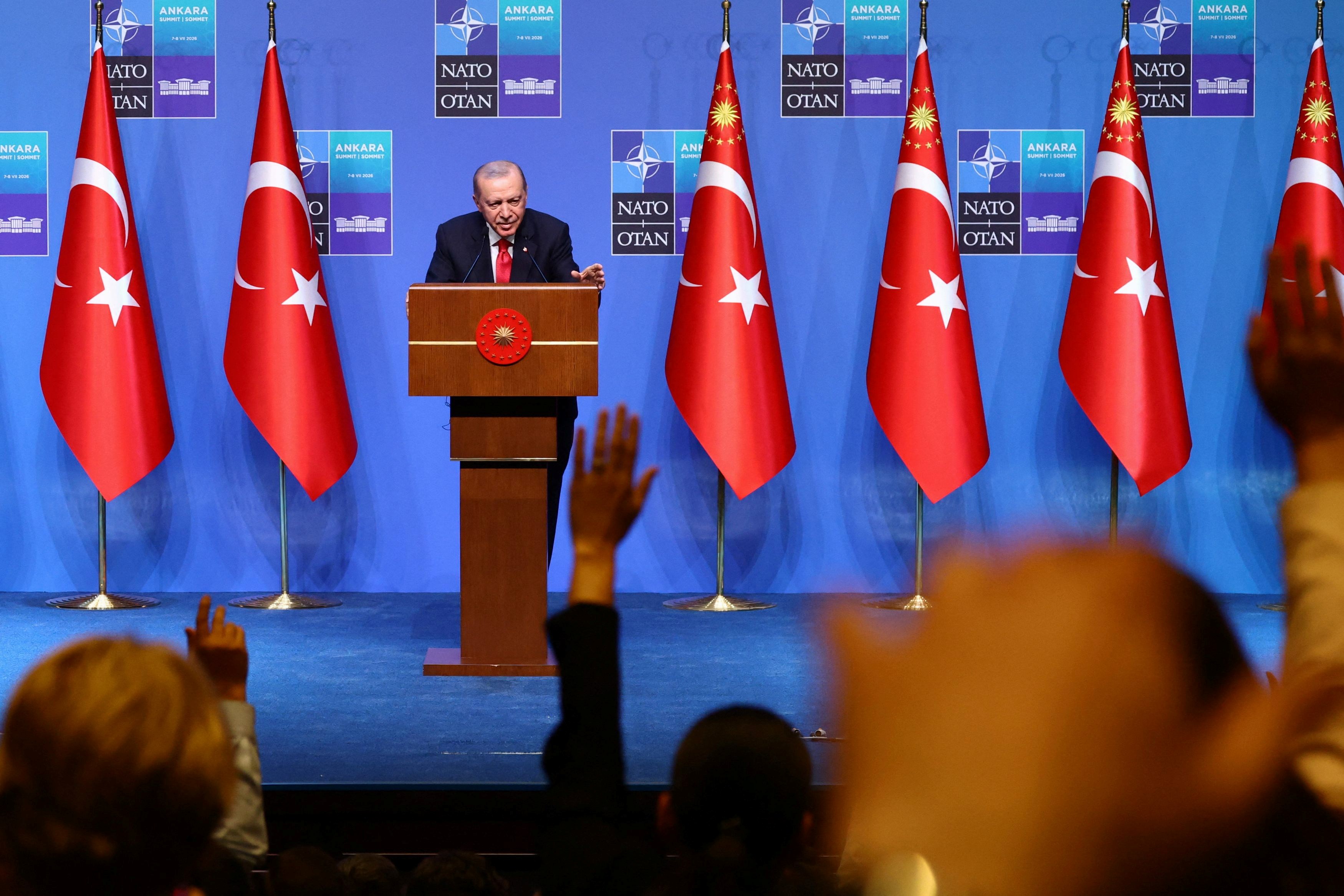
Turkish President Recep Tayyip Erdogan has reaffirmed his support for the controversial 2019 Turkey-Libya maritime memorandum, dismissing objections from Greece, the European Union and Egypt as “legally unfounded” and insisting that Ankara will not accept being excluded from the eastern Mediterranean.
Erdogan said Turkey did not seek to secure benefits at the expense of other countries in the region, while arguing that those seeking to exclude Ankara from the eastern Mediterranean must respect the wishes of both Turkey and Libya.
“I consider it particularly important for the future of Turkish foreign policy, as well as the country’s political life, that those who fiercely criticized us over the memorandum, asking ‘What business do we have in Libya?’, now acknowledge that we were right,” Erdogan said.
“Our sole compass in both domestic and foreign policy is Turkey’s interests. Even if we have to pay a price, we will never hesitate to do what is right and beneficial for Turkey and the Turkish people,” he added.
Erdogan described the approval of the memorandum by Libya’s eastern-based House of Representatives as a positive development, arguing that the agreement represented an important step toward safeguarding the two countries’ legitimate rights in the eastern Mediterranean.
He placed particular emphasis on the unanimous nature of the vote, saying it demonstrated that Libya’s political forces could set aside their differences when national interests were at stake.
The Turkish president also said the decision strengthened prospects for a unified Libya, which he maintained Ankara had supported from the outset.
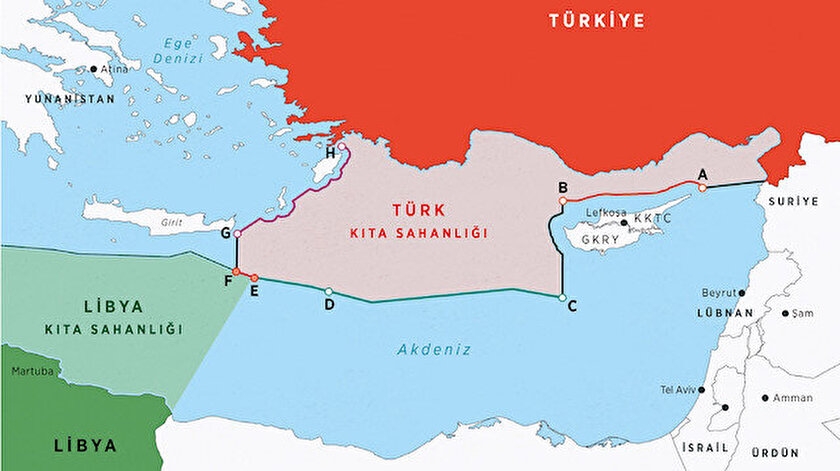
A map showing delimitated exclusive economic zones (EEZs) between Turkey and the provisional government in Tripoli, which Athens and the EU consider as baseless and illegal.
The eastern-based Libyan House of Representatives approved the maritime memorandum on Oct. 20, reversing years of opposition to the agreement signed in November 2019 by Turkey and Libya’s then-Tripoli-based Government of National Accord, led by Fayez al-Sarraj.
The vote also overturned earlier parliamentary resolutions rejecting agreements with Turkey and calling for political ties with Ankara to be severed.
The decision marked a significant shift in relations between Turkey and eastern Libya, whose authorities had previously opposed the maritime agreement despite Ankara’s close ties with the rival administration in Tripoli.
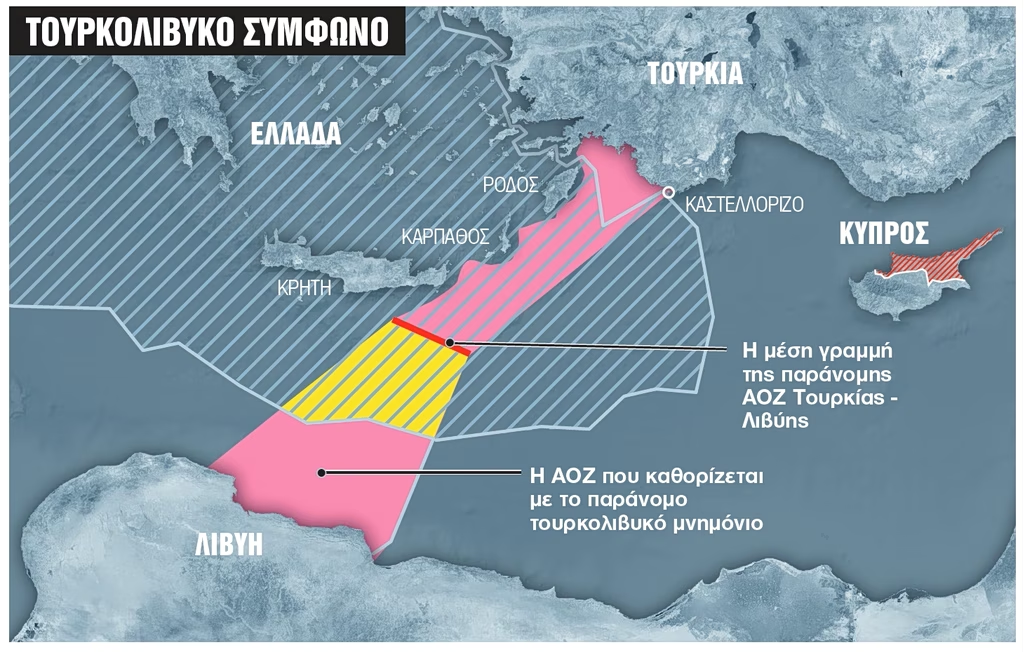
Greece, Egypt and Cyprus reject the agreement, arguing that it disregards their maritime rights and those of other states. The European Union has also maintained that the memorandum infringes on the sovereign rights of third countries and does not comply with international law of the sea.
Athens has argued that Turkey and Libya do not have opposite or adjacent coastlines that would provide a legal basis for the maritime delimitation established by the agreement. Greece has also emphasized the maritime rights of its islands under the United Nations Convention on the Law of the Sea (UNCLOS).
Washington reiterates position
The US State Department has clarified its position following an initial response that avoided directly assessing the legality of the agreement.
In a statement issued on Sunday, in response to a question by Greek media, a State Department spokesperson said:
“The announcement of the ratification of the Turkey-Libya memorandum of understanding on maritime delimitation has raised tensions in the region and is unhelpful and provocative — and our position on this matter has not changed.”
The spokesperson urged all countries, including partners in the eastern Mediterranean, to resolve maritime disputes through good-faith negotiations and avoid provocative behavior.
“Greece and Turkey are both NATO allies. We encourage them to engage bilaterally to address any areas of disagreement,” the statement added.
The clarification followed an earlier State Department response last week, which had emphasized negotiations and regional economic cooperation without explicitly criticizing the Libyan parliament’s decision.