

 Μake us preferred on Google
After more than two years of war and running to shelters with their toddler and newborn son, Nadav Pollak and his wife left Israel for Toronto in July 2025.
Now Pollak, 41, is one of tens of thousands flying back to vote in Tuesday’s elections, which many Israelis see as the most consequential in the country’s history. Direct flights from Canada have been suspended because of hostilities in the Middle East. He paid $5,716 for three seats on a 14-hour journey with a stopover in Vienna—and says it was worth it.
“This government failed on so many levels,” said the former Israeli intelligence veteran who plans to vote against Netanyahu. “I gave this country almost 10 years in the public sector in the military. I don’t want to see Israel going on this path.”
Unlike many other Western countries, Israel requires voters to cast ballots in person, with exceptions for diplomats, emissaries and some soldiers abroad.

Nadav Pollak returned to Israel with his family from their new home in Toronto to vote in Tuesday’s election. AMIT ELKAYAM FOR THE WALL STREET JOURNAL
The elections are expected to be tight. Longtime Prime Minister Benjamin Netanyahu is fighting for his political survival. His coalition is polling neck and neck with opposition parties. The 67,000 Israeli expatriates expected to return to vote—according to a survey by Fly&Vote, an initiative of an American nonprofit that helps Israelis get home to cast ballots—could help swing a close race.
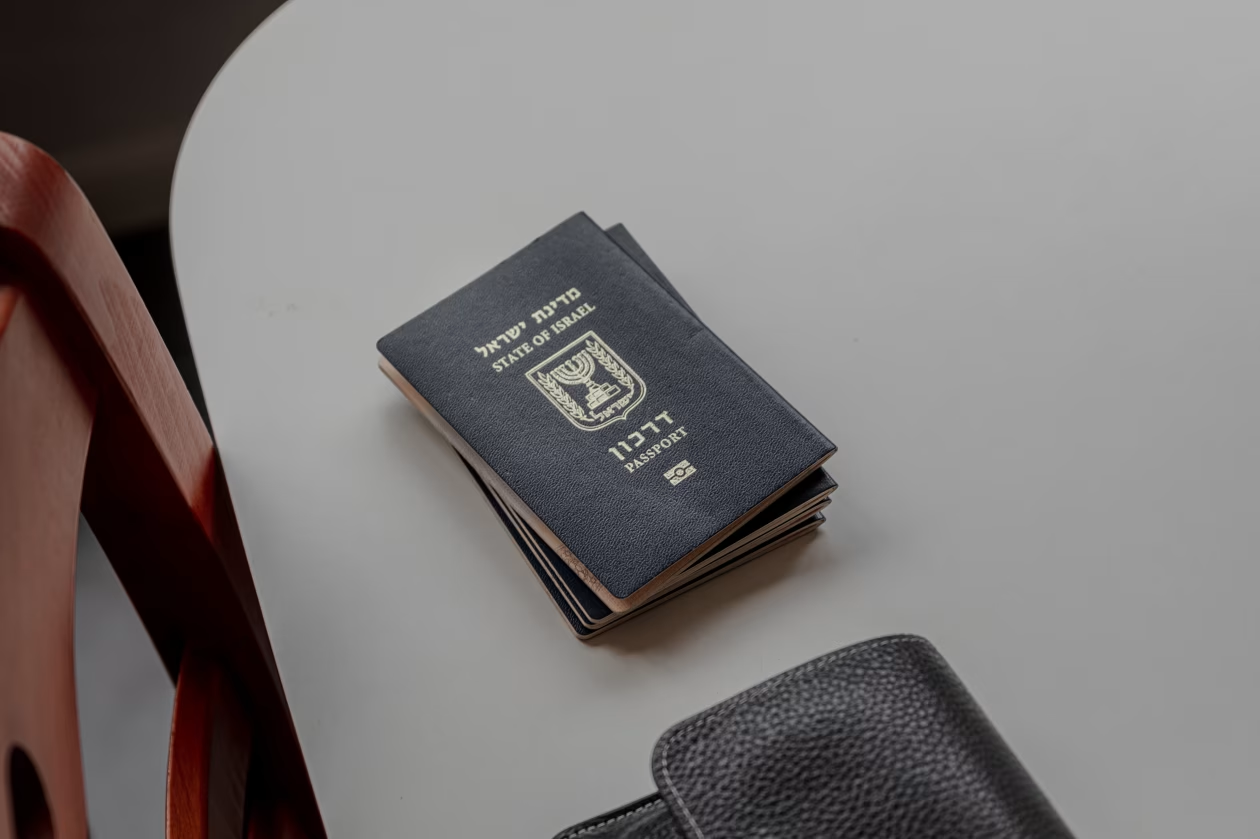
The Israeli passports belonging to Nadav Pollak and his family. AMIT ELKAYAM FOR THE WALL STREET JOURNAL
It is the first election since the Hamas-led Oct. 7, 2023, attack that shattered Israel’s sense of security and set off three years of war around the region. Many Israelis see it as a fight for the country’s soul. It pits Netanyahu’s coalition of far-right, nationalist and ultraorthodox parties against a more centrist bloc built around former army chief of staff Gadi Eisenkot.
Many expats say they are planning to vote against Netanyahu. Liberal groups are spearheading efforts to bring them home. Some of those flying in to vote took part in protests against Netanyahu’s government that drew crowds into the streets for much of his term. There is no data on how returning expats intend to vote.
The Fly&Vote operation includes around 20 full-time staff and more than 50 volunteers who coordinate with airlines and travel agencies and organized half a dozen flights to bring voters back.
“We sort of set out with a goal of at least 50,000 and people said we were crazy, and we are exceeding those numbers,” said Jonathan Barsade, president of AID Coalition, which launched the program.
Netanyahu’s Likud party asked the election commission to stop the program. Under a settlement earlier this month, AID Coalition agreed not to organize additional flights and said it would let airlines set the price of tickets. The program says it is nonpartisan and works closely with lawyers to ensure that its work complies with the law.
Israelis flying in to vote have flooded social media in recent days with images of their tickets for Tel Aviv and selfies from the airport.
“There were so many people coming inbound, and so few going outbound,” said Tami Giniger, who flew into Ben Gurion Airport earlier this month from Bangkok, where she relocated with her family from Israel in January 2025.
“All the terminals were filled with people coming in, and I hear of people coming from all over the world,” she said.

Former army chief of staff Gadi Eisenkot has assembled a more centrist bloc to challenge the prime minister. AMIT ELKAYAM FOR THE WALL STREET JOURNAL
Current polls show Israel’s fragmented opposition bloc with a slight lead. Both sides are polling short of the 61 seats they need to win a majority in the 120-seat legislature. If neither side is able to form a government, Netanyahu remain as caretaker prime minister until a new election is held.
Netanyahu has served as prime minister for about 19 years across multiple terms since 1996 and is deeply polarizing.
His detractors say he bears responsibility for the security failure that led to the Hamas attacks that left around 1,200 people dead and another roughly 250 taken hostage in Gaza. They say he has undermined democratic institutions, brought extremists into his government, prolonged wars for political gain and damaged Israel’s standing abroad amid growing anger about Israel’s conduct in the Gaza war.
The prime minister’s office didn’t respond to requests for comment. Netanyahu has repeatedly said he is fighting for Israel.
Around half of the expats returning to vote are coming in from the U.S., followed by more than a third from Europe, according to Fly&Vote. There is no comparable data for previous years, though organizers and inbound voters say they have rarely seen such levels of engagement.
Some of those flying back to vote are doing so for the first time in years.
Netzer Maoz, a 65-year-old retiree who lives in Chandler, Ariz., hasn’t voted in an Israeli election since he moved to the U.S. in 1991. This time, he’s flying back to vote against the current government. He plans to cast his ballot for the Democrats, a left-leaning Zionist party, and says he is motivated by the Oct. 7 security failure.
“I think it has to be investigated,” he said. “Nobody’s doing anything. It’s like nobody’s done anything wrong, or at least not the people at the top who are responsible for it.”

Tami Giniger flew to Israel from Bangkok, where she moved with her family in January 2025. AMIT ELKAYAM FOR THE WALL STREET JOURNAL
Israelis abroad tend to stay engaged with the country, keeping up-to-date on current affairs and visiting Israel to see family and friends. The 2023 protests against what was seen as an attempt by Netanyahu to reduce the power and independence of the judiciary mobilized overseas Israelis. The Oct. 7 attack further intensified interest in the country’s direction.
The return of voters from abroad comes amid years of brain drain especially among doctors, tech entrepreneurs and academics. Giniger and her husband used to live in Tel Aviv. They decided he would accept a job offer in Bangkok to give their children a breather from the years of war.
Some of those who left say they haven’t closed the door to coming back. Pollak said that he thinks about bringing his children back to Israel, but that Netanyahu and far-right ministers in his government are taking the country down the wrong path.
“If Netanyahu will be voted in again now it will make the choice of staying in Canada much easier,” he said.
Write to Anat Peled at anat.peled@wsj.com