
 Μake us preferred on Google
David Lisnard, the rightwing mayor of Cannes, has risen so suddenly in French presidential polls that his campaign has been forced to double the capacity of his first big rally to 10,000 people.
The December 13 event in Lyon will be a test of the once little-known politician, an economic liberal who admires Argentina’s iconoclastic president, Javier Milei, and wants to put France’s “obese state” on a crash diet.
Once ridiculed, Lisnard’s campaign slogan, “Something is happening”, is starting to ring true. The 57-year-old marathon runner and recently re-elected head of France’s influential association of mayors has climbed to around 12 per cent in first-round polling scenarios, some of which see him beating former prime minister Édouard Philippe. Both, however, remain well behind far-right leader Marine Le Pen and far-left firebrand Jean-Luc Mélenchon.
The crowded field on the centre and right risks splitting the moderate vote, paving the way for a presidential run-off between Le Pen and Mélenchon, which most polls suggest the far-right leader would win. Yet Philippe and other contenders have failed to agree on a joint primary to rally behind a single candidate.
Lisnard has a flair for punchy one-liners, canny social media posts and scathing attacks on the French state’s excesses — runaway public spending, punitive taxes and suffocating bureaucracy. His prescription is a smaller state, more power for the provinces, greater freedom for business and a tougher line on crime and immigration.
“The state keeps trying to patch things up, but you can’t patch up the Titanic!” he told LCI news in mid-September.
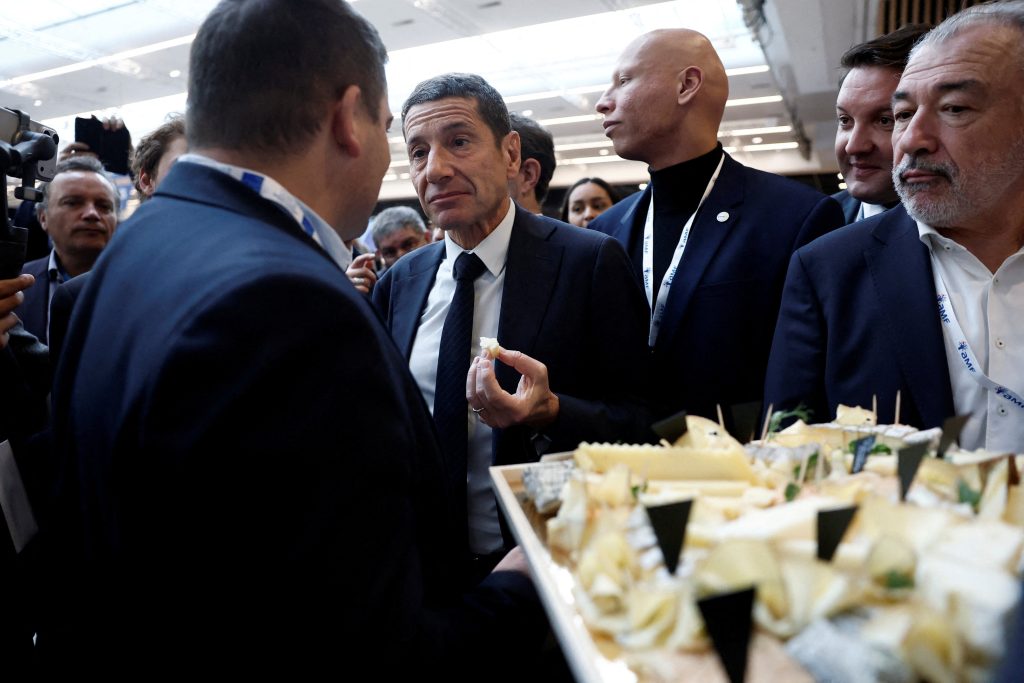
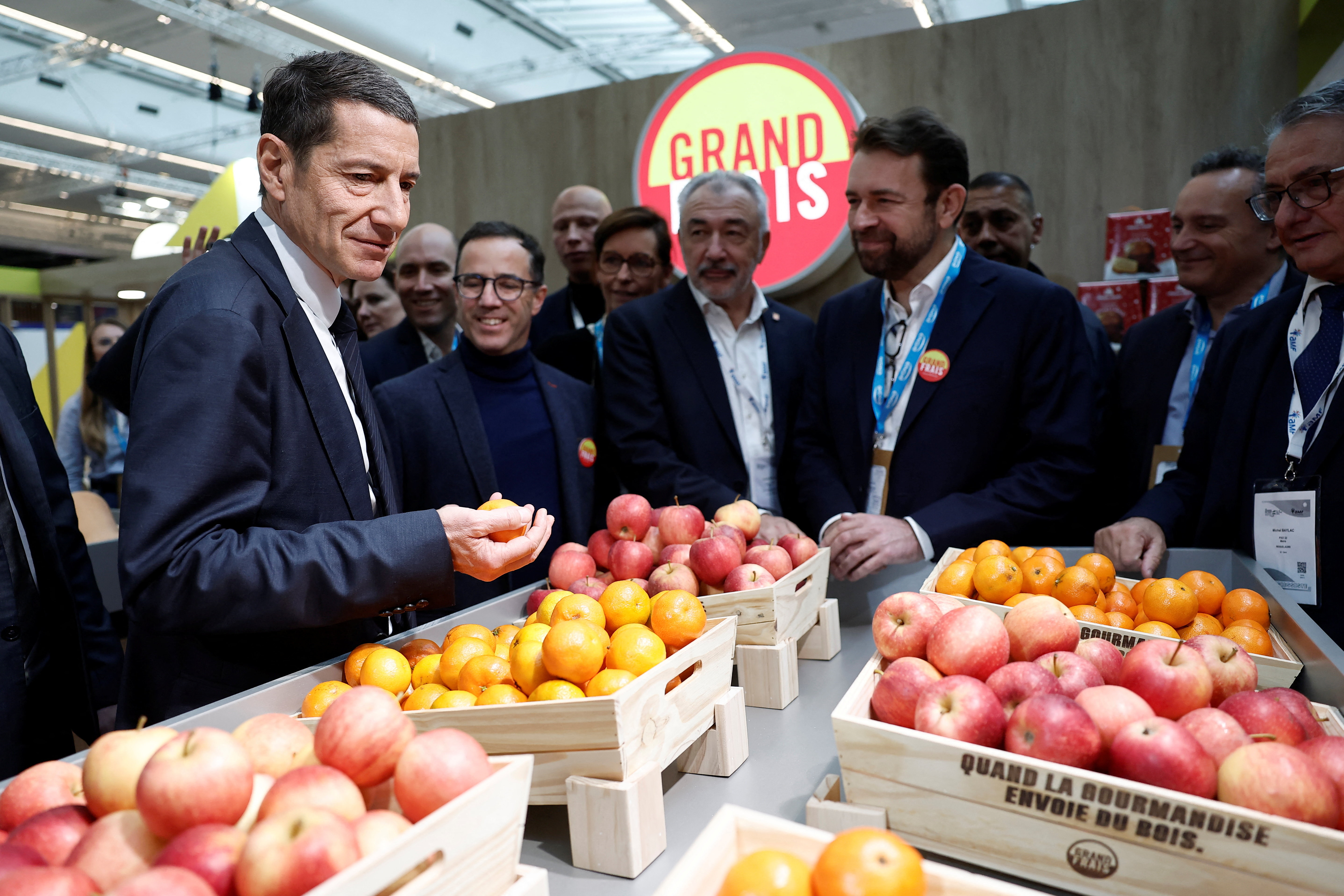
David Lisnard, President of the Association of French Mayors (AMF) and right-wing candidate for the 2027 French presidential election, tastes food at a stand during his visit to the Mayors and Local Authorities Exhibition during the 108th Mayors Congress (Congres des Maires) in Paris, France, November 24, 2026. REUTERS/Benoit Tessier TPX IMAGES OF THE DAY
France’s high-tax, generous welfare model is heading for the iceberg, he argues, as economic and demographic pressures mount. “Too much spending and too much bureaucracy are destroying the state’s ability to act.”
In France, such free-market liberalism has long been a hard sell. Citizens look to the state as their ultimate protector and provider, from free schooling to generous pensions, in a tradition of government intervention stretching back to the monarchy.
The numbers reflect that deep attachment to the state: public spending accounts for 57 per cent of GDP, the tax burden is among the world’s highest and public debt is approaching 120 per cent of GDP.
But faith in the state may be fraying. After nearly a decade under President Emmanuel Macron, who has piled on debt while retreating from tough reforms, voters appear increasingly ready to question the French model. An Ipsos poll found that roughly 80 per cent want radical or profound change, while about 90 per cent believe their country is in decline.
Lisnard’s rise stems from his image as an outsider who never worked for Macron, said Bernard Sananès, a pollster at Elabe. Macron’s record-low 14 per cent approval rating has tainted politicians associated with him, notably Philippe and another former prime minister, Gabriel Attal.
“Lisnard is benefiting from being a novelty and offering a real rupture,” said Sananès. “But there may be a Lisnard bubble, just as we have seen in the past where challengers emerge in the autumn only to fade by spring.”
Born in Limoges to a ballet dancer and a professional footballer, Lisnard took a different path from France’s political elite, bypassing the prestigious Parisian schools that have produced so many of its leaders. Instead, he gained a rare taste of the private sector working in his parents’ clothing business, an experience he said first exposed him to thickets of regulation.
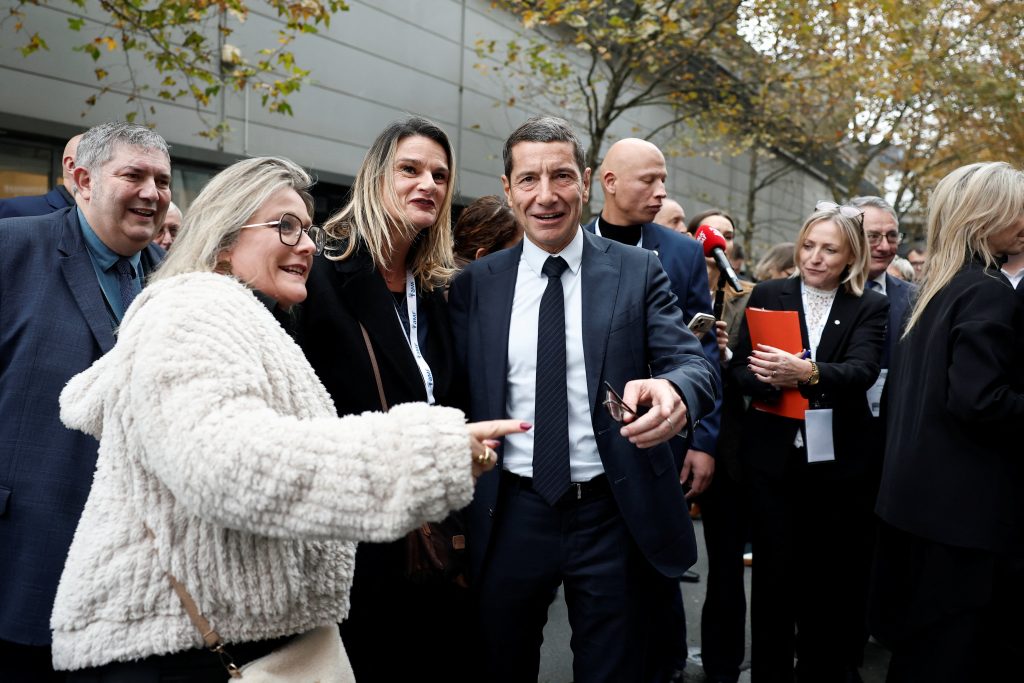
David Lisnard, President of the Association of French Mayors (AMF) and right-wing candidate for the 2027 French presidential election, talks with visitors as he visits the Mayors and Local Authorities Exhibition during the 108th Mayors Congress (Congres des Maires) in Paris, France, November 24, 2026. REUTERS/Benoit Tessier
Lisnard has an earthy, straight-talking style reminiscent of Jacques Chirac, who famously downed beers on the campaign trail in the 1990s. At an agriculture show, he made a lewd joke to a mascot dressed in a cow costume.
Whether Lisnard can succeed depends on voters’ appetite for change. He is proposing deeper spending cuts than his rivals — €200bn by 2032, largely through a sweeping reduction in the number of civil servants.
His programme includes potentially explosive reforms: making people work until at least 65 for a full pension, up from 63 now, and scaling back state pensions in favour of a private pillar, an idea that remains deeply controversial in France. He also wants to strip teachers of their civil servant status and introduce private sector competition into France’s sacrosanct public education system.
“We are the country with the highest public spending in the world, yet we have fewer and fewer public services. Perhaps we should ask ourselves why,” he said in an interview with BFMTV.
Some executives and rival campaign officials question whether French voters want Lisnard’s liberal policies. “I don’t think there is a space for what are very minority views,” said one banker.
But an Ipsos survey for Institut Montaigne found that 54 per cent of French people favour limiting the state’s role in the economy and giving businesses more freedom, up from 45 per cent in 2022, while more than three quarters favour cutting government spending.
His lack of experience in international affairs could prove a weakness at a time when Europe is grappling with Russia’s war in Ukraine and trade tensions with the US and China.
Lisnard has built a national following on social media, bypassing traditional news outlets that long paid him little attention. Punchy AI-generated videos cast him as a superhero or World Cup winner, while more conventional clips show him in a navy suit railing against the establishment.
In one stunt inspired by Argentina’s Milei, he fed pages representing France’s 4,000-page labour code, along with environmental and building regulations, into a paper shredder. The Ramones’ “Blitzkreig Bop” blares as he shouts: “Vive la liberté!”
Alexandra Borchio-Fontimp, a senator from Lisnard’s Nouvelle Énergie party, said the stunt was typical of his irreverent humour and penchant for provocation. “He wants to break with convention as a candidate outside the system,” she said.
In Cannes, Lisnard inspects a different street each morning to check its cleanliness, said Borchio-Fontimp. He has cut spending by reducing staff numbers and renegotiating contracts, while investing in a sweeping renovation of the famous Croisette promenade. Municipal taxes were lowered.
His rise has rattled rivals. Le Pen accused him of leaving workers “defenceless” by seeking to repeal the labour code, while Philippe said Lisnard was courting the far right.
But Hervé Morin, a centrist politician from Normandy, described Lisnard as a pragmatist rather than an ideologue.
Their political alliance was forged over a long dinner. “I invited him over to my house for roast chicken and potatoes . . . We drank quite a few bottles of red wine and decided to start working together, later inviting intellectuals to discuss all sorts of subjects, filling notebooks with ideas.”
Asked whether Lisnard could really prevent a presidential run-off between Le Pen and Mélenchon, Morin was unequivocal: “If it’s not him, it will be no one.”
Additional reporting by Sarah White
Copyright The Financial Times Limited 2026
© 2026 The Financial Times Ltd. All rights reserved. Please do not copy and paste FT articles and redistribute by email or post tο the web.