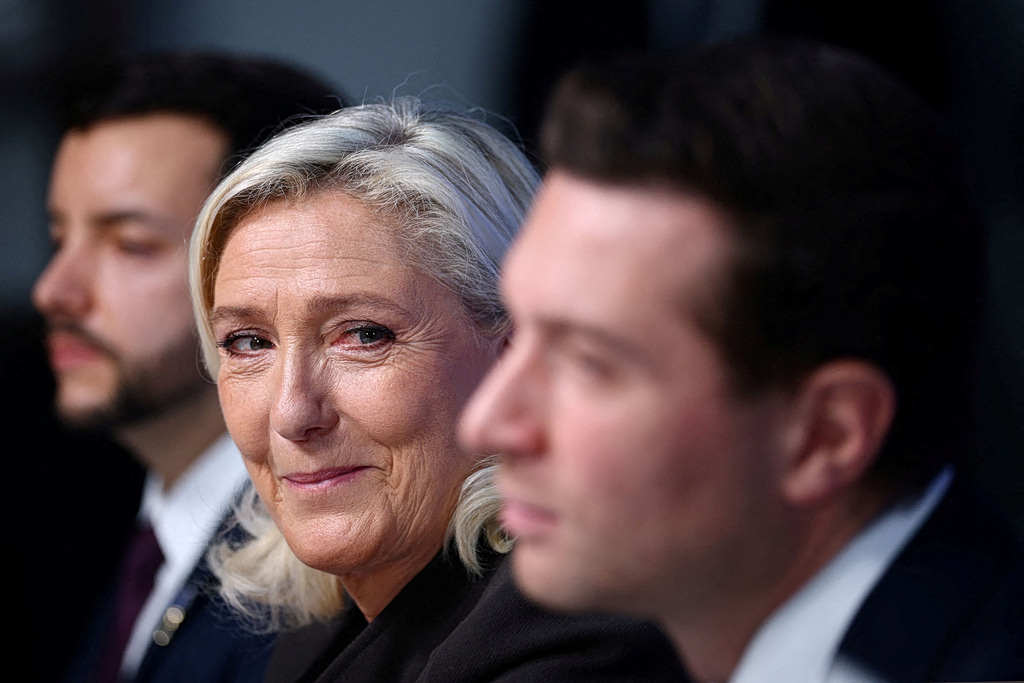
 Μake us preferred on Google
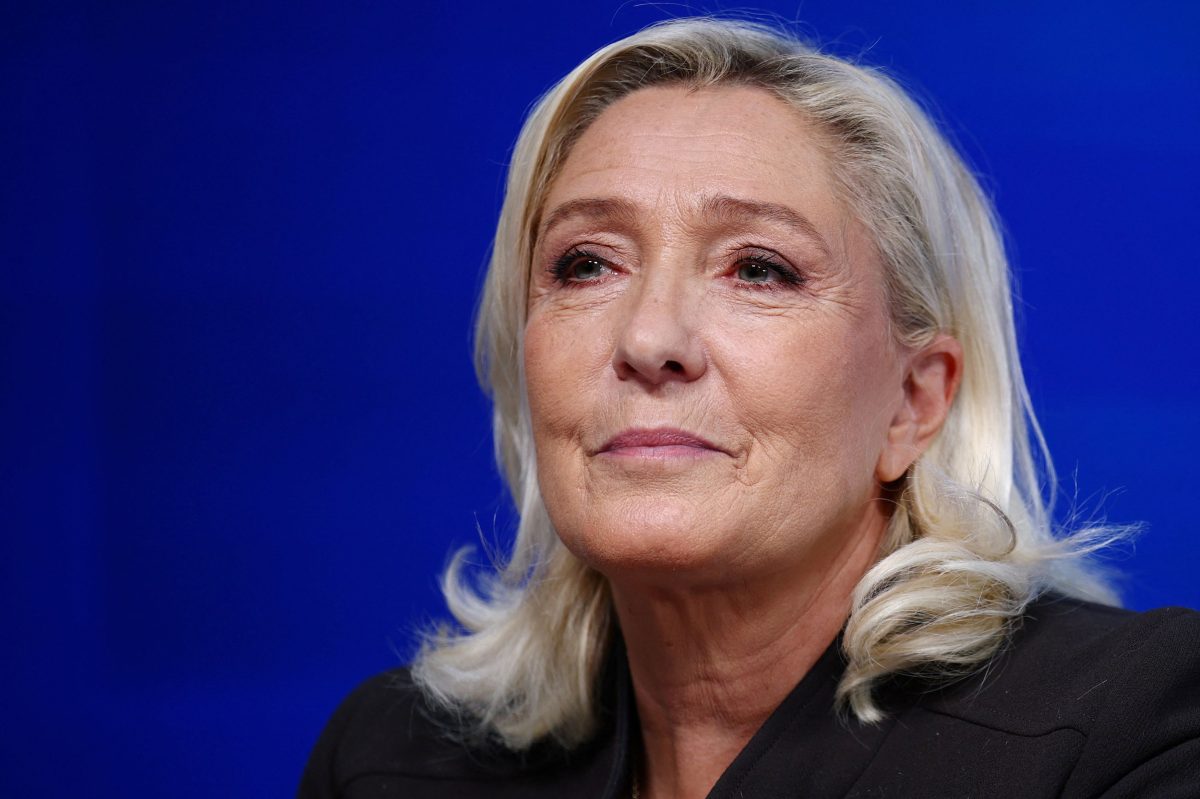
On a rare trip to Brussels last month, French far-right presidential frontrunner Marine Le Pen fired a warning shot at the 27 member states of the European Union.
She said they should not stitch up an agreement on the EU’s next seven-year budget before the French presidential election that she stands a good chance of winning.
The far-right leader, who has threatened to slash Paris’s contribution to the bloc’s finances, depicted any attempt to reach such a deal before France’s vote next spring as “a democratic scandal within the EU” that would “risk rendering the budget illegitimate”.
Nevertheless, the bloc’s leaders are seeking to reach a budget accord this year; on Thursday they also anointed Spain’s Pablo Hernández de Cos as the new president of the European Central Bank, a decision brought forward to pre-empt elections in France and elsewhere.
A staunch Eurosceptic who previously spent more than a decade calling for France to leave the EU, or “Frexit”, Le Pen now represents the biggest populist challenge to the bloc in its history.
While the EU has faced Eurosceptic disrupters before, from Britain’s Margaret Thatcher to Viktor Orbán in Hungary, none has been as powerful or as potentially destructive to the European project as a French president from the far right.
Le Pen wants to upend the status quo on a raft of issues — support for Ukraine, immigration, the supremacy of European law, the Green Deal — and cut the bloc’s institutions down to size, starting with a much smaller budget.
Her opposition to any enlargement of the bloc also potentially spells trouble for the UK should it wish to rejoin.
As EU officials make contingency plans for a Le Pen presidency, some are holding out hope that financial markets will act as the ultimate check on her ambitions — not least because of the dire state of French public finances. In turn, Le Pen told the FT in an interview last month she wanted a “trial of strength” against the bloc.
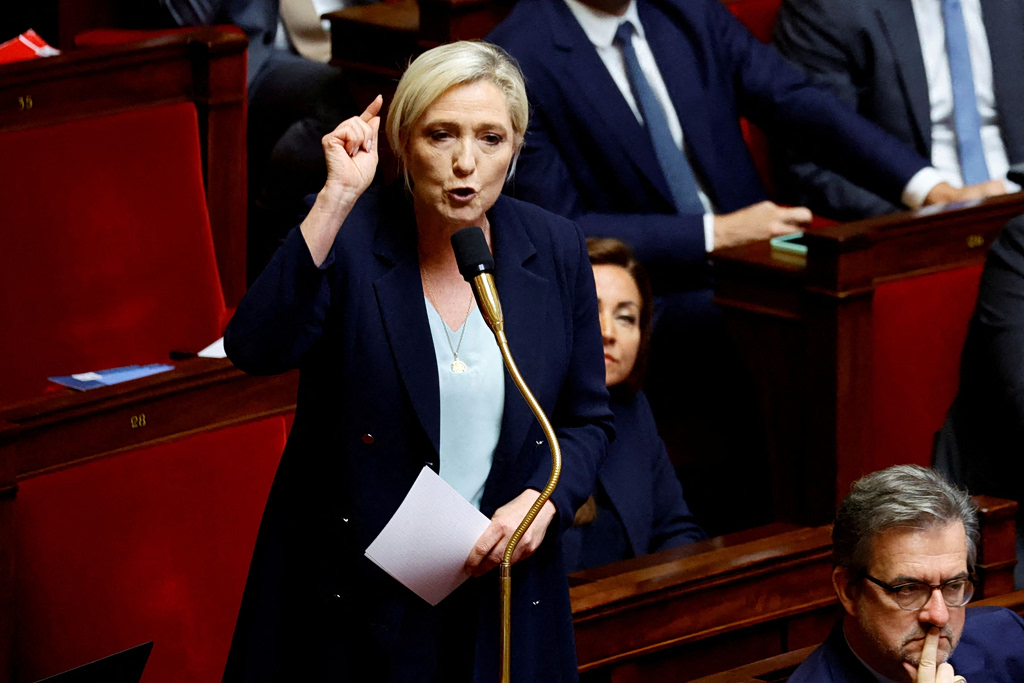
Marine Le Pen, member of parliament and president of the French far-right National Rally (Rassemblement National – RN) party parliamentary group, speaks during a debate on an opposition-sponsored motion by the LIOT grouping of centrist lawmakers to overturn the French government’s pension reform law that raised the retirement age to 64, at the National Assembly in Paris, France, June 8, 2023. REUTERS/Sarah Meyssonnier/File Photo
Jean-Paul Garraud, the leader of the Rassemblement National party’s members of the European parliament, argues that the EU’s era of integration, when central institutions gained power “at the expense of its member states”, is coming to an end: “Marine Le Pen’s arrival in power will sound the death knell for that evolution,” he says.
By contrast with Le Pen’s three previous unsuccessful campaigns for the French presidency, this time the 58-year-old leader of the RN is far ahead in the polls, with more than three-quarters of voters wanting radical change after nearly a decade under President Emmanuel Macron.
The vote will also take place at a vulnerable moment for Europe, with Russia’s full-scale war against Ukraine entering its sixth year, America’s security guarantee in question and China’s trade practices squeezing the continent’s manufacturers.
Given that Le Pen is now the “base case”, two European diplomats said talks had begun over how EU law could be used to mitigate or block her more extreme plans.
In some areas, officials argue the Commission should pitch itself as an ally to Le Pen, such as on migration, where it has already hardened its border policies under pressure from other nationalist leaders.
In others, the EU is trying to agree what it can before a Le Pen presidency. In addition to the bloc’s efforts to strike a budget deal and the ECB choice, Germany is seeking long-term financing for Ukraine to blunt Le Pen’s promise to curb support for Kyiv.
Advocates of a more deeply integrated EU hope that Le Pen will have no choice but to tone down her stridency. They point to how another nationalist leader, the Italian Prime Minister Giorgia Meloni, has proved pragmatic since taking power in 2022, working within EU rules, allying with European Commission president Ursula von der Leyen on migration and trade and backing Ukraine.
“She [Le Pen] will soon find out how dependent France is on the EU and the single market,” says a senior EU official. “That’s happened to every populist.”
Senior RN officials brush aside the Meloni comparison because of the differences in how France and Italy are governed, as well as the countries’ relative weights in economic and defence terms.
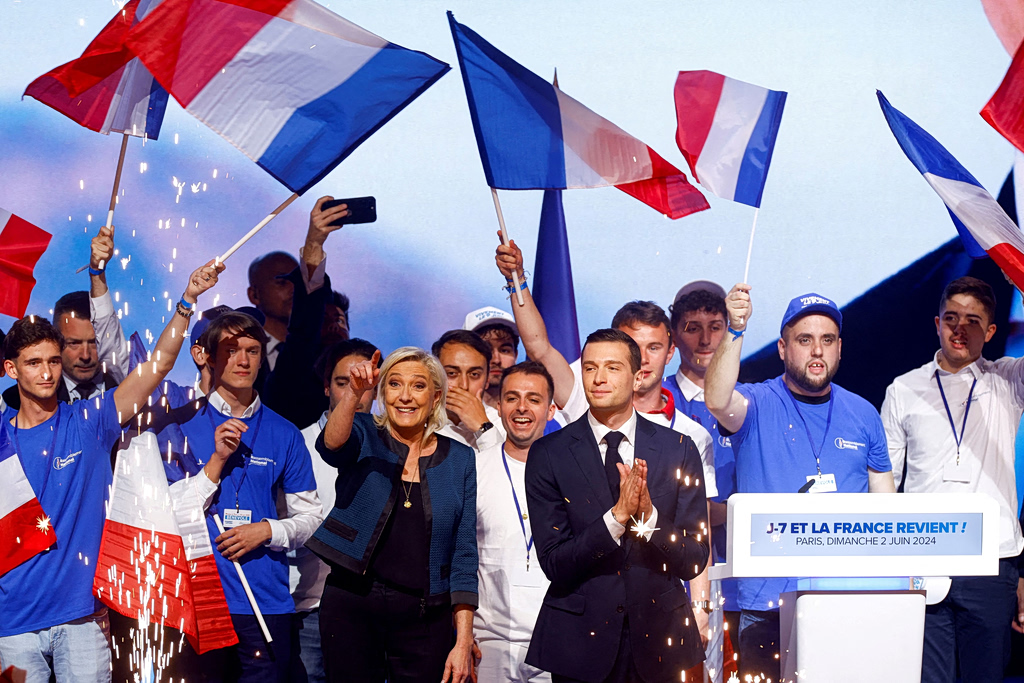
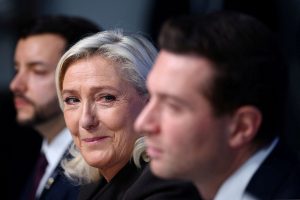
Marine Le Pen, President of the French far-right National Rally (Rassemblement National – RN) party parliamentary group, and Jordan Bardella, President of the French far-right National Rally (Rassemblement National – RN) party and head of the RN list for the European elections, attend a political rally during the party’s campaign for the EU elections, in Paris, France, June 2, 2024. REUTERS/Christian Hartmann/File Photo
“Marine will do what she says she will do,” says Philippe Olivier, a senior MEP and Le Pen’s brother-in-law. “Meloni is somewhat constrained and neutralised by the financial commitments and promises made by the EU.” He adds that the Italian prime minister will be “a natural ally” on many issues.
European officials also contend that Le Pen would inevitably be reined in by France’s fiscal travails and fear of triggering a debt crisis. The country’s deficit this year will hit 5.5 per cent of GDP, the highest in the Eurozone. Last month the yield on French 10-year bonds — which moves inversely to price — rose above 5 per cent for the first time since 2002, although it has dipped back below since.
A French president, the officials say, could ill afford to alienate the EU institutions that will have to review France’s budget plans or might come to its rescue, in the ECB’s case, in the event of a severe debt market sell-off. Although Le Pen described France’s debt burden as a “gigantic” constraint in her interview with the FT, the RN maintains it does not need to rein in its policy on the EU to retain investors’ confidence.
Benjamin Haddad, France’s Europe minister, argues that, if elected, Le Pen will pitch Paris into a showdown with Brussels, with the first clashes over the budget and aid to Ukraine.
“I think that the RN would de facto lead us to a form of Frexit,” he says. “Either a real one or a disguised one. But both could be harmful, at a time when, on the contrary, we need a strong Europe on the international scene.”
He adds: “She is ideologically against the European project and it would provoke a crisis with the EU.”
Rogue state?
The French far right was not always so hostile to the EU. Marine’s father, Jean-Marie Le Pen, who founded the Front National party in 1972 and served in the European parliament for more than 30 years, saw European unity as a bulwark against communism and supported defence and economic co-operation.
His views shifted after the cold war and the 1992 Maastricht treaty, which paved the way for economic and monetary union. Opposition to Brussels became central to the FN’s identity and Frexit a stated goal.
Yet the European parliament, with its proportional voting system favouring smaller parties, was also where many far-right politicians first won elected office, obtained funding and raised their profiles.
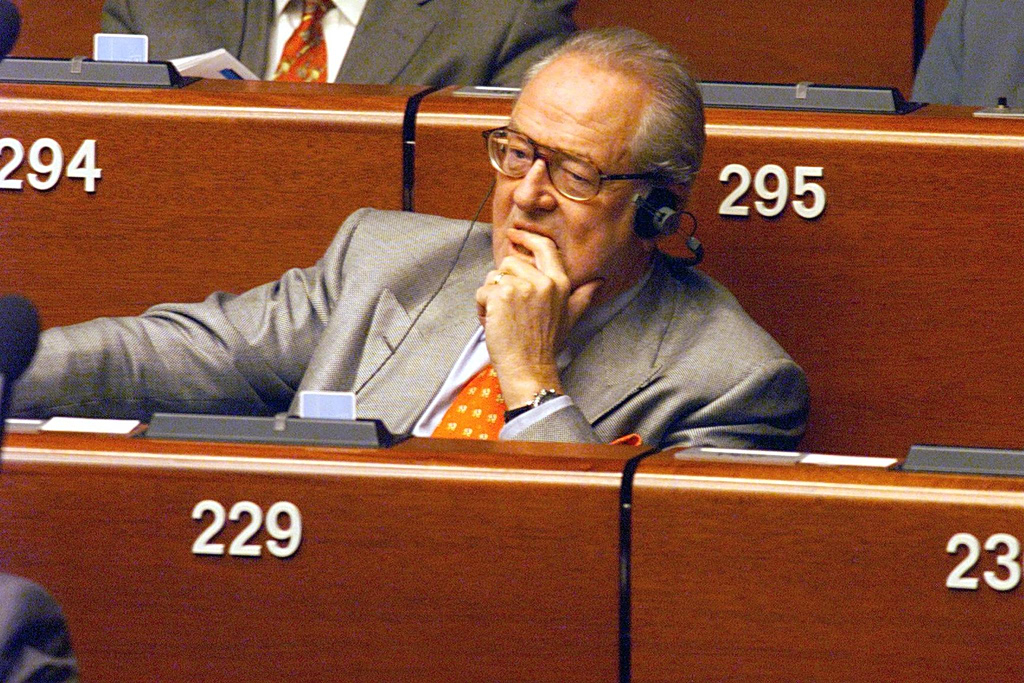
PRI51 – 19981215 – STRASBOURG, FRANCE : (FILES) – This file picture taken 15 December 1998 at the European Parliament in Strasbourg shows the leader of the far-right National Front party, Jean-Marie Le-Pen. The French State Council confirmed 06 October 2000 that Le Pen had lost his European mandate following a government decree on his ineligibility.
EPA PHOTO AFP FILES/GERARD CERLES
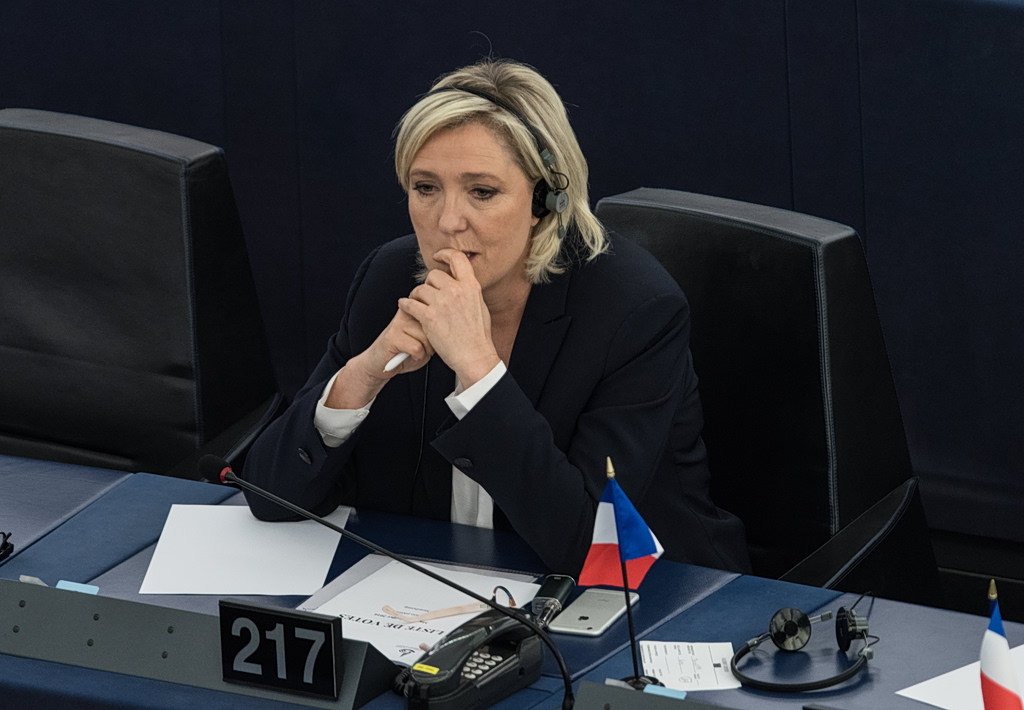
epa05824435 (FILE) – Leader of French Front National (FN) party Marine Le Pen reacts during the plenary session in the European Parliament in Strasbourg, France, 05 July 2016 (reissued 02 March 2017). Le Pen lost her EU immunity after a European Parliament vote on 02 March 2017 in connection with tweets of pictures showing IS violence. EPA/PATRICK SEEGER
When Le Pen’s party, now known as the RN, was cash-strapped, it also allegedly used funds allocated to its MEPs to further its French operation. Le Pen and other party officials were convicted last year of embezzling about €4.4mn in EU money. The case still casts a shadow over her; a final appeal is pending.
Le Pen’s stance on the EU has evolved: in the 2012 presidential campaign she wanted to leave the euro and renegotiate key treaties, and in 2017 she threatened to take France out unless the EU agreed to sweeping reforms.
That ambiguous position allowed Macron, then a polished 39-year-old former banker, to demolish her with a single question in their first presidential TV debate. He asked her if she wanted to leave the euro, leaving her stuttering and nervously consulting her notes.
The debacle scarred Le Pen and led her to abandon any talk of Frexit. By 2022, her campaign pledge was to transform the bloc from within. Although polls show the French to be among the most sceptical of the EU, barely a quarter want the country to actually leave, a sentiment reinforced by the UK’s bruising experience with Brexit.
“French citizens are clearly in favour of supporting Ukraine and in favour of the European Union,” says Haddad. “And this is one of the reasons that we will defeat her in the next election.”
Today, although Le Pen no longer wants France to leave the EU, she says she will remake the bloc into a “Europe of Nations”, ending the supposed over-reach of its central institutions and reducing the European Commission to a “secretariat”. The RN vows to put Commission president von der Leyen — their bête noire — back in a box.
The implications of such a shift by France — a powerful founding member and the second biggest net contributor to the EU budget — would be profound.
The French president is a directly elected head of state with near-total power over foreign policy and defence, even without a parliamentary majority. They have sole authority over the French nuclear arsenal. Fewer checks and balances exist since coalitions are rare.
At the EU level, although other member states often dismiss France as arrogant and fiscally irresponsible, Paris retains considerable influence, since decisions frequently come down to deals with Berlin. France loses battles, such as when it was outvoted to pass a trade deal with South America’s Mercosur trade bloc. But under Macron it has won over many to the once idiosyncratic French view that Europe needs more “strategic autonomy” on industry, energy and defence to protect itself from great powers.
Le Pen could galvanise other nationalist leaders such as her Slovak, Czech and Slovenian counterparts, and form a Eurosceptic caucus among national leaders. She could also try to form a partnership with Meloni.
“They could work together to make France and Italy the new motor for the EU to replace the so-called Franco-German couple that has not been working,” says Marion Maréchal, an MEP and Le Pen’s niece, who supports a rapprochement of rightwing parties in the EU parliament.
But whether Rome or other capitals would back Le Pen is unclear. She risks alienating poorer EU countries that could lose out under her budget plans.
“Le Pen says she wants to change Europe from within, but to do that you need allies,” says Pascale Joannin, the head of the Robert Schuman Foundation. “She wants a sovereign France but not a totally isolated one.”
Aurore Lalucq, a leftwing MEP, says Le Pen will be dangerous even with few allies. “Of course she will have real power, even if it is just a negative power to obstruct,” she says. “Remember how hard it was to manage Orbán’s games, can you imagine it with France?”
Le Pen has said she will slash France’s contribution to the EU budget, saving €11bn in 2027 and more in subsequent years. She wants to set a “national price” for electricity based on French production costs rather than European wholesale prices, risking conflict with EU single-market rules.
The far-right leader is also opposed to any further enlargement of the EU, including for Ukraine, a move that she thinks could prove fatal to French farmers’ livelihoods.
Indeed, a Le Pen presidency could derail a possible attempt by UK Prime Minister Andy Burnham to steer his country back into the bloc. She told the FT last month, “the British will not come back as long as we have not actually addressed all of the flaws that made them leave”.
Meanwhile, at home the RN is set to lay down a seismic challenge to Brussels. Le Pen has long promised to hold a referendum to change the French constitution to allow sweeping restrictions on immigration and deliver a key RN promise of establishing a “national preference” to give citizens priority for social housing, benefits and jobs.
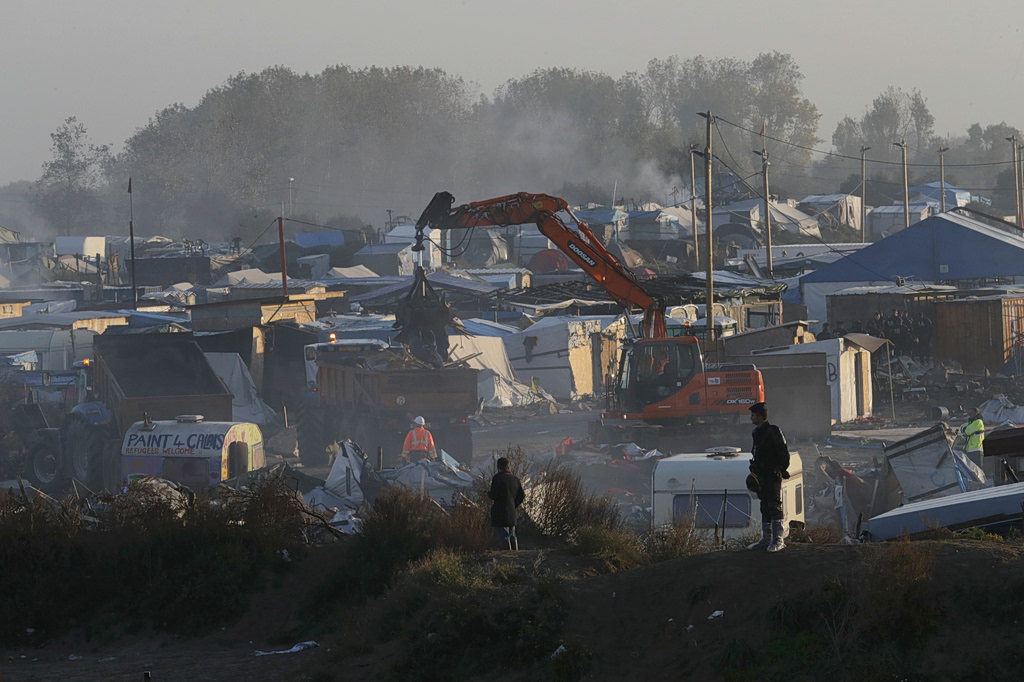
A bulldozer is used to remove debris as workmen tear down makeshift shelters during the dismantlement of the camp called the “Jungle” in Calais, France, October 27, 2016. REUTERS/Philippe Wojazer
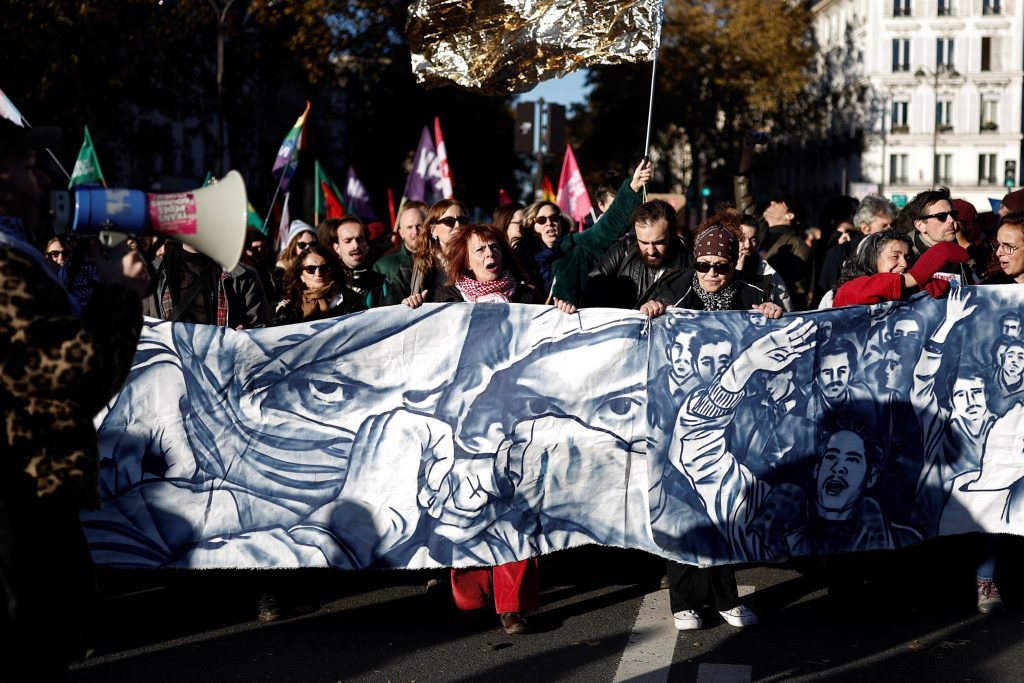
Demonstrator hold a large painted banner during the fifth Saturday of demonstrations against the high cost of living, joined by marches against police violence and violence against children, in Paris, France, November 14, 2026. REUTERS/Benoit Tessier
The move would allow French courts to disregard EU laws that bar such policies, by creating what the RN calls a “constitutional shield”. This would challenge the legal order established by EU treaties, namely that member states must respect European law and the European Court of Justice. The RN could trigger a prolonged legal confrontation with Brussels.
Garraud, the leader of RN MEPs, says a French constitutional referendum is non-negotiable: “It will be done immediately, absolutely immediately, because you cannot govern if you don’t have control over immigration policy. It’s simply impossible.”
Catherine Fieschi, an expert on populism at the European University Institute in Florence, argues that refusing to pay budget dues and creating a national preference would breach the EU treaties and France’s agreements with other member states.
“It might not be Brexit,” she says. “But it would be France becoming a rogue member of the EU.”
Money matters
Perhaps the most immediate impact of a Le Pen presidency would be on aid to Ukraine, which could lead to an impasse on the EU budget. But Berlin and other capitals worry that the real danger is a French fiscal crisis that could spread to other countries in the Eurozone.
The RN leader has vowed to stop financial assistance for Kyiv six months after taking office, arguing that France can no longer afford it. She has also suggested she would not back further EU budgetary support for Kyiv if Paris were saddled with liabilities.
Military training and sending weapons could continue, she said. But Le Pen opposes the deployment of French troops to Ukraine after a ceasefire under the 35-country Coalition of the Willing, which France co-leads with the UK.

French soldiers train shooting as they take part in the Koalicja 26.2 military exercise in Nowa Deba, Poland, November 15, 2026. The drill brings together troops from 11 countries to train with Multinational Force Ukraine, set up by the Coalition of the Willing and jointly led by Britain and France to support Ukraine after a possible ceasefire. REUTERS/Kacper Pempel
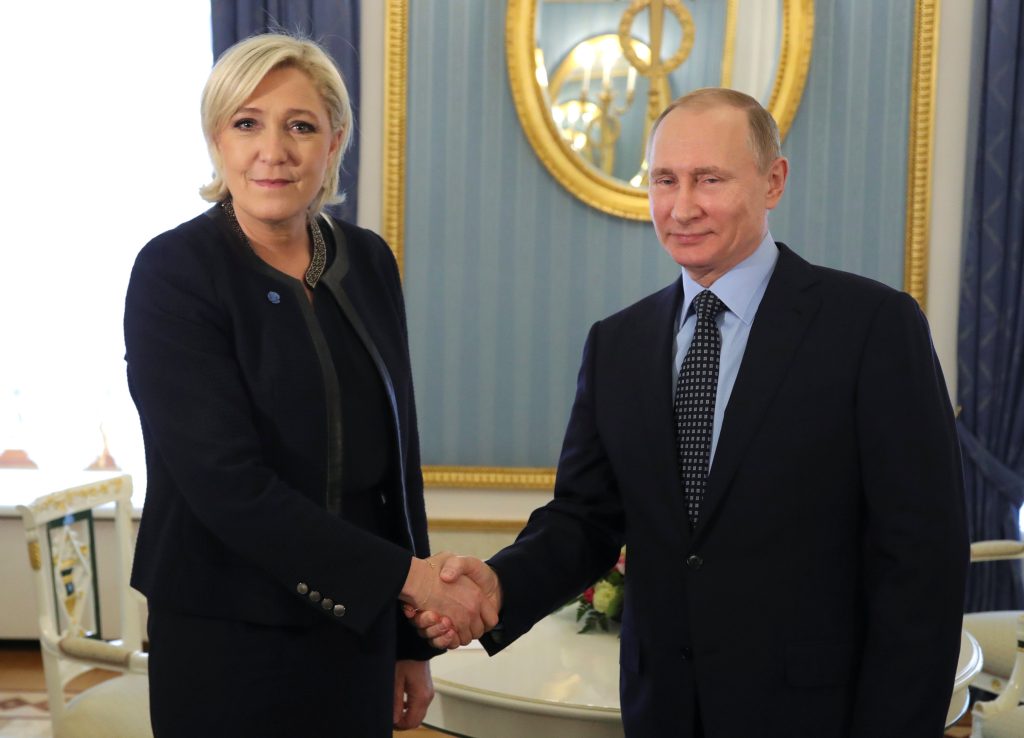
Russian President Vladimir Putin shakes hands with Marine Le Pen, French National Front (FN) political party leader and candidate for the French 2017 presidential election, during their meeting in Moscow, Russia March 24, 2017. Sputnik/Mikhail Klimentyev/Kremlin via REUTERS ATTENTION EDITORS – THIS IMAGE WAS PROVIDED BY A THIRD PARTY. EDITORIAL USE ONLY.
When Ukrainian President Volodymyr Zelenskyy invited her to Kyiv this month to persuade her to reconsider, she refused, instead meeting the country’s ambassador in Paris.
Although Le Pen quickly condemned Russia’s full-scale invasion of Ukraine in 2022, she was a longtime admirer of Russian President Vladimir Putin and wanted closer ties with Moscow. In 2014, she turned to a Russian bank for a campaign when French banks refused to extend credit. She opposes EU sanctions against Russia.
Her critics say stopping aid to Ukraine would be tantamount to siding with the Kremlin. It is also likely to create a rift with countries that see their security interests bound up with Ukraine becoming a strong, independent state.
Ahead of next year’s French election, German Chancellor Friedrich Merz has threatened to block the EU’s budget unless all 27 members commit to long-term funding for Ukraine.
“For Europe, this matter has an existential dimension,” says Norbert Röttgen, a senior MP and foreign policy expert for Merz’s Christian Democrats.
“A withdrawal of solidarity on matters of war and peace would inevitably call into question European integration and solidarity in other policy areas,” he adds. “One cannot turn one’s back on Europe when it comes to peace and security while simultaneously insisting on the benefits of a common European agricultural market.”
A Le Pen presidency would be difficult for Germany, whose partnership with France has driven European integration for the last 70 years, even if it has sputtered recently.
Le Pen provoked Berlin this week by declaring that her “Europe of Nations” would replace what she called a “German Europe” dominated by Berlin’s interests.
“Definitely, there is no special place in her heart for the German-French relationship,” says a government figure in Berlin, noting Le Pen’s dismissal of the 2019 Aachen treaty between the two countries as “a betrayal” since it calls for closer co-operation on the economy, defence and foreign policy.
What worries Berlin and other capitals most of all is the spectre of financial contagion triggered by a truculent Le Pen.
“It will be a disaster for them, it will be a disaster for others because it would be a virus,” says Enrico Letta, a former Italian prime minister.
To reassure investors, Le Pen has committed to €140bn in cost savings by 2032, mostly through spending cuts, and debt limits enshrined in the constitution. But economists have questioned the viability of the proposed savings.
There could be a further sell-off of French bonds as the election approaches. For now, the possibility that the ECB may backstop France is helping keep a lid on 10-year yields, say analysts, and therefore on the country’s cost of capital. But for the bank to intervene, France is supposed to comply with EU deficit limits that are now far out of reach. A combative Le Pen might not benefit from the largesse of the ECB and fellow member states.
Letta draws a parallel with 2011, when Silvio Berlusconi was ousted as Italian prime minister after markets and EU leaders lost confidence in his ability to staunch the deficit. Meloni was a junior minister in Berlusconi’s government and witnessed his humiliating demise.
“France doesn’t have the antibodies that, for instance, Italy, Spain, Greece and Portugal have because of the [sovereign debt] crisis. None of those countries will ever challenge Brussels over the budget,” says Letta. “If you challenge Brussels, Brussels and Frankfurt will win and you will enter a negative spiral and uncharted territory.”
Link To FT.com: https://www.ft.com/content/9bbd926e-ccef-4717-9044-48a23c9353ba
Copyright The Financial Times Limited 2026
© 2026 The Financial Times Ltd. All rights reserved. Please do not copy and paste FT articles and redistribute by email or post to the web.